

Most American youth basketball teams lose out on wins because they lack clear, consistent defensive foundations. Without structured defensive goals and organized practices, even the most talented squads struggle to work as one on the court. This guide unpacks proven methods and practical drills to help coaches teach defensive principles, build unity, and see measurable team improvement throughout the season.
Table of Contents
- Step 1: Establish Clear Defensive Goals
- Step 2: Organize Progressive Defensive Drills
- Step 3: Demonstrate Key Defensive Fundamentals
- Step 4: Implement Team-Based Defensive Systems
- Step 5: Verify Defensive Understanding and Execution
Quick Summary
| Essential Insight | Explanation |
|---|---|
| 1. Set Clear Defensive Goals | Define specific, measurable goals to guide players’ defensive efforts effectively. |
| 2. Organize Progressive Drills | Design drills that build from basic to complex skills, reinforcing defensive techniques gradually. |
| 3. Demonstrate Key Fundamentals | Break down defensive movements, emphasizing proper stance and positioning for quick reactions. |
| 4. Implement Team-Based Systems | Establish clear roles and communication within defensive strategies to enhance teamwork. |
| 5. Verify Understanding Regularly | Use scenario-based drills and video analysis to evaluate and improve players’ defensive execution. |
Step 1: Establish Clear Defensive Goals
Defensive success starts with setting precise, actionable objectives that transform your basketball team’s protective strategy. When coaches define defensive goals with specific measurements, players gain a clear roadmap for improvement and team coordination.
Begin by establishing team defensive principles that outline exactly what you want to achieve. These goals should focus on critical defensive elements like maintaining proper positioning, disrupting offensive plays, and creating strategic pressure without committing unnecessary fouls. Each goal must be observable and measurable allowing players to understand their specific responsibilities. For instance, a team goal might be limiting opponent scoring to under 45 points per game or forcing a minimum of 12 turnovers during each match. Individual player goals could include maintaining defensive stance for entire defensive possessions, staying between the offensive player and basket, and reducing personal foul counts.
Pro tip: Write down defensive goals where all team members can see them regularly and review progress during practice sessions to maintain accountability and motivation.
Step 2: Organize Progressive Defensive Drills
Progressive defensive drills are the backbone of building a solid team defensive strategy, systematically developing players skills from basic positioning to advanced defensive techniques. Effective defensive drill organization starts with teaching fundamental skills that create a strong foundation for team performance.
Begin by designing drills that build complexity incrementally. Start with basic defensive stance and footwork drills where players learn proper positioning and balance. Initial drills should focus on individual defensive techniques like maintaining a low defensive stance, executing quick lateral slides, and understanding proper body positioning between an offensive player and the basket. As players master these foundational skills, gradually introduce more complex scenarios that simulate game situations such as defending screens, handling pick and roll plays, and communicating defensive switches.
Structure your drills to challenge players progressively while maintaining their confidence and skill development. Create drill sequences that start with stationary defensive techniques and slowly incorporate movement, defensive reactions, and team coordination. Practice sessions should include individual skill work, partner drills, and full team defensive scenarios that reinforce the principles learned in earlier stages.
Pro tip: Video record your defensive drill sessions to provide players with visual feedback and allow them to analyze their own defensive movements and positioning.
Step 3: Demonstrate Key Defensive Fundamentals
Teaching effective defensive skills requires breaking down complex movements into clear, observable techniques that players can quickly understand and replicate. Key defensive fundamentals begin with mastering a precise body positioning and stance that enables quick reactions and strategic defensive play.
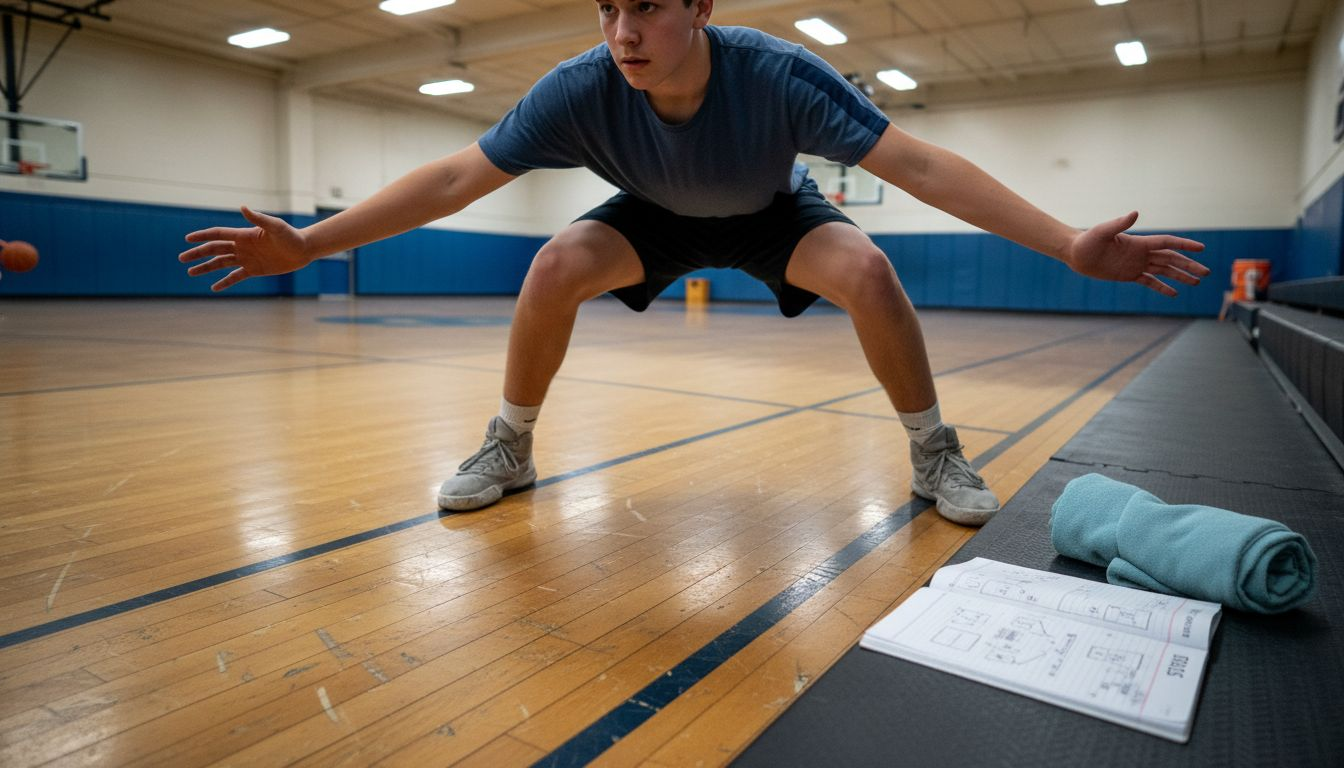
Start by demonstrating the ideal defensive stance players should adopt. This foundational position involves standing with feet shoulder-width apart, knees slightly bent, and weight balanced on the balls of the feet. Position your arms wide to reduce passing lanes and maintain an athletic posture that allows rapid lateral movement. Show players how to mirror offensive players by keeping their body between the opponent and the basket, focusing their vision on the offensive player’s midsection to anticipate potential movements. Practice defensive slides that maintain this low stance while moving quickly and smoothly side to side, emphasizing that balance and controlled movement are more important than speed.
Progress to advanced defensive techniques that involve communication and strategic positioning. Teach players how to contest shots without fouling by keeping hands active but controlled, using body positioning to force offensive players into less advantageous shooting positions. Incorporate drills that help players understand how to use angles effectively creating defensive pressure that limits an opponents scoring opportunities.
Pro tip: Encourage players to videotape themselves performing defensive drills so they can personally analyze and improve their technique and body mechanics.
Step 4: Implement Team-Based Defensive Systems
Successful team defense requires more than individual skills it demands a cohesive strategic approach where players understand their collective responsibilities. Implementing team-based defensive systems relies on organizing players into coordinated roles and communication patterns that create a unified defensive framework.
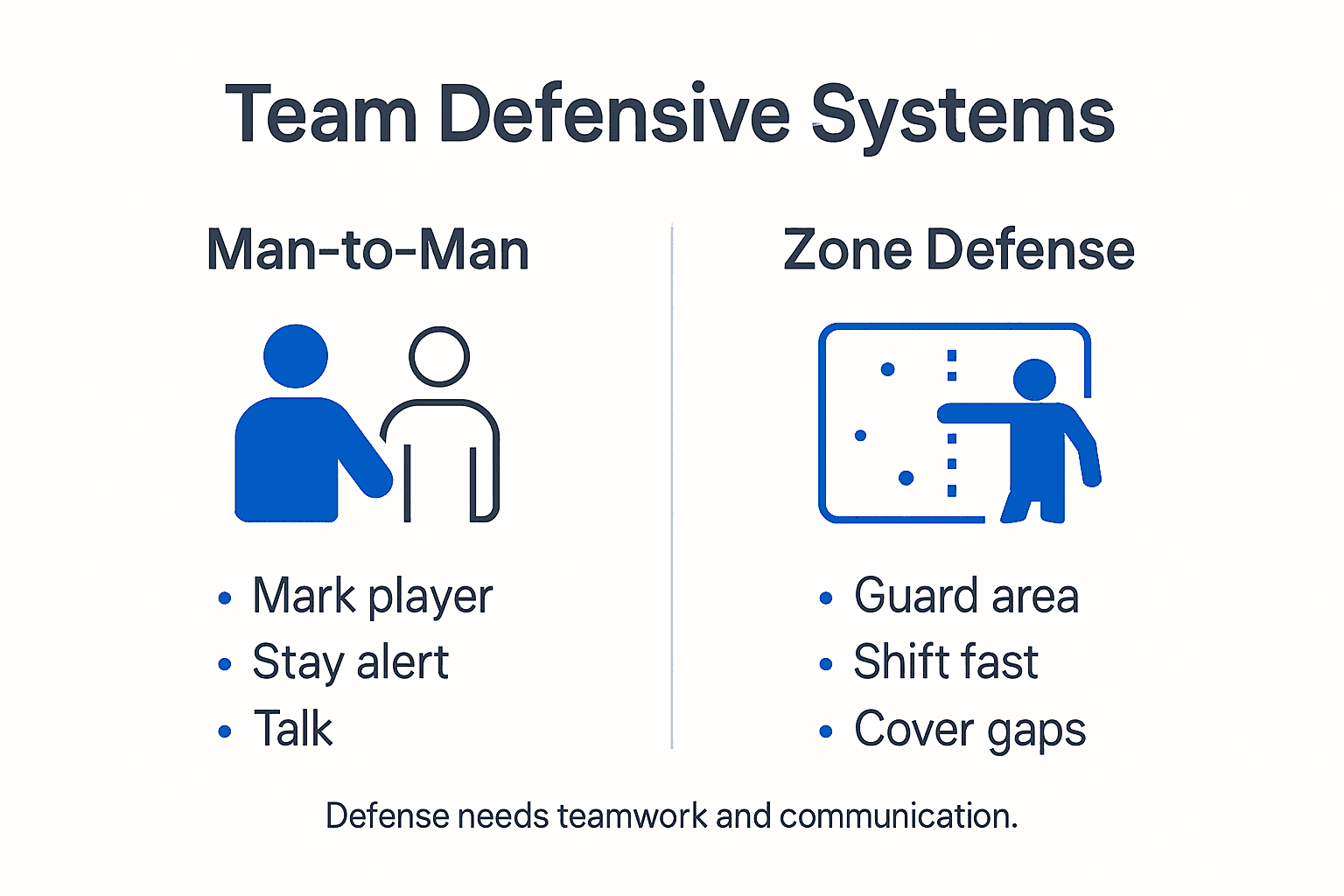
Begin by selecting a defensive strategy that matches your team’s strengths such as man-to-man or zone defense. Each system requires players to understand specific roles and responsibilities including how to help teammates, execute defensive rotations, and respond quickly to offensive plays. During practice sessions break down each defensive scheme into clear segments teaching players precise movements and communication protocols. Focus on developing trust and cooperation by demonstrating how individual actions contribute to overall team defensive success. Practice scenarios that simulate game situations will help players internalize the defensive system and learn to react instinctively as a coordinated unit.
Progress to advanced defensive techniques that involve complex rotations and strategic positioning. Teach players how to read offensive movements anticipate potential scoring threats and communicate effectively to switch defensive assignments seamlessly. Emphasize that successful team defense is not about individual heroics but about collective effort and synchronized team response.
Here’s a summary of common team-based defensive strategies and how they impact overall play:
| Defensive System | Player Roles | Communication Required | Strategic Impact |
|---|---|---|---|
| Man-to-Man | Assigns player to guard one opponent | Verbal switches and help alerts | Maximizes individual accountability |
| Zone Defense | Guards assigned court areas | Signals for zone shifts | Reduces gaps against aggressive offenses |
| Press Defense | Applies full or half-court pressure | Calls for traps and rotations | Forces quick decisions and turnovers |
| Match-Up Zone | Combines man and zone principles | Both zone and man communication | Balances coverage and flexibility |
Pro tip: Regularly video record team defensive practice sessions to provide visual feedback and help players understand their collective movement patterns and areas for improvement.
Step 5: Verify Defensive Understanding and Execution
Evaluating your team’s defensive capabilities requires a systematic approach that goes beyond simple observation. Coaches must implement consistent assessment strategies to verify players comprehend and execute defensive principles with precision and confidence.
Design comprehensive verification methods that test both individual and team defensive understanding. This involves creating scenario based drills that challenge players to demonstrate their knowledge of defensive positioning, communication, and tactical responses. Conduct regular feedback sessions where players explain their defensive responsibilities and decision making processes during specific game situations. Use video analysis to break down defensive plays allowing players to see their performance objectively and identify areas for improvement. Pay close attention to players ability to maintain defensive stance, execute rotational movements, and communicate effectively during simulated offensive challenges.
Progress to more advanced verification techniques that measure not just technical skills but also tactical comprehension. Implement scrimmage scenarios that require players to adapt defensive strategies in real time testing their ability to read offensive movements and make quick collective decisions. Encourage player self reflection by having them analyze their own defensive performances and propose improvements highlighting the importance of continuous learning and strategic development.
This table outlines practical methods for verifying defensive understanding, with their benefits and suggested frequency:
| Verification Method | Key Benefit | Suggested Frequency |
|---|---|---|
| Scenario-Based Drills | Tests real game reactions | Weekly in practice |
| Video Analysis | Identifies technique errors | After each game session |
| Feedback Session | Builds player self-awareness | Biweekly or as needed |
| Structured Scorecard | Tracks progress over time | Monthly evaluations |
Pro tip: Create a structured evaluation scorecard that tracks individual and team defensive performance metrics to provide clear quantitative feedback on defensive skill progression.
Build a Championship-Caliber Defense with Proven Coaching Resources
Teaching defense principles like setting clear goals, organizing progressive drills, and implementing team-based systems can be overwhelming without the right tools. Many coaches struggle to consistently develop defensive understanding and execution while keeping players motivated and accountable. This article highlights how crucial structured strategies and detailed fundamentals are for creating winning teams.
Hoop Mentality offers professional-grade resources tailored specifically to overcome these challenges. Our Basketball Guides – Hoop Mentality provide step-by-step frameworks for defensive drills, communication systems, and evaluation methods. Combine these with our Basketball Playbooks - Hoop Mentality to implement cohesive team defenses that maximize individual and collective performance.

Don’t wait to transform your team’s defensive mindset and execution. Explore our comprehensive coaching tools now and start commanding your court with confidence. Visit Hoop Mentality to unlock ready-to-use resources designed to save you time and elevate your players’ defensive skills today.
Frequently Asked Questions
How can I set effective defensive goals for my basketball team?
Setting effective defensive goals involves defining clear and measurable objectives, such as limiting opponent scoring to under 45 points per game. Write these goals down where all team members can see them regularly to maintain focus and motivation.
What are some essential defensive drills to start with?
Begin with basic defensive stance and footwork drills that focus on individual techniques like lateral slides and maintaining a low stance. Progressively introduce more complex drills that simulate game situations, challenging players to develop their skills systematically.
How do I teach my players the key fundamentals of defense?
To teach defensive fundamentals, demonstrate ideal body positioning and stances, emphasizing balance and movement. Encourage players to practice these techniques consistently and videotape their drills for self-analysis.
What strategies should I implement for team-based defense?
Start by selecting a defensive strategy that aligns with your team’s strengths, such as man-to-man or zone defense. Clearly communicate each player’s roles and responsibilities within that system during practice to build trust and effective teamwork.
How can I assess my team’s defensive performance?
Evaluate your team’s defensive skills through scenario-based drills, video analysis, and structured feedback sessions. Create a scorecard to track individual and team progress over time, focusing on how well players execute defensive concepts and tactics.