

Many coaches treat zone defense as a fallback option, something you run when your players can’t guard man-to-man. That assumption is wrong. Zone defense is used at every level of the game, from youth leagues to the NBA, as a deliberate tactical choice. This guide breaks down what zone defense actually is, the formations you need to know, when to use it, and how to coach it effectively so your team executes it with confidence.
Table of Contents
- What is a zone defense? Definition and core principles
- Types of zone defenses: formations and application
- When and why to use zone defense: strengths, risks, and NBA data
- Coaching zone defense: execution, communication, and practice tips
- Resources to elevate your team’s zone defense
- Frequently asked questions
Key Takeaways
| Point | Details |
|---|---|
| Zone defense defined | Players defend areas on the court rather than specific opponents for tactical team coverage. |
| Types and tactics | Different zone formations offer unique advantages and require tailored teaching and practice. |
| Strategic use | Zone defense is ideal for protecting the paint and masking weaknesses but exposes teams to perimeter shooting risks. |
| Coaching essentials | Execution demands communication, drill variety, and balancing zone with man-to-man for skill development. |
What is a zone defense? Definition and core principles
Zone defense is a system where each player is responsible for guarding a specific area of the court rather than tracking a specific opponent. When the ball moves, players shift their positions based on where the ball is, not where a single player goes. This is the fundamental difference from man-to-man defense, where each defender follows one assigned player everywhere on the court.
The zone works because it forces the offense to move the ball and find gaps, rather than isolating individual defenders. When your players understand their zones and rotate correctly, the defense becomes a connected unit. When they don’t, gaps open up fast.
The key mechanics of zone defense include active hands, sprinting to the ball, communication, and proper rotations based on ball location. These aren’t optional extras. They are the foundation. Without them, a zone falls apart at every level. Start with teaching defense basics before layering in zone-specific responsibilities.
Here is a quick breakdown of zone responsibilities by position in a standard 2-3 setup:
| Position | Primary zone area | Key responsibility |
|---|---|---|
| Guard 1 (top left) | Left wing and elbow | Ball pressure, deny entry pass |
| Guard 2 (top right) | Right wing and elbow | Ball pressure, deny entry pass |
| Forward 1 (mid left) | Left block and corner | Close out on corner, box out |
| Forward 2 (mid right) | Right block and corner | Close out on corner, box out |
| Center (bottom middle) | Paint and low post | Protect rim, rebound, shift with ball |
Key principles every player must know:
- Shift together. The whole zone moves as one unit when the ball moves.
- Communicate constantly. Call out ball location, screens, and cutters.
- Active hands. Deflect passes and disrupt passing lanes at all times.
- Sprint to position. Walking to your zone spot gives the offense free looks.
- Own your rebounding area. Every player has a box-out responsibility, not just the center.
Types of zone defenses: formations and application
Once you understand the core principles, the next step is choosing the right formation for your team and your opponent. Each zone formation has a different shape, different strengths, and different vulnerabilities.
Here is a comparison of the most common zone formations:
| Formation | Positioning | Ball pressure | Best used when |
|---|---|---|---|
| 2-3 zone | 2 guards up, 3 across the baseline | Moderate at the top | Opponent lacks outside shooting |
| 1-3-1 zone | 1 guard up, 3 across middle, 1 at baseline | High at the top | Forcing turnovers, trapping corners |
| 3-2 zone | 3 guards up, 2 in the paint | High perimeter pressure | Opponent relies on post play |
| 2-2-1 press | 2 up, 2 mid, 1 back | Full-court pressure | Forcing fast turnovers, late game |
The 2-3 is the most widely used zone at every level because it protects the paint and is relatively simple to teach. The 1-3-1 zone defense is more aggressive and creates trapping opportunities in the corners, but it requires athletic, communicative players to avoid giving up easy baseline cuts.
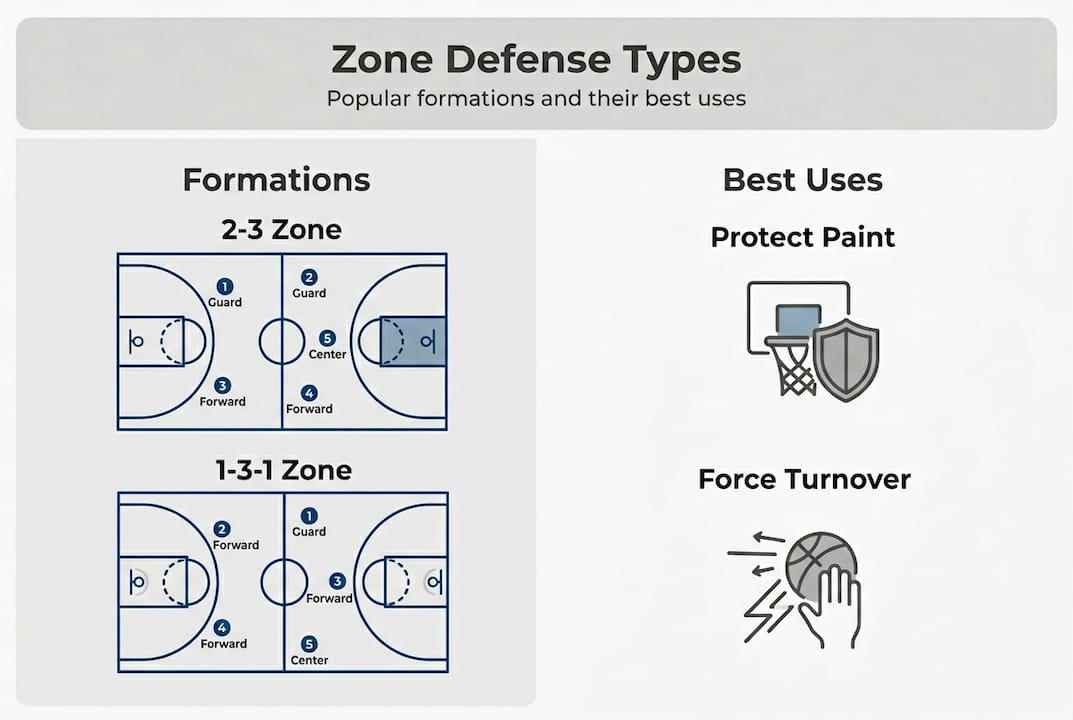
Advanced options include hybrid zone presses that blend zone principles with man-to-man pressure. These are effective for disrupting tempo and forcing turnovers, but they demand more practice time to execute cleanly.
Key advantages and risks by formation:
- 2-3 zone: Protects the paint well, but leaves the corners and high post open.
- 1-3-1 zone: Creates turnovers and traps, but is vulnerable to skip passes and baseline cuts.
- 3-2 zone: Pressures the perimeter, but can be exploited by strong post players.
- Hybrid presses: Disrupt rhythm and tempo, but require high conditioning and communication.
Experts recommend using forms like the 2-3, hybrid man-zone, and traps in specific game situations rather than running one zone all game. Mixing formations keeps the offense guessing and prevents them from settling into a rhythm against your defense.
When and why to use zone defense: strengths, risks, and NBA data
Zone defense is a strategic tool, not a default setting. Knowing when to deploy it is just as important as knowing how to run it.
Zone defense is preferred to protect the paint or hide individual weaknesses, but man-to-man is better for applying constant pressure on the ball. That distinction matters. Zone is not always the right call.
Even at the highest level, zone is used selectively. NBA zone usage sits under 3% of possessions, yet it reduces opponent three-point percentage and overall team efficiency when deployed correctly. That is a significant impact for a defense used so sparingly.
Here are the scenarios where zone defense makes the most sense:
- Your opponent has weak outside shooters. Zone collapses the paint and dares them to shoot from distance.
- You need to protect a player in foul trouble. Zone limits individual matchup exposure.
- Your team is physically smaller. Zone allows you to defend the paint without getting beaten off the dribble.
- You want to disrupt a team’s offensive rhythm. Switching from man-to-man to zone mid-game forces the offense to reset.
- You are facing a dominant post player. Zone can double-team the post without leaving the perimeter exposed.
Avoid zone defense in these situations:
- The opponent has multiple reliable three-point shooters. Zone leaves corners open.
- Your players are not communicating well. A silent zone is a broken zone.
- The opponent runs a patient, ball-reversal offense. They will find the gaps every time.
For more on attacking zone systems, review zone offense strategies and study beating a 2-3 zone from the offensive side. Understanding how offenses attack your zone makes you a better defensive coach.
Coaching zone defense: execution, communication, and practice tips
Knowing the theory is one thing. Getting your players to execute it under game pressure is another. Here is how to build a zone defense that actually holds up.
Start with rotations. Run shell drills where the offense moves the ball and your defenders shift together without any live defense. Players need to feel the correct positioning before they can react to it in real time. Once rotations are clean, add a live ball handler and increase the pressure gradually.
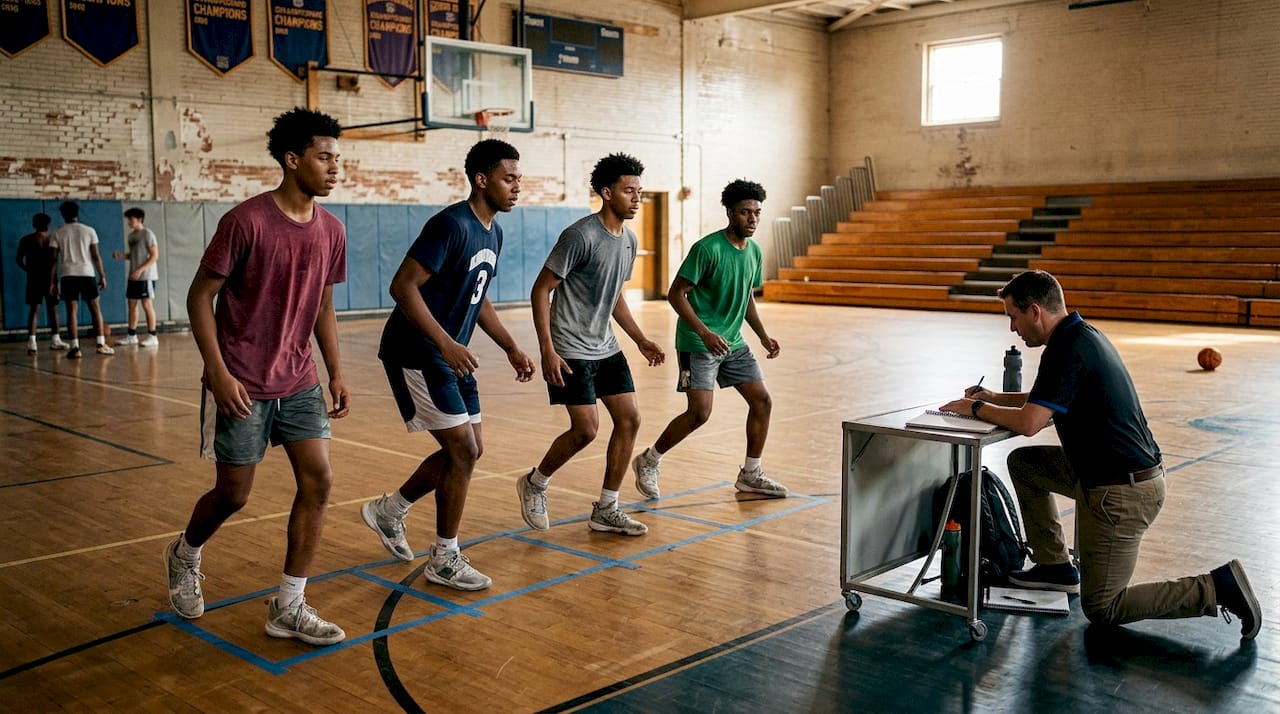
Communication and drills are essential to avoid gaps. Use rotation drills, rebounding drills, and communication drills as separate focused sessions before combining them. Players who talk on defense make far fewer positioning errors.
Active hands, sprinting as the ball moves, and clear rebounding responsibilities are the three habits that separate a functional zone from a leaky one. Drill each one individually before expecting players to combine them in a game.
Common mistakes to fix early:
- Ball watching. Players freeze and watch the ball instead of moving to their zone spot.
- Lazy closeouts. Defenders walk to the corner instead of sprinting, giving shooters time and space.
- No communication. Players assume someone else will call out the cutter or the skip pass.
- Ignoring rebounding lanes. Zone players forget their box-out responsibility when a shot goes up.
Practice focus areas for zone defense:
- Rotation drills without live defense (shadow work)
- Closeout and contest drills from zone positions
- Box-out and rebounding drills from zone alignments
- Communication drills: calling ball, calling cutters, calling screens
- Live 5-on-5 with offense running zone-attack sets
For more targeted guidance, check out defensive adjustment tips and defense coaching tips to sharpen your approach. Also review zone coaching mistakes to avoid the most common errors coaches make when installing a zone system. For younger players, basketball fundamentals for youth should come before zone-specific work.
Pro Tip: Mix man-to-man principles into your zone practices. Have players guard a specific opponent for one possession, then switch to zone the next. This keeps individual defensive skills sharp and prevents players from becoming dependent on the zone structure to cover for poor footwork or slow reactions.
Resources to elevate your team’s zone defense
You now have the framework. The next step is putting it into structured practice sessions your players can follow and repeat.

Hoop Mentality has the tools to make that easier. Use a ready-made practice plan template to organize your zone defense sessions with clear timing, drill sequences, and coaching cues built in. Add the big man drill resource to develop your post defenders inside the zone. Every resource at Hoop Mentality is built from real coaching experience, so you get tools that work on the court, not just on paper. Save time on planning and spend more time coaching.
Frequently asked questions
What is the main difference between zone and man-to-man defenses?
Zone defense assigns players to guard specific court areas rather than specific opponents, while man-to-man has each defender follow one assigned player. The key shift is from tracking a person to owning a space.
When should a coach choose zone defense for their team?
Zone defense works best when you need to protect the paint or hide a slower defender, or when the opponent lacks reliable outside shooters. It is a situational tool, not a full-game solution.
Does using a zone defense mean my team won’t develop man-to-man skills?
Relying only on zone can slow individual defensive development, so teach both systems in practice. Players who only play zone often struggle with footwork and on-ball pressure in man-to-man situations.
How can a team overcome the weaknesses of zone defense?
Focus on aggressive closeouts and constant communication to close the gaps that zone defense naturally creates. Adjusting your formation based on the opponent’s shooting tendencies also reduces exposure significantly.