

Most youth basketball teams worldwide share an unexpected challenge—over 60 percent of coaches struggle to effectively convey even basic american fundamentals during practice. Mastering these building blocks impacts not only how players learn, but also shapes their success on the court. This guide breaks down the core skills every coach should focus on, offering simple yet proven strategies to help young athletes develop strong fundamentals and transform team performance.
Table of Contents
- Defining Basketball Fundamentals For Young Players
- Core Skills Every Team Must Master
- Teaching Fundamentals Across Ages And Levels
- How Fundamentals Impact Game Performance
- Common Coaching Mistakes And Solutions
Key Takeaways
| Point | Details |
|---|---|
| Emphasize Fundamental Skills | Focus on teaching young players essential skills like shooting mechanics and ball handling to create a strong foundation for their basketball development. |
| Tailor Coaching by Age | Adapt coaching strategies to match the developmental stages of players, ensuring age-appropriate training that considers their physical and cognitive capabilities. |
| Impact on Game Performance | Mastery of fundamentals correlates directly with improved individual and team performance, enhancing decision-making and overall gameplay success. |
| Avoid Common Mistakes | Recognize and address common coaching errors, such as prioritizing winning over development, to foster a positive learning environment that enhances player growth. |
Defining Basketball Fundamentals for Young Players
Basketball fundamentals represent the core technical skills and movement patterns essential for player development. Scientifically guided player development models emphasize teaching young athletes proper techniques that form the foundation for advanced basketball performance.
These fundamental skills include essential elements like proper shooting mechanics, ball handling, defensive positioning, passing techniques, and footwork. Each skill must be learned progressively, with coaches breaking down complex movements into simple, digestible components. Young players need to master basic body control, spatial awareness, and motor coordination before attempting more advanced basketball strategies.
By systematically introducing these core skills, coaches can help players build muscle memory, confidence, and a solid understanding of basketball principles. The goal is not just teaching individual techniques but creating a comprehensive framework where players understand how different fundamental skills interconnect and contribute to overall court performance.
Pro Tip: Start each practice session with 10-15 minutes of deliberate fundamental skill work, ensuring players understand proper technique before increasing complexity or speed.
Core Skills Every Team Must Master
Successful basketball teams are built on a foundation of core skills that players must develop and consistently execute. Essential player development strategies emphasize mastering fundamental techniques that translate directly into team performance and individual player growth.
The primary core skills every basketball team must develop include shooting accuracy, ball handling, defensive positioning, passing precision, and court awareness. Shooting requires consistent mechanics, proper hand placement, and smooth follow-through. Ball handling demands players develop dexterity, control, and the ability to protect the basketball under pressure. Defensive positioning involves understanding spatial relationships, maintaining athletic stance, and anticipating offensive movements.
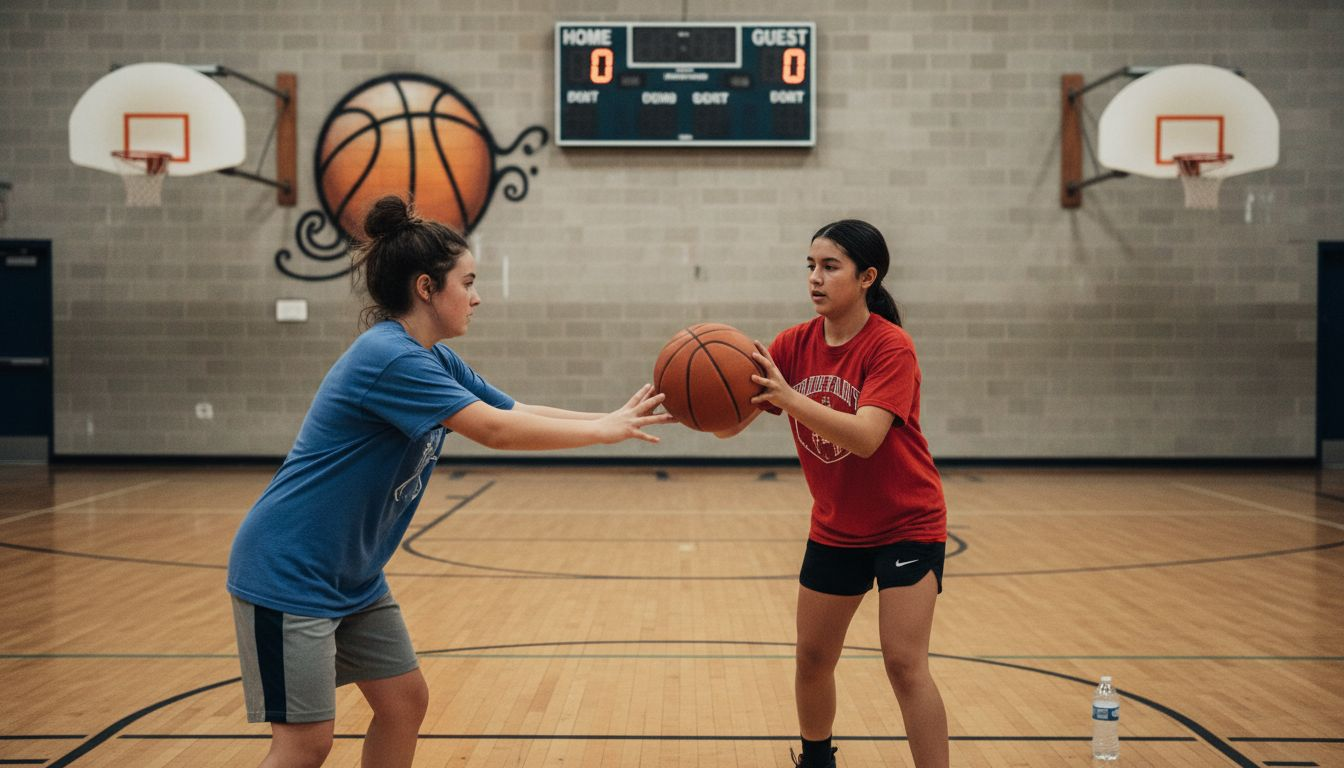
Additionally, teams must focus on developing communication skills, understanding team offensive and defensive schemes, and building basketball intelligence. Players need to learn how individual skills interconnect and contribute to collective team success. This means practicing not just technical skills, but also developing mental awareness, quick decision-making, and the ability to read and react to game situations dynamically.
Pro Tip: Create weekly skill challenge drills that rotate through different fundamental techniques, ensuring players continually refine and improve their core basketball abilities.
Teaching Fundamentals Across Ages and Levels
Developing basketball skills requires a nuanced approach that recognizes the unique developmental stages of young athletes. Youth basketball coaching curricula highlight the critical importance of tailoring instruction to specific age groups, ensuring that players receive age-appropriate training that matches their physical, cognitive, and motor skill capabilities.
For younger players (ages 7-10), coaches should focus on fundamental movement skills, basic ball handling, and introducing simple game concepts through fun, low-pressure activities. As players progress to ages 11-14, instruction becomes more technical, emphasizing proper shooting mechanics, defensive positioning, and more complex passing techniques. Advanced players (ages 15-18) require sophisticated skill refinement, tactical understanding, and specialized position-specific training that builds on previously established fundamental skills.
Successful skill progression demands coaches understand the physiological and psychological changes players experience during different developmental stages. This means adapting teaching methods, communication styles, and drill complexity to match players’ evolving capabilities. Coaches must balance technical instruction with motivation, creating learning environments that challenge players while maintaining their enthusiasm and love for the game.
Here’s a summary comparing basketball skill focus by age group:
| Age Group | Primary Skill Focus | Coaching Approach |
|---|---|---|
| 7-10 years | Movement, ball control, basic concepts | Fun games, simple drills |
| 11-14 years | Technique building, positioning, passing | Technical corrections, skill detail |
| 15-18 years | Advanced skills, tactics, specialization | Position-specific, high-intensity training |
Pro Tip: Develop a progressive skill matrix that outlines specific fundamental techniques players should master at each age group, allowing for structured and intentional skill development.
How Fundamentals Impact Game Performance
Core basketball skills training demonstrates a direct correlation between fundamental skill mastery and overall game performance. Athletes who consistently develop and refine basic techniques like shooting, passing, and defensive positioning create a solid foundation that translates into more effective and confident gameplay.
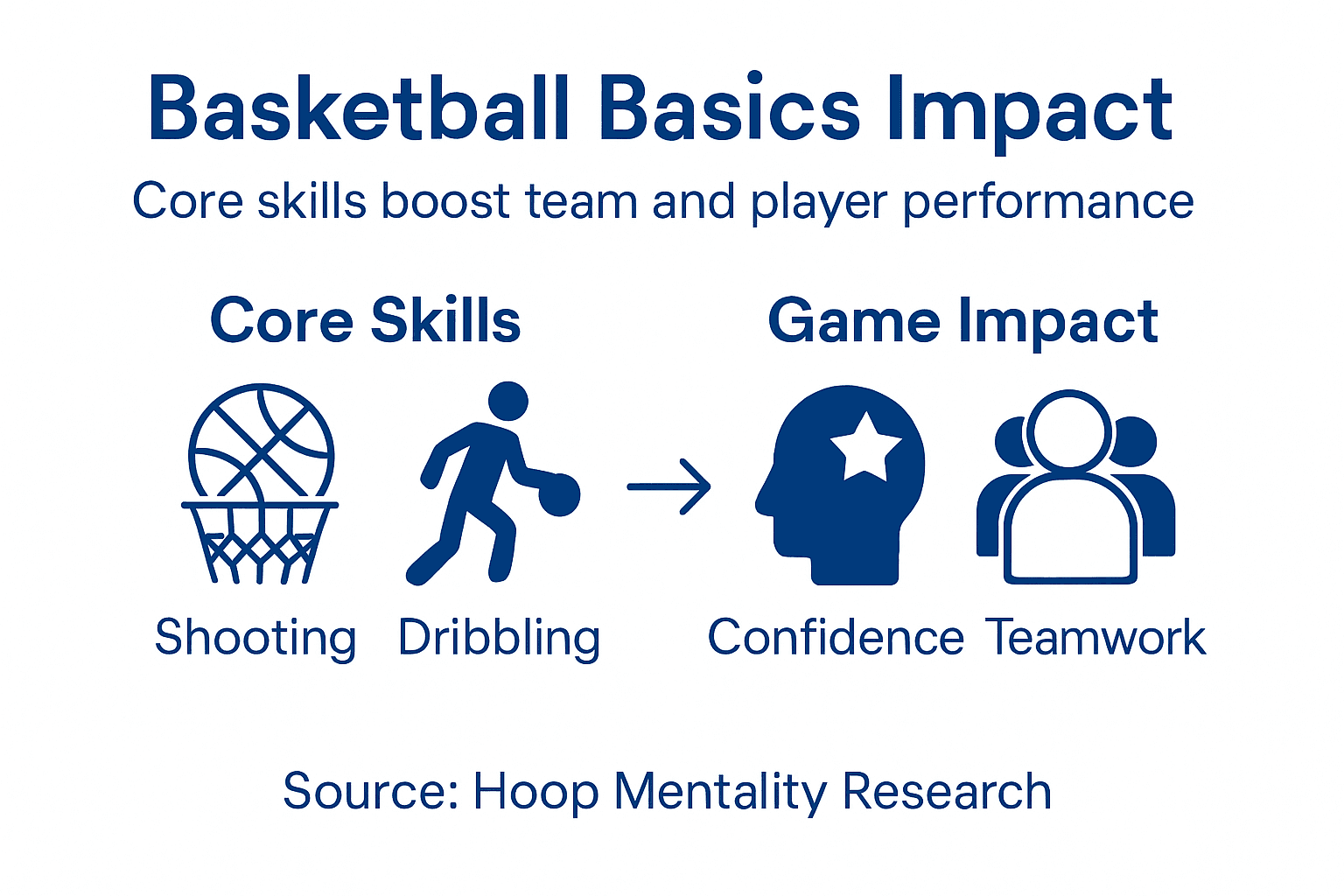
Professional performance analysis reveals that key performance indicators are deeply rooted in fundamental skills. Shooting percentages, defensive rebounds, assist rates, and turnover management all stem directly from a player’s ability to execute basic basketball techniques with precision and consistency. Teams with players who have strong foundational skills demonstrate greater adaptability, making split-second decisions that can dramatically influence game outcomes.
Beyond individual statistics, fundamental skills contribute to team chemistry and collective performance. Players with well-developed technical abilities communicate more effectively, understand spatial relationships on the court, and can seamlessly integrate individual talents into cohesive team strategies. This interconnectedness means that investing time in fundamental skill development creates a multiplier effect, elevating both individual player potential and overall team performance.
Compare how basketball fundamentals impact individual and team performance:
| Skill Area | Individual Impact | Team Impact |
|---|---|---|
| Shooting Mechanics | Boosts scoring and confidence | Raises overall team shooting % |
| Defensive Positioning | Fewer fouls, better stops | Stronger team defense, more turnovers |
| Passing Techniques | Lower turnovers, faster decisions | Improved ball movement, more assists |
| Court Awareness | Smarter game decisions | Better spacing and chemistry |
Pro Tip: Design practice sessions that progressively challenge players by combining fundamental skills into more complex game-like scenarios, helping them develop muscle memory and intuitive decision-making.
Common Coaching Mistakes and Solutions
Basketball coaching strategies reveal that youth coaches often make critical errors that can significantly hinder player development. The most common mistakes typically stem from misunderstanding player motivation, using inappropriate teaching methods, or failing to create a positive learning environment.
One fundamental coaching mistake is overemphasizing winning at the expense of skill development. Coaches who prioritize game scores over individual player growth create unnecessary pressure that can diminish players’ enjoyment and long-term basketball potential. Another frequent error involves using a one-size-fits-all approach to training, which ignores the unique learning styles, physical capabilities, and psychological needs of individual players.
Addressing these challenges requires coaches to adopt a more nuanced, player-centered approach. This means developing individualized training strategies, providing constructive and encouraging feedback, and creating practice environments that balance skill improvement with enjoyment. Coaches must learn to recognize each player’s strengths and weaknesses, adapt their communication styles, and design drills that progressively challenge players while maintaining their enthusiasm and confidence.
Pro Tip: Conduct regular one-on-one player check-ins to understand individual motivations, learning preferences, and personal basketball goals, allowing for more targeted and effective coaching.
Elevate Youth Coaching by Mastering Basketball Fundamentals
Coaching youth basketball comes with the rewarding challenge of building strong foundational skills while keeping players motivated and engaged. This article highlights how crucial it is to focus on proper shooting mechanics, ball handling, defensive positioning, and court awareness during every practice. Coaches often struggle to balance individualized development with team cohesion, but the right tools can make all the difference in delivering organized, effective sessions that foster confidence and skill growth.
Unlock your team’s potential by integrating our expertly designed Basketball Drills - Hoop Mentality and Basketball Workouts - Hoop Mentality into your practice plans.

Take control of your coaching approach today with resources from Hoop Mentality that support youth coaches at every step. Equip yourself with proven strategies to develop fundamentals systematically, keep players motivated, and organize practices efficiently. Start turning fundamental skills into game-winning performances now.
Frequently Asked Questions
What are the essential basketball fundamentals for young players?
Fundamental skills include proper shooting mechanics, ball handling, defensive positioning, passing techniques, and footwork. These skills are critical for developing a strong foundation for basketball performance.
How can I effectively teach basketball fundamentals to young athletes?
Focus on breaking down complex movements into simple, digestible components. Use fun, low-pressure activities for younger players and progressively introduce more technical aspects as they mature cognitively and physically.
Why is it important to tailor coaching methods to different age groups in basketball?
Each age group has unique developmental stages. Adapting coaching techniques ensures that players receive appropriate training that matches their physical and cognitive abilities, promoting better skill retention and overall enjoyment of the sport.
What common mistakes should youth coaches avoid when teaching basketball fundamentals?
Coaches should avoid prioritizing winning over skill development, using a one-size-fits-all training approach, and neglecting to create a positive learning environment. Instead, focus on individualized feedback and balanced practice sessions that foster growth and enjoyment.