

Many coaches think zone offense means static plays. Reality? Dynamic spacing and movement boost scoring efficiency by up to 10% against zone defenses. This guide covers core principles, strategies, and drills for effective zone offense. You’ll learn actionable concepts adaptable for all skill levels, from understanding what zone offense actually is to implementing proven frameworks that create high-percentage scoring opportunities. Let’s transform how your team attacks zones.
Table of Contents
- Understanding Zone Offense in Basketball
- Key Principles of Effective Zone Offense
- Exploiting Defensive Gaps and Weaknesses
- Zone Offense Frameworks: Motion Vs. Continuity
- Practical Attacks For Common Zone Defenses
- Coaching Tips And Drills To Implement Zone Offense
- Common Misconceptions About Zone Offense
- Summary And Path Forward For Coaches
- Discover More Coaching Resources At Hoop Mentality
Key Takeaways
| Point | Details |
|---|---|
| Zone offense targets area defenses through spacing, ball movement, and dynamic player motion to create scoring opportunities. | It differs fundamentally from man-to-man offense by reading and attacking defensive structure rather than individual matchups. |
| Proper spacing of 15-18 feet stretches zones while quick ball movement forces defensive rotations that open shots. | Penetration collapses defenses and increases open perimeter chances by up to 30%. |
| Motion offense offers freedom and unpredictability, while continuity provides structure through set rules. | Hybrid approaches blend both for balance between creativity and control. |
| Practical attacks like stack formations and ball reversals exploit common zones such as 2-3 and 1-3-1 defenses. | The 3-Pass Rule drill improves shot quality by emphasizing patience and ball movement. |
| Common misconceptions include believing zone offense is just static plays or that perimeter shooters alone suffice. | Dynamic movement and penetration are critical for effective zone attacks. |
Understanding Zone Offense in Basketball
Zone offense targets defenses covering areas rather than individual players. It focuses on spacing, ball movement, and player motion to break down defensive structures. The key difference from man-to-man offense lies in reading and attacking zones as collective units instead of isolated matchups.
Why does zone offense matter? Packed defenses limit driving lanes and clog the paint, making traditional man-to-man attacks ineffective. Zone offense unlocks scoring by stretching defenses horizontally and vertically, creating gaps for penetration and open shots.
Core elements include:
- Spacing players to stretch the defensive coverage
- Moving the ball quickly to force rotations
- Timing cuts and flashes to exploit shifting gaps
- Penetrating to collapse defenders and open kick-out passes
Understanding these fundamentals sets the foundation for beating a 2-3 zone defense and other common zone formations. Once you grasp what zone offense is, you can apply specific principles to make it work.
Key Principles of Effective Zone Offense
Effective zone offense relies on four core principles that work together to break down defensive structures.
First, maintain 15-18 feet spacing between players to stretch the zone. Tight spacing allows defenders to cover multiple offensive players simultaneously. Proper spacing forces defenders to choose who to guard, creating natural gaps. This spacing principle directly impacts basketball spacing efficiency across your entire offensive system.
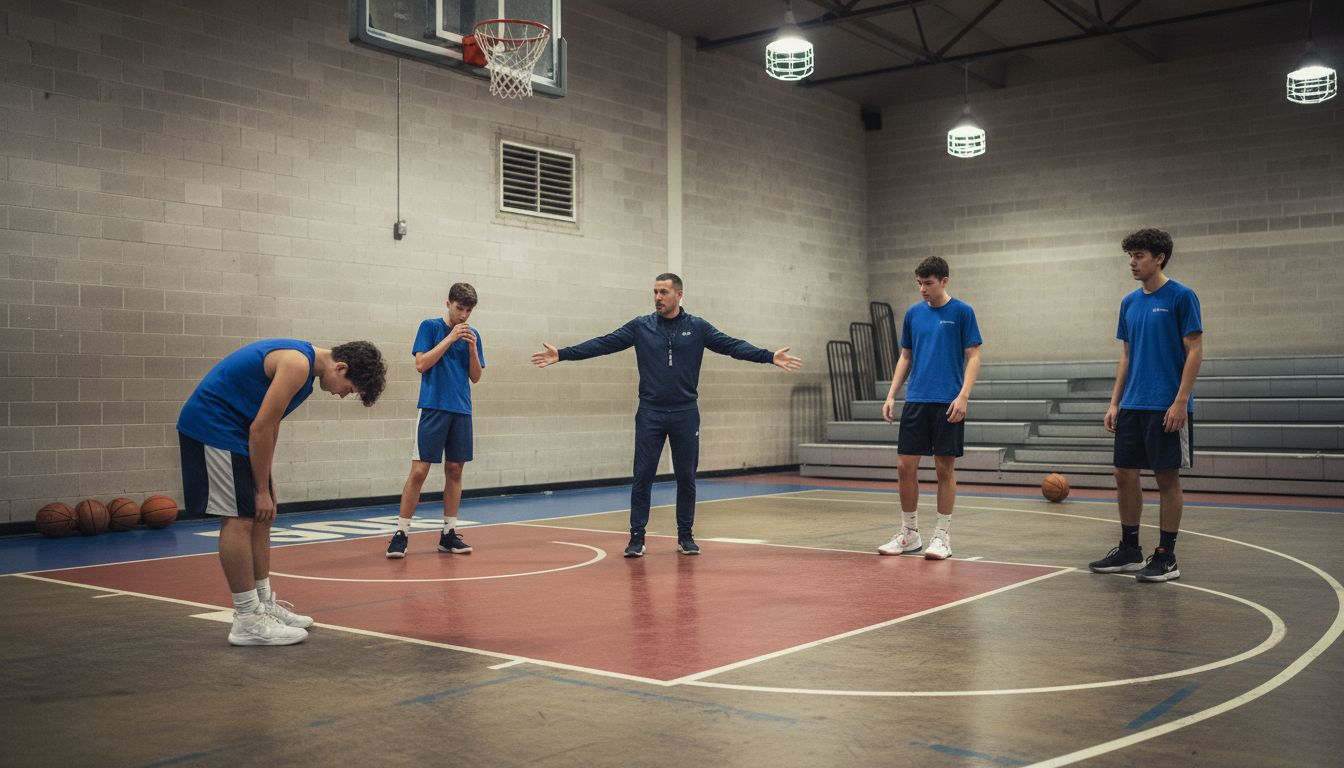
Second, move the ball quickly and crisply. Zones shift as the ball moves, and fast passes expose defensive rotations before they complete. Swing passes across the perimeter force defenders to sprint laterally, creating fatigue and mistakes. The 3-Pass Rule before shot attempts improves shot quality by increasing ball movement and defensive breakdowns.
Third, use dynamic off-ball movement. Players cutting and flashing into gaps disrupt zone alignment and force communication errors. These movements complement off the ball movement tips that enhance overall offensive flow. Stationary players allow zones to settle and defend comfortably.
Fourth, penetrate the zone to collapse defenders. Dribble penetration forces help rotations that open kick-out passes for open shots. This principle ties directly to how you implement motion offense concepts within your system.
Pro Tip: Run the 3-Pass Rule drill in every practice to build patience and discipline. Players must make three passes before shooting, forcing them to value ball movement over quick shots.
Exploiting Defensive Gaps and Weaknesses
Every zone defense has inherent gaps, especially in the middle and free-throw line areas. Your job is identifying and attacking these vulnerabilities systematically.
Penetration into zone gaps increases open perimeter shot chances by up to 30%. When you drive into a gap, defenders must help or give up a layup. This help rotation opens passing lanes to the perimeter and weak-side corners. The penetration and kick-out pattern becomes your primary weapon.
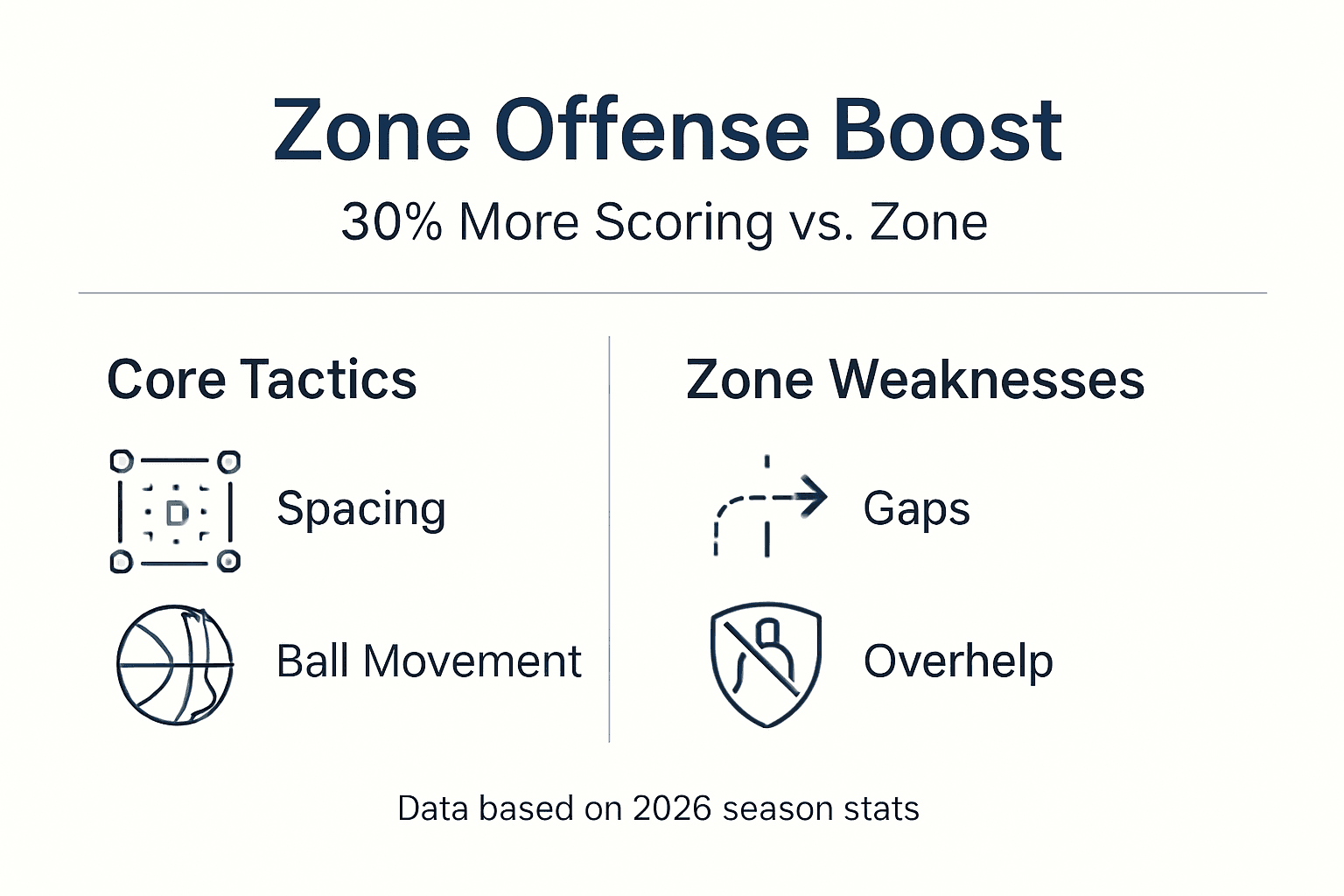
Position players strategically in natural zone gaps to maximize effectiveness. For example, placing a player at the free-throw line against a 2-3 zone creates a numerical advantage in the middle. This high post position can receive passes, attack closeouts, or distribute to cutters.
Key exploitation tactics include:
- Flashing cutters into gaps as the ball moves
- Using skip passes to hit defenders in rotation
- Attacking from different angles to create confusion
- Reading defender positioning to find soft spots
Patience matters when exploiting gaps. Rushing shots before the defense breaks down wastes possessions. Wait for the quality opportunity that results from forced rotations. Resources like modern offense vs 2-3 zone provide detailed strategies for these concepts.
Understanding the benefits of penetration in zone offense helps you teach players when and how to attack. Penetration without purpose leads to turnovers. Penetration with intent to collapse and kick creates scoring.
Zone Offense Frameworks: Motion vs. Continuity
Choosing the right offensive framework determines how your team executes zone offense principles. Three main approaches exist: motion, continuity, and hybrid systems.
Motion offense offers player freedom and unpredictability but requires higher basketball IQ. Players read the defense and make decisions based on spacing principles and defensive reactions. This approach works best for experienced teams comfortable making split-second choices. Learn more about motion offense explained to understand its full application.
Continuity offense uses set rules and patterns that repeat, providing structure and ease of teaching. Players follow predetermined movements and reads, reducing decision-making complexity. This framework suits youth teams or developing programs where consistency matters more than creativity.
| Framework | Advantages | Best For |
|---|---|---|
| Motion | Unpredictable, adaptable, player freedom | Experienced teams with high basketball IQ |
| Continuity | Structured, easy to teach, consistent patterns | Youth or developing teams |
| Hybrid | Balances creativity and control, maximizes options | Competitive teams seeking versatility |
Hybrid offenses blend both approaches for balance. You might run a continuity pattern as your base but allow motion principles when opportunities arise. This gives structure while maintaining adaptability.
Choose continuity for youth or developing teams to reduce indecision and build confidence. Use hybrid systems for competitive teams to maximize options and keep defenses guessing. Understanding types of motion offense helps you customize your approach.
Pro Tip: Adapt frameworks based on your roster’s strengths and experience level. A framework that works for one team may not fit another, even within the same program.
Practical Attacks for Common Zone Defenses
Translating principles into specific plays makes zone offense actionable. Here are proven attacks for common zone defenses.
Against 2-3 zones,
Stack Play execution steps:
- Set up in a 1-3-1 alignment with two players stacked at the free-throw line
- Pass to the wing to initiate defensive movement
- As the ball moves, the top stack player cuts to the ball-side block
- The bottom stack player flashes to the opposite elbow
- The point guard cuts through to the weak-side corner
- Look for the cutter, flash, or kick-out to the corner
Against 1-3-1 zones, use quick ball reversals and screening actions. The 1-3-1 is vulnerable to reversals because the defense must cover more ground horizontally. Effective tactics include:
- Reversing the ball side to side rapidly
- Setting screens for the middle defender to free cutters
- Attacking the short corners with dribble penetration
- Flashing the high post as the ball swings
Tailor player roles and positioning according to zone type. Your best shooter should occupy spots where that specific zone is weakest. Against a 2-3, that might be the corners. Against a 1-3-1, it could be the wings.
Practice these attacks through beat a 2-3 zone offense plays and similar drills. Repetition builds recognition and execution speed. Watch Coach Ryan Schultz’s Stack play for visual demonstration of proper timing and spacing.
Coaching Tips and Drills to Implement Zone Offense
Teaching zone offense effectively requires structured practice methods that embed core concepts. Drills focusing on passing, spacing, and decision-making improve team execution and confidence against zone defenses.
Implement these drills systematically:
- 3-Pass Rule Drill: Require three passes before any shot attempt to build patience and ball movement habits
- Spacing Circuit: Mark spots 15-18 feet apart and have players maintain positions while passing
- Penetration and Kick: One player drives into gaps while teammates spot up for kick-outs
- Zone Recognition: Show different zone alignments and have players identify gaps and attack points
- Live Scrimmage: Practice against scout team zones with specific rules emphasizing principles
Build confidence through repetition and scenario-based drills. Players need to see zone defenses repeatedly to develop reading skills. Scrimmage situations where you call out specific zone types force quick adaptation.
Train penetration and kick-out passes under defensive pressure. Controlled chaos drills where defenders contest but don’t fully commit help players learn to make reads without fear. This connects to off the ball movement tips that support these actions.
Practice player decision-making by giving freedom within structure. Let players choose their cuts and movements while maintaining spacing principles. This develops basketball IQ over time. Apply spacing drills for basketball consistently to reinforce proper floor balance.
Pro Tip: Use visual aids like floor markers or colored spots during practices to reinforce spacing requirements. Players learn faster when they can see proper positioning clearly.
Common Misconceptions about Zone Offense
Several misconceptions limit zone offense effectiveness. Recognizing and correcting these beliefs improves execution.
First, zone offense is not just static set plays. Dynamic spacing and movement increase scoring by up to 10% versus zones, contradicting the belief that set plays suffice. Movement creates the gaps that static positions cannot.
Second, isolation plays rarely succeed against zone defenses. Zones are designed to help and recover quickly, making one-on-one attacks inefficient. Team movement and ball circulation win against zones, not individual heroics.
Third, patience improves shot quality, but coaches often let players rush shots. The 3-Pass Rule exists because hurried attempts reduce efficiency dramatically. Trust the process of breaking down the defense through movement.
Fourth, simply placing shooters around the perimeter isn’t enough. Without penetration and movement, zones can comfortably close out to perimeter shooters. You need interior threats to collapse defenses first. Understanding the importance of spacing includes knowing when spacing alone is insufficient.
Common mistakes include:
- Standing still after passing instead of cutting or relocating
- Taking the first available shot instead of working for quality looks
- Failing to penetrate gaps and settling for contested perimeter shots
- Not recognizing zone shifts and adjustments during possessions
Misunderstandings often stem from lack of drill practice and in-game reads. Players need repeated exposure to zones to develop instincts. Even common coaching misconceptions in other fields show how persistent incorrect beliefs can be without proper education.
Summary and Path Forward for Coaches
Zone offense attacks area defenses through spacing, ball movement, and dynamic player motion. Core principles include maintaining 15-18 feet spacing, moving the ball quickly, using off-ball cuts, and penetrating to collapse defenders. Frameworks range from structured continuity to free-flowing motion, with hybrid approaches offering balance.
Continuous practice of these concepts improves execution. Run drills emphasizing spacing, the 3-Pass Rule, and decision-making regularly. Benefits include better shot quality, efficient scoring, and the ability to adapt to various zone defenses.
Apply these strategies to your team’s system immediately. Start with one or two concepts and build complexity as players develop comfort. Zone offense isn’t mastered overnight, but consistent work yields measurable results.
Your path forward involves ongoing learning and adjustment. Study how different zones react to your attacks and adapt accordingly. The coaches who succeed against zones are those who remain flexible and committed to teaching fundamentals thoroughly.
Discover More Coaching Resources at Hoop Mentality
Mastering zone offense requires comprehensive planning and structured practice. Hoop Mentality offers detailed guides for coaching fundamentals that support these concepts. Our basketball fundamentals guide provides the foundation for teaching all offensive systems effectively.

Find comprehensive playbook creation tools tailored for basketball teams through our playbook creation guide. These resources help you organize zone offense plays and principles into teachable formats. Access practice plan templates designed to boost team development with our basketball practice plan template. These tools enable you to implement zone offense more effectively and confidently, saving time while improving player execution and understanding.
FAQ
What Is Zone Offense in Basketball?
Zone offense is an offensive strategy designed to attack zone defenses by exploiting gaps through spacing, ball movement, and player motion. It contrasts with man-to-man offense, which focuses on individual matchups rather than attacking defensive structures collectively.
How Does Penetration Improve Zone Offense Effectiveness?
Penetration forces defenders to leave their zones to help, opening passing lanes and kick-out opportunities. Successful penetration can increase open perimeter shot opportunities by up to 30%. It’s the key to breaking down compact zone defenses that pack the paint.
What Are the Best Drills to Teach Zone Offense?
The 3-Pass Rule drill encourages ball movement and patience before shooting. Spacing drills enforce maintaining 15-18 feet distance between players to stretch defenses. Decision-making drills simulate reading zone defenses to improve real-game choices and recognition.
Should I Use a Motion or Continuity Offense Against Zones?
Motion offense offers freedom and unpredictability but requires higher basketball IQ from players. Continuity offense is structured and easier to teach, making it ideal for youth or less experienced teams. Hybrid approaches balance both for versatile, adaptable gameplay that maximizes your roster’s strengths.
Recommended
- How To Beat A 2-3 Zone Defense With Smart Basketball Offense Play – Hoop Mentality
- Modern Offense Against 2-3 Zone Defense - Hoop Mentality
- Complete 1-3-1 Zone Defense Guide V2.0 – Hoop Mentality
- DHO Offense Against 2-3 Zone Defense - Hoop Mentality
- discount-olympic-games-2024 | Parcel International