

Stopping the top scorer in a close game often comes down to one skill: on-ball defense. For youth basketball coaches working with middle and high school teams, teaching this technique matters because research shows strong on-ball defense can directly reduce opponents’ scoring chances and help swing momentum in favor of your squad. Discover proven strategies and core fundamentals that empower players to challenge ball handlers, disrupt offenses, and build championship-level defensive habits from the ground up.
Table of Contents
- Defining On-Ball Defense In Basketball
- Key Techniques And Defensive Variations
- Impact Of On-Ball Defense On Team Play
- Developing Players’ Skills Through Defense
- Common Coaching Mistakes To Avoid
Key Takeaways
| Point | Details |
|---|---|
| Importance of On-Ball Defense | On-ball defense is a fundamental strategy in basketball that disrupts offensive plays and prevents scoring opportunities. |
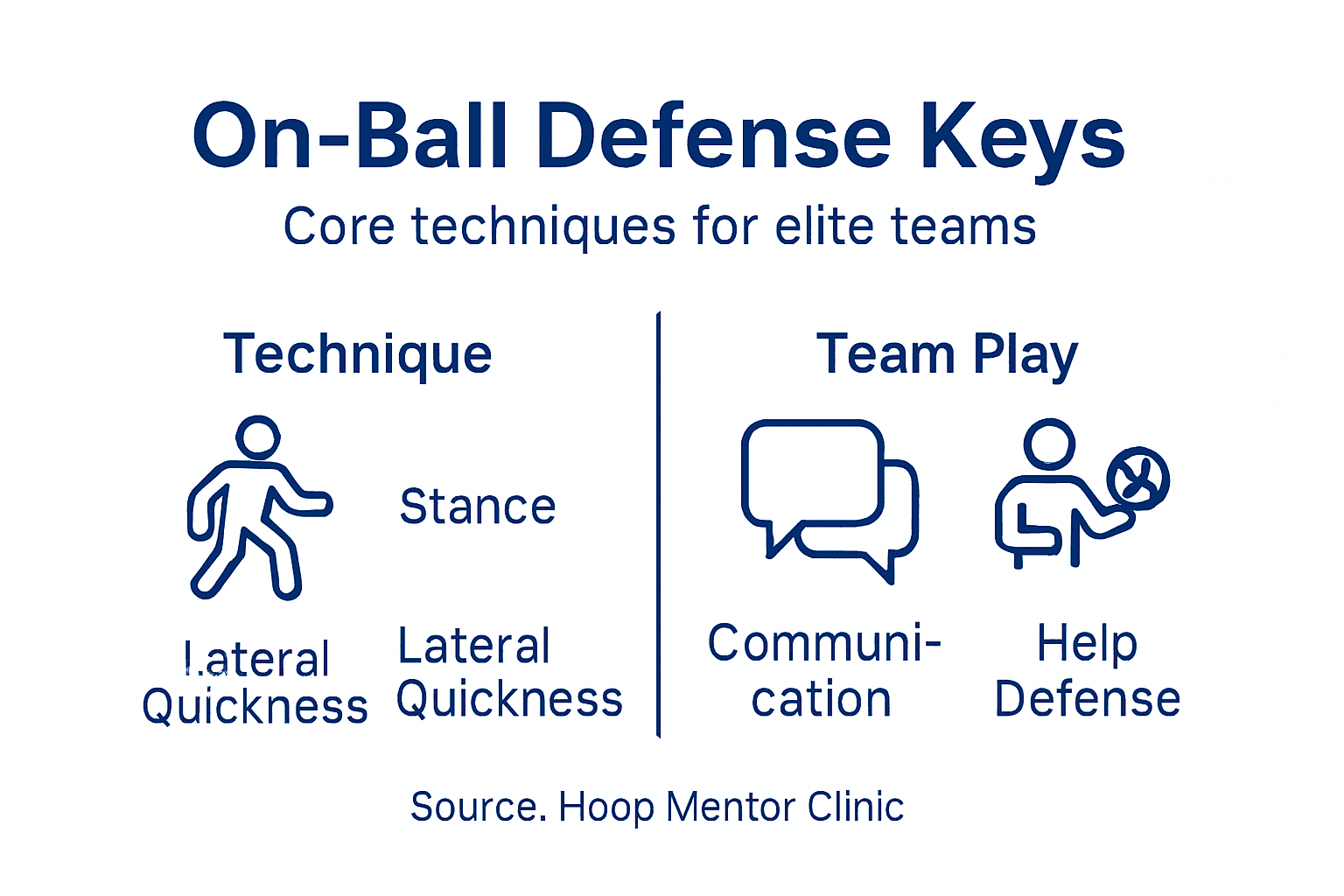
| Key Techniques | Effective on-ball defense involves maintaining proper stance, quick lateral movement, and anticipating offensive players’ actions. |
| Impact on Team Play | Strong on-ball defense significantly enhances team performance by reducing opponent shooting efficiency and generating turnovers. |
| Coaching Focus | Coaches should adapt defensive strategies to individual player strengths and emphasize consistent practice and mental preparation. |
Defining On-Ball Defense in Basketball
On-ball defense represents the critical defensive strategy where a player directly guards an opponent possessing the basketball. This fundamental technique requires a defender to position themselves strategically between their assigned player and the basket, actively working to disrupt offensive plays and prevent easy scoring opportunities.
The core elements of effective on-ball defense include:
- Maintaining proper defensive stance with bent knees and balanced positioning
- Staying close enough to contest shots without fouling
- Using quick lateral movements to mirror the offensive player’s actions
- Preventing direct driving lanes to the basket
- Communicating defensive intentions with teammates
Successful on-ball defenders develop a combination of physical skills and mental awareness. Basketball defensive concepts require players to read offensive players’ body language, anticipate movement patterns, and react with split-second precision. This involves understanding an opponent’s preferred scoring methods, recognizing potential passing angles, and maintaining constant defensive pressure.
Physical Requirements for On-Ball Defense
- Quick lateral foot speed
- Strong lower body strength
- Excellent hand-eye coordination
- High stamina and conditioning
- Mental resilience and focus
Pro Tip: Practice defensive slides and stance drills daily to build muscle memory and improve on-ball defensive effectiveness.
Key Techniques and Defensive Variations
On-ball defense encompasses multiple strategic approaches that allow defenders to neutralize offensive players effectively. Each technique requires precise body positioning, anticipation skills, and strategic decision-making to disrupt an opponent’s scoring opportunities.
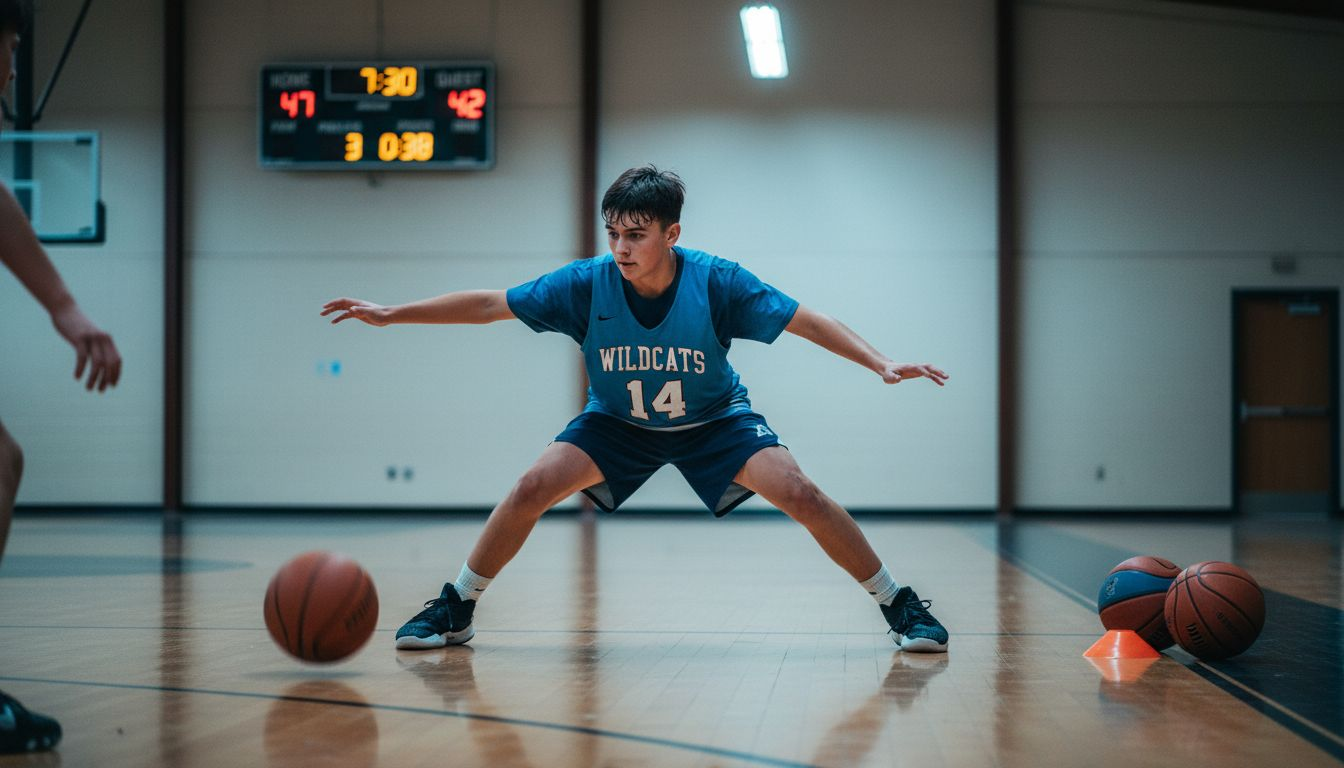
The primary defensive variations include:
Here’s how the main on-ball defensive strategies compare in application and risk:
| Defensive Variation | Best Used Against | Main Benefit | Potential Drawback |
|---|---|---|---|
| Tight Pressure Defense | Quick ball handlers | Forces turnovers | Higher foul risk |
| Containment Defense | Strong drivers | Limits penetration | Allows pull-up jumpers |
| Sagging Defense | Poor outside shooters | Reduces drive opportunities | Open shots for shooters |
| Switch Defense | Teams with frequent screens | Maintains matchup integrity | Can create size mismatches |
| Help Defense | Isolations and rotations | Provides double-team support | Leaves weak side open |
- Tight Pressure Defense: Aggressively guarding the ball handler within arm’s length
- Containment Defense: Positioning to funnel offensive players into less dangerous areas
- Sagging Defense: Giving offensive players space while maintaining defensive positioning
- Switch Defense: Exchanging defensive assignments quickly during offensive player movements
- Help Defense: Supporting teammates by providing secondary defensive coverage
Most coaches teach defensive adjustment strategies that emphasize reading the offensive player’s intentions and body language. Understanding these subtle cues allows defenders to anticipate potential moves and react proactively rather than reactively. This mental preparation is as crucial as physical positioning in creating effective defensive gameplay.
Key Defensive Hand Techniques
- Active hand disruption
- Controlled reach-ins without fouling
- Blocking passing lanes
- Creating deflection opportunities
- Maintaining balanced defensive posture
Successful on-ball defense transforms individual skills into team defensive strength, making every possession a strategic challenge.
Pro Tip: Practice reading offensive players’ hip and shoulder movements during one-on-one drills to improve defensive anticipation and reaction time.
Impact of On-Ball Defense on Team Play
On-ball defense serves as a critical catalyst for transforming individual defensive skills into collective team performance. Defensive skill research demonstrates that effective one-on-one defensive techniques directly influence team success by disrupting offensive strategies and creating scoring opportunities.
The key impacts of strong on-ball defense include:
- Reducing opponent shooting percentages
- Generating turnovers and defensive transition plays
- Forcing offensive players into uncomfortable shooting positions
- Controlling game tempo and momentum
- Creating psychological pressure on opposing teams
Quantitative analysis reveals that teams with superior on-ball defenders consistently outperform their opponents. These defenders do more than simply block shots or contest drives; they fundamentally alter the spatial dynamics of basketball gameplay. Quantitative defensive analysis shows that skilled defenders can reduce shot frequency and efficiency by strategically positioning themselves and reading offensive player movements.
This table outlines ways successful on-ball defense impacts overall team performance:
| Impact Area | Positive Outcome | Example Scenario |
|---|---|---|
| Shooting Efficiency | Lowers opponent field goal rates | Offense forced into contested shots |
| Turnover Creation | Increases fast-break chances | Deflection leads to a layup |
| Game Tempo | Disrupts offensive flow | Opponent struggles to organize |
| Team Morale | Boosts collective energy | Defensive stop fires up the bench |
| Scouting Advantage | Exposes offensive weaknesses | Key scorer denied easy touches |
Strategic Defensive Advantages
- Anticipating offensive player intentions
- Communicating defensive shifts quickly
- Understanding spatial positioning
- Maintaining consistent defensive energy
- Adapting to different offensive styles
Exceptional on-ball defense transforms individual skill into collective team strength, making every defensive possession a strategic battle.
Pro Tip: Develop team defensive communication drills that emphasize reading offensive player body language and coordinating defensive responses.
Developing Players’ Skills Through Defense
Defensive skill development represents a comprehensive approach to building elite basketball players who contribute value beyond traditional scoring metrics. Technical defensive training integrates physical conditioning, cognitive learning, and situational awareness to transform individual athletes into strategic defensive performers.
Key components of defensive skill development include:
- Mastering fundamental defensive stance
- Developing precise footwork techniques
- Enhancing spatial awareness
- Improving reaction times
- Building tactical decision-making skills
- Understanding team defensive strategies
Advanced training methodologies focus on multiple skill dimensions simultaneously. Defensive analytics research demonstrates that systematic training can significantly improve a player’s lateral movement, positioning, and anticipatory skills. These techniques go beyond simple physical drills, emphasizing cognitive understanding of defensive roles and strategic positioning.
Critical Defensive Skill Elements
- Mental preparation and game reading
- Physical conditioning specific to defensive movements
- Video analysis of defensive scenarios
- Scenario-based practice simulations
- Individual and team defensive communication skills
Exceptional defensive players are not born, but carefully developed through structured, intelligent training approaches that challenge both mind and body.
Pro Tip: Implement weekly video review sessions where players analyze their own defensive performances to identify strengths and areas for improvement.
Common Coaching Mistakes to Avoid
Communicating on-ball defensive strategies requires nuanced understanding and strategic approach. Coaching communication strategies are critical in avoiding common pitfalls that can undermine player development and team performance.
Most frequent coaching mistakes in defensive training include:
- Overcomplicating defensive instructions
- Failing to demonstrate proper techniques
- Neglecting individual player strengths
- Using one-size-fits-all defensive approaches
- Lacking constructive feedback mechanisms
- Ignoring mental preparation aspects
- Inconsistent practice of defensive fundamentals
Successful coaches recognize that defensive skill development is a complex process requiring patience, personalization, and persistent communication. Understanding each player’s unique capabilities allows coaches to design targeted defensive training that maximizes individual and team potential. Common coaching errors often stem from rigid training methodologies that do not adapt to player dynamics.
Key Areas for Defensive Coaching Improvement
- Player-specific skill assessment
- Adaptable defensive strategy design
- Continuous technical skill refinement
- Psychological defensive preparation
- Effective performance feedback
Exceptional defensive coaching transforms technical instruction into intuitive player understanding.
Pro Tip: Implement individual player defensive skill assessments quarterly to track progress and customize training approaches.
Elevate Your Team’s On-Ball Defense With Proven Coaching Resources
Struggling to build elite on-ball defenders who can disrupt offensive plays and boost team performance? Understanding key defensive techniques like tight pressure, containment, and help defense is essential, but implementing them consistently can be challenging. Hoop Mentality offers comprehensive solutions including detailed basketball playbooks and progressive basketball drills designed to sharpen defensive skills and improve in-game decision making.

Take control of your defensive strategy today and transform individual skills into cohesive team strength. Visit Hoop Mentality to access practical coaching guides, organized practice plans, and tools that will make teaching on-ball defense easier and more effective. Start developing your players’ anticipation, communication, and positioning right now.
Frequently Asked Questions
What is on-ball defense in basketball?
On-ball defense is a critical defensive strategy where a player directly guards an opponent holding the ball, aiming to prevent scoring by positioning themselves effectively and disrupting plays.
What are the core elements of effective on-ball defense?
The core elements include maintaining a proper defensive stance, staying close enough to contest shots, quick lateral movements, preventing driving lanes, and communicating with teammates.
How does strong on-ball defense impact team performance?
Strong on-ball defense can reduce opponent shooting percentages, generate turnovers, control game tempo, boost team morale, and expose offensive weaknesses, significantly enhancing overall team effectiveness.
What are some common mistakes coaches make when teaching on-ball defense?
Common mistakes include overcomplicating instructions, neglecting individual player strengths, using a one-size-fits-all approach, and inconsistent practice of defensive fundamentals.