

Many coaches think defensive drills just build toughness. They’re wrong. These structured exercises also boost players’ mental defensive IQ by up to 40%, transforming how teams anticipate, rotate, and communicate on defense. This guide reveals exactly how defensive drills develop crucial player skills and elevate overall team performance through proven methods used by successful programs worldwide.
Table of Contents
- The Critical Role of Defensive Drills
- The Impact of Defensive Drills on Player Skills
- Enhancing Defensive Awareness and Basketball IQ
- Building Team Coordination and Communication Through Drills
- Key Defensive Drill Types and Their Benefits
- Common Misconceptions About Defensive Drills
- Practical Implementation of Defensive Drills in Practice
- Conclusion: Maximizing Defense Through Drill Mastery
- Explore Hoop Mentality’s Top Coaching Resources
Key Takeaways
| Point | Details |
|---|---|
| Defensive drills improve both physical and mental skills | Well designed drills can increase defensive effectiveness by approximately 30% through enhanced footwork, positioning, and anticipation. |
| Communication focused drills reduce errors | Teams practicing communication drills commit 15% fewer defensive errors during competitive games. |
| Shell and pressing drills significantly boost performance |
Shell drills increase defensive stops by 18% while |
| Mental defensive development matters more than most realize | Cognitive improvements from drills can represent up to 40% of overall defensive gains. |
| Targeted drill implementation improves game day execution | Structured practice sessions translate directly to better rotations, decision making, and coordination during live competition. |
The Critical Role of Defensive Drills
Defensive drills are structured practice exercises specifically designed to improve individual and team defensive capabilities. These focused activities target core defensive skills that separate winning teams from those constantly struggling to contain opponents.
Every effective defense requires mastery of fundamental skills. Proper footwork enables defenders to stay in front of ball handlers. Correct positioning prevents easy scoring opportunities. Clear communication coordinates team efforts. Sharp anticipation disrupts offensive rhythm.
The benefits of basketball drills extend far beyond physical conditioning. Defensive drills increase defensive IQ by teaching players to anticipate offensive moves through reading body language and positioning cues. This cognitive development proves just as valuable as physical improvements.
Consider how drills contribute to defensive excellence:
- Footwork drills build lateral quickness and balanced stances
- Closeout exercises improve recovery speed and contest quality
- Rotation drills teach help defense timing and positioning
- Communication activities synchronize team defensive efforts
- Decision making scenarios develop quick judgment under pressure
These elements combine to create complete defenders who think as quickly as they move. Players who regularly practice defensive drills make smarter rotations, maintain better positioning, and execute team concepts with precision. The structured repetition builds muscle memory while simultaneously sharpening mental processing speed.
You cannot separate physical and mental defensive development. Both must progress together for maximum effectiveness.
The Impact of Defensive Drills on Player Skills
Footwork forms the foundation of individual defense. Without proper foot positioning and movement patterns, even the most athletic players struggle to contain opponents. Defensive stance drills teach players to maintain low centers of gravity while staying light on their feet.
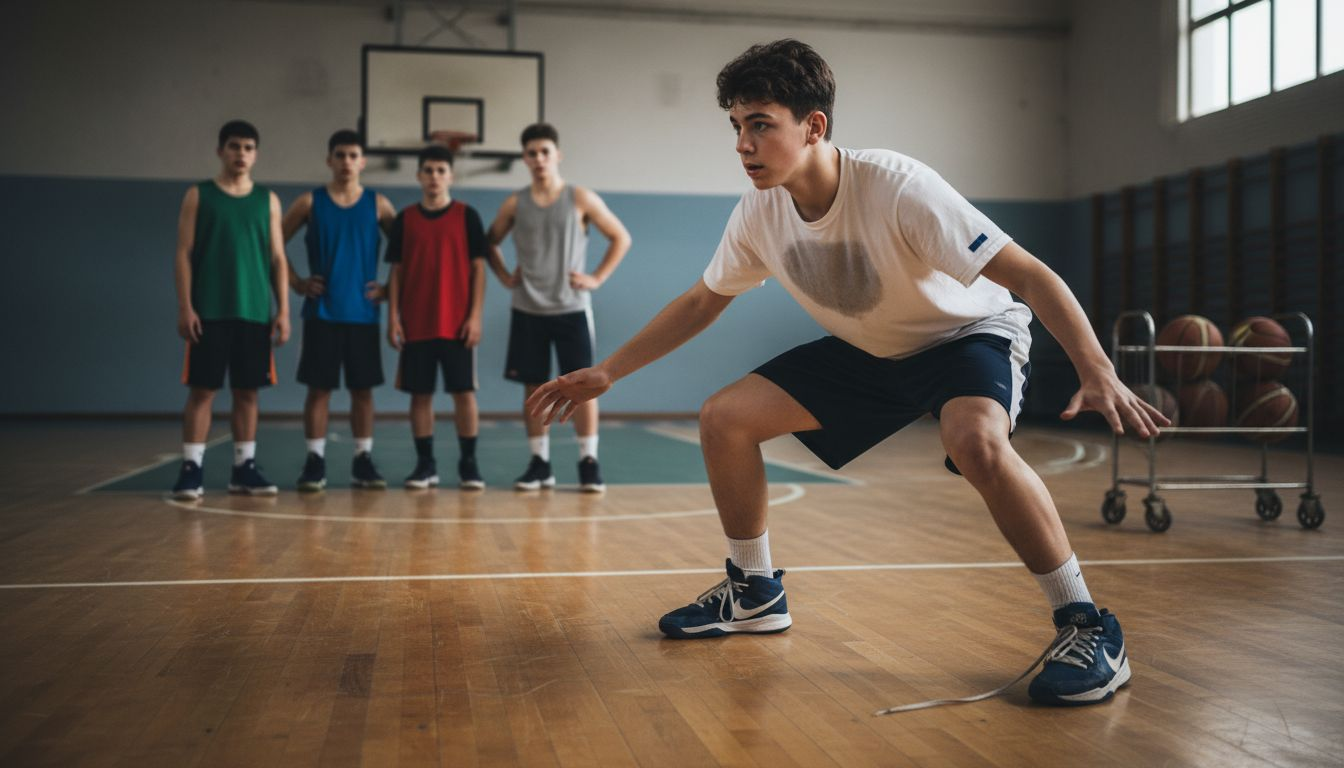
Slide drills specifically target lateral movement quality. Players practice moving side to side without crossing feet or standing upright. Zig zag closeout exercises combine multiple skills, requiring defenders to sprint, break down, and slide in rapid succession. These drills translate directly to game situations.
Individual skill drills also enhance reaction time and closing speed. Quick feet exercises force players to respond to visual or auditory cues instantly. This training reduces the gap between recognizing offensive actions and responding appropriately.
Balanced defensive stances produce multiple benefits beyond mobility. Proper defensive positioning reduces reach in fouls by keeping defenders stable and controlled. Players in balanced stances also secure more rebounds because they maintain position through contact.
Agility drills complement footwork training by improving multi directional movement. Cone drills, ladder exercises, and shadow defense all develop body control at various speeds. Competitive drills boost decision speed by forcing players to react while maintaining proper technique.
Pro Tip: Schedule footwork drills early in practice when players have fresh legs and can focus on technique details. Mental fatigue reduces the quality of movement patterns, so prioritize defensive footwork immediately after warm ups for maximum skill development.
The combination of physical footwork development and mental anticipation creates defenders who both move well and read offenses accurately. Regular defensive drills foster better team communication, leading to fewer breakdowns and more effective rotations throughout games.
Enhancing Defensive Awareness and Basketball IQ
Reading offensive players separates good defenders from great ones. Drills that simulate live game scenarios teach players to recognize offensive cues before moves happen. Hip positioning, shoulder angles, and eye direction all telegraph an offensive player’s intentions.
Anticipation drills force defenders to react to these subtle signals. Players learn which body positions precede drives versus shots. They recognize when offensive players prepare to pass rather than attack. This pattern recognition develops through repetitive exposure in controlled drill environments.
Defensive rotation speed directly impacts team success. Practice drills that simulate defensive rotations improve team defensive recovery by up to 20%. These improvements stem from players understanding help responsibilities before breakdowns occur.
The mental decision making process follows a clear sequence:
- Read the offensive player’s body language and positioning
- Recognize the developing play pattern based on offensive alignment
- Communicate rotational responsibilities to teammates verbally
- Execute the appropriate defensive movement or adjustment
- Close out to contest shots or passes with proper technique
Pressure situations during practice build mental resilience. Competitive drill scenarios where defenders face consequences for mistakes sharpen focus and decision quality. Players learn to process information faster when outcomes matter.
Mental defensive abilities represent a massive component of overall performance. The cognitive skills developed through structured defensive drills often account for 40% or more of measured defensive improvements, demonstrating why physical training alone falls short.
Defense principles become instinctive through proper drill implementation. Players stop thinking about rotations and simply execute them. This automatic response frees mental capacity for reading more complex offensive actions.
Game preparation drills that mirror opponent tendencies accelerate learning further. When players practice defending specific offensive sets or actions, they enter games with established mental frameworks for responding effectively.
Building Team Coordination and Communication Through Drills
Verbal communication during defense prevents confusion and breakdowns. Drills requiring constant talking build this habit into automatic behavior. Players learn to call screens, signal switches, and alert teammates to cutters without conscious thought.
Teams practicing communication focused drills commit 15% fewer defensive errors during competitive games. This reduction stems from clearer role assignments and better coordination of defensive responsibilities.
Non verbal cues also play crucial roles in team defense. Hand signals, eye contact, and body positioning all convey information rapidly during live play. Shell drills specifically train players to recognize and respond to these silent communications.
Clear defensive assignments eliminate hesitation and overlap. When each player knows their specific responsibility within team concepts, rotations happen smoothly. Drills that emphasize role clarity prepare players to execute without confusion during pressure moments.
Team defensive rotations require synchronized movement from all five players. Help defense timing drills teach when to leave assignments to provide support. Closeout priority exercises establish which defender recovers to which shooter after rotations.
Communication drills work best when they replicate game intensity and pace. Walking through rotations builds understanding, but only full speed repetitions create game ready coordination.
Key elements of effective team defensive coordination:
- Consistent terminology that all players understand and use
- Established protocols for common situations like screen defense
- Regular practice of help and recover patterns
- Clear hierarchy for defensive decision making authority
Team member coordination improves dramatically when players practice together consistently. Defensive chemistry develops through shared experiences responding to various offensive actions.
Pro Tip: Require verbal communication on every single defensive possession during drills, even when actions seem obvious. This creates habits that persist into games when communication becomes crucial during chaos and noise.
Synchronized team defense creates defensive systems greater than the sum of individual abilities. Five average defenders who communicate and rotate properly outperform five talented individuals who operate independently.
Key Defensive Drill Types and Their Benefits
Different drill categories develop distinct defensive capabilities. Understanding when and how to use each type maximizes practice efficiency and player development.
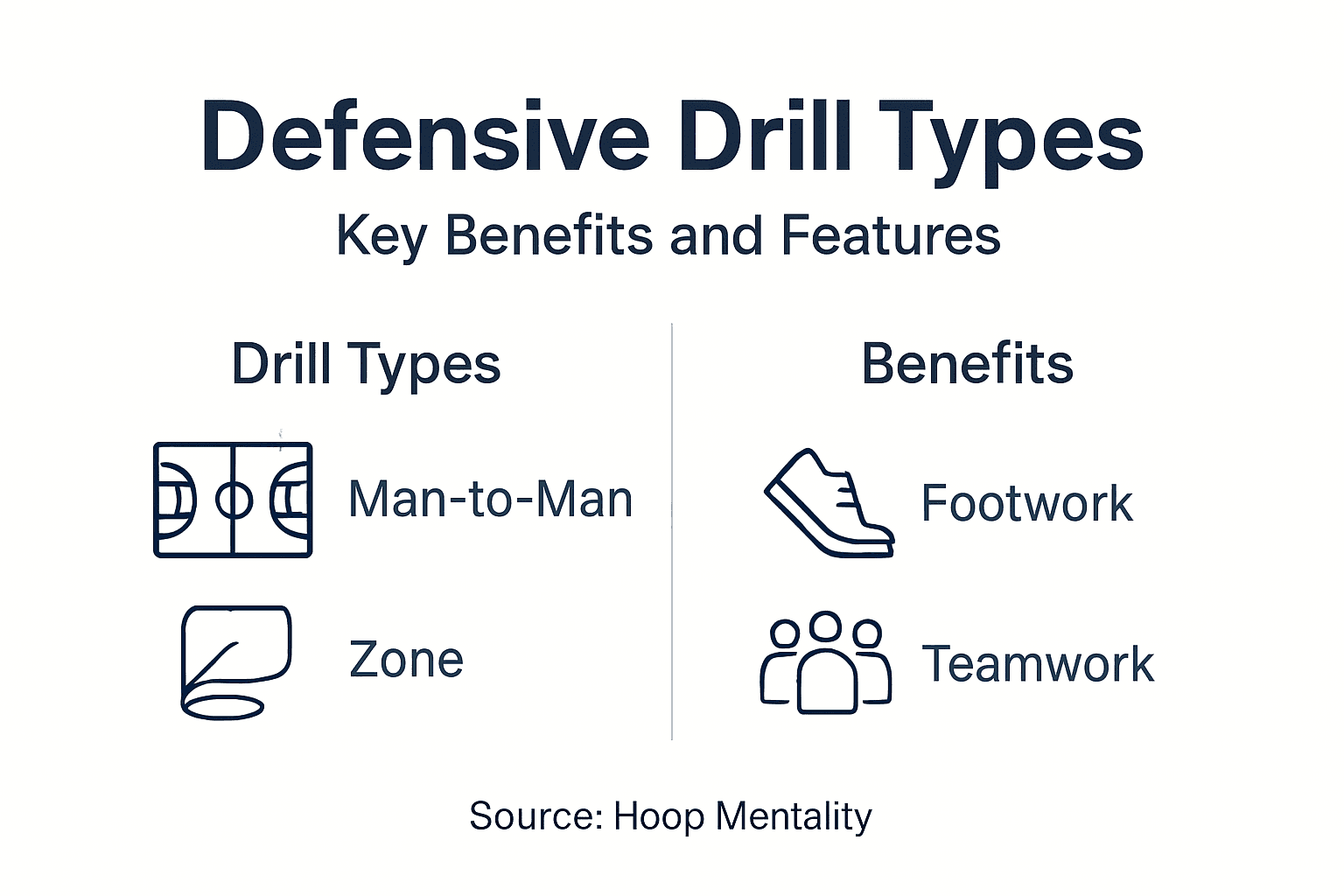
Man to man drills focus on individual matchup situations. These exercises teach on ball defense, denying passes, and fighting through screens. Closeout drills and one on one scenarios fall into this category. Physical demands include lateral quickness and stamina. Cognitive requirements involve reading the ball handler and anticipating moves.
Shell and zone drills emphasize team positioning and help defense. Four on four shell drill variations teach proper spacing and rotation timing. Teams using shell drills increase defensive stops by approximately 18%. The shell drill benefits extend to both man and zone defensive schemes.
Press and trapping drills develop full court pressure capabilities. These exercises train aggressive double team execution and trap rotations. Pressure drills lead to an average 12% increase in forced turnovers during games. Press defense drills prepare teams to disrupt offensive rhythm.
| Drill Type | Key Features | Physical Demands | Cognitive Demands | Primary Benefits |
|---|---|---|---|---|
| Man to Man | Individual matchups, closeouts, deny defense | High lateral quickness, sustained effort | Reading offensive moves, anticipation | Improved on ball defense, better individual positioning |
| Shell/Zone | Team rotations, help defense, spacing | Moderate intensity, frequent movement | Understanding team concepts, rotation timing | Enhanced help defense, coordinated team positioning |
| Press/Trap | Full court pressure, double teams, traps | Extreme cardiovascular demand | Quick decision making, communication | Increased turnovers, disrupted offensive flow |
Defensive drill types should match your team’s defensive philosophy. Teams emphasizing man principles need more individual drill work. Zone oriented teams benefit from extended shell drill time. Pressing teams require specialized full court exercises.
Balancing drill variety prevents staleness while developing complete defensive skill sets. Rotating through different drill types weekly keeps players engaged and challenged.
Common Misconceptions About Defensive Drills
Many coaches hold false beliefs about defensive drill effectiveness and application. Correcting these misconceptions leads to better practice design and improved outcomes.
Myth number one claims defensive drills only develop physical capabilities. Reality shows mental defensive abilities can represent up to 40% of defensive performance improvements from structured drill work. Anticipation, communication, and decision making all improve through proper drill implementation.
Another common misconception suggests defensive drills benefit only elite level players. Truth reveals that age appropriate defensive exercises help players at every skill level. Youth players especially benefit from building proper defensive habits early. Beginner defenders need fundamental drills even more than advanced players do.
Some coaches believe drilling alone guarantees defensive success. This oversimplification ignores the necessity of combining drills with game experience and tactical instruction. Drills build skills, but players must learn when and how to apply those skills within team defensive systems.
Additional false beliefs include:
- Defensive drills require minimal planning or structure
- More drilling always produces better results regardless of quality
- Individual defensive improvement automatically translates to team success
- Physical toughness matters more than technical skill development
Understanding these misconceptions helps you design more effective practice sessions. Defensive drills must target both physical and mental skills. They should match player development levels while progressively increasing difficulty. Quality practice with clear objectives outperforms mindless repetition every time.
The most successful defensive programs integrate drills thoughtfully within comprehensive development plans rather than treating them as isolated activities.
Practical Implementation of Defensive Drills in Practice
Strategic drill implementation transforms defensive capabilities systematically. Follow this proven process to maximize results.
Step one requires honest assessment of current defensive strengths and weaknesses. Watch game film identifying specific breakdown patterns. Note whether issues stem from individual skill gaps, communication failures, or conceptual misunderstandings. This analysis guides drill selection.
Step two involves choosing drills targeting identified deficiencies. If closeouts create problems, prioritize sprint and closeout exercises. When rotations break down, emphasize shell drill variations. Match drill difficulty to player capabilities while maintaining appropriate challenge levels.
Step three focuses on progressive implementation during practice. Introduce new drills at reduced speed, ensuring players understand objectives and techniques. Gradually increase pace and competitive intensity as proficiency improves. Practice planning should allocate sufficient time for proper drill execution without rushing.
Step four evaluates impact through controlled scrimmages and player feedback. Observe whether practiced skills transfer to live situations. Adjust drill selection and coaching points based on results. Consistent evaluation prevents wasted practice time on ineffective activities.
Step five emphasizes consistent incorporation for skill reinforcement. Defensive abilities deteriorate without regular practice. Basketball practice plan templates should include defensive drill blocks in every session.
Pro Tip: Simulate game pressure by adding consequences to competitive drills. Losers run sprints or winners earn water breaks first. This intensity replicates the mental pressure players face during actual games, preparing them for high stakes defensive possessions.
Balance remains critical throughout implementation. Excessive drilling without application causes boredom and disengagement. Insufficient drilling prevents skill mastery. Finding the right balance requires knowing your team and adjusting based on their responses and development pace.
Conclusion: Maximizing Defense Through Drill Mastery
Defensive drills develop the complete skill set required for elite team defense. Physical capabilities like footwork and agility combine with mental skills including anticipation and communication. Teams that prioritize structured defensive practice gain measurable advantages in stops, turnovers, and overall performance.
The evidence clearly demonstrates significant improvements from targeted drill work. Better rotations, fewer errors, and increased defensive IQ all result from consistent practice. Coaches who implement these principles systematically outperform those relying on natural talent alone.
Your competitive edge starts with commitment to defensive excellence. Begin implementing focused defensive drills today. Select exercises matching your team’s needs, practice them with intensity, and watch your defense transform into your greatest strength.
Explore Hoop Mentality’s Top Coaching Resources
Building elite team defense requires more than just knowing which drills to run. You need comprehensive systems for teaching fundamentals, organizing practices, and developing complete players.

Hoop Mentality provides professional coaching resources designed specifically for coaches seeking structured, proven systems. Our basketball fundamentals guide breaks down essential defensive concepts into teachable progressions. The top coaching resources collection includes detailed practice plans, drill libraries, and strategy guides developed through real coaching experience. Our team building guide helps you create cohesive defensive units that communicate and execute under pressure. These tools save preparation time while improving your coaching confidence and team results.
FAQ
What are defensive drills in basketball?
Defensive drills are structured exercises designed to improve players’ defensive skills such as footwork, positioning, communication, and anticipation. They help teams defend more effectively during games by building both physical capabilities and mental defensive awareness through repetitive practice.
How do defensive drills improve team communication?
Communication focused drills train players to verbalize switches, rotations, and coverage responsibilities consistently. This regular practice reduces defensive errors and boosts coordination during live play by making communication automatic rather than something players must remember under pressure.
Which defensive drills best develop mental defensive skills?
Rotational drills, live scenario simulations, and decision making exercises best improve mental defensive skills by forcing players to read opponents and react quickly. These drills create game like pressure situations that develop anticipation and judgment abilities essential for high level defense.
Can defensive drills benefit youth or beginner players?
Yes, age appropriate defensive drills help youth and beginners build essential defensive fundamentals early in development. Starting with proper techniques prevents bad habits while fostering good defensive instincts that serve players throughout their basketball careers.
How often should coaches incorporate defensive drills into practice?
Consistent incorporation of defensive drills in every practice session yields the best long term improvements. Balance defensive work with offensive skills, conditioning, and scrimmages while ensuring adequate rest. Daily defensive drill work builds habits and maintains skill sharpness throughout the season.
Recommended
- Defensive Rotations Explained: Boosting Team Defense – Hoop Mentality
- How to Teach Defense Principles for Winning Teams – Hoop Mentality
- Shell Drill in Basketball: Transforming Team Defense – Hoop Mentality
- 7 Essential Defensive Adjustment Tips for Basketball Coaches – Hoop Mentality
- Why Johnny Ryan’s Art Style Makes the Offense Worse (and Better) – The Mansion Press