

TL;DR:
- Effective basketball leadership relies on transformational behaviors like individualized support, inspiring vision, and psychological safety. These qualities foster team cohesion, reduce burnout, and enhance player resilience through consistent, genuine interactions. Applying these principles daily builds trust, accountability, and sustainable success on and off the court.
Most basketball coaches assume that being a great team leader means firing up players at halftime or running a tight ship with strict rules. Neither is enough. Research now shows that the qualities separating average coaches from transformational ones have more to do with psychological dynamics, trust, and individualized attention than with volume or authority. This article breaks down the evidence on what truly defines a great team leader in basketball, and gives you concrete tools to apply it starting with your next practice.
Table of Contents
- Key takeaways
- What a great team leader actually looks like
- Psychological safety and why it changes everything
- Supportive vs. controlling coaching and player fatigue
- How coach knowledge protects your team and yourself
- Practical steps to lead your team better starting now
- My honest take on becoming a truly great coach
- Take the next step with Hoopmentality
- FAQ
Key takeaways
| Point | Details |
|---|---|
| Transformational leadership drives cohesion | Inspiring vision and individual support build team unity more effectively than authority alone. |
| Psychological safety unlocks performance | Players who feel safe to admit mistakes learn faster and perform better under pressure. |
| Controlling coaching causes burnout | Authoritarian behavior increases psychological fatigue and reduces player engagement over time. |
| Coach knowledge protects against burnout | Credible expertise strengthens relationships and psychological safety, reducing burnout for both coaches and players. |
| Practical habits beat theory | Daily application of supportive feedback, autonomy, and genuine care produces measurable results. |
What a great team leader actually looks like
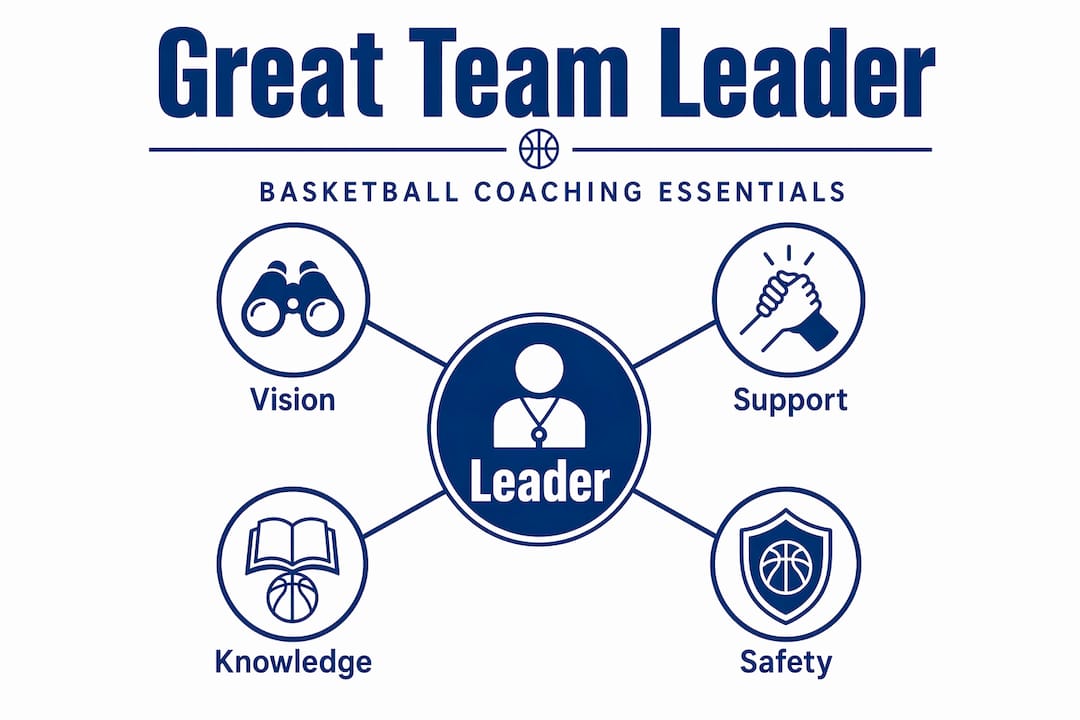
Most coaches have been told that leadership is about energy, presence, and command. That framing is incomplete. The research on transformational leadership in sports shows something more specific: the coaches who consistently build cohesive, high-performing teams operate through four distinct behaviors.
- Idealized influence. You model the behavior you expect. Players watch everything. When your commitment, professionalism, and composure match your words, you earn the credibility to hold them accountable.
- Inspirational motivation. You articulate a clear, compelling vision for the team. Not just “win the championship,” but why this group, this season, and what they are building together.
- Intellectual stimulation. You challenge players to think, solve problems, and contribute ideas. Coaches who ask “what did you see on that play?” instead of only directing build smarter, more adaptable athletes.
- Individualized consideration. You treat each player as a person with unique needs, goals, and pressures. A veteran guard needs different feedback than a freshman center.
These are the qualities of effective leaders across sports contexts, not just basketball. And the data is clear: mental toughness mediates team cohesion by 16.34% in teams led by transformational coaches. That means the mental foundation your leadership builds is directly responsible for how well your team holds together when games get tight.
Applying these behaviors does not require a personality overhaul. It requires consistency. Check in individually with two or three players every practice. Frame team goals around shared identity, not just outcomes. When players see you solve problems out loud, they learn to do the same.
Pro Tip: Keep a short notebook or phone note with one observation per player per week. After a month, you will have a detailed picture of who needs more challenge, who needs more support, and where your individualized consideration has gaps.
Psychological safety and why it changes everything
Here is something counterintuitive: high-performing teams report more errors than low-performing ones. Not because they make more mistakes, but because they feel safe enough to admit them. Amy Edmondson’s research identifies psychological safety as the single most important factor in team effectiveness, and it translates directly to the basketball court.
When players fear judgment for a wrong read or a missed rotation, they stop communicating. They hide mistakes until they become patterns. That silence costs games.
Building psychological safety as a coach comes down to specific behaviors:
- Respond to mistakes with curiosity, not punishment. “What happened there?” beats “What were you thinking?”
- Normalize uncertainty. Tell your players when you are not sure about a call or a scheme. It signals that honesty is valued.
- Give non-punitive feedback consistently. Supportive coaching behaviors predict psychological safety with a strong effect (β=0.56), meaning your daily feedback style directly shapes how safe players feel.
- Address disrespect among players quickly. Psychological safety is fragile. One teammate who mocks errors can undo months of trust-building.
The payoff is significant. When athletes feel psychologically safe, their self-efficacy and resilience go up. They take on harder challenges, recover faster from setbacks, and stay engaged when the season gets difficult. These are the coaching feedback strategies that separate teams that plateau from teams that keep growing.
Supportive vs. controlling coaching and player fatigue
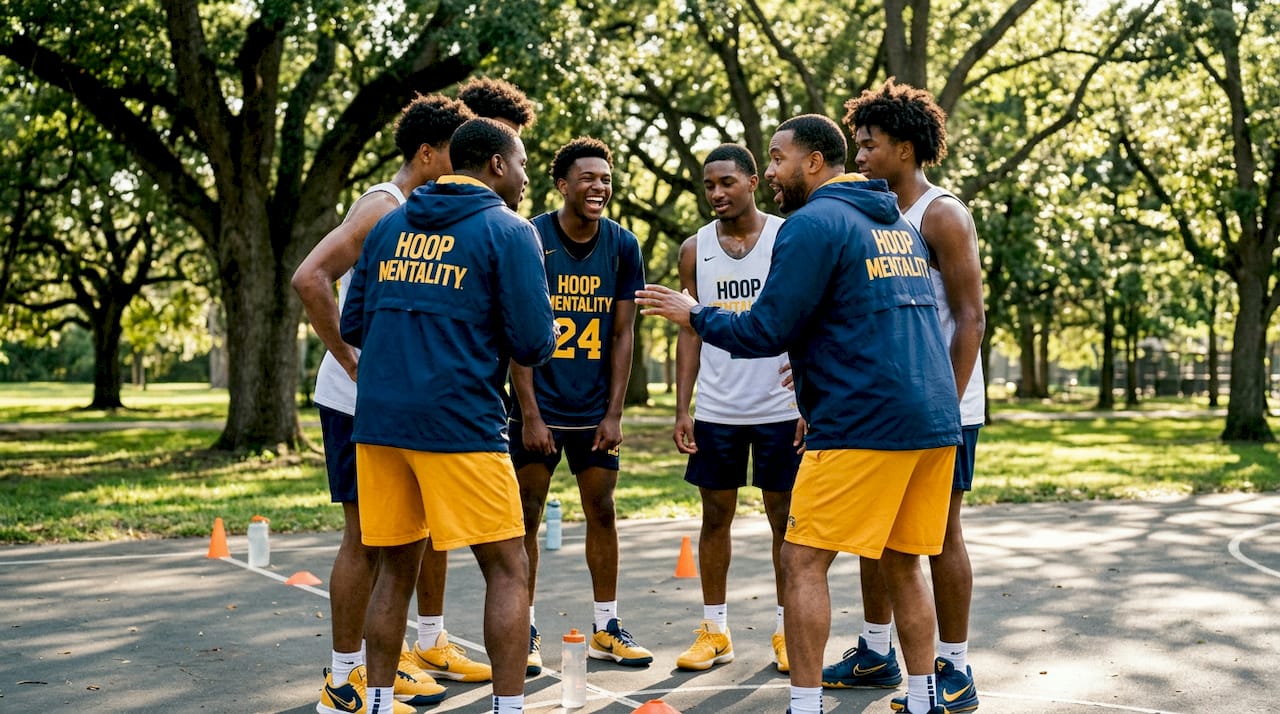
The word “authoritarian” sounds extreme, but controlling coaching behaviors are common and subtle. Micromanaging rotations, publicly criticizing effort, withholding praise, and using playing time as punishment all fall in this category.
Here is what the research shows about their effects:
- Psychological fatigue increases. Authoritarian coaching correlates directly with higher psychological fatigue and lower engagement. Players stop caring because they feel no ownership over their performance.
- Self-efficacy drops. When coaches control every decision, players never build confidence in their own judgment. Come playoff time, that gap shows.
- Engagement collapses. All coaching dimensions except authoritarian behavior correlate with higher player engagement. The research is not subtle on this point.
- Burnout risk rises. Controlling leadership drives emotional fatigue, which erodes long-term performance and mental health in athletes.
Shifting toward autonomy-supportive coaching does not mean losing authority. You still set standards, make personnel decisions, and run practice. The shift is in how you communicate those decisions. Give players rationale. Ask for input where you can. Acknowledge their perspective even when you go a different direction.
Pro Tip: After your next practice, count how many times you gave a directive versus asked a question. If your directives outnumber questions by 10 to 1 or more, you are likely operating in a controlling mode without realizing it. Adjusting that ratio is one of the fastest ways to shift your team climate.
NBA coaches like J.B. Bickerstaff demonstrate what this looks like in practice: adapting communication with high emotional intelligence, knowing when to push and when to support, and building environments where players feel capable rather than corrected.
How coach knowledge protects your team and yourself
This section often gets skipped in leadership conversations, but it matters more than most coaches realize. Coach knowledge links directly to reduced burnout, but not through a straight line. The path runs through psychological safety and coach-athlete relationship quality.
When players can see that you know the game, they trust your feedback. That trust creates a relationship where accountability feels fair rather than arbitrary. And that relationship is what makes psychological safety possible at scale.
“Inauthentic care leads to player disengagement. Effective coaches build trust via genuine one-on-one interactions.” (Jordan Ott coaching profile)
The behaviors that build this kind of credibility are concrete:
- Know your players’ individual situations. Not just their on-court tendencies, but what they are working toward, what pressures they carry, and what motivates them off the court.
- Be visibly prepared. Show up to practice with a plan. Players notice when you are making it up as you go.
- Follow through on what you say. Consistency between your words and actions is the foundation of leadership skills for teams.
- Protect your own mental health. Coach burnout is a real outcome, and it is connected to how well you manage relationships and create safety for your staff and players.
Strong coach-athlete relationships do not happen by accident. They are built through repeated small interactions: a quick check-in before a shoot-around, honest feedback delivered with care, and developing leadership in players so the culture does not depend entirely on you.
Practical steps to lead your team better starting now
Knowing the research is one thing. Using it at practice on Tuesday is another. Here is a direct comparison of what less effective versus more effective leadership looks like in common coaching situations.
| Situation | Less effective approach | More effective approach |
|---|---|---|
| Player makes a mental error | “How many times do I have to tell you?” | “Walk me through what you saw. What would you do differently?” |
| Pre-game preparation | Rigid scripted speech, same every game | Address team vision and individual roles specific to tonight |
| Giving feedback on performance | Generalized praise or criticism | Specific, behavior-focused feedback tied to individual goals |
| Player shows frustration | Dismiss or punish the emotion | Acknowledge it, address the cause, refocus on what they control |
| Building team cohesion | Rely on group punishments or drills | Create shared experiences and identity through goals and accountability |
The five habits that matter most for best practices for team leadership in basketball are straightforward once you know what to look for. Build mental toughness by framing adversity as development, not failure. Apply transformational behaviors daily, not just in big moments. Make psychological safety a practice standard, not a retreat-day concept. Replace control with structure and rationale. And invest time in one-on-one relationships every single week.
None of this requires more hours. It requires different habits inside the hours you already have.
My honest take on becoming a truly great coach
I’ve watched a lot of coaches confuse intensity with effectiveness. High decibels, constant correction, and iron-fisted control feel like leadership. They look like engagement. But in my experience, the coaches whose players run through walls for them are the ones who actually know their players and let that knowledge show.
What I’ve learned is that the hardest shift is not adopting new techniques. It’s letting go of the belief that loosening control means losing standards. It doesn’t. An autonomy-supportive environment still has high expectations. It just earns buy-in instead of demanding compliance.
I’ve also seen coaches burn out at an alarming rate because they tried to carry the entire culture alone. When you build a team that values psychological safety and genuine relationships, accountability becomes distributed. Players hold each other. The culture sustains itself when you have a bad week.
The traits of successful team leaders in this sport are not the loudest ones in the room. They are the most consistent. Show up prepared. Care visibly. Know the game and share that knowledge. Those three things compound over a season in ways that no single halftime speech ever will.
— Dejan
Take the next step with Hoopmentality
The principles in this article work best when they are backed by structure. Hoopmentality’s resources are built to help you put these ideas into practice immediately. The Game Preparation Guide gives you a weekly practice plan designed around clarity and team cohesion, so your players always know what to expect and why. For coaches developing big men, the Big Man Dual Action Drill builds individual skill alongside the kind of mental toughness that holds teams together under pressure. Both tools are built by coaches with real experience. They save time and deliver structure your players can feel.
FAQ
What makes a great team leader in basketball?
A great team leader in basketball combines transformational leadership behaviors like individual support, inspiring vision, and intellectual challenge with psychological safety and genuine care for each player. Research shows these qualities directly improve team cohesion and player performance.
How does psychological safety improve team performance?
Psychological safety enables players to admit mistakes and communicate openly, which accelerates learning and reduces errors that hurt performance. Teams with high psychological safety are more resilient and engaged under pressure.
What is the difference between supportive and controlling coaching?
Supportive coaching builds player self-efficacy, resilience, and engagement. Controlling coaching, including public criticism and punishing mistakes, increases psychological fatigue and reduces long-term motivation.
Can transformational leadership actually reduce burnout?
Yes. Coach knowledge combined with strong relationships and psychological safety creates a pathway that reduces burnout for both coaches and athletes, making leadership more sustainable over a full season.
How do you develop leadership skills as a basketball coach?
Start with daily habits: check in individually with players, give specific behavior-based feedback, and create space for players to think and solve problems. Consistency in these small interactions builds the trust that defines effective characteristics of a strong leader over time.