

TL;DR:
- Player rotations are strategic substitutions that manage fatigue, sustain intensity, and provide tactical advantages during a game.
- Planning rotations before games eliminates bias and ensures all players are mentally prepared for their roles, improving overall performance.
Player rotations are defined as planned substitutions that cycle athletes in and out of a game to manage fatigue, maintain intensity, and create tactical advantages. The role of player rotations goes far beyond simply giving players a rest. Rotations control the physical and mental state of your entire roster across 40 minutes of high-intensity play. Modern coaching philosophies in 2026 treat rotation timing as a performance variable, not an afterthought. Coaches who plan substitutions with the same rigor they apply to plays and sets consistently get more from their full roster.
What is the role of player rotations in game performance?
Player rotations are a disciplined tactic to adjust team mode and avoid fatigue-induced performance dips without relying excessively on timeouts. That framing matters because it shifts how you think about substitutions. You are not weakening your lineup when you rotate. You are dynamically shifting your team’s energy state to sustain speed, rim protection, and defensive intensity across all four quarters.
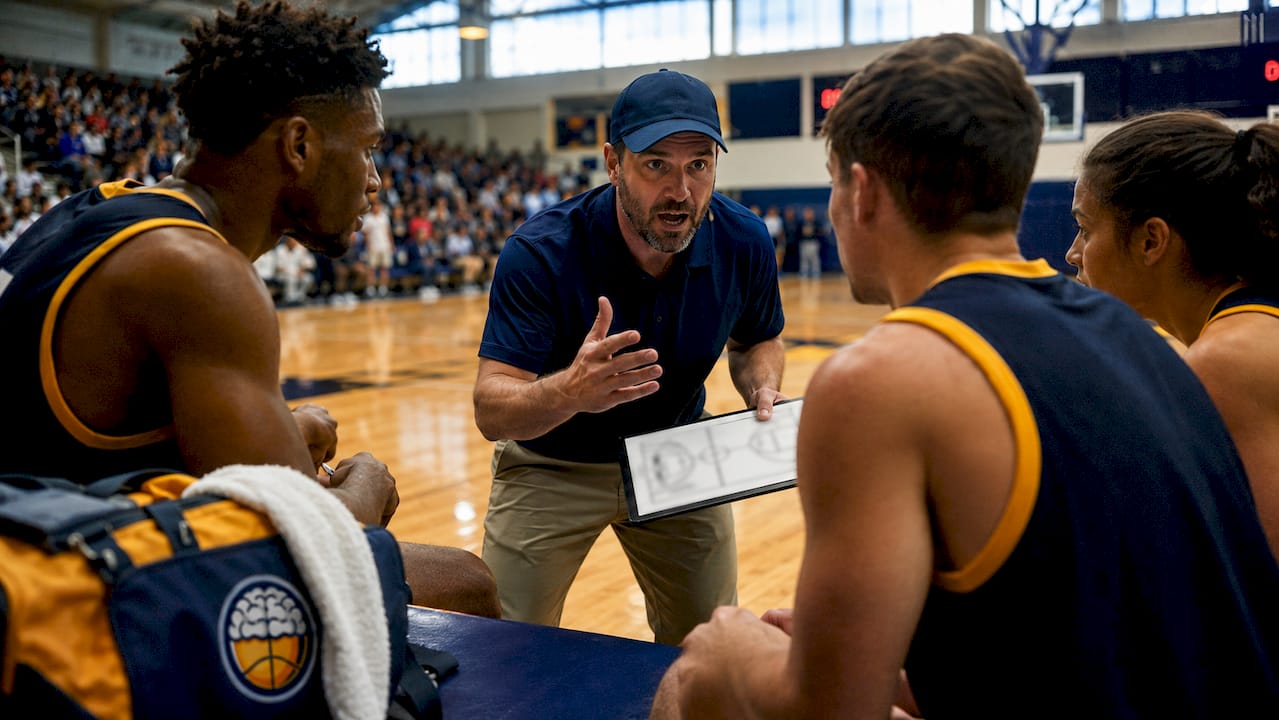
Rotation management also covers more than physical recovery. It includes tactical adjustments, matchup changes, and foul management. A player sitting with two early fouls is a rotation decision. A defender who cannot guard a specific ball handler is a rotation decision. Substitution choices involve evaluating defensive cost, possession reliability, and game arithmetic like foul trouble and conditioning, not just talent or shooting performance. That complexity is why pre-game planning beats improvised decisions every time.
How do player rotation strategies impact physiological performance?
The length of a rotation window directly affects how well a player recovers before re-entering the game. Shorter rotation windows of 1–2 minutes preserve parasympathetic activity and support rapid recovery during high-intensity play. Longer rotations of 3–4 minutes increase cumulative cardiovascular stress and reduce the body’s ability to regulate itself quickly. Heart rate variability and perceived exertion both confirm that shorter intervals produce better autonomic regulation.
What this means for you as a coach is concrete. A player who sits for 90 seconds returns with a lower heart rate and sharper focus than one who sits for four minutes and mentally drifts. The physiological case for micro-rotations is strong, particularly in the second half when fatigue compounds. Here is what shorter rotation windows deliver:
- Maintained parasympathetic activity: The nervous system stays in a recovery-ready state, allowing faster return to peak output.
- Lower perceived exertion on re-entry: Players report feeling less taxed when they return after brief, structured rest periods.
- Reduced cardiovascular stress: Shorter bench time prevents the spike in heart rate that comes with extended inactivity followed by sudden high-intensity play.
- Better defensive intensity: Fresh legs directly translate to faster closeouts, better positioning, and sustained pressure.
Modern basketball teams treat fatigue as a competitive variable managed through planned rotations integrated with nutrition, sleep, and technology. That systemic view separates programs that stay competitive deep into a season from those that fade.
Why should coaches plan rotation orders before games?
Pre-game rotation planning removes bias from the equation. Coaches naturally favor keeping stronger players on the court longer, which creates two problems. Starters accumulate excessive fatigue, and bench players never get the game-ready conditioning they need. Planning rotation orders in advance forces you to commit to intervals before emotion and game pressure cloud your judgment.
Youth and adult players need different rotation windows. Industry guidelines recommend youth coaches use 6–10 minute rotation windows, since shorter intervals can complicate game management at that level while longer rotations risk players losing focus. Adult and semi-professional players benefit from tighter intervals tied to physiological data. Here is a simple pre-game planning process:
- Set your rotation order in writing. List every player and their expected entry and exit points before tip-off.
- Assign role-specific intervals. Starters may play 8–10 minute stretches; rotation players enter on fixed time slots.
- Account for foul trouble and matchups. Build in contingency slots for players who pick up early fouls.
- Communicate the plan to players. Every player should know when they are entering before the game starts.
- Review and adjust at halftime. Use the break to recalibrate based on actual game flow, not gut feeling.
Pro Tip: Tell each player their rotation slot before warm-ups. Players who know when they are entering stay mentally engaged on the bench instead of watching passively. This one habit reduces substitution hesitation and improves readiness.
Communicating the rotation plan also builds trust. Players who understand their role and timing perform better when they enter the game. Uncertainty about playing time is one of the fastest ways to lose bench player engagement.
What workload differences exist among starters, rotation players, and bench players?
Starters accumulate significantly higher game loads and high-intensity sprint demands than rotation and bench players. Research on semi-professional basketball shows effect sizes for load differences between starters and bench players at 1.65, with sprint demand differences at 1.32. Those are large gaps. They mean your bench players are not physically prepared for the intensity they face when they enter a close game in the fourth quarter.
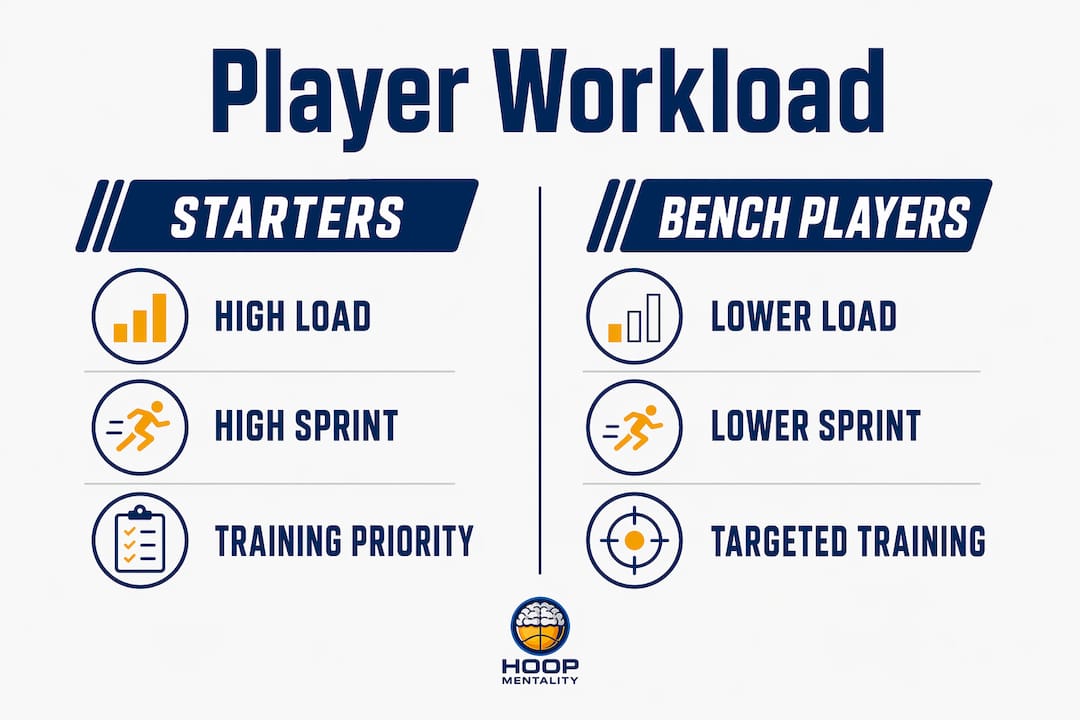
This workload gap has direct implications for how you structure practice and training rotations. Bench players need targeted high-intensity work to simulate game demands they rarely accumulate during actual play. Coaches who prepare bench players for high-intensity moments close this readiness gap before it becomes a liability in a playoff game.
| Player role | Relative game load | Sprint demand level | Training priority |
|---|---|---|---|
| Starter | High | High | Recovery and load management |
| Rotation player | Moderate | Moderate | Conditioning and readiness |
| Bench player | Low | Low | High-intensity simulation work |
Load management today requires thinking multiple games ahead. Incorporating recovery into your rotation plan, not just your practice schedule, sustains player availability across a full season. A starter playing 36 minutes in game one may need a reduced role in game two. Building that flexibility into your rotation system before the season starts is the mark of a prepared coaching staff.
What are best practices for implementing effective player rotations?
The most reliable rotation systems use fixed time slots rather than fatigue-based substitutions. Fixed intervals remove guesswork and prevent the common coaching error of leaving a tired player on the court because the game situation feels too important to make a change. Fixed time slots also ensure fair play, particularly in youth basketball, where development and equal opportunity matter as much as winning.
The “stagger pattern” is one of the most effective frameworks used at the professional level. It ensures your two best players rarely share the same rest period, so at least one primary playmaker anchors the lineup at all times. This maintains offensive stability during substitutions and prevents the lineup from collapsing when your top scorer sits.
The “On Deck” system is equally practical. It physically marks where the next player waits to enter the game, which prevents mental check-out and improves readiness. Players who know they are entering next stay locked in. Players without a clear cue tend to drift mentally. Here is how to build a practical rotation system:
- Use the stagger pattern for your top two players. Schedule their rest periods so one is always on the court.
- Implement an On Deck position. Designate a physical spot on the bench where the next substitution waits.
- Track minutes in real time. Use a simple spreadsheet or a practice planning tool to log actual playing time against your plan.
- Build in defensive substitution triggers. Define specific matchup scenarios that automatically prompt a substitution regardless of the time slot.
- Review rotation data after every game. Compare planned intervals against actual minutes to identify where the plan broke down.
Pro Tip: After each game, compare your planned rotation sheet against actual minutes logged. The gaps between plan and reality reveal your coaching tendencies, including which players you unconsciously favor and which substitutions you delay under pressure.
Defensive rotation strategies also tie directly into substitution timing. A fresh defender entering at the right moment can change the outcome of a possession. Treating defensive substitutions as a planned event rather than a reactive one gives your team a consistent edge.
Key takeaways
Effective player rotation management combines physiological science, pre-game planning, and structured systems to sustain team performance and close the readiness gap between starters and bench players.
| Point | Details |
|---|---|
| Shorter rotation windows work better | 1–2 minute intervals preserve recovery and reduce cardiovascular stress compared to 3–4 minute windows. |
| Plan rotations before tip-off | Written rotation orders eliminate bias and keep bench players mentally engaged throughout the game. |
| Workload gaps are large and real | Starters carry significantly higher sprint and load demands, so bench players need targeted high-intensity training. |
| Stagger your top players | Never rest your two best players at the same time; keep one primary playmaker on the court at all times. |
| Fixed systems beat improvised decisions | The On Deck system and fixed time slots reduce hesitation, improve fairness, and prevent mental disengagement. |
What I’ve learned about rotations that most coaches get wrong
Most coaches treat rotations as a reactive tool. A player looks tired, so they pull him. The game gets tight, so they leave the starters in. That approach feels logical in the moment, but it consistently produces the same outcome: starters who are gassed in the fourth quarter and bench players who are not ready when they finally enter.
The shift that changed how I think about rotation management was treating it as a system, not a judgment call. When you commit to a rotation plan before the game, you remove yourself from the equation at the worst possible moment. Game pressure distorts perception. A coach who believes in a player will always find a reason to leave him on the court one more minute. A written plan does not make that mistake.
The other thing most coaches underestimate is the communication side. Players who know their rotation slot before tip-off perform better when they enter. That is not a soft observation. It is a direct result of mental readiness. A player who has been told “you are entering at the 4-minute mark of the second quarter” is already preparing mentally. A player who is surprised by a substitution is not.
Load management also extends beyond the current game. Thinking about your rotation in terms of the next three games, not just tonight, changes which decisions you make. A star player at 80% effort across four games wins more than a star player at 100% for two games and injured for two. That math is simple. Applying it consistently is the hard part.
— Dejan
Hoop Mentality’s tools for managing player rotations
Planning rotations well requires the right structure. Hoop Mentality builds coaching resources specifically for this kind of organized, system-based approach.

The Basketball Template Bundle for Coaches includes lineup and rotation planning tools built from real coaching experience. You get templates that cover pre-game rotation orders, load tracking, and substitution frameworks you can use at any level. Each template is ready to use and easy to adapt to your team’s specific needs. Coaches who use structured templates spend less time making decisions under pressure and more time coaching. Visit Hoop Mentality to see the full range of resources available for your program.
FAQ
What is the role of player rotations in basketball?
Player rotations are planned substitutions that manage fatigue, maintain defensive intensity, and create tactical advantages throughout a game. They are a disciplined system, not a reactive response to tired players.
How long should a player rotation interval be?
Shorter intervals of 1–2 minutes better preserve recovery and autonomic regulation compared to 3–4 minute windows, which increase cardiovascular stress. Youth players typically benefit from 6–10 minute rotation windows.
Why does pre-game rotation planning matter?
Pre-game planning removes coaching bias and ensures bench players know their role before tip-off, which directly improves their mental readiness and performance on entry.
How do workload differences affect rotation decisions?
Starters accumulate significantly higher game loads and sprint demands than bench players, with effect sizes of 1.65 and 1.32 respectively. Bench players need targeted high-intensity training to close that readiness gap.
What is the stagger pattern in rotation management?
The stagger pattern schedules rest periods so your two best players never sit at the same time, keeping at least one primary playmaker on the court to maintain offensive stability during substitutions.