

What makes one substitution pattern more effective than another during a heated basketball game? For youth and high school coaches, mastering strategic player management can mean the difference between a gritty win and a late-game collapse. Substitution patterns do more than swap tired players—they set the pace, manage energy, and keep your team sharp. This guide breaks down the key ideas and smart strategies you need to build smarter rotations and keep your players ready for every challenge.
Table of Contents
- Defining Basketball Substitution Patterns
- Types of Substitution Patterns and Rotations
- Strategic Purposes Behind Substitutions
- Legal Rules and Game Procedures
- Balancing Player Development and Competition
- Common Mistakes and How to Avoid Them
Key Takeaways
| Point | Details |
|---|---|
| Effective Substitution Patterns | Substitutions are strategic maneuvers that influence team performance and game outcomes through careful player management and energy distribution. |
| Types of Substitution Strategies | Coaches utilize various sophisticated patterns such as Load Management Rotations and Tactical Matchup Rotations to enhance gameplay effectiveness. |
| Legal Procedures for Substitutions | Understanding and adhering to official substitution rules is crucial for maintaining game integrity and preventing penalties during play. |
| Balancing Development and Competition | Coaches must integrate emerging talent into gameplay without compromising team success by monitoring performance and creating safe growth environments. |
Defining Basketball Substitution Patterns
Basketball substitution patterns represent strategic player rotations designed to optimize team performance and manage player energy throughout a game. These calculated switches go far beyond simply replacing tired athletes - they are intricate tactical maneuvers that can dramatically influence game dynamics.
Substitution strategies are fundamentally about player management and strategic energy distribution. Researchers analyzing professional league substitutions have discovered that precise player rotations can significantly impact scoring performances across different game quarters.
Key considerations for effective substitution patterns include:
- Player fatigue levels
- Individual player skill sets
- Current game score and momentum
- Tactical matchups against opposing team
- Foul situation for individual players
Successful coaches recognize that substitutions are not random events, but carefully choreographed strategic decisions. Basketball systems research reveals that top teams use substitution patterns as dynamic tools to maintain competitive advantage.
Pro tip: Track individual player energy expenditure and recovery rates during practice to develop more precise substitution strategies.
Types of Substitution Patterns and Rotations
Basketball coaches employ various sophisticated substitution patterns that go beyond simple player swaps. Advanced rotation strategies incorporate complex methodologies designed to maximize team performance and player effectiveness throughout a game.
These substitution approaches can be categorized into several key types:
- Load Management Rotations: Strategically distributing playing time to prevent player exhaustion
- Performance-Based Substitutions: Replacing players based on current game performance and statistical metrics
- Tactical Matchup Rotations: Switching players to create favorable strategic advantages against specific opponent lineups
- Energy Management Patterns: Systematically rotating players to maintain consistent team intensity
- Skill-Specific Substitutions: Introducing specialized players for specific game situations
Modern basketball teams increasingly utilize data-driven substitution methods. Basketball tactical research reveals that machine learning algorithms now help coaches predict optimal player combinations and rotation strategies by analyzing complex in-game dynamics.
Successful substitution patterns require coaches to balance multiple variables simultaneously. This includes tracking individual player performance, understanding team chemistry, monitoring fatigue levels, and making split-second tactical decisions that can dramatically shift game momentum.
Pro tip: Create personalized player energy profiles during practice to develop more precise and responsive substitution strategies.
Here’s how common substitution patterns differ in focus and application:
| Pattern Type | Primary Focus | Typical Game Situation |
|---|---|---|
| Load Management Rotations | Preventing exhaustion | High-intensity or long games |
| Performance-Based Substitutions | Boosting effectiveness | When player underperforms |
| Tactical Matchup Rotations | Exploiting mismatches | Opponent lineup changes |
| Energy Management Patterns | Sustaining intensity | Late game or overtime |
| Skill-Specific Substitutions | Maximizing skill usage | Key plays or critical moments |
Strategic Purposes Behind Substitutions
Substitutions in basketball are far more than simple player exchanges - they are complex strategic maneuvers designed to maintain team performance and competitive advantage. Basketball substitution strategies serve multiple critical purposes that can dramatically influence game outcomes.
The primary strategic purposes of substitutions include:
- Performance Optimization: Inserting fresh players to maintain high-intensity gameplay
- Tactical Matchup Management: Creating advantageous defensive and offensive combinations
- Energy Preservation: Preventing player fatigue and potential injury risks
- Skill Alignment: Matching player capabilities with specific game situations
- Momentum Control: Disrupting opponent rhythm and maintaining team momentum
Coaches must carefully analyze multiple variables when making substitution decisions. Basketball player positions play a crucial role in determining optimal rotation strategies, considering each athlete’s unique strengths, current performance levels, and potential impact on team dynamics.
Successful substitution strategies require coaches to develop a nuanced understanding of player capabilities, team chemistry, and real-time game conditions. This demands constant observation, quick decision-making, and the ability to predict how specific player combinations might influence the game’s trajectory.
Pro tip: Develop a comprehensive player performance tracking system that monitors individual energy levels, statistical metrics, and situational effectiveness to inform more precise substitution decisions.
Legal Rules and Game Procedures
Basketball substitution procedures are strictly regulated by official organizations to maintain game fairness and structured gameplay. Basketball substitution rules require coaches and players to follow precise protocols during match play, ensuring smooth transitions and preventing potential penalties.
Key legal procedures for basketball substitutions include:
- Timing Restrictions: Substitutions only permitted during official game stoppages
- Referee Signaling: Coaches must signal referees before executing player changes
- Bench Protocol: Players waiting to substitute must remain in designated bench areas
- Entry Limitations: Players must wait for referee authorization before entering the court
- Substitution Tracking: Official scorekeeper documents each player exchange
Team discipline methods play a critical role in ensuring players understand and execute these complex substitution protocols. Coaches must train athletes to recognize appropriate substitution moments and follow official game procedures precisely.
International basketball organizations like FIBA and the NBA maintain comprehensive guidelines that govern substitution processes. These regulations are designed to prevent potential advantages through unauthorized player exchanges and maintain the integrity of competitive basketball gameplay.
Pro tip: Develop a standardized substitution communication system with your team to streamline court transitions and minimize potential procedural errors.
The following table summarizes how legal basketball substitution rules impact coaching strategy and team discipline:
| Rule Aspect | Game Impact | Coaching Responsibility |
|---|---|---|
| Timing Restrictions | Prevents unfair exchanges | Plan substitutions in advance |
| Referee Signaling | Ensures order and clarity | Communicate clearly to officials |
| Bench Protocol | Maintains player discipline | Train players on positioning |
| Entry Limitations | Avoids unauthorized play | Reinforce rules during practice |
Balancing Player Development and Competition
Coaches face a critical challenge in managing player development while maintaining competitive performance. Substitution strategies provide a nuanced approach to integrating emerging talent without compromising team success.
Key strategies for balancing development and competition include:
- Incremental Integration: Introducing young players in lower-stakes game moments
- Skill-Based Rotation: Matching player development stage with appropriate game situations
- Performance Monitoring: Tracking individual player progress during limited play time
- Controlled Risk Management: Creating safe environments for skill growth
- Psychological Development: Building player confidence through strategic exposure
Player development approaches require coaches to design substitution patterns that serve dual objectives. This means creating opportunities for younger or less experienced players to gain meaningful court time while ensuring the team’s competitive integrity remains intact.

Successful coaches understand that player development is not a linear process. They must constantly assess individual athlete capabilities, team dynamics, and competitive requirements to make informed substitution decisions that balance immediate performance needs with long-term team growth.
Pro tip: Create individualized player development scorecards that track both performance metrics and growth potential during limited game minutes.
Common Mistakes and How to Avoid Them
Basketball coaches frequently encounter critical challenges when managing player substitutions. Basketball substitution challenges reveal several common mistakes that can significantly disrupt team performance and game momentum.
Key substitution mistakes coaches must avoid include:
- Momentum Disruption: Making unplanned substitutions that break team rhythm
- Fatigue Mismanagement: Overlooking player exhaustion signs
- Poor Communication: Failing to clearly signal and coordinate player exchanges
- Foul Trouble Negligence: Not strategically managing player foul situations
- Inflexible Rotation Patterns: Using rigid substitution approaches that don’t adapt to game dynamics
Coaching mistake prevention requires coaches to develop a dynamic, observant approach to substitutions. This means constantly monitoring player energy, game flow, and individual athlete capabilities to make informed, strategic decisions.
Successful substitution management demands a proactive mindset. Coaches must anticipate potential challenges, maintain open communication with players, and develop flexible strategies that can quickly respond to changing game conditions and individual player performance levels.
Pro tip: Create a real-time substitution tracking system that logs player performance, energy levels, and strategic impact during practice and games.
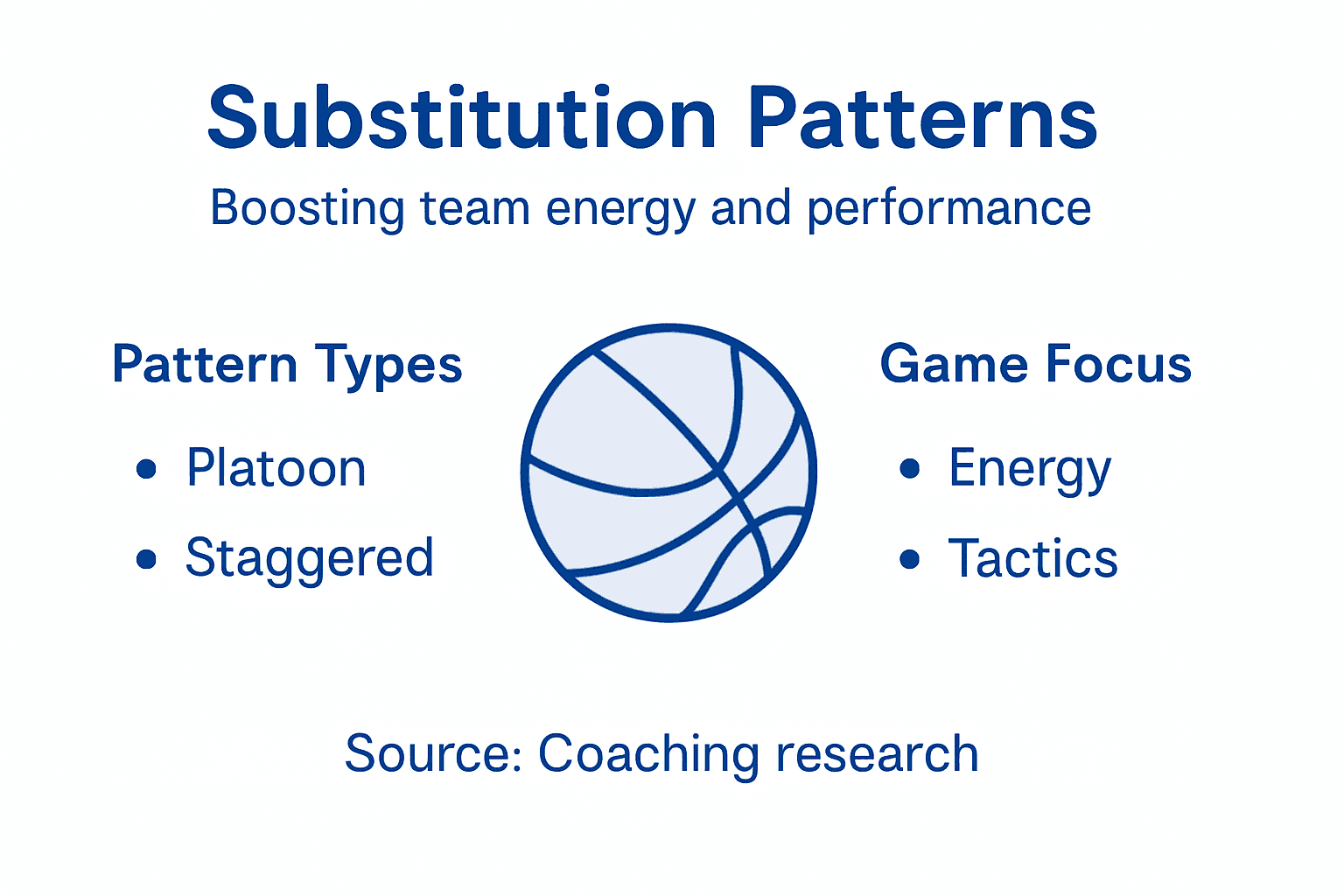
Master Basketball Substitution Patterns to Boost Your Team’s Energy and Performance
Are you ready to take control of your team’s energy levels and sharpen your substitution strategies? Understanding how to manage player rotations effectively is crucial for maintaining intensity and momentum during every game quarter. The right substitution pattern balances fatigue management, tactical matchups, and skill alignment to keep your players performing at their best.
Unlock proven methods with our expertly crafted Basketball Playbooks - Hoop Mentality and elevate your coaching strategy today. Combine these with customizable Basketball Templates - Hoop Mentality to streamline your substitution tracking and communicate clear roles to your players. Visit Hoop Mentality now to access resources designed by real coaches who understand the challenges of managing energy and rotations. Act now to transform how your team sustains peak performance from tip-off to the final buzzer.
Frequently Asked Questions
What are basketball substitution patterns?
Basketball substitution patterns are strategic player rotations designed to optimize team performance and manage player energy throughout a game. They involve more than just swapping players; they are tactical moves that can significantly affect game dynamics.
How can substitution patterns improve team energy?
Effective substitution patterns allow fresh players to enter the game, maintaining high-intensity gameplay and preserving energy levels. This helps prevent player fatigue and ensures that the team can sustain its competitive advantage throughout the game.
What factors should coaches consider when making substitution decisions?
Coaches should consider player fatigue levels, individual skill sets, current game score, tactical matchups against the opposing team, and individual foul situations when deciding on substitutions.
What are common mistakes made during player substitutions?
Common mistakes include making unplanned substitutions that disrupt team momentum, neglecting to monitor player fatigue, failing to communicate clearly with players, overlooking foul trouble, and relying on inflexible rotation patterns that do not adapt to the game’s dynamics.
Recommended
- 7 Fun Basketball Warm Up Drills for Youth Coaches – Hoop Mentality
- Basketball – Hoop Mentality
- 7 Essential Man-to-Man Offense Tips for Basketball Coaches – Hoop Mentality
- 7 Essential Basketball Teamwork Tips for Youth Coaches – Hoop Mentality
- Effective Pre-Workout Routine for Women: Boost Your Performance – Interval