

Every youth basketball coach in North America has faced moments when player focus slips during a tough practice or a close game. Creating lasting change goes beyond quick fixes or harsh consequences. Discipline means designing a system where your athletes take ownership for their actions on and off the court. By blending accountability with genuine support, you help players build resilience, develop self-control, and create the foundation for lasting team success.
Table of Contents
- Defining Discipline In Basketball Coaching
- Types Of Discipline Approaches For Youth
- How Discipline Influences Player Behavior
- Establishing Clear Team Rules And Expectations
- Best Practices For Consistent Enforcement
- Common Discipline Mistakes And Legal Limits
Key Takeaways
| Point | Details |
|---|---|
| Emphasize Personal Responsibility | Discipline in basketball coaching focuses on helping players understand their actions and the impact on the team, fostering accountability through personal choice. |
| Balance Approaches | Effective coaching combines corrective, preventive, supportive, and consequence-based methods tailored to individual player needs. |
| Clear Expectations Matter | Establishing specific, written team rules and communicating their importance ensures players understand standards and fosters a culture of discipline. |
| Consistency Builds Trust | Consistent enforcement of rules creates a sense of fairness, preventing resentment and reinforcing team culture among players. |
Defining Discipline in Basketball Coaching
When you step into coaching, you quickly realize that discipline in basketball is nothing like the punitive model many coaches inherited from their playing days. It’s not about punishment, intimidation, or running players until they’re exhausted as a consequence for mistakes. Instead, discipline in basketball coaching means building a system where players take personal responsibility for their actions and behavior, understanding that every decision on the court either strengthens or weakens the team. Think of it as the framework you create to develop focused, accountable athletes who execute at high levels because they choose to, not because they fear consequences.
The research on effective coaching emphasizes that cultivating self-discipline in young athletes requires coaches to act as teachers and mentors, not just authority figures. Your role extends far beyond correcting mistakes in the moment. A coach with genuine disciplinary effectiveness demonstrates presence, diagnosis, and correction by setting clear expectations, modeling the behavior you demand, and helping players understand why standards matter. This approach means when a player arrives late to practice, you don’t simply hand out punishment. Instead, you diagnose what caused the tardiness, help the player understand how it affects teammates, and guide them toward choosing different behavior next time. The distinction matters enormously. Players who feel respected and understood build genuine accountability, while those who experience only enforcement become resentful and look for ways around the rules.
What separates discipline from control is warmth and individualization. Young athletes in North America respond to coaches who combine firm expectations with genuine care. Some players need direct conversation about their role. Others respond better to seeing the connection between their behavior and team success through game footage or statistics. Some thrive with public recognition when they execute disciplined plays. Others need private acknowledgment to avoid embarrassment. Your disciplinary approach must reflect these differences rather than treating every player identically. When a shooting guard consistently takes poor shots instead of moving the ball, the solution isn’t identical to how you address a center who misses defensive assignments. The underlying principle remains constant—players need to understand expectations and choose better behavior—but the method changes based on personality, learning style, and situation.
Building focused teams through disciplinary systems also means establishing what accountability actually looks like in your program. Is it conditioning? Reduced playing time? Loss of starting position? Written contracts about practice standards? The most effective coaches connect consequences directly to the behavior and make the connection transparent before problems arise. When players know from day one that repeated mental errors result in coming out of games until they refocus, they’re more likely to control their attention span. When they understand that disrespect toward teammates costs them time with their close friends on the team, they’re motivated to maintain positive relationships. Positive discipline techniques focus on assisting athletes’ growth rather than mere enforcement, which is the shift that transforms a team from merely following rules into genuinely embracing standards.
Pro tip: Document three to five specific behavioral expectations for your team before the season starts, clearly explain what success looks like for each expectation, and connect each one to team performance rather than arbitrary authority, then review these standards in your first team meeting so every player owns them from the beginning.
Types of Discipline Approaches for Youth
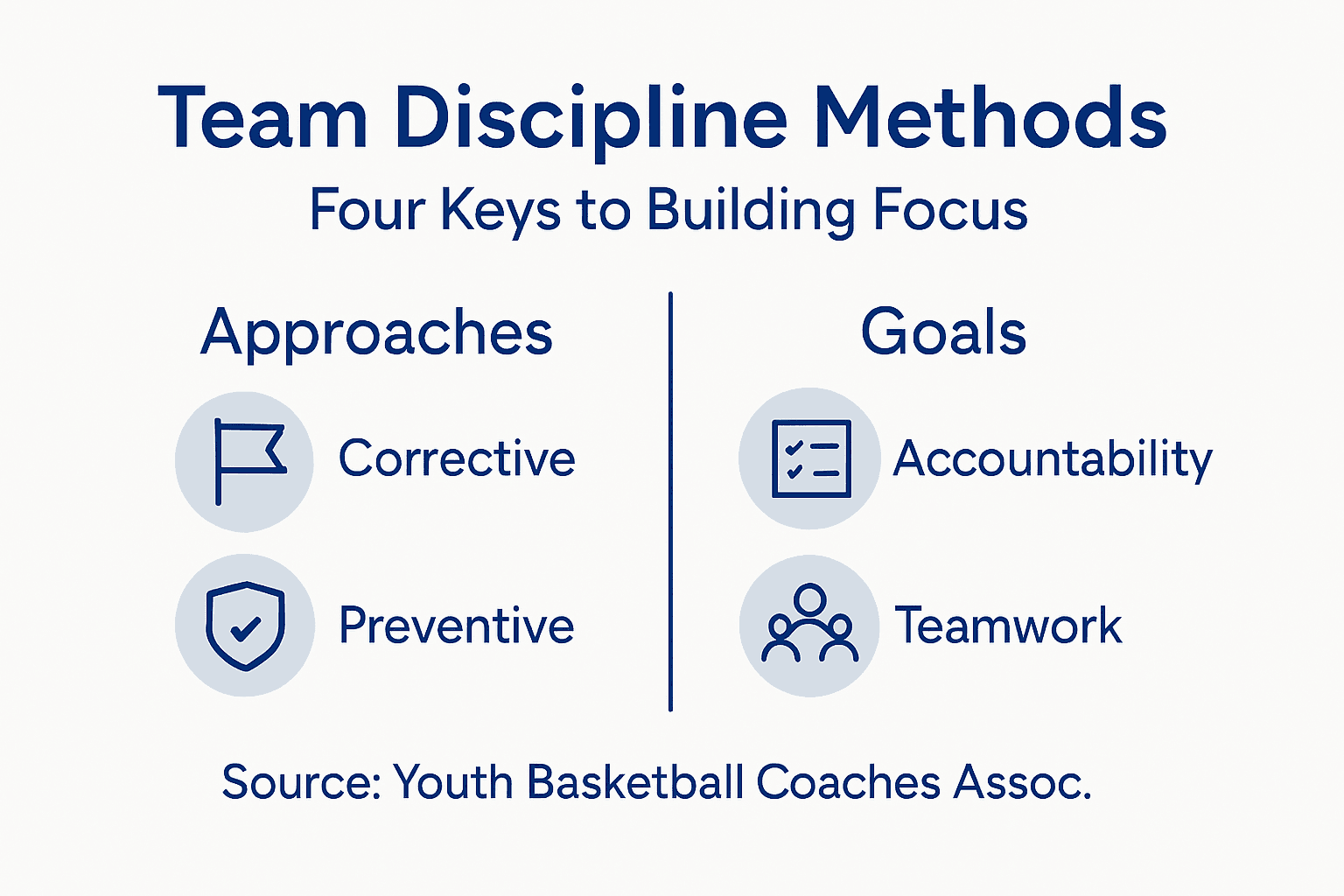
Youth basketball coaches typically work with four distinct discipline approaches, and the most effective teams use a combination tailored to their specific players and culture. Understanding each approach helps you decide which method works best for different situations and individuals. The approach you choose directly impacts whether players internalize standards or simply comply when you’re watching. Getting this right transforms how your team responds to adversity, handles mistakes, and maintains focus during critical moments.
The corrective approach is what most coaches lean toward initially. When a player takes a bad shot, makes a lazy pass, or fails to execute a defensive assignment, you immediately address it. This might mean calling a timeout, pulling the player aside during a dead ball, or discussing it after practice. The corrective approach works well in the moment because it’s immediate and targeted. However, constant correction can feel like criticism to young athletes, potentially damaging confidence and creating reluctance to take risks. The key is balancing correction with affirmation. When you correct a player’s footwork on defense but then say, “That’s the footwork I need from you. You’ve got this,” the message becomes instructional rather than punitive. Coaches who master this approach catch players doing things right almost as often as addressing mistakes, creating a feedback loop that develops rather than diminishes effort.
The preventive approach focuses on stopping problems before they occur. This means establishing clear expectations at the beginning of the season, running efficient practices that minimize downtime where bad habits form, and creating systems that naturally encourage correct behavior. For example, if turnovers are your team’s problem, you structure defensive drills so players must maintain active hands and communication. If players arrive late to games, you institute a pre game meeting 45 minutes before tip off where attendance is mandatory and you discuss game plan details. Preventive discipline requires more upfront work but dramatically reduces the need for correction later. Teams that use this approach typically have fewer behavioral issues because the structure itself guides players toward making good decisions. Youth basketball success depends significantly on preventing problems through thoughtful program design rather than constantly reacting to them.
The supportive approach emphasizes helping players understand the “why” behind standards. Instead of simply telling a player to box out, you might show game film of how proper boxing out created scoring opportunities for your team, then ask the player, “How does this help us win?” This approach takes longer initially but creates deep ownership. Young athletes who understand the reasoning behind discipline internalize it rather than viewing it as arbitrary authority. Support looks like checking in with a struggling player about what’s happening off court, recognizing that sometimes behavioral issues stem from family stress or academic pressure rather than laziness. It means having private conversations before public consequences, giving players second chances when they show genuine effort to improve, and celebrating their progress when they overcome specific challenges.
The consequence based approach involves clear outcomes for breaking team standards. If a player is late to practice three times, they sit out the next game. If they disrespect a teammate, they have a mandatory community service session together. If they miss a defensive assignment, they run conditioning after practice. Consequences work only when they’re consistent, clearly communicated beforehand, and directly connected to the behavior. The danger is becoming so focused on punishment that you forget the teaching aspect. The most effective coaches use consequences sparingly and pair them with conversation. When a player misses a game due to tardiness, the consequence teaches the lesson, but then you have a follow up conversation: “I care too much about you to let you develop habits that will hurt you in college or your professional life. What happened? What can we do differently?”
Here’s a side-by-side comparison of key discipline approaches in youth basketball coaching:
| Approach Type | Main Goal | Typical Method | Potential Risks |
|---|---|---|---|
| Corrective | Immediate behavior change | Targeted feedback or timeout | Reduced confidence if overused |
| Preventive | Avoid issues proactively | Structured routines & clear rules | May require more planning |
| Supportive | Build understanding & ownership | Video reviews, conversation | Takes longer to see results |
| Consequence-Based | Enforce standards consistently | Predetermined consequences | Can promote fear if misused |
Combining Approaches for Maximum Impact
The strongest disciplinary systems blend all four approaches situationally. You might use prevention by establishing a “no complaining about calls” standard in preseason, support by explaining why this matters for mental toughness, correction when someone slips up, and consequences if the behavior becomes habitual. This layered approach respects that young people respond differently to different methods. Some players need clear structure and predictable consequences. Others respond better to understanding the bigger picture. Some thrive with direct feedback. Others need privacy and gentleness.
Pro tip: Identify your three most common behavioral problems in youth basketball, then design one preventive structure for each (like a pre game routine that discourages tardiness, drill efficiency that prevents boredom induced mistakes, or a team communication system that reduces conflict), so you spend your corrective energy on exceptions rather than patterns.
How Discipline Influences Player Behavior
Discipline doesn’t change behavior by fear alone. Instead, it works by creating consistent structures and expectations that shape how players think about themselves and their responsibilities. When you implement disciplinary systems effectively, you’re not just punishing mistakes. You’re teaching your athletes that their choices matter, that effort is non-negotiable, and that the team’s success depends on everyone maintaining standards. This shift in mindset transforms how players approach everything from practice effort to game focus. The players who internalize discipline become self-regulating, making better decisions even when you’re not watching because they’ve learned to value the standards you’ve established together.
Research on youth athletics reveals that positive coach behaviors and discipline directly enhance player motivation and psychological readiness for competition. When discipline is delivered with care and explanation rather than anger and humiliation, young athletes develop resilience instead of resentment. Think about the difference between a coach who yells “That’s unacceptable defense, you’re coming out” versus one who substitutes a player and says during the next timeout, “I need you to stay lower and trust your footwork. You’ve got this next possession.” Both actions remove the player temporarily, but the second approach creates a player who focuses on correction rather than defensiveness. Players who experience supportive discipline show improved commitment, better attendance, more consistent effort, and higher enjoyment of the sport. They also handle setbacks more effectively because they’ve learned through your modeling and feedback that mistakes are opportunities to improve rather than evidence of failure. This psychological resilience translates directly into better game performance, especially in pressure moments when self-doubt typically creaks into a young athlete’s mind.
The behavioral influence of discipline extends beyond individual players to team chemistry. When your discipline system is consistent and fair, players trust it. They know that taking a selfish shot results in the same consequence for the star player as the bench player. They understand that arriving late has consistent outcomes regardless of circumstances. This predictability creates team culture because players feel respected rather than victimized. They see discipline as belonging to everyone equally, which builds collective ownership. Teams with this foundation respond differently to adversity. When you fall behind in a game, players don’t panic or blame. They execute the adjustments you’ve discussed in practice because discipline has taught them that problems require solutions, not excuses. The trust that develops from fair, consistent discipline also strengthens player-coach relationships, making it easier for athletes to receive correction without feeling attacked. You can say hard things to players who trust that you care about them and that your standards reflect that care.
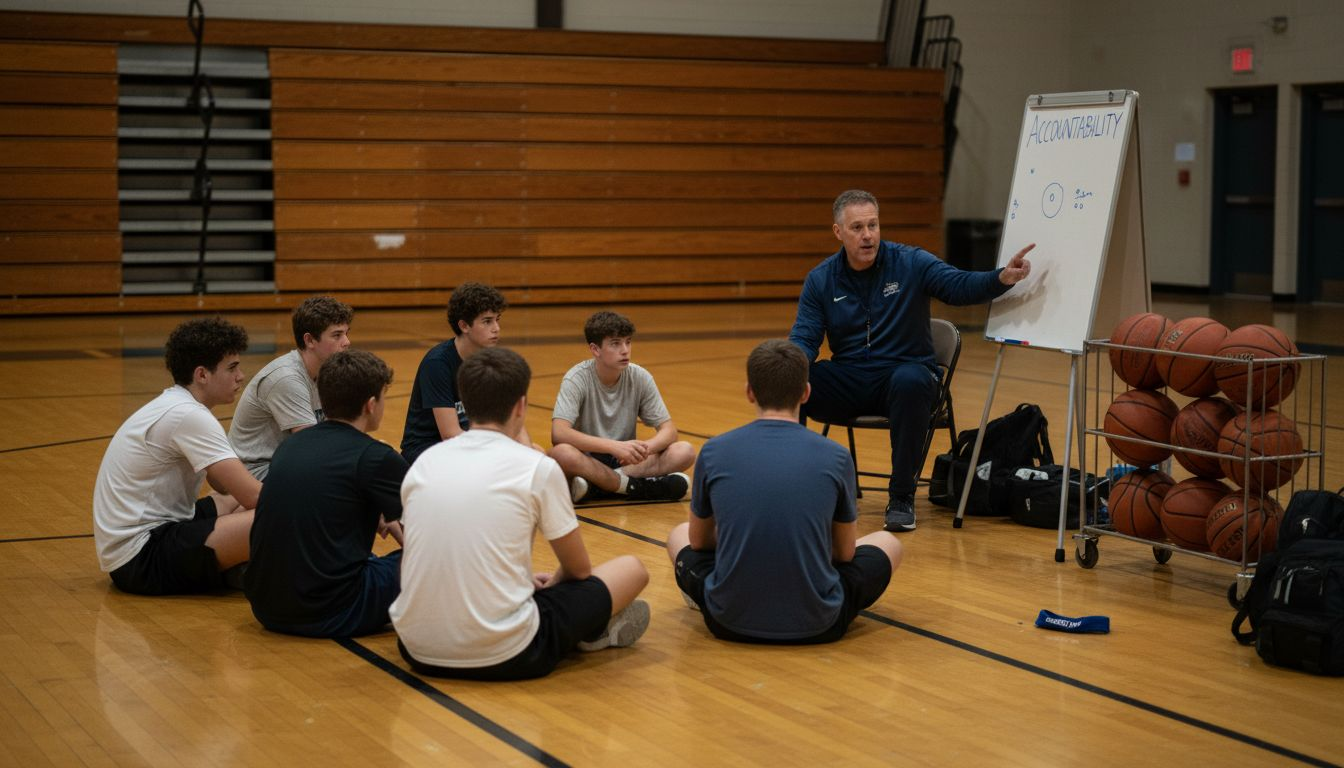
Behavioral change also happens when discipline connects directly to results. When a player shoots poorly because they’re taking rushed shots instead of following offensive principles, and you demonstrate how better shot selection increases team efficiency, they understand the connection. Young athletes aren’t motivated by arbitrary rules. They respond when they see how discipline creates success. This is why showing game film of how defensive intensity led to a win is more powerful than lecturing about hustle. When players witness the cause and effect between their disciplined execution and outcomes they care about, they internalize the behavior. They start policing themselves because they’ve learned that the standards you’ve set actually produce the results they want. This self-governance is the ultimate goal of discipline. When your freshmen are holding each other accountable to standards without your intervention, when players are correcting teammates’ effort levels during shooting drills, when the culture has shifted so that discipline feels like belonging rather than restriction, you’ve transformed behavior at the deepest level.
Pro tip: Video record one practice per week and spend 10 minutes the next practice showing players exactly how their disciplined or undisciplined execution created turnovers, open shots, or defensive breakdowns, so they see the direct connection between the standards you enforce and the results they produce.
Establishing Clear Team Rules and Expectations
You can’t build a disciplined team on assumptions. Players need to know exactly what you expect, why those expectations matter, and what happens when standards aren’t met. The difference between teams that maintain focus under pressure and those that fall apart often comes down to clarity. When rules are vague, players interpret them differently. One athlete thinks showing up five minutes early is sufficient. Another believes 15 minutes early is standard. One player considers a missed defensive assignment a minor mistake. Another views it as a serious breach. These inconsistencies create resentment because players feel judged arbitrarily. Clear, written expectations eliminate this confusion and create a foundation where discipline feels fair rather than personal.
Start by identifying your non negotiable standards. These are the few rules so central to your team culture that violating them carries meaningful consequences. Most coaches make the mistake of creating too many rules, diluting the importance of each one. Narrow it down to three or four foundational expectations that directly impact team success and culture. For youth teams, these typically include attendance and punctuality, effort and focus in practice, respect for teammates and coaches, and adherence to offensive and defensive principles. Once you’ve identified these core standards, write them down specifically. Don’t say “be on time.” Instead write, “All players arrive 15 minutes before practice starts and are ready to begin with the group at the scheduled time. This applies to all players equally.” Don’t say “work hard.” Write, “During competitive drills, every player executes at game intensity with active communication and complete effort on both offense and defense.” Specificity removes interpretation. Players know exactly what success looks like.
For reference, here is an example of how clear team rules enhance discipline and team culture in basketball:
| Team Rule Category | Example Expectation | Why It Matters |
|---|---|---|
| Attendance & Punctuality | Arrive 15 minutes before practice | Respects teammates’ preparation |
| Effort & Focus | Play at game intensity in all drills | Builds competitive mindset |
| Respect | Support teammates during challenges | Fosters positive relationships |
| Game Principles | Follow offense/defense instructions | Keeps strategy consistent |
Next, communicate these expectations in multiple formats during your first team meeting. Read them aloud so every player hears directly from you. Provide written copies so players can reference them at home. Explain the “why” behind each rule so players understand it’s not arbitrary control. For instance, when explaining the attendance rule, you might say, “Basketball is a team game. When one player is missing from practice, everyone else’s development suffers because they don’t get the repetitions they need with their full lineup. When someone arrives late, it delays our warm up and cuts into time we could spend on critical skills. This isn’t about punishment. It’s about respecting your teammates’ time and commitment.” Players who understand the reasoning buy in rather than merely comply. Consider having veteran players or captains discuss how these standards have helped the team. Peer reinforcement carries weight with young athletes.
Build accountability into the structure of your program rather than relying solely on consequences. If punctuality matters, start practice on time regardless of who has arrived. Late players miss the opening drill and have to catch up. This creates a natural consequence rather than you having to enforce one. If effort in practice is the standard, film the most physical, focused drills and show them to the team, celebrating the players who embody intensity. If respect matters, address disrespect immediately and privately. Stop it before it becomes normalized. Make building strong team culture a shared responsibility by empowering players to hold each other accountable. When a teammate is slacking during shooting drills, a peer saying, “Come on, we set this standard together” is more powerful than coach correction.
Review your team rules quarterly. As the season progresses, you’ll notice which standards are working and which need adjustment. Some rules may prove unnecessary. Others might need refinement based on situations that have arisen. Bringing players into this review process makes them invested. Ask during a team meeting, “Are our standards clear? Do they make sense? Is there anything we need to change?” This collaborative approach transforms rules from coach imposed restrictions into team commitments. When players help shape the standards they’re expected to maintain, compliance increases dramatically because the rules reflect their voice and values.
Pro tip: Write your three to four core team rules, have each one reviewed for clarity by a trusted assistant coach or experienced player, then deliver them in writing and verbally in your first team meeting while explaining the reasoning behind each rule so players understand expectations before any violations occur.
Best Practices for Consistent Enforcement
Consistency is the foundation of trust in any disciplinary system. When you enforce rules equally, players believe in fairness. When you allow exceptions for certain players, resentment spreads quickly through the locker room. The star player who arrives late without consequence while a bench player sits out teaches every athlete that standards are negotiable based on talent or status. This destroys team culture faster than almost anything else. Your best players must understand that being valuable to the team actually means they have higher responsibility to maintain standards, not exemption from them. Consistent enforcement means the same rule applies to your All State guard as it does to your third string point guard. The same consequence follows regardless of playoff implications, tournament status, or how much playing time a player receives.
Consistency requires preparation and documentation. Before the season starts, write down specific consequences for specific violations. If a player misses practice without notification, what happens first time? Second time? Third time? If someone shows disrespect, is the response different than missing practice? How? When you’ve thought through these scenarios beforehand, you’re not making emotional decisions in the moment. You’re executing a system. This matters because human beings are naturally inconsistent. You might be irritable on a Monday after a difficult weekend and respond harshly to a minor infraction, then be relaxed on Friday and overlook something more serious. Your players notice. Documentation keeps you honest and prevents the bias that naturally creeps into judgment. Share this consequence chart with your team so everyone knows the progression. Transparency about enforcement builds confidence in the system. Players might not like the consequence, but they respect that it’s been determined fairly rather than arbitrarily.
Another critical practice involves separating the person from the behavior. When enforcing discipline, you’re addressing what a player did, never who they are as a person. This distinction matters enormously for young athletes’ psychological development. Compare these two approaches. Coach A says, “You’re lazy. That’s why you’re coming out of the game.” Coach B says, “That possession, you didn’t get your feet set on defense. That’s not who you are. Get your feet set, then get back in.” Both coaches are enforcing the same standard, but Coach B preserves the player’s identity while correcting behavior. Players respond by actually changing the behavior rather than becoming defensive. When you say a player is something (lazy, careless, undisciplined), they internalize it. They start believing it about themselves. When you address specific actions, they understand that change is possible and entirely within their control.
Consistency also requires addressing violations quickly but privately when possible. If a player commits a turnover due to poor decision making, correct it immediately in the game or right after. If a player shows disrespect toward a teammate, address it during the next break rather than saving it for after practice. Speed matters because the behavior is fresh in the player’s mind. Privacy matters because public humiliation breeds resentment. The exception is behavior that affects team culture directly, like disrespect or lack of effort, which might warrant a moment of public acknowledgment so other players know the standard is being upheld. Most corrections, though, should happen one on one. This allows the player to hear your message without having to defend themselves in front of peers. They’re more likely to accept correction and commit to change when they don’t feel embarrassed.
Finally, consistent enforcement means following through on every single consequence you’ve announced. If you say a player sits out the next game for missing practice, that player sits regardless of opponent difficulty, playoff seeding, or your need for them. If you say conditioning follows disrespect, that conditioning happens even if it means staying 15 minutes after practice. Players test boundaries to see if you mean what you say. The first time you don’t follow through, the entire system loses credibility. When a young athlete sees that you enforce consequences even when it costs the team, they understand that your standards are genuinely non negotiable. That’s when compliance becomes automatic rather than resistant. Consistent enforcement isn’t about being harsh. It’s about being reliable. Players can work within any system as long as they understand it and trust that everyone plays by the same rules.
Pro tip: Create a one page consequence chart documenting what happens for three common violations at first offense, second offense, and third offense, then review it with your team in the first meeting and stick to it exactly regardless of circumstances, so enforcement becomes predictable and your job becomes executing the plan rather than making judgment calls.
Common Discipline Mistakes and Legal Limits
Most coaches learn about discipline through trial and error, which means making mistakes along the way. Understanding common pitfalls helps you avoid them entirely. The most dangerous mistake is using physical punishment or conditioning as discipline. Running sprints because a player took a bad shot or making the team do pushups as punishment for a loss crosses a critical line. Physical activity should never feel like suffering imposed for behavioral reasons. This damages trust, creates resentment, and in many jurisdictions violates school or athletic organization policies. Conditioning is for building fitness. Discipline is for building character and accountability. Keep them separate. If you need consequences, reduce playing time, require community service, have players assist with team tasks, or implement individual skill work. These address behavior without crossing into physical punishment territory.
Another significant mistake is inconsistent application based on emotion rather than policy. You’ve had a frustrating day, so you come down hard on a minor infraction. The next day you’re in a good mood and overlook something similar. Your players immediately recognize this pattern. They learn to read your mood rather than respecting your standards. Some will test you when they sense you’re relaxed. Others will become anxious, never knowing what will trigger your reaction. Emotional discipline creates chaos. Documented, systematic discipline creates safety. Write your rules and consequences before the season starts. Then execute them regardless of your emotional state. This is actually easier than making judgment calls constantly. You’re not deciding anything. You’re following the plan.
Avoid public humiliation as a disciplinary tool. Yelling at a player in front of the entire team might feel satisfying in the moment, but it damages that athlete’s confidence and their trust in you. It also teaches other players to fear rather than respect you. Young athletes who feel embarrassed typically respond by withdrawing effort, becoming defensive, or finding ways to avoid similar situations rather than changing behavior. Private conversations followed by clear expectations work exponentially better. Call the player aside during a break and say, “I need to talk with you about that last possession. You didn’t execute the defensive coverage we practiced. That’s fixable. Here’s what I need to see next time.” The player hears the correction, understands what to do differently, and maintains their dignity. They’re more likely to execute the correction because they haven’t had to defend themselves emotionally.
Regarding legal limits, youth basketball operates under specific policies that vary by school district, athletic organization, and state. You must understand your organization’s disciplinary policies before implementing any system. Many schools prohibit certain types of discipline or require parental notification for specific violations. Some require documentation of behavioral issues before consequences can escalate. Athletic associations sometimes restrict what happens during competitions versus practice. What’s legal in one jurisdiction might violate policy in another. Before establishing your discipline system, review your school or organization’s athletic handbook and speak with your athletic director. Ask specific questions: Can I reduce playing time? Are there restrictions on practice modifications? What documentation is required? Do parents need notification before certain consequences? This conversation prevents legal complications and ensures your discipline methods align with institutional expectations.
Understand the difference between your legal authority and your appropriate authority. You might legally be able to enforce certain consequences, but that doesn’t make them good coaching. Just because you can run players until they’re exhausted doesn’t mean you should. Just because you can publicly criticize a player doesn’t mean it serves your team culture. The most effective coaches operate within the spirit of institutional policies, not just the letter of the law. They build systems that develop young people rather than merely controlling them. They recognize that every disciplinary interaction is also a teaching moment. They understand that how you enforce standards teaches players as much as the standards themselves.
Common Mistakes to Avoid
- Using physical punishment or conditioning as consequences for behavioral violations
- Allowing emotions to drive enforcement decisions rather than following documented policy
- Public humiliation or yelling at players in front of the team
- Failing to document violations or consequences
- Applying discipline inconsistently based on player status or talent level
- Enforcing consequences only when convenient or when it doesn’t affect winning
- Failing to understand your organization’s specific athletic policies
- Making discipline personal rather than addressing specific behaviors
Pro tip: Contact your athletic director or school administration before establishing your discipline system to understand exact policies and legal limits specific to your organization, then build your system within those boundaries so you avoid complications and maintain credibility.
Build Disciplined Teams That Win With Confidence
Discipline is the key to building focused basketball teams where every player understands expectations and takes ownership. If you want to move beyond inconsistent corrections and unreliable enforcement, Hoop Mentality offers the structured tools you need to create clear team rules, enforce standards consistently, and develop resilient athletes who perform under pressure. Our Basketball Guides and proven Basketball Drills provide practical solutions designed to save you time while elevating your coaching effectiveness.

Start transforming your approach to discipline today by accessing resources that connect youth basketball standards with real coaching experience. Visit Hoop Mentality and equip yourself with easy-to-use tools that help build accountability, improve communication, and lead your team to consistent success. Take the first step now and see how disciplined methods lead to winning results.
Frequently Asked Questions
What is the difference between corrective and preventive discipline in youth basketball coaching?
Corrective discipline focuses on addressing mistakes immediately to change behavior, while preventive discipline aims to establish clear expectations and structures from the outset to reduce the likelihood of issues occurring.
How can supportive discipline impact player development?
Supportive discipline emphasizes helping players understand the reasoning behind standards. This approach fosters ownership and accountability, allowing athletes to internalize discipline rather than view it as arbitrary rules imposed by authority figures.
Why is consistency important in enforcing team rules?
Consistency builds trust among players. When rules are enforced equally for all, athletes feel respected, and it prevents resentment from arising if some players perceive favoritism or arbitrary judgment.
What are some best practices for establishing clear team rules?
Identify a few non-negotiable standards that directly impact team culture, provide clear and specific expectations for each rule, communicate these expectations multiple ways, and involve players in the rule-setting process to enhance buy-in.