

TL;DR:
- Advanced scouting extends beyond film review by combining data analysis, technology, and organized workflows to gain a competitive edge. It involves deliberate, question-driven evaluation of opponents, enabling targeted game plans and player development, especially when integrated early into the season. Modern tools like multi-angle cameras and AI-driven data support faster and more accurate insights, but organizational buy-in and structured processes are essential for maximizing its benefits.
Most coaches think advanced scouting means watching more film. It doesn’t. The role of advanced scouting in basketball is a structured, analytical process that combines video technology, data interpretation, and organizational workflow to give your team a measurable edge before tip-off. Done right, it shapes opponent game plans, informs player development decisions, and reduces the emotional bias that clouds in-game judgment. This article breaks down exactly how it works, what tools are driving it forward, and how you can build it into your coaching operation at any level.
Table of Contents
- Key Takeaways
- The role of advanced scouting in basketball strategy
- Modern advanced scouting techniques and tools
- Practical workflows for scouting within your staff
- Benefits of advanced scouting for game preparation
- Common pitfalls and how to avoid them
- My take on what actually moves the needle
- Put your scouting to work with Hoopmentality
- FAQ
Key Takeaways
| Point | Details |
|---|---|
| Scouting is a strategic process | Advanced scouting goes beyond film review to include data analysis, workflow, and targeted reporting. |
| Technology accelerates feedback | Multi-angle cameras and cloud tagging tools speed up the loop between footage capture and player learning. |
| Human judgment stays central | Automated data and AI outputs support scouting decisions but never replace the eye test. |
| Timing matters as much as depth | Front-loading evaluations before the season gives coaches usable reports during critical early game planning. |
| Organization drives impact | Embedding scouting into team decision-making for recruitment and tactics multiplies its return. |
The role of advanced scouting in basketball strategy
Advanced scouting, often called opponent analysis or advance scouting in professional settings, is the practice of evaluating upcoming opponents and your own players before a game or series with enough lead time to act on the findings. It is not passive film consumption. It is deliberate, question-driven analysis.
A scout watching a game from a scouting seat is doing something fundamentally different from a coach watching from the bench. Advance scouts track detailed sequences and positioning with the specific goal of identifying advantages for winning, completely removed from the emotional pressure of managing the live contest. That objectivity is the core of what makes it useful.
In practice, a complete advanced scouting report on an opponent covers:
- Offensive tendencies by player and by lineup combination
- Defensive positioning and rotational habits
- Pick-and-roll coverages and transition behavior
- High-usage situations and how they create shots
- Individual player strengths, weaknesses, and shot selection patterns
The output feeds directly into your game plan. It tells your staff which matchups to seek, which actions to take away, and where the opponent is vulnerable in specific game situations. Pro baseball scouts complete evaluations before the season reaches full pace, delivering detailed reports for early series planning. Basketball teams that operate the same way gain preparation time their opponents simply don’t have.
“Advanced scouting is not about watching more. It’s about watching with a defined answer in mind.” This is the difference between a scout and a spectator.
That distinction matters for how you staff, schedule, and structure your scouting operation.
Modern advanced scouting techniques and tools
The gap between a program using current technology and one relying only on manual film has grown significantly. Advanced scouting techniques today combine multi-angle video capture, automated data tagging, and cloud-based collaboration into a single connected workflow.
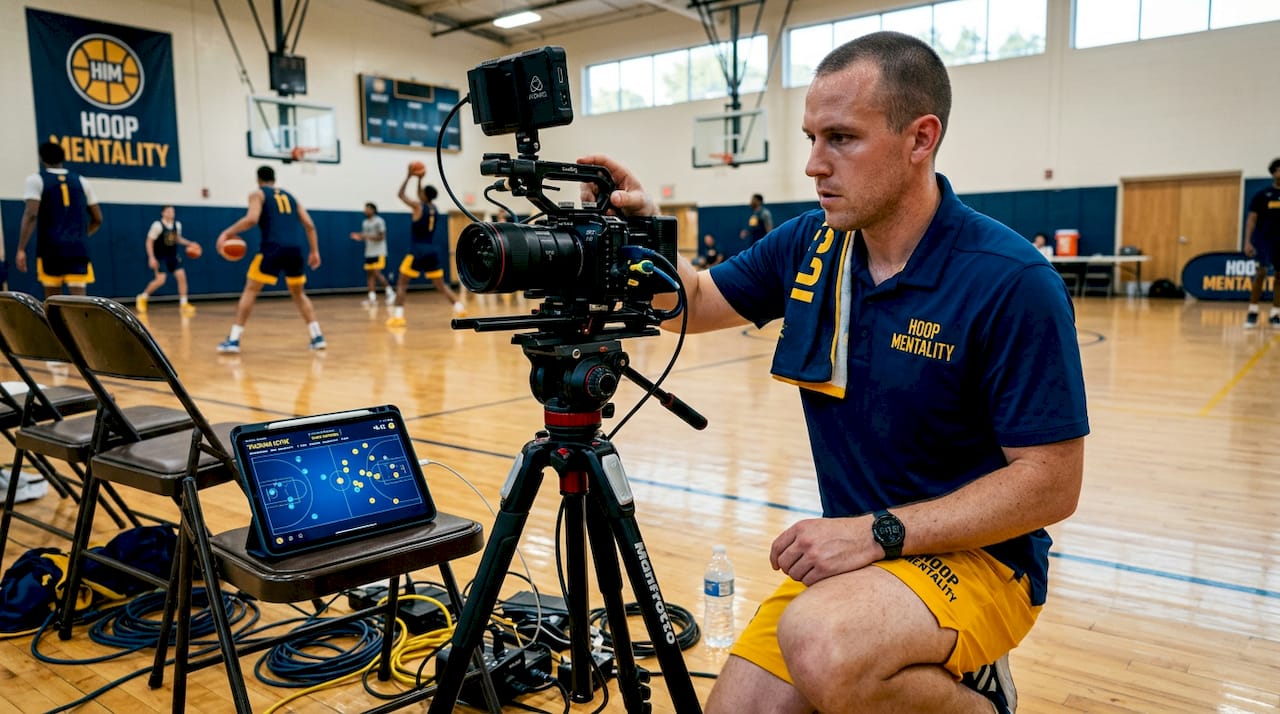
The San Antonio Spurs are one of the clearest examples of this in practice. Their multi-angle AI-powered cameras cover two practice courts and a shooting lab with full basket-to-basket tactical views. Footage feeds into subscription-based annotation tools that allow staff to clip, tag, and share specific sequences within minutes of capture. That speed directly compresses the feedback loop between observation and coaching action.
| Tool type | Primary function | Impact on scouting |
|---|---|---|
| Multi-angle fixed cameras | Full-court capture without operator | Consistent, uninterrupted footage for analysis |
| Cloud-based tagging platforms | Annotation and clip sharing | Fast delivery of key sequences to coaches and players |
| AI detection and tracking pipelines | Player tracking and jersey OCR | Structured data output at scale |
| Advanced statistical databases | Targeted performance metrics | Context for what the film shows |
On the data side, AI pipelines now process basketball video for player detection, tracking, jersey identification, and court mapping. These pipelines run asynchronously, producing structured data outputs that support large-scale scouting analysis without manual frame-by-frame review. That matters for any program evaluating multiple opponents simultaneously.
Still, the combination of film and targeted stats is what produces the most reliable picture. NBA draft scouting workflows rely primarily on the eye test, supplemented by specific advanced metrics like rim finishing rate, assist rate, and steal rate to answer focused questions about a player’s game. The data answers “how often” while the film answers “how and why.”
Pro Tip: Build your scouting tech stack around speed of delivery, not volume of capture. A single-angle camera with a fast tagging workflow beats a four-camera setup where clips sit unreviewed for 48 hours.
Learn more about how scouting video builds your edge and how it connects to broader game preparation. You can also explore the role of analytics in basketball to understand the data side of the scouting equation.
Practical workflows for scouting within your staff
Knowing what advanced scouting covers is one thing. Building it into your coaching operation is another. The workflow is where most programs struggle, not because they lack interest, but because they haven’t assigned the right people to the right stages.
Here is a practical sequence that works at the college and professional levels, and scales down cleanly for high school programs with limited staff:
- Schedule footage capture before the opponent’s last few games prior to your matchup. Identify what questions you need answered and assign camera or clip sourcing responsibility.
- Tag and annotate footage by play type, player tendency, and situation. Focus on the 10 to 15 clips per category that best represent what you will face. Depth is less important than representativeness.
- Create a focused report that presents findings visually, not just in text. Short clip packages with written notes are far more effective than 40-page written breakdowns.
- Present to coaching staff for alignment. Identify the two or three tactical adjustments the scouting supports. This is where the scouting converts into a game plan.
- Share player-facing clips through your video platform so players can see what they are being asked to prepare for. Scouting that never reaches the locker room is preparation that never happens.
Advanced scouting functions as a time allocation strategy at the professional level, front-loading opponent evaluation before teams reach full competitive pace. That same principle applies to your preseason calendar. The most effective programs complete opponent profiles during the two weeks before the season opens, not the night before games begin.
Houston Dynamo FC demonstrated this principle by hiring a dedicated Head of Analysis whose role spans translating data into tactical decisions across recruitment, performance, and coaching alignment. The position exists because the return from integrated scouting at that organizational level is high enough to justify a full-time role. Basketball programs are following the same model.
Pro Tip: Set a hard deadline of 72 hours before game time for your scouting report to be complete. Anything finalized later gives coaches and players too little time to absorb and practice against it.
Benefits of advanced scouting for game preparation
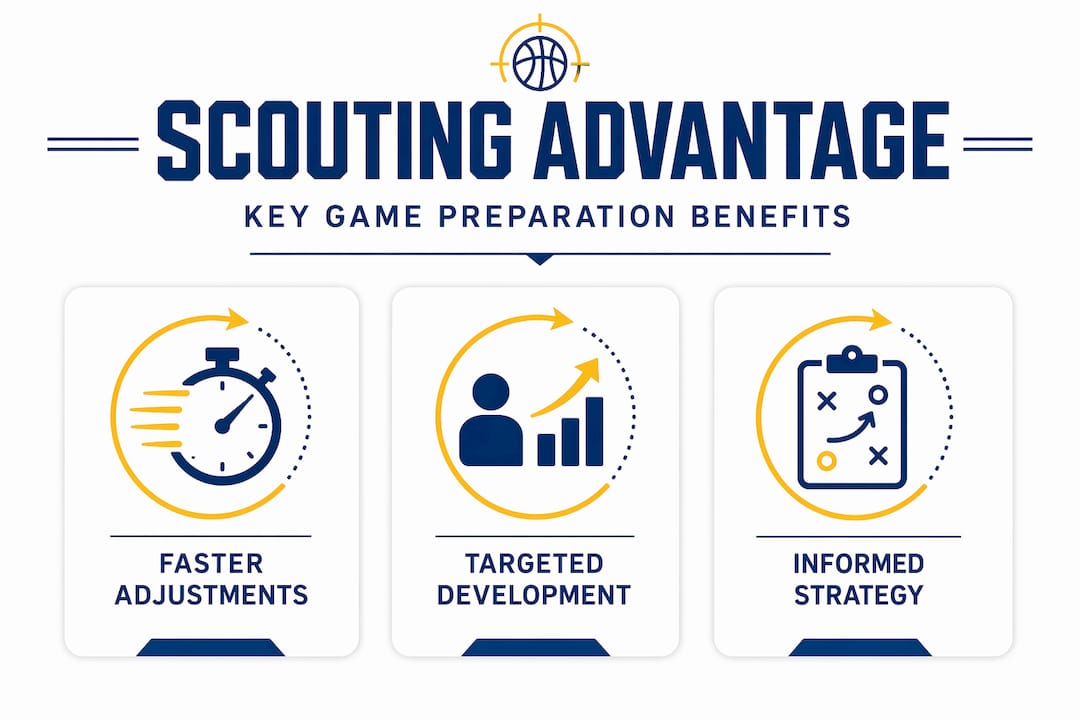
The measurable benefits of building a real advanced scouting process are most visible in three areas: game preparation depth, player development quality, and in-game decision speed.
On the game preparation side, a well-prepared scout gives your staff:
- Opponent tendencies sorted by situation, not just player name
- Lineup-specific habits that tell you which five-man units to attack
- Early-season opponent data before the public box score narrative has formed
For player development, the advantage is in specificity. When your post player watches three clips of the opponent center dropping into a soft hedge, he can visualize the action and practice against it. Generic coaching instructions don’t produce the same mental preparation. The feedback loop between video capture and player learning accelerates dramatically when footage is tagged and shared quickly.
The objectivity benefit is underrated. Advance scouts provide an analytical perspective distinct from the emotional viewpoint of coaches managing the live game. When a coach is managing a rotation in the third quarter, they are not cataloging defensive tendencies. The advance scout is doing that from the outside, building the picture the head coach needs without the pressure of real-time decisions clouding the view.
Objective scouting creates a separate information channel. Your game-time instincts and your pre-game analysis should inform each other, not compete.
In close series and playoff environments, that informational advantage compounds. Teams with thorough scouting files adjust faster in Game 2 because the analysis was already done. That is not an accident. It’s a workflow decision made weeks earlier.
Common pitfalls and how to avoid them
Even programs that invest in scouting resources make predictable mistakes. Recognizing them early protects your time and improves output quality.
- Trusting raw data without film context. Automated scouting tools require strong internal standards and expert judgment to interpret meaningfully. A player’s low assist-to-turnover ratio means something different if the film shows him running a high-usage isolation offense.
- Collecting footage without a tagging system. Simply collecting video without timely feedback reduces the development impact significantly. Footage that doesn’t get tagged and delivered is preparation that doesn’t happen.
- Writing reports that never reach players. Scouting that stops at the coaches-only meeting is preparation wasted. Players who see the footage understand the game plan at a deeper level than players who only hear it described.
- Starting the scouting process too late. If your first opponent clip review happens two days before the game, you don’t have time to adjust practice content, install specific counters, or give players enough repetitions.
Pro Tip: Use a shared scouting template across your staff so reports are consistent regardless of who produces them. Consistent structure means faster reading and better retention during pre-game meetings.
For a structured approach to the full scouting workflow, Hoopmentality’s basketball scouting workflow guide covers how to combine film and data effectively for team preparation.
My take on what actually moves the needle
I’ve watched a lot of programs adopt video systems and call it advanced scouting. Most of them are just watching more film with better equipment. The real shift happens when scouting becomes a scheduled part of your preparation calendar with defined outputs and delivery deadlines.
In my experience, the biggest gains come from speed of feedback, not depth of analysis. A three-clip package delivered to your point guard 48 hours before the game does more than a 30-minute film session the morning of tip-off. Players need time to process, visualize, and practice against what they’ve seen. That only happens if the scouting reaches them early enough to matter.
I’ve also found that the eye test doesn’t compete with data. It anchors data. When I watch a guard and then check his rim finishing numbers, the stats tell me whether what I’m seeing is a pattern or a sample. Without the film, the numbers have no texture. Without the numbers, the film has no scale. You need both, and you need a clear question before you start either.
The hardest part isn’t the technology or the analysis. It’s organizational buy-in. When your entire staff trusts the scouting process and acts on it consistently, the preparation quality compounds over a season. When one coach uses the report and another ignores it, the advantage disappears. Get everyone in the same system first. The rest follows.
— Dejan
Put your scouting to work with Hoopmentality
Advanced scouting findings only create wins when they connect to what happens in practice. Hoopmentality builds that connection directly into its coaching resources.
The Game Preparation Guide with Weekly Practice Plan gives you a structured system to translate scouting reports into practice sessions, so your players are working on what the opponent will actually present. No more generic drills the week before a game. If your post players need specific development work based on what your scouting reveals, the Big Man Dual Action Drill gives you a targeted resource to address those gaps directly. Both tools are available now through Hoopmentality.
FAQ
What is the role of advanced scouting in basketball?
Advanced scouting in basketball involves analyzing upcoming opponents and your own players before games to identify tendencies, strengths, and weaknesses. The goal is to produce specific, actionable reports that directly inform game plans and practice preparation.
How does advanced scouting work in practice?
Scouts capture and review game footage, tag key sequences by play type and player behavior, and produce visual reports for coaching staff and players. The full cycle runs from footage capture through annotation, report creation, and player-facing delivery before game day.
What are the main benefits of advanced scouting?
The primary benefits include more specific opponent game planning, faster mid-season adjustments, targeted player development feedback, and an objective analytical perspective separate from the in-game emotional environment coaches operate in.
What tools are used in advanced scouting today?
Modern scouting uses multi-angle fixed cameras, cloud-based tagging platforms, AI tracking pipelines, and statistical databases. Programs like the San Antonio Spurs combine full-court AI-powered cameras with fast annotation tools to compress the feedback loop significantly.
Should coaches rely on data or film for scouting?
Neither alone is sufficient. Advanced metrics work best when used to answer specific questions about a player’s game, with film providing the context that raw numbers cannot capture on their own.