

Start this week: assign a rotating captain and run a captain-led warm-up at every practice. That single habit is the foundation of on-court team leader development. Track two metrics from day one: the percentage of teammates making eye contact during cues, and the average seconds between a cue and first player movement. Use the Hoop Mentality Captain Log to record both after each session.
Week 1 action checklist:
- Assign a rotating captain for each practice this week
- Hand the captain a laminated cue card before warm-up begins
- Run the 3-phase warm-up (mobility, activation, integration) with the captain leading
- Enforce the Three Cues Rule: three concise, actionable cues per drill
- Record eye-contact rate and cue-to-action seconds in the Captain Log
- Brief the captain for 2 minutes after practice with one praise and one improvement
Key Takeaways
Effective team leader development in basketball requires rotating captains, two tracked metrics, and a phased 6–8 week curriculum built around captain-led warm-ups and structured feedback.
| Point | Details |
|---|---|
| Start with rotation | Assign a rotating captain every practice and hand off a laminated cue card before warm-up. |
| Track two metrics | Measure eye-contact rate and cue-to-action seconds every session using the Captain Log. |
| Use a phased curriculum | Run three phases over 6–8 weeks: exposure, decision-making, then autonomy and accountability. |
| Feedback drives growth | Use the 3-point post-practice debrief and a 15–20 minute weekly check-in to develop each captain. |
| Hoop Mentality templates | The Basketball Starter Pack and Template Bundle include ready-to-use Captain Logs, rubrics, and practice plans. |
Table of Contents
- What does your next practice look like with a captain in charge?
- How does a 6-week captain development curriculum work?
- Which drills build communication and on-court leadership?
- Ready-to-use 60- and 90-minute practice plans
- How do you select captains without creating favoritism?
- How do you measure captain growth over 6–12 weeks?
- How do coaches give feedback without micro-managing captains?
- What goes wrong with captain development and how do you fix it?
- Hoop Mentality resources for leader development
- Why structured leader development is worth your time
- Hoop Mentality templates that speed up your program
- Sources
- FAQ
What does your next practice look like with a captain in charge?
Copy this timed breakdown into your session plan and run it as-is.
- 0:00–10:00 — Captain-led warm-up. The rotating captain runs the 3-phase sequence (mobility, activation, integration) using the Captain-Led Warm-Up protocol. Coach observes and records cue quality on the Captain Log sheet.
- 10:00–20:00 — Communication drill block. Run Communication Circle or shell work. Captain enforces the Three Cues Rule. Assistant coach tracks cue-to-action seconds.
- 20:00–45:00 — Skill work with captain roles. Captain calls transitions, sets defensive assignments, and manages tempo. Coach focuses on one skill theme.
- 45:00–60:00 — Captain-run integration scrimmage. Captain manages substitutions and calls one timeout. Coach stays silent unless safety is at risk.
- 60:00 — Debrief. Captain delivers one team observation. Coach adds one data point from the Captain Log.
Session checklist:
- Captain card handed off before warm-up
- Three Cues Rule enforced throughout
- Captain Log sheet completed by end of session
- Assistant coach assigned one observation focus per block
How does a 6-week captain development curriculum work?
Structure the program in three phases. Each phase builds on the last and ends with a checkpoint.
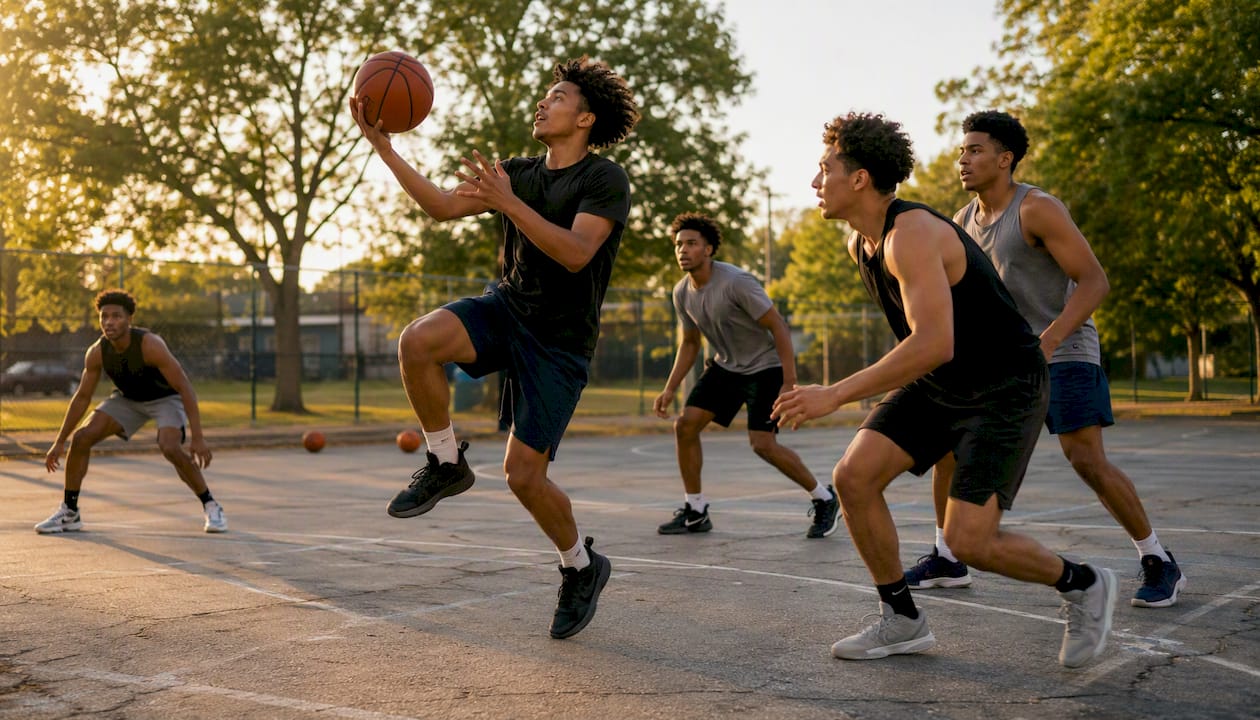
Phase 1 (weeks 1–2): exposure
Captains lead warm-ups and low-cognitive drills only. The coach supports every cue and corrects in real time. Goal: captains deliver three clean cues per drill without prompting.
Phase 2 (weeks 3–4): decision-making under pressure
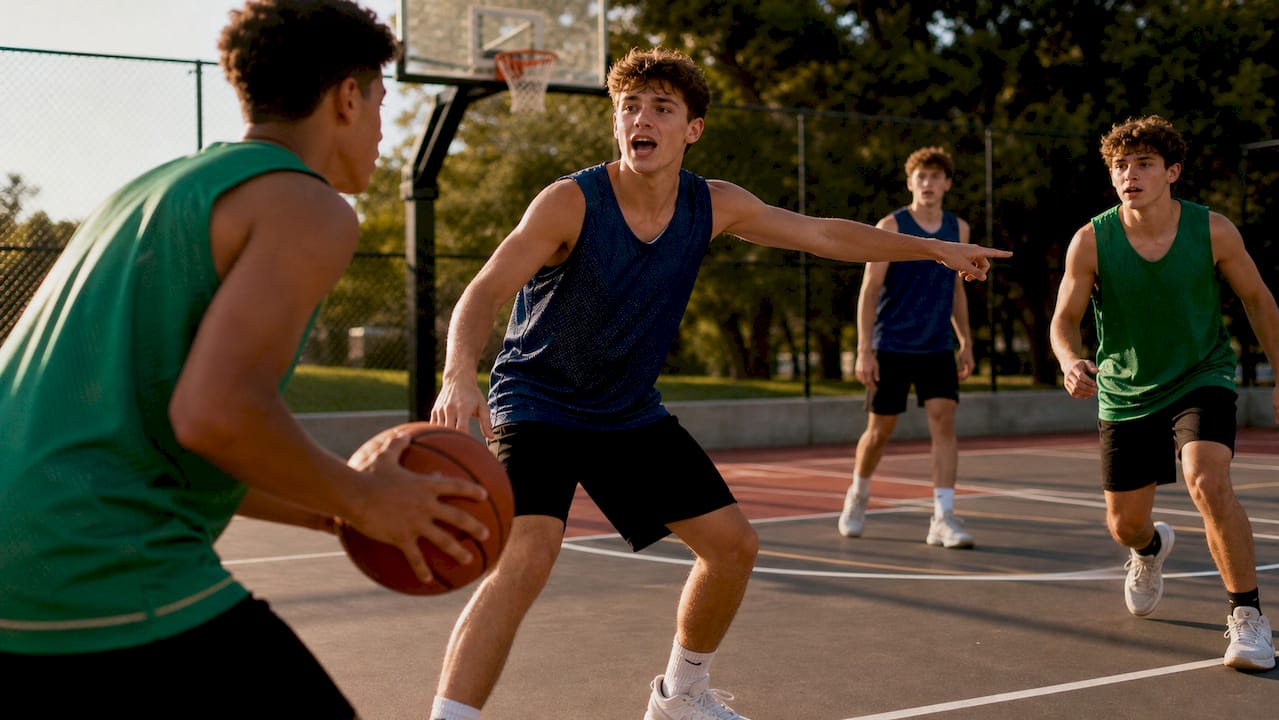
Introduce 3v3 and 4v4 small-sided games where the captain calls plays and manages rotations. Add a short captain-led film session (10 minutes, one defensive clip).
Phase 3 (weeks 5–8): autonomy and accountability
Captains run accountability huddles before practice, manage short segments independently, and deliver in-game cues under fatigue. Coach observes and provides post-session data only.
| Checkpoint | Week | What to assess | Tool |
|---|---|---|---|
| Baseline review | Week 2 | Cue clarity, eye-contact rate | Observation checklist |
| Mid-program review | Week 4 | Decision speed, inclusivity | 4-point rubric |
| Final review | Week 6–8 | Consistency, accountability | Full rubric + Captain Log |
Which drills build communication and on-court leadership?
Small-sided games, communication-focused shell work, and captain’s scrimmage are the most effective drills for developing on-court leadership and accountability. Run them in this order.
Communication Circle. Players stand in a circle. The captain calls a cue; every player must respond with a verbal acknowledgment before moving. Progression: add a ball, then add defensive pressure.
3v3 Read-and-React. Half-court. Captain plays point and must verbalize every decision before executing. Coaching cue: “Call it before you do it.” U12 variation: two-word cues only. U16+ variation: full defensive assignment syntax.
Captain’s Scrimmage. Full-court 5v5. Captain manages substitutions and calls one play per possession. Coach tracks cue-to-action seconds. Progression: add a shot-clock constraint.
Free-Throw Pressure Ladder. Team must hit a set number of consecutive free throws. Captain manages focus cues between attempts. Read-and-react and pressure free-throw ladders accelerate composure when paired with post-drill reflection.
Safety notes: avoid spinal-twisting movements in warm-up sequences for U12. Add visual anchors (colored cones) for younger groups. Increase verbal complexity only after players demonstrate consistent response to two-word cues.
Pro Tip: Field-tested programs using the Captain-Led Warm-Up protocol reported 31% higher retention of verbal cueing accuracy after 12 weeks across 17 programs. Run it every practice, not just on leadership days.
Ready-to-use 60- and 90-minute practice plans
| Segment | 60-min plan | 90-min plan |
|---|---|---|
| Captain-led warm-up | 10 min | 12 min |
| Leadership drill block | 10 min | 10 min |
| Skill/transition work | 15 min | 25 min |
| Captain-run scrimmage | 10 min | 10 min |
| Debrief | 5 min | 15 min |
What to log each session (Captain Log fields):
- Date and captain name
- Each cue delivered (word-for-word)
- Team response: % of players who moved within 3 seconds
- One corrective note from the coach
Download the Basketball Template Bundle For Coaches to get editable versions of both plans, the Captain Log sheet, and the observation checklist. Adapt column widths for your roster size and add an age-group note at the top of each sheet.
How do you select captains without creating favoritism?
Score each candidate on five criteria, each rated 1–4:
- Effort and work ethic — shows up early, stays late, leads by example in conditioning
- Communication ability — gives clear, calm cues; does not use blame language
- Accountability — owns mistakes publicly and corrects without drama
- Coachability — applies feedback within the same session
- Peer respect — teammates respond to their cues without being told to
Two selection models:
- Coach-appointed with trial period. Coach selects based on rubric scores from the first two weeks of practice. Captain holds the role for 3–4 weeks, then the rubric is re-scored. Transparent criteria prevent the “popularity” perception.
- Player-nominated trial rotation. Players vote anonymously using a simple form (name three teammates who fit the five criteria). Coach cross-references votes with rubric scores and appoints a rotating captain for each week. Observing off-court behavior, communication, and work ethic is as important as in-practice performance when choosing leaders.
Rotation options: weekly rotation (every player gets a turn), role-based rotation (offensive captain / defensive captain), or co-captain model (one experienced, one developing). Communicate the decision to players and parents in writing before the season starts.
Pro Tip: Select captains in spring for the following season when possible. That gives you a full off-season to run the 6-week curriculum before competition begins.
How do you measure captain growth over 6–12 weeks?
Use a 4-point rubric scored at each checkpoint:
| Score | Clarity | Timing | Inclusivity | Consistency |
|---|---|---|---|---|
| 1 | Cues are unclear or absent | Cues come after the moment | Addresses 1–2 players only | Rarely leads without prompting |
| 2 | Cues are understandable but vague | Cues are slightly late | Addresses half the group | Leads in some drills |
| 3 | Cues are clear and specific | Cues land at the right moment | Addresses most players | Leads consistently in practice |
| 4 | Cues are precise and calm under pressure | Cues anticipate the next action | Addresses every player by name | Leads in games without prompting |
Observation checklist items:
- % of teammates responding to cues (target: 80%+ by week 6)
- Cue-to-action seconds (target: under 3 seconds by week 4)
- Number of corrective interventions the captain makes per session
- Instances of blame language (target: zero by week 4)
Track the two priority metrics (eye-contact rate and cue-to-action seconds) on a simple progress chart. Plot them weekly. A flat line after week 4 signals the captain needs a new challenge, not more repetition.
How do coaches give feedback without micro-managing captains?
Give captains increasing ownership. Your job shifts from directing to observing and feeding data back after sessions. The Captain’s Academy model — weekly check-ins, defined expectations, and structured drills — creates a repeatable path from title to real influence.
In-the-moment cue (10 seconds): “Good cue. Watch your timing on the next one.”
Post-practice 3-point debrief:
- One specific praise: “You called the rotation before the ball moved. That’s exactly right.”
- One improvement: “Three players didn’t respond to your cue in the third drill. What would you do differently?”
- One next-step task: “Tomorrow, call every player by name during the communication circle.”
Weekly check-in template (15–20 minutes):
- What went well this week as a leader?
- What was the hardest moment?
- One goal for next week (captain sets it, coach approves it)
- One paired practice task to work on together
Pro Tip: Use coaching leadership traits as a reference when building your feedback scripts. Model the behavior you want captains to replicate.
What goes wrong with captain development and how do you fix it?
Common pitfalls:
- Overloading captains in week 1 with full game-management responsibility
- Giving inconsistent feedback (praising one day, ignoring the next)
- Letting captains use blame language without correction
- Selection perceived as favoritism because criteria were never shared
Red flags to watch:
- Drop in team morale after captain is appointed
- Captain avoids accountability huddles or delegates them to the coach
- Cue content becomes unsafe (physical gestures, exclusionary language)
Corrective actions:
- Run a coach-led reset: take back one responsibility, let the captain earn it again over one week.
- Retrain cue content: sit with the captain and rewrite their three standard cues together.
- Re-pair the captain with an assistant coach for two sessions of side-by-side oversight.
- Use a normalization script with the team: “We’re all learning this together. The captain’s role rotates, and everyone gets a turn.”
Hoop Mentality resources for leader development
Hoop Mentality provides player leadership development resources built by coaches for coaches. The tools below map directly to this program:
- Captain Log — tracks cues, team response, and session notes; start using it in week 1
- Observation checklist — pre-formatted for the 4-point rubric; print one per checkpoint
- Practice plan templates — editable 60- and 90-minute formats with leadership segments built in
- Scouting templates — use the Editable Scouting Report Template for captain-led film sessions in Phase 2
For staff coordination and scheduling your leadership program across multiple sessions, staff management best practices offer a useful operational framework to keep assistant coaches aligned.
Why structured leader development is worth your time
Most coaches know they want leaders. Fewer build the conditions that produce them. A rotating captain with a laminated cue card and a 15-minute weekly check-in costs almost nothing in practice time. What it returns is a team that self-corrects, communicates under pressure, and holds each other accountable without the coach in the middle of every moment. Start small. Rotate the role. Measure two numbers. The culture follows the habit, not the title.
Hoop Mentality templates that speed up your program
Ready to run this plan without building everything from scratch? The Basketball Starter Pack For Coaches includes practice templates and simple leadership tools you can use in week 1. For a full setup, the Basketball Template Bundle For Coaches adds editable rubrics, Captain Log sheets, and the 60- and 90-minute practice plans referenced throughout this guide.
Start with the Captain Log and one practice template. That’s enough to run your first captain-led session tonight. Both packs are available at Hoop Mentality and ready to download immediately.
Sources
- How to Build Youth Basketball Leadership in 2026: The Captain-Led Warm-Up + Communication Drill Protocol
- Basketball Drills to Build Sharper Leadership Skills
- Properly developing player leadership | Winning Hoops
- Beyond the Playbook: A Coach’s Guide to Developing Influential Team Captains in Basketball and Netball | Vanta Sports
Adapt all materials to your team’s age group and follow local safety guidelines for youth contact drills.
FAQ
What is the first step in basketball team leader development?
Assign a rotating captain and run a captain-led warm-up at every practice this week. Track eye-contact rate and cue-to-action seconds from session one.
How long does it take to develop an effective team captain?
A structured 6–8 week curriculum with weekly checkpoints at weeks 2, 4, and 6–8 produces measurable improvement in cue clarity, timing, and consistency.
How do you select a captain without creating favoritism?
Score candidates on five criteria (effort, communication, accountability, coachability, peer respect) using a 1–4 rubric, then share the criteria with the team before announcing any decision.
Which drills work best for developing on-court leadership?
Communication Circle, 3v3 read-and-react, captain’s scrimmage, and free-throw pressure ladders are the most effective drills when paired with post-drill reflection and coach debriefs.
What templates does Hoop Mentality offer for captain development?
The Basketball Starter Pack and Basketball Template Bundle include editable Captain Logs, observation checklists, 4-point rubrics, and 60- and 90-minute practice plans ready to download and use.