

TL;DR:
- Developing player leadership enhances team cohesion, mental toughness, and retention significantly.
- Implementing routines like daily debriefs and regular role reviews fosters leadership skills.
- Focusing on task cohesion and honest feedback drives performance under pressure.
Talent alone does not build a winning team. Plenty of rosters are loaded with skilled players who still struggle to communicate, make smart decisions under pressure, or hold each other accountable when it counts. Developing real leaders from within your squad is one of the most impactful things you can do as a coach. The research backs this up, and so does practical experience on the sideline. This guide walks you through exactly how to build player leadership, from the tools and routines to a season-long roadmap and a clear way to measure what’s working.
Table of Contents
- Understanding the impact of player leadership
- Key tools and structures for player leadership development
- Step-by-step process: Building leadership throughout the season
- Measuring progress and adjusting your leadership strategy
- Why most leadership programs fail—and what really works
- Take your team’s leadership—and results—to the next level
- Frequently asked questions
Key Takeaways
| Point | Details |
|---|---|
| Leadership drives results | A transformational approach to leadership can measurably improve team cohesion and performance. |
| Embed leadership routines | Daily debriefs, feedback, and clear roles develop leadership organically during practice. |
| Measure and adjust | Assess progress using both data and feedback, then iterate to strengthen your team’s leadership. |
| Task cohesion matters most | Focusing on shared tasks and accountability outperforms just promoting team friendships. |
Understanding the impact of player leadership
Player leadership is not just about who has the most experience or who scores the most points. It’s about players who influence attitudes, behaviors, and effort levels across the team, both in practice and on game day. These players communicate clearly, hold teammates accountable, and model the work ethic you want your whole roster to reflect.
The evidence for prioritizing this is hard to ignore. Research on transformational leadership in basketball shows a direct 83.66% effect on team cohesion, with an additional indirect effect of 16.34% running through mental toughness. That means leadership does not just make players feel connected. It builds the grit they need to perform when games get tough.
| Leadership effect | Impact percentage |
|---|---|
| Direct effect on team cohesion | 83.66% |
| Indirect effect via mental toughness | 16.34% |
| Culture correlation with retention | 20% higher |
Building a strong team culture is not a soft goal. Teams with strong cultures consistently show 20% higher retention and engagement compared to those that neglect it. That number matters whether you are coaching youth, high school, or college ball.
“90% of coaches agree that a strong team culture directly leads to better on-court performance.” This is not opinion. It’s a pattern coaches at every level keep confirming.
So what separates a team that has talent from one that actually uses it? Leadership structure. Players who know their roles, communicate expectations, and trust each other to execute are fundamentally different from collections of individuals who just happen to wear the same jersey. The leadership study in basketball makes it clear: investing in this area is one of the highest-return moves you can make as a coach.
Key tools and structures for player leadership development
Knowing the impact is step one. Knowing how to build it daily is where most coaches need a clear system. These are the core tools and routines that embed leadership development into your regular practice schedule.
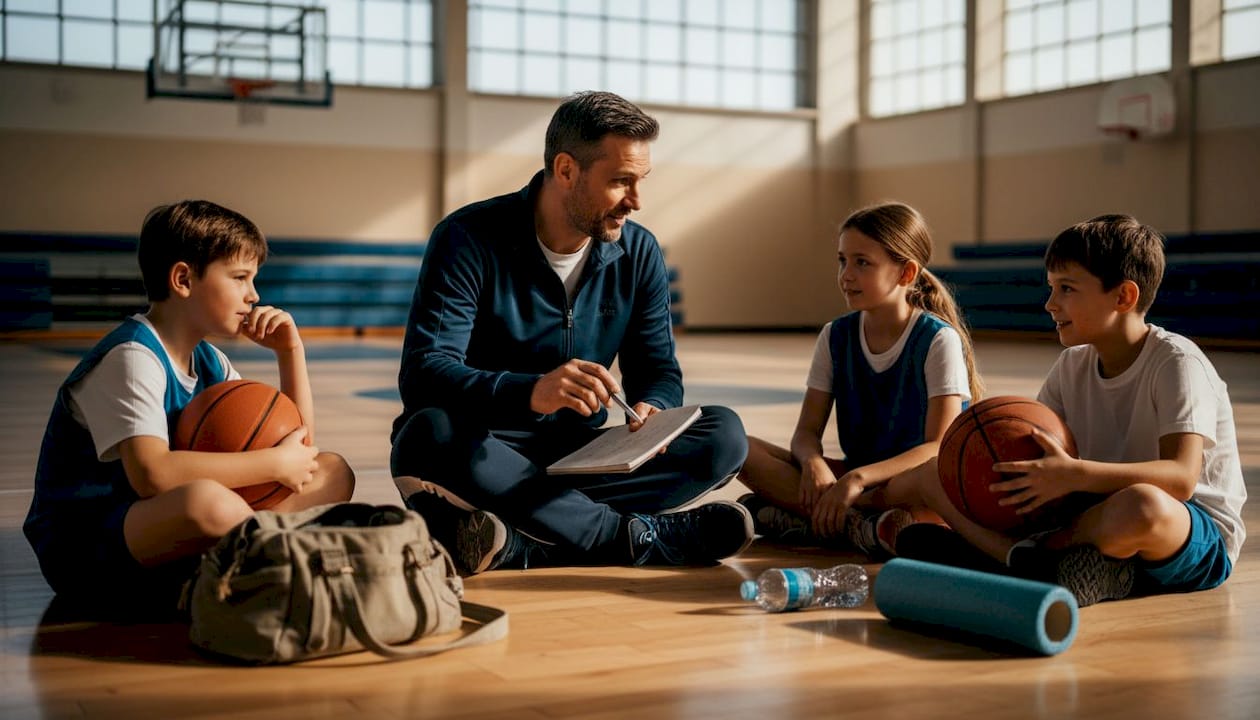
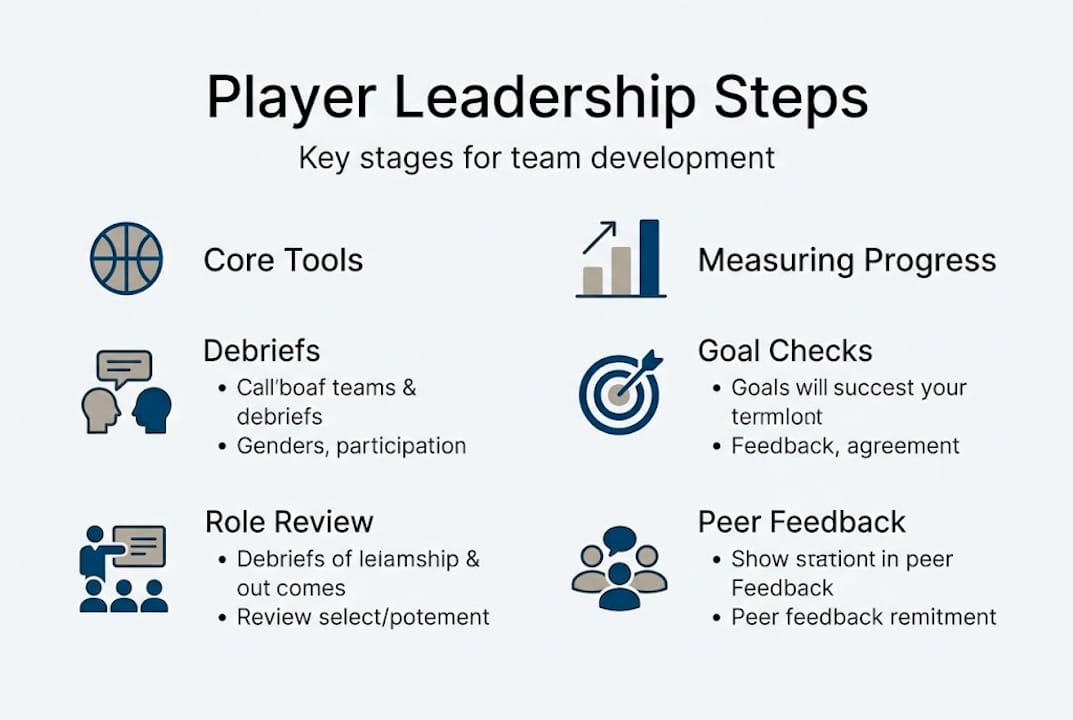
Daily debriefs. A five-minute review at the end of every practice is one of the simplest habits you can install. Ask players what went well, what needs improvement, and who showed leadership today. It takes almost no time and builds a habit of reflection.
Weekly peer feedback sessions. Structured moments where players give each other constructive, specific input. This is not a free-for-all. Set clear guidelines: focus on behaviors, not personalities. Keep it actionable.
Structured goal-checks. Tie individual and team goals to leadership roles. Players need to know what they are accountable for, not just what their position requires on defense or offense.
Team roles review every 2-3 weeks. As the season evolves, roles shift. Reviewing them regularly keeps expectations clear and prevents confusion or resentment from building up.
Here’s a quick comparison of cohesion types and which to prioritize:
| Cohesion type | Focus | Performance value |
|---|---|---|
| Task cohesion | Shared goals, roles, communication | High, especially under pressure |
| Social cohesion | Friendships, team bonding | Moderate, can avoid hard conversations |
Research from team sport leadership strategies confirms that task cohesion outperforms social cohesion when it comes to results under pressure. Build the relationship, but always anchor it to the work.
- Use leadership moments inside drills to spotlight good behaviors in real time
- Rotate who leads warm-ups or film sessions to build comfort with leadership across the roster
- Pair experienced players with developing ones for structured leadership skill-building
- Revisit your key leadership skills framework with players each month
Pro Tip: Use a specific drill moment, like a critical defensive stop or a contested finish, to pause and ask the floor leader what call they made and why. This builds real-time decision-making habits without adding extra time to practice.
Step-by-step process: Building leadership throughout the season
With your toolkit in place, here’s how to apply it from the first day of pre-season through the final playoff push.
-
Set clear leadership roles in pre-season. Before the first official practice, identify two or three players for formal leadership roles. Define what those roles mean in specific, behavioral terms. Vague titles create confusion. Clear expectations create accountability.
-
Incorporate daily and weekly leadership activities. Start with the five-minute debrief every practice. Add peer feedback sessions once a week. Make these non-negotiable, the same way you treat conditioning or film study.
-
Review and update team roles every 2-3 weeks. A player who was hesitant in October may be ready to lead a drill group by November. Keep the structure flexible enough to reflect actual growth.
-
Facilitate peer feedback and player ownership. Give players a structured format for feedback so they do not default to either silence or venting. Ownership grows when players feel they have a real voice in how the team operates.
-
Elevate leadership tasks during playoffs. Under pressure, leadership either shows up or disappears. Use this phase to increase responsibility, not reduce it. Let players lead film sessions, run accountability check-ins, and speak first in huddles.
Democratic and transformational leadership styles consistently boost both motivation and leadership emergence in team sport settings. Apply these through your leadership tips for coaches and your player development tips throughout the season.
Pro Tip: Rotate leadership opportunities to every player on your roster, not just your captains. A backup guard who leads a successful defensive film segment builds confidence that shows up in game situations.
Measuring progress and adjusting your leadership strategy
Once your plan is running, you need a clear way to know if it’s working. Gut feeling is not enough. Here’s what to track.
Observable performance indicators:
- On-court communication during games (calling screens, switching, alerting teammates)
- Conflict resolution speed: how quickly do issues get addressed without coach intervention?
- Decision-making quality in high-pressure moments
Player feedback:
- Run structured surveys after each phase of the season: pre-season, mid-season, playoffs
- Hold informal check-ins with your leadership group every two weeks
- Ask specific questions: “Do you feel your role is clear?” and “Where do you feel unsupported?”
Team outcomes:
- Retention from one season to the next
- Engagement levels in practice (effort, communication, initiative)
- Win/loss context: are close games being won or lost on leadership moments?
Teams that build leadership skills in practice and track the results consistently outperform those that treat leadership as a one-time conversation. The basketball leadership research reinforces this: 20% higher retention is not an accident. It’s the outcome of deliberate culture-building tracked over time.
Adjust your tactics based on what the data and player feedback tell you. If peer feedback sessions are creating tension rather than growth, adjust the format. If role reviews are being skipped, make them a scheduled agenda item. The plan should serve the team, not the other way around.
Why most leadership programs fail—and what really works
Here is the uncomfortable truth: most leadership programs fail because they focus on making players feel good about the team rather than making them responsible for it. Team bonding activities, optional captain meetings, and motivational talks are comfortable. They do not create leaders.
Real leadership growth happens when players face situations they are not ready for and have to work through them anyway. Peer feedback that is honest, even when it stings. Role reviews that result in a demotion, not just affirmation. Accountability conversations that coaches sometimes avoid because they feel risky.
Over-prioritizing social cohesion is a common trap. As outlined in team sport leadership strategies, focusing too heavily on “getting along” often means the hard conversations never happen. Task cohesion, built around shared goals, clear roles, and honest communication, is what drives performance when the pressure is highest.
Allowing players to fail forward is one of the most practical tools available. A player who makes the wrong call in a drill and then talks through why, learns faster than one who is corrected from the sideline every time. The confident coaching fundamentals that separate good coaches from great ones often come down to this: trusting the process enough to let players own it.
Take your team’s leadership—and results—to the next level
This guide gives you the framework. Now you need the tools to run it consistently without rebuilding everything from scratch each week.
Hoop Mentality’s basketball practice plan template makes it simple to schedule leadership routines directly into your practice structure, so debriefs, role reviews, and peer feedback sessions are already built in. Pair that with skill-specific tools like the Big Man Dual Action Drill to create real leadership moments inside every session. These resources are built from real coaching experience, designed to save you time and help you focus on developing your team with confidence and structure.
Frequently asked questions
What is the most effective way to develop player leadership in basketball?
Regular leadership activities like daily debriefs and peer feedback sessions, combined with clear role expectations, create the foundation for lasting player leadership.
How often should team roles and leadership responsibilities be reviewed?
Review leadership roles every 2-3 weeks to keep them clear and relevant as your team develops through the season.
Why is task cohesion more important than social cohesion in basketball teams?
Task cohesion improves communication and performance under pressure, while over-focusing on social cohesion can make it harder to have the direct conversations that actually drive growth.
How can I measure progress in player leadership development?
Track observable behaviors, collect player feedback through surveys or check-ins, and monitor team retention and engagement across the season for a full picture of progress.
Recommended
- Basketball Leadership Guide: Build Strong Team Culture – Hoop Mentality
- How To Develop Leadership Skills In Basketball Players? – Hoop Mentality
- Key Leadership Skills: Complete Guide for Coaches – Hoop Mentality
- Player Development: Transforming High School Teams – Hoop Mentality
- How team play in games builds social skills for families - The World Game