

TL;DR:
- Clear communication norms prevent confusion and ensure everyone knows where critical information resides.
- Supporting a culture of active listening, transparency, and consistent documentation builds trust and team performance.
The top team communication tips every basketball coach needs
Clear communication is the difference between a team that executes and one that guesses. These tips work immediately.
- Set response time norms. Define how fast players and staff should reply to messages on each channel.
- Use meeting agendas. Share the agenda before every team meeting so everyone arrives prepared.
- Practice active listening. Repeat key points back to players to confirm understanding.
- Assign clear roles. Every player and staff member should know their responsibilities without asking.
- Create a single information hub. Keep practice plans, scouting reports, and decisions in one shared location.
- Build feedback loops. Schedule regular one-on-ones to surface issues before they grow.
- Match the channel to the message. Use live conversations for conflict and sensitive topics; use written updates for schedules and status.
- Document decisions. Write down what was decided, who owns it, and the deadline after every significant meeting.
- Read non-verbal cues. Body language and tone tell you what players won’t say out loud.
- Tailor your message. Adjust how you communicate based on each player’s personality and learning style.
These habits form the foundation. The sections below show you how to build each one into a real system.
Table of Contents
- How to establish clear communication norms for your team
- How your communication style shapes team morale and results
- Building communication as intentional infrastructure, not an afterthought
- Practical communication strategies from Hoop Mentality coaching experience
- Hoop Mentality resources built for coaching communication
- FAQ
- Key Takeaways
How to establish clear communication norms for your team
Most communication problems on basketball teams are not attitude problems. They are system problems. When players don’t know where to find the practice schedule, or staff members expect a reply that never comes, the issue is missing norms, not missing effort.
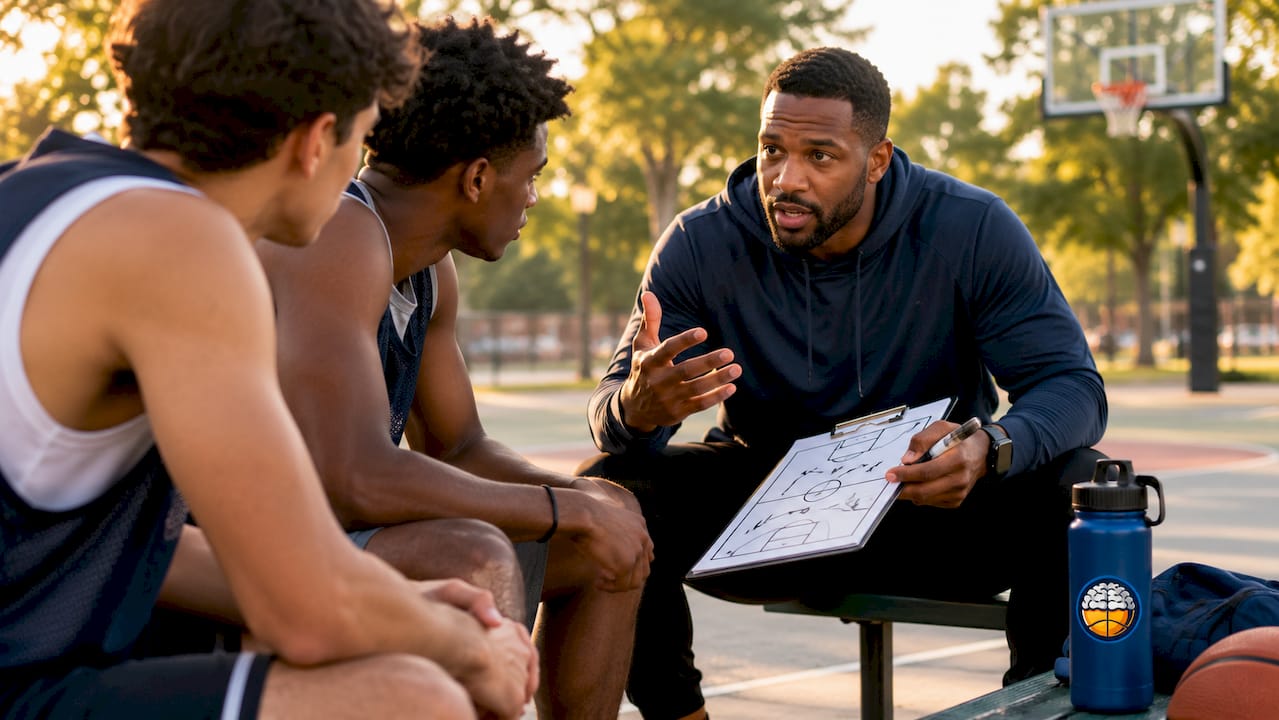
Explicit communication norms prevent confusion and make sure everyone knows how and where critical information lives. Start by defining three things: which channel handles which type of message, how fast a response is expected, and where decisions get stored.
Practical steps to set your norms:
- Define your channels. Quick questions go to group chat. Practice plans and game prep go to a shared doc or folder. Conflict and performance conversations happen face to face.
- Set response time expectations. For example: chat replies within four hours during the day, email replies within 24 hours.
- Write decisions down immediately. After every staff meeting, post a short summary with the decision, the owner, and the deadline.
- Share agendas before meetings. No agenda means no meeting. Attendees need to know the topics and expected outcomes before they walk in.
- Review norms at the start of each season. What worked last year may not fit a new roster or staff.
Pro Tip: Write your communication norms as a one-page reference and share it with every new player and staff member on day one. It removes ambiguity before it starts.
How your communication style shapes team morale and results
Your style as a coach sets the tone for every interaction on the team. A coach who communicates with transparency and context builds a high-trust environment. One who withholds information or delivers feedback without care creates confusion and low morale.
Coaching communication styles fall into two broad categories: supportive and efficiency-driven. Supportive coaches prioritize the player’s emotional state alongside the message. Efficiency-driven coaches prioritize speed and directness. Neither is wrong. The problem comes when you apply the same style to every player regardless of what they need.
Transparency is a specific skill here. It does not mean sharing everything. It means accessible information with no unnecessary gatekeepers. When players understand why a decision was made, they trust the process even when they disagree with the outcome.
Style alignment strategies:
- Know your default style. Ask a trusted assistant coach how you come across in high-pressure moments.
- Adjust for the player. A veteran needs less explanation. A rookie needs more context.
- Lead with the why. Before delivering critical feedback, state why the correction matters to the team’s goals.
- Stay consistent. Players lose trust when a coach’s tone shifts unpredictably based on mood.
- Model the behavior you want. If you want players to communicate openly, show them what that looks like in your own interactions with staff.
Building communication as intentional infrastructure, not an afterthought
High-performing teams treat communication the way they treat conditioning: it is a system, not a reaction. When communication is reactive, information gets lost, decisions get revisited, and players operate on incomplete pictures.
The fix is to build communication infrastructure before the season starts. That means deciding where information lives, who owns each communication channel, and how updates flow from staff to players and back. Fragmented channels, where some information lives in a group chat, some in email, and some only in someone’s head, create friction and information loss.
Use async communication for updates that don’t need a live response. A recorded video walkthrough of a new play, a written scouting summary, or a shared practice plan all qualify. Save synchronous meetings for decisions that require real-time debate, emotional nuance, or complex group alignment. An eight-person, one-hour meeting consumes eight person-hours of productivity. Use that time deliberately.
Infrastructure-building steps:
- Pick one platform for documentation. Notion, Google Docs, or a shared drive. One place, consistently used.
- Assign communication owners. One staff member is responsible for posting the weekly schedule. Another owns the scouting report distribution.
- Use async updates for routine information. Practice times, film review links, and travel logistics don’t need a meeting.
- Create continuous feedback loops. A standing weekly prompt, such as “What’s working? What’s stuck?” normalizes raising issues early.
- Document with an outsider-first mindset. Write every summary as if the reader wasn’t in the room. Include background, not just conclusions.
For structured meeting formats and sports staff coordination, having clear role definitions before the season saves significant time during it.
Practical communication strategies from Hoop Mentality coaching experience
The strategies below come directly from real coaching contexts. They address the situations where communication most often breaks down: one-on-one player conversations, staff disagreements, and in-game adjustments.
Active listening in practice. When a player comes to you with a concern, repeat the key point back before responding. “So what I’m hearing is you feel your role isn’t clear in the half-court offense. Is that right?” This one habit reduces misunderstandings and makes players feel heard. Building that trust takes repetition, not a single conversation.
Tailoring communication to player personalities. Some players respond to direct, brief feedback. Others need context and encouragement before they can absorb a correction. Knowing the difference is a coaching skill, not a personality preference. Use one-on-ones to learn how each player processes information best.
Conflict resolution with clear protocols. Conflict resolution benefits from psychological safety. Players need to know they can raise an issue without it becoming a bigger problem. Set a clear path: player raises concern with coach directly, coach responds within 24 hours, resolution is documented. Quick resolution prevents escalation.
Using technology to support communication. Tools like shared Google Docs, Hudl for film review, and messaging apps keep information accessible between practices. The goal is not more tools. It is fewer, used consistently.
Recommended strategies with Hoop Mentality resources:
- Use the Basketball Starter Pack For Coaches to organize practice plans and communication templates from day one.
- The Basketball Template Bundle For Coaches includes ready-to-use formats for practice planning and team management.
- Share the Editable Scouting Report Template with staff to standardize how player and opponent analysis gets communicated.
- Use the Basketball Scouting Report Template to give players clear, consistent pre-game information.
- The Basketball Shooting Bundle For Coaches includes drill communication frameworks that help players understand expectations quickly.
Hoop Mentality resources built for coaching communication
Coaches who want ready-to-use communication tools don’t need to build everything from scratch.
Hoop Mentality provides professional basketball coaching resources developed through real coaching experience. The Basketball Starter Pack For Coaches gives you practice plans, templates, and organizational tools that reduce the time you spend on logistics and increase the time you spend coaching. Every resource is built to help you communicate clearly with players and staff, from pre-game scouting summaries to structured practice formats.
Browse the full collection at Hoop Mentality and get the tools your team needs this season.
FAQ
What are the most effective team communication tips for basketball coaches?
Set clear norms for each channel, document decisions after every meeting, and practice active listening in one-on-ones. These three habits address the most common sources of miscommunication on basketball teams.
How does a coach’s communication style affect team performance?
Coach communication style directly affects player morale and trust. Transparent, consistent communication builds a high-trust environment where players perform with confidence.
What tools help coaches improve team communication?
Shared documentation platforms like Google Docs, film review tools like Hudl, and structured templates from Hoop Mentality all support consistent, clear communication between coaches and players.
How do you build a feedback culture on a basketball team?
Schedule regular one-on-ones, use a standing weekly prompt for blockers and wins, and make it clear that raising issues early is expected, not penalized. Psychological safety is the foundation.
What is the best way to handle conflict within a coaching staff or team?
Address conflict directly and quickly using a clear protocol: raise the issue, respond within 24 hours, and document the resolution. Teams that surface issues early avoid escalation and perform better.
Key Takeaways
Clear communication norms, consistent documentation, and active listening are the three pillars every basketball coach needs to build a high-trust, high-performance team.
| Point | Details |
|---|---|
| Set explicit norms | Define response times, channel use, and documentation standards before the season starts. |
| Match channel to message | Use live meetings for conflict and complex decisions; use async tools for updates and schedules. |
| Document every decision | Write down what was decided, who owns it, and the deadline after every significant meeting. |
| Build feedback loops | Regular one-on-ones and standing weekly prompts surface issues before they escalate. |
| Hoop Mentality resources | The Basketball Starter Pack and Template Bundle give coaches ready-to-use communication and planning tools. |