

Open gym sessions give players a coach-controlled environment for autonomous, high-repetition skill work that supplements formal team practice. Use them to fill three specific gaps your structured sessions can’t: individual repetition volume, self-directed problem-solving, and load management for players rehabbing or peaking.
- Autonomy and self-organization: Players set their own rep targets and sequence their own work.
- Targeted repetition: High-volume shooting, finishing, and ball-handling reps without stopping for team instruction.
- Recovery and individual work: Lower-intensity sessions for players managing load or returning from injury.
The rest of this guide gives you session formats, sample plans, tracking tools, and the drills to assign.
Table of Contents
- What does the role of open gym sessions actually mean for coaches?
- Which players benefit most from open gym?
- How do you structure open gym sessions? Three sample plans
- What is the coach’s role during open gym?
- How does open gym complement your formal practice schedule?
- What mistakes do coaches make with open gym?
- Which drills work best in open gym?
- How do you track open gym progress?
- Equipment and facility management during open gym
- Key Takeaways
- Open gym works when you treat it as a designed session
- Hoop Mentality resources for your open gym program
- Useful sources
- FAQ
What does the role of open gym sessions actually mean for coaches?
Open gym is an educational tool, not just extra facility access. Frontiers in Sports and Active Living (2025) positions it as a deliberate environment that builds athletes’ capacity to self-manage training priorities, which is a skill formal practice rarely develops. When a player has to decide what to work on, set a rep goal, and self-correct without a coach calling every rep, they internalize the practice habits that carry over to games.
The open gym advantages most coaches underuse are flexibility and access. Players can target a specific weakness at a time that fits their schedule, without waiting for a team session to address it. The limitation is equally clear: without coach input, open gym drifts toward low-intensity social time. That gap is exactly where your structure matters.
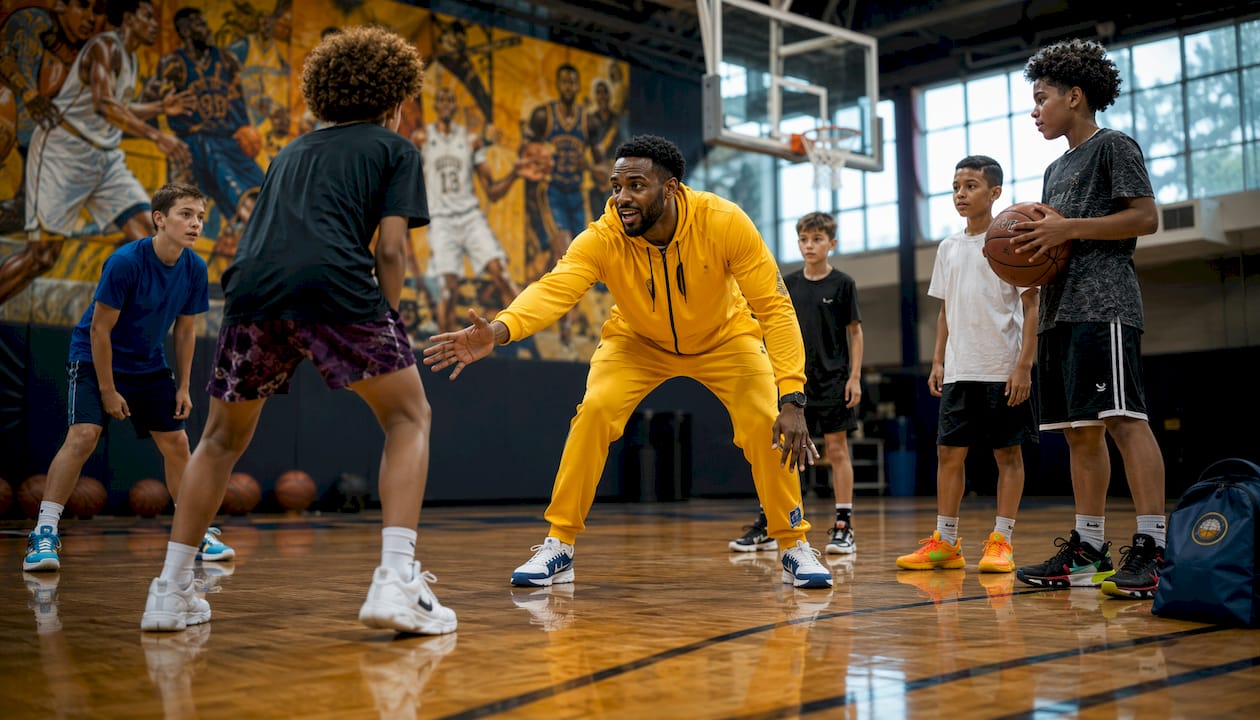
Pro Tip: Define the objective before you advertise open gym. A skill-development session assigns individualized targets. A facility-access session does not. Communicate the difference clearly so players show up ready to work.
Which players benefit most from open gym?
Not every player on your roster needs open gym at the same time. Prioritize these profiles:
- High-rep skill seekers: Guards and wings working on shot mechanics or finishing who need more attempts than team practice allows.
- Load-managed athletes: Players coming off minor injuries or managing fatigue who need lower-intensity, self-paced work.
- Specialized skill-seekers: Bigs developing face-up games or perimeter players adding a new move to their arsenal.
- Experienced self-starters: Upperclassmen or varsity-level players who already understand rep quality and can work independently.
For youth and middle-school players, open gym works best with a coach present and a short assigned task list. Unsupervised open gym for younger athletes tends to produce low-quality reps and poor habits. For high school and college-level players, a brief goal card at check-in is usually enough structure to keep sessions productive.
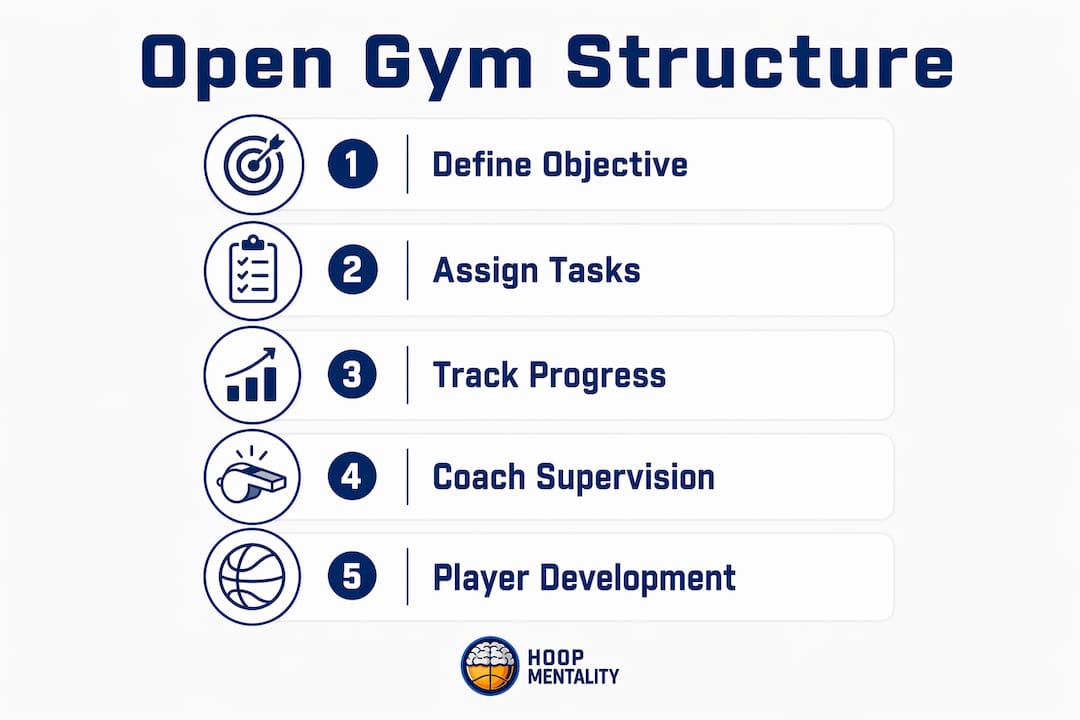
How do you structure open gym sessions? Three sample plans
Three formats cover most coaching situations. Match the format to your players’ needs and your available supervision.
| Format | Objective | Equipment | Supervision Ratio | Best For |
|---|---|---|---|---|
| Supervised skills lab | Targeted skill reps with coach feedback | Balls, cones, chairs | 1 coach per 10 players | Varsity, advanced players |
| Coach-curated stations | Rotating drill stations with assigned tasks | Balls, bands, agility ladders | 1 coach per 15 players | Mixed skill levels |
| Free practice with observation | Self-directed work, coach observes and redirects | Balls, open floor | 1 coach per 15–20 players | Experienced, self-motivated players |
45-minute session
- 0–5 min: Check-in, goal card submission, warm-up structure
- 5–35 min: Assigned skill block (shooting, finishing, or ball-handling)
- 35–42 min: Competitive rep challenge (make-based or timed)
- 42–45 min: Coach feedback, log completion
60-minute session
- 0–7 min: Check-in and dynamic warm-up
- 7–45 min: Two skill blocks (20 min each) with a 3-minute transition
- 45–55 min: Competitive or game-speed application
- 55–60 min: Coach notes, goal card review
90-minute session
- 0–10 min: Check-in, warm-up, goal review
- 10–60 min: Three rotating stations (15–17 min each)
- 60–80 min: Live 1-on-1 or 2-on-2 application
- 80–90 min: Cool-down, coach debrief, next-session targets
What is the coach’s role during open gym?
Coach presence is required. The supervision model shifts from directive instruction to observation and targeted feedback, but a coach on the floor is not optional. Certified staff monitoring activity and redirecting low-quality reps is what separates a productive open gym from an unsupervised shoot-around.
Operational policies to set before your first session:
- Require a signed waiver and a brief safety orientation for new participants.
- Use a check-in sheet or digital log at the door.
- Set a clear supervision ratio (see the table above) and stick to it.
- Schedule sessions during off-peak hours to avoid overlap with team practice.
- Post a short rule sheet: no full-court sprints without a partner, no contact drills without coach approval.
Your coaching feedback approach during open gym is brief and specific. Watch for rep quality, not just rep count. Redirect a player who is practicing a bad habit before it compounds.
Pro Tip: Decide early whether open gym is a paid add-on or included in your program fee. OPEX coaching guidance is direct on this: misaligning open gym with your business model creates friction and unmet expectations. If it adds real coaching time, price it accordingly.
How does open gym complement your formal practice schedule?
Open gym should refine what formal practice introduces, not replace it. Training literature recommends using structured sessions for foundations and open gym for high-repetition, focused work. That split applies directly to basketball: teach the move in practice, then let players log reps in open gym.
Timing strategies that work:
- Off-season: 2–3 open gym sessions per week, focused on individual skill development.
- Pre-season: 1–2 sessions per week, aligned with the skills being installed in team practice.
- In-season: 1 session per week maximum, used for load management or targeted finishing work.
Communicate the schedule to players and parents at the start of each phase. A short message explaining the purpose of each open gym block prevents confusion about attendance expectations. For organizing your full practice calendar, align open gym dates with your practice plan so both reinforce the same skill priorities.
What mistakes do coaches make with open gym?
The most common failure is running open gym with no defined objective. Players arrive, shoot around for an hour, and leave without measurable improvement. The session looked productive but wasn’t.
Four mistakes that erode program quality:
- No assigned objective or goal card at entry.
- Scheduling open gym during or immediately before team practice, creating fatigue and focus conflicts.
- Insufficient supervision, allowing bad habits to compound.
- Mismatching open gym with your business model, offering it free when it requires real coaching time.
These mistakes share a root cause: treating open gym as leftover time rather than a designed session. Players read that signal quickly and match the energy you set.
Pro Tip: Set entry criteria. Require a goal card, a minimum skill level for unsupervised formats, and a brief orientation for first-time participants. Clear rules at the door prevent the typical failure modes before they start.
Which drills work best in open gym?
Choose drills that support repetition, produce measurable outcomes, and require minimal partner dependency. These categories cover most open gym needs.
Shooting progressions:
- Catch-and-shoot from five spots (make 5 at each before moving)
- Off-the-dribble pull-up from elbow
- Pistol action into spot-up three
Finishing progressions:
- Mikan drill (both hands, 25 makes)
- Euro-step finish off two dribbles
- Hesitation into floater or layup
Ball-handling reps:
- Two-ball stationary dribbling (30-second intervals)
- Cone weave with change-of-direction
- DHO (dribble hand-off) footwork pattern
Three Hoop Mentality resources slot directly into these progressions:
- Pistol Transition DHO: Assign this for players working on transition finishing mechanics and DHO reads. Works in the 60- and 90-minute formats.
- Hesitation Finishing and Shooting: High-rep finishing and shooting progressions ready to drop into any station block.
- Skill Improving Infinite Loop Drills: Looped drill sequences with built-in rep targets, ideal for self-directed open gym work.
How do you track open gym progress?
Tracking must be simple and tied to session objectives. A complex system won’t get used. Three tools cover what you need.
| Metric | What to Track | Frequency |
|---|---|---|
| Attendance | Player name, date, session type | Every session |
| Goal card completion | Objective set vs. objective met | Every session |
| Skill test score | Make percentage or timed rep count | Every 2–3 weeks |
| Coach observation note | Rep quality, habit flags, progress notes | Weekly |
A one-page tracking sheet per player works. Top section: name, date, session goal. Middle: rep log or make count. Bottom: coach note. Review trends every four weeks and adjust drill assignments based on what the data shows. For a full skills development workflow, Hoop Mentality’s templates give you a ready-made tracking structure.
Equipment and facility management during open gym
Set up the floor before players arrive. Assign specific baskets or zones to each drill station so players aren’t competing for space. Rotate equipment (balls, cones, chairs) on a posted schedule if you’re running stations.
Key guidelines:
- Inspect all balls and equipment before each session. Remove damaged gear immediately.
- Post a floor map showing station locations and rotation order.
- Keep a first-aid kit courtside and confirm your facility’s emergency protocol with staff.
- Log equipment use and flag items needing replacement after each session.
- Limit the number of players per basket to maintain rep quality and reduce collision risk.
Key Takeaways
Open gym sessions produce measurable player development when they are structured, supervised, and aligned with your formal practice objectives.
| Point | Details |
|---|---|
| Define the objective first | Assign a goal card at check-in so every player has a measurable target before they touch a ball. |
| Match format to player level | Use supervised skills labs for younger players; free practice with observation for experienced, self-directed athletes. |
| Schedule off-peak | Place open gym outside team practice windows to protect focus and prevent fatigue conflicts. |
| Track every four weeks | Review attendance logs, goal card completion, and skill test scores on a monthly cycle to adjust programming. |
| Use Hoop Mentality resources | The Pistol Transition DHO, Hesitation Finishing and Shooting, and Infinite Loop Drills plug directly into any session format. |
Open gym works when you treat it as a designed session
The coaches who get the most from open gym are the ones who stop treating it as leftover time. The Frontiers (2025) research is clear: autonomy in training is a skill that has to be developed, and open gym is the environment where that happens. But autonomy without structure produces bad habits at scale.
The practical lesson is this: the less directive you are during open gym, the more deliberate your setup needs to be. A goal card, a posted station map, and a check-in log do more for rep quality than constant verbal coaching. Set the conditions, then observe. You’ll learn more about your players’ individual habits in one open gym session than in a week of team practice.
Pilot it for four to six weeks. Track attendance and goal card completion. Run a short skill test at week one and week six. The data will tell you whether to expand it, adjust the format, or cut it entirely.
Hoop Mentality resources for your open gym program
Hoop Mentality gives you ready-made tools to run open gym sessions without building everything from scratch. Three products are built for exactly this use case.
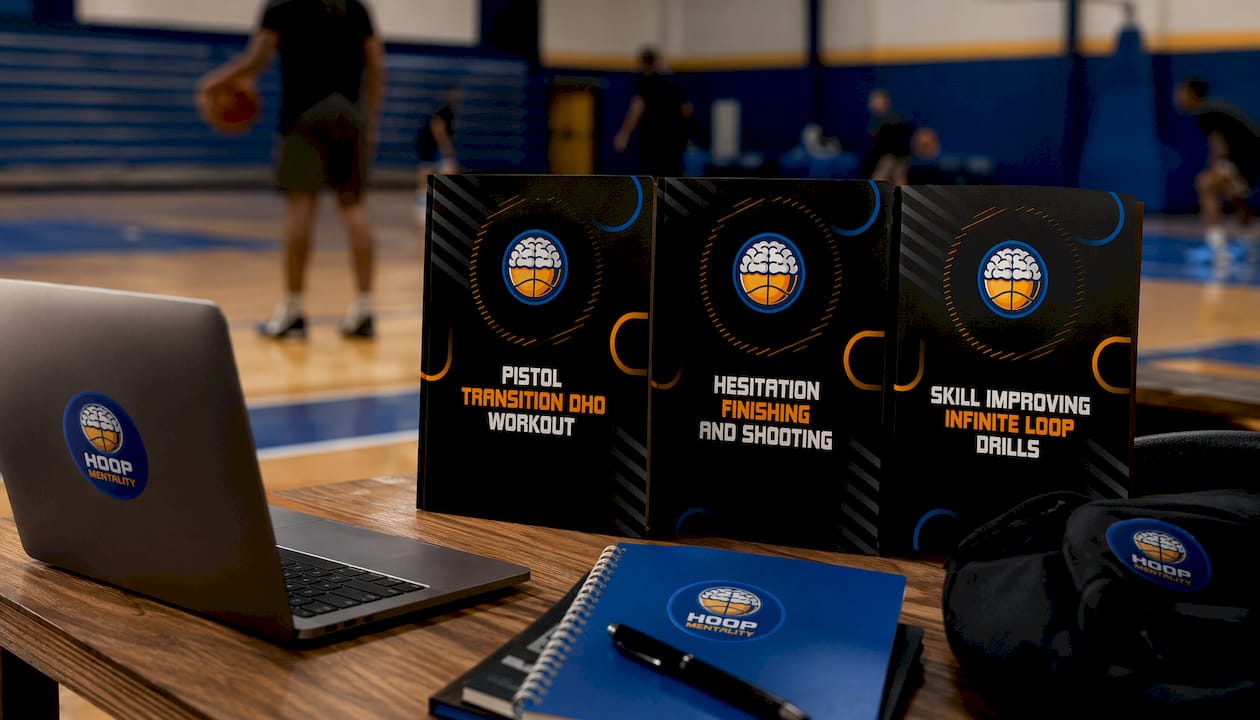
The Pistol Transition DHO All-Access Workout covers transition finishing mechanics with clear rep targets. The Hesitation Finishing and Shooting All-Access Workout gives players a full finishing and shooting progression they can run independently. The Skill Improving Infinite Loop Drills provide looped sequences with built-in goals, ideal for self-directed station work. Each resource plugs directly into the 45-, 60-, and 90-minute session formats above. Browse the full collection at Hoop Mentality and add the resources that fit your current training phase.
Useful sources
- Frontiers in Sports and Active Living (2025) — Open gym as a platform for self-organization and autonomy — Required reading for coaches designing educational open gym sessions.
- OPEX Fitness — How To Do An Open Gym — Required reading for aligning open gym with your coaching business model.
- CrossFit RRG — Open Gym or Training Classes: Which Is Right for You?
- Gyminny Kids — What Is Open Gym? Benefits at a Gymnastics Facility
- Hoop Mentality — Basketball Skills Development Workflow for Coaches
FAQ
What is the role of open gym sessions in basketball?
Open gym sessions give players structured time for autonomous, high-repetition skill work outside formal team practice. Frontiers in Sports and Active Living (2025) identifies this as an educational function that builds self-organization and training initiative.
How often should a basketball team hold open gym?
Off-season: 2–3 sessions per week. In-season: 1 session per week maximum, focused on load management or targeted skill refinement.
Does open gym require a coach to be present?
Yes. Supervision is required to maintain rep quality, prevent injury, and redirect poor habits. The coaching role shifts to observation and targeted feedback rather than step-by-step instruction.
How do you measure whether open gym is working?
Track attendance, goal card completion, and a periodic skill test every 2–3 weeks. Review the data every four weeks and adjust drill assignments based on trends.
Which Hoop Mentality resources work best for open gym?
The Pistol Transition DHO, Hesitation Finishing and Shooting, and Skill Improving Infinite Loop Drills are built for high-rep, self-directed open gym work and slot into any session format.