

TL;DR:
- Effective in-game adjustments focus on diagnosing root causes and implementing one targeted change at a time. Coaches use frameworks like the OODA loop to observe, diagnose, decide, and act quickly during moments of performance breakdowns. Prioritizing clarity and preparation helps players react faster and keep adjustments purposeful rather than reactive.
Player adjustment strategies are targeted, incremental changes made during a game to stabilize performance and respond to what the opponent is actually doing. Not full system overhauls. Not panic moves. Focused recalibrations based on what you observe, diagnose, and decide in real time.
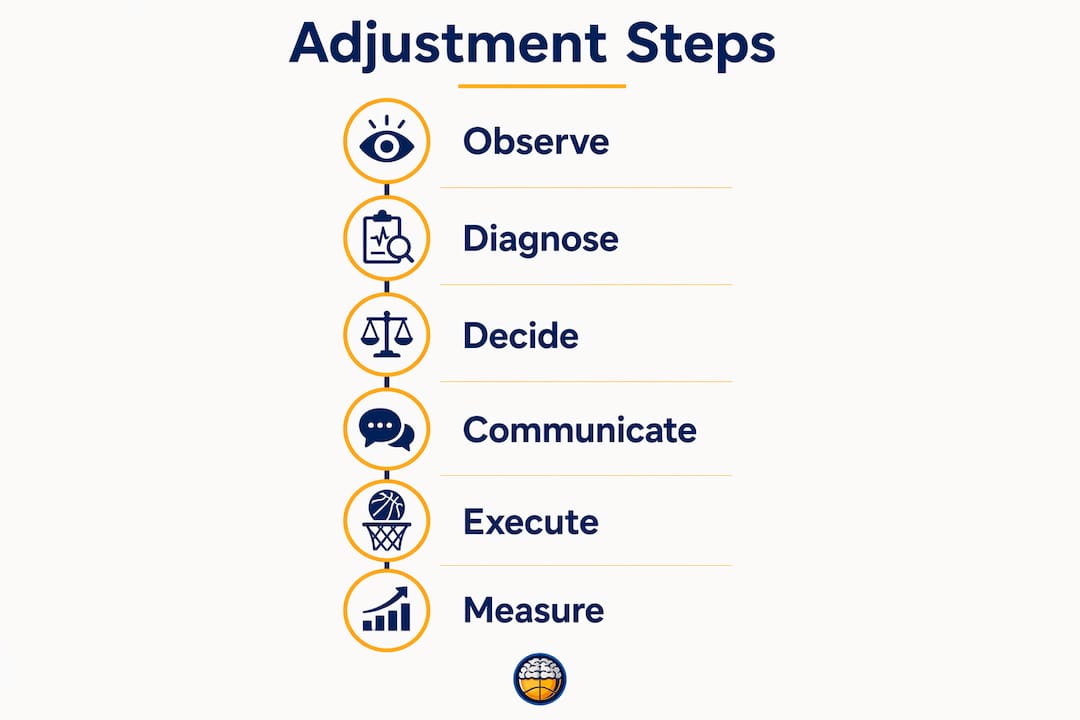
The most reliable framework for this is the OODA loop: Observe, Orient, Decide, Act. You watch what’s breaking down, identify the process causing it (not just the scoreboard symptom), choose one targeted fix, and execute it clearly. Then you loop back and watch again.
Here’s what that looks like in practice:
- Observe: Track patterns, not just outcomes. Is the defense collapsing on the ball or rotating late?
- Orient: Diagnose the cause. Is it a scheme problem, a personnel mismatch, or poor execution?
- Decide: Pick one adjustment. One. Not three.
- Act: Communicate it simply and directly to your players.
Role-specific adjustments matter here. Defensive players need different cues than offensive ones. A guard adjusting off-ball screens reads the game differently than a post player adjusting positioning on the block. Hoop Mentality’s coaching resources are built around exactly this kind of practical, role-aware guidance, grounded in real basketball experience rather than theory alone.
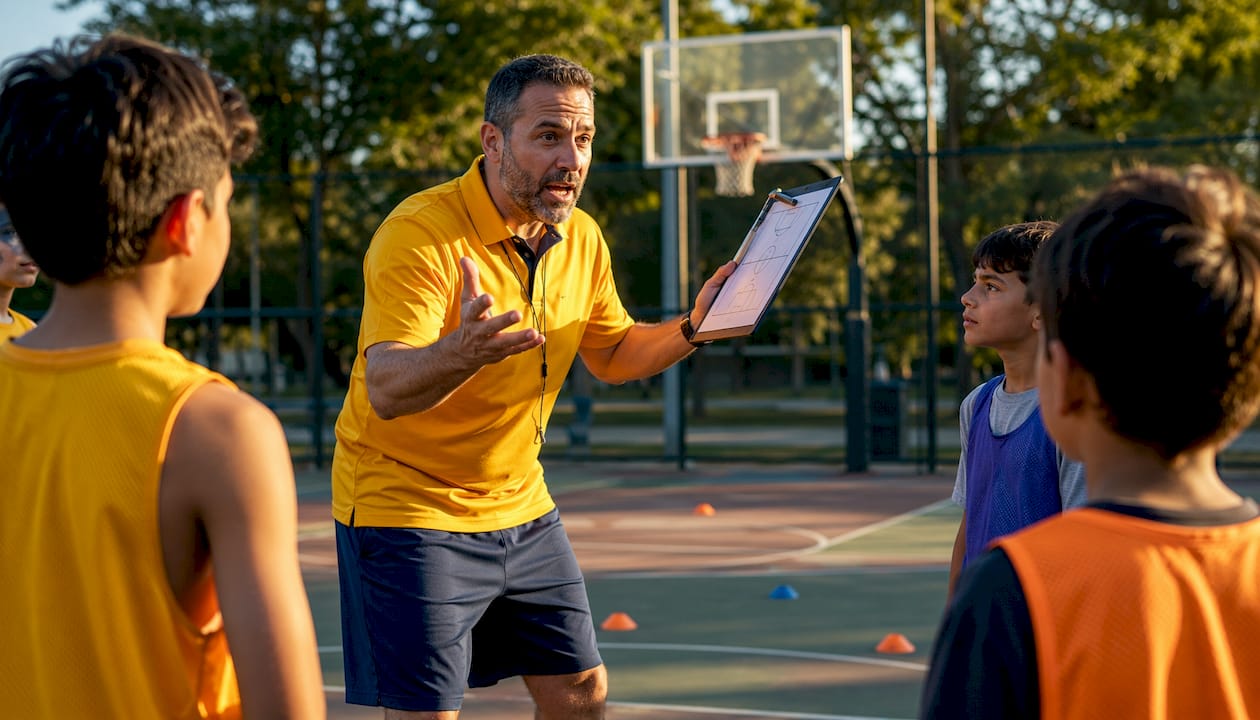
What are the most effective player adjustment strategies during a game?
The best tactical adjustments work because they target the right problem at the right time. Effective in-game adaptability relies not on raw skill alone but on decisive flexibility and knowing when to break or adjust the game plan.
Tactical techniques coaches use most:
- Manipulate tempo. Speed the game up when your opponent is disorganized. Slow it down when they’re on a run. Controlling pace forces opponents into conditions they haven’t prepared for. Hoop Mentality’s guide on basketball tempo control breaks down exactly how pace changes affect defensive rotations and offensive spacing.
- Target recovery zones. Identify where opposing players are physically or mentally fatigued and attack those spots directly.
- Shift defensive focus. Doubling a star player stops one threat but opens another. That trade-off is intentional, not accidental. See Hoop Mentality’s defensive adjustment tips for role-specific reads.
- Adjust formations and roles. Move a player to a different position mid-game when the matchup demands it. This is personnel adjustment, not scheme change.
- Change shot placement. If a player is getting blocked at the rim, redirect them to mid-range or pull-up opportunities until the defense adjusts.
Mental techniques that actually work:
- Build “if-then” decision trees before the game. Pre-built decision models reduce hesitation and prevent emotional overreactions during high-pressure moments.
- Use passive, high-percentage plays to buy time. Neutralize momentum before forcing a counter.
- Name the problem out loud. Saying or writing the cause of a breakdown moves players from frustration to action faster.
Prioritizing one high-leverage adjustment at a time avoids confusion and lets you measure whether it’s working before making the next move.
Pro Tip: After calling a timeout, give players one instruction, not five. “We’re switching to zone on the next three possessions” lands. A four-point halftime speech about effort, spacing, rebounding, and transition defense does not.
Common challenges coaches face when making in-game adjustments
The biggest mistake coaches make is adjusting to what they see on the scoreboard instead of what’s causing it. Distinguishing outcomes from the processes behind them is the single most critical skill in real-time game management.
Common pitfalls:
- Confusing symptoms with root causes. Your team is giving up easy baskets. Is it the scheme, or is one defender not executing their assignment? Changing the scheme when execution is the problem wastes a timeout and confuses players.
- Emotional adjustments. Reacting to a bad call or a momentum swing with a random tactical change rarely fixes anything. It usually creates new problems.
- Over-adjusting. Making three changes at once means you can’t tell which one worked or which one made things worse.
- Ignoring trade-offs. Every adjustment involves trade-offs. Stopping a star scorer may open a driving lane. Accepting that trade-off consciously is different from discovering it by accident.
Coaching under pressure isn’t about finding perfect solutions. It’s a negotiation with reality to optimize your winning chances given the constraints you’re working with. The goal is to choose which problems you can tolerate temporarily, not to eliminate all of them at once.
Timeouts and pre-play routines do more than stop the clock. Taking intentional pauses lowers heart rate and shifts players from reactive panic to objective, rational diagnosis. That physiological reset is what makes a timeout worth more than the 30 seconds it buys.
Poor execution is often mistaken for scheme failure. Before changing your game plan, ask whether your players understand the current one and are running it correctly. Sometimes the adjustment isn’t tactical at all. It’s a personnel swap or a clearer instruction.
How advanced mental models sharpen your strategic adaptation
The coaches who consistently make good adjustments aren’t reacting faster. They’re thinking ahead. They’ve already built the decision trees before tip-off.
Strategic adaptation theory in practice:
- Condition your opponent first. Repeat a pattern deliberately to establish an expectation. Then exploit the predicted reaction. Show ball-screen action three times, then slip the screener on the fourth. This is conditioning as a strategic tool, not repetition by accident.
- Build if-then trees before the game. Map your most likely scenarios: if they hedge hard on ball screens, then attack the roll. If they switch everything, then isolate mismatches. Players who have pre-loaded responses execute faster and with more confidence.
- Manage opportunity cost. Every adjustment uses a resource: a timeout, a rotation, a player’s energy. Choosing one counter-move means accepting you can’t run another simultaneously. That’s not a weakness in your plan. It’s the plan working correctly.
- Make incremental changes, not identity shifts. A minor tweak adjusts execution. A major shift alters your entire system. Most mid-game problems call for tweaks. Reserve full system changes for halftime or when you’re down by a margin that demands it.
- Use pauses to regulate, not just to draw up plays. Deliberate use of full timeouts and pre-possession routines restores mental clarity and improves adjustment accuracy under pressure. The physical act of slowing breathing and resetting posture changes what players can process.
Pro Tip: Before your next game, write down three “if-then” scenarios specific to your opponent’s tendencies. Give each player their personal trigger and response. You’ll spend less time explaining adjustments mid-game and more time executing them.
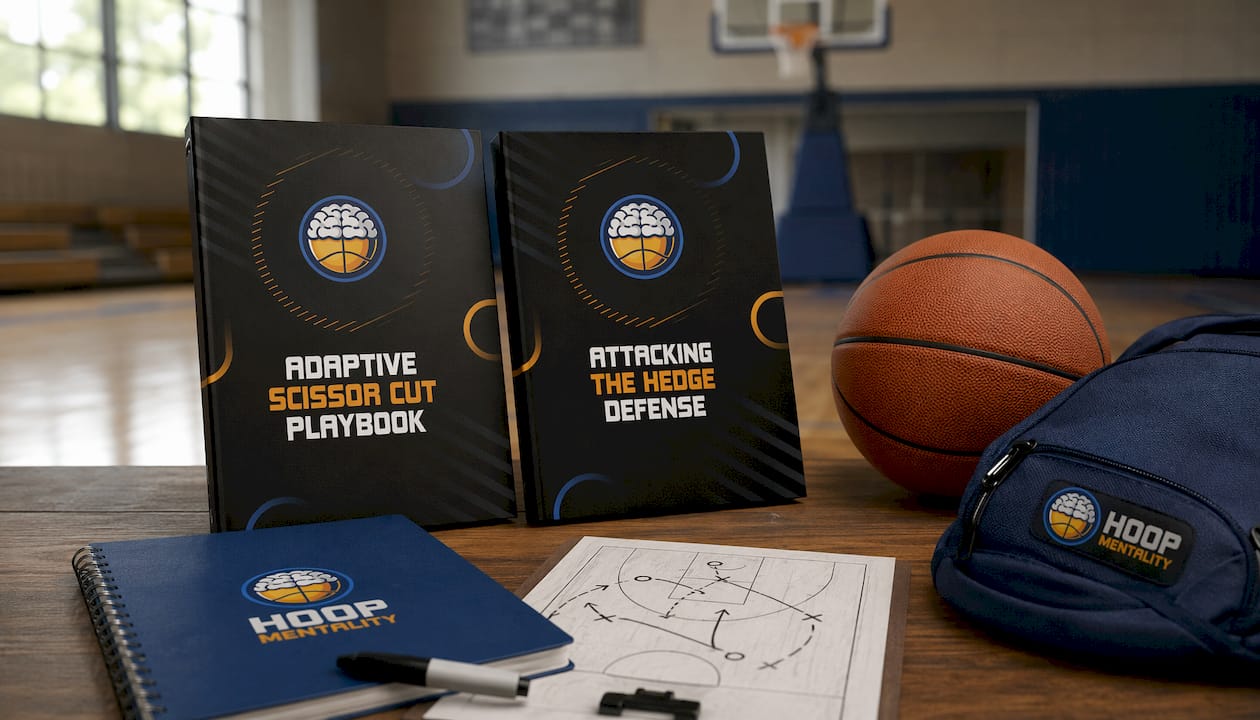
For coaches building out their offensive adjustment toolkit, the Adaptive Scissor Cut Playbook from Hoop Mentality provides ready-to-use sets designed around exactly this kind of flexible, read-and-react offense.
How do you measure whether an adjustment is actually working?
You can’t manage what you don’t track. Measuring adjustment effectiveness during a game requires a short feedback loop, not a post-game spreadsheet.
During the game:
- Watch the next two to three possessions after an adjustment. Did the problem you targeted get better, worse, or stay the same?
- Track one specific metric per adjustment. If you switched to zone to slow a penetrating guard, count how many times they got into the paint in the next four minutes.
- Use your assistants as observers. One coach watches the adjustment’s effect while you manage the bench.
Post-game:
- Review film with a specific question: did the adjustment solve the root cause or just mask the symptom temporarily?
- Compare the score differential before and after each major change. This gives you a rough read on whether the timing was right.
- Ask players what they understood the adjustment to be. Gaps between your intent and their execution reveal communication problems, not just tactical ones. Hoop Mentality’s resources on player feedback methods cover structured ways to run this kind of debrief efficiently.
Recognizing patterns and cycling through incremental adjustments builds long-term competitive advantage. One game’s data point is noise. Ten games of tracking the same adjustment type becomes a coaching asset.
Preparation techniques that make in-game adjustments faster and cleaner
The smoothest in-game adjustments aren’t improvised. They’re rehearsed. Coaches who prepare their teams for adaptability before the game spend less time explaining and more time executing when it counts.
Before the game:
- Scout opponent tendencies. Know their go-to plays, their preferred tempo, and their defensive rotations before tip-off. The more you’ve mapped their patterns, the faster you recognize deviations during the game.
- Prepare your if-then library. Run through two or three likely scenarios in your pre-game talk. “If they press full-court, here’s our response.” Players who’ve heard it once execute it faster under pressure.
- Assign observation roles. Tell one assistant to track defensive rotations and another to watch transition offense. Distributed observation means you get better data faster.
- Practice adjustment drills. Run drills in practice that require players to switch assignments or change spacing on a verbal cue. The adjustment itself becomes a trained behavior, not a new instruction.
During warm-ups and early possessions:
- Use the first few minutes of the game as live scouting. Confirm or update your pre-game reads. Is their star player moving well? Are they running the sets you prepared for?
- Establish your baseline early so deviations are obvious. You can’t spot a pattern change if you haven’t locked in the pattern first.
For coaches working on attacking specific defensive schemes, the hedge ball screen playbook from Hoop Mentality gives you pre-built sets that are already designed around reading and reacting to defensive adjustments in real time. Insights on sports club operations and in-game decision-making from resources like the FCOPS coaching blog can also supplement your preparation process.
Key Takeaways
Effective player adjustment strategies require diagnosing root causes, not symptoms, and executing one targeted change at a time through a clear observe-orient-decide-act cycle.
| Point | Details |
|---|---|
| Use the OODA loop | Observe, Orient, Decide, Act gives you a repeatable framework for every in-game adjustment. |
| One adjustment at a time | Prioritizing a single high-leverage change lets you measure its effect before making the next move. |
| Distinguish cause from symptom | Poor execution is often mistaken for scheme failure; check what players understood before changing the plan. |
| Build if-then trees pre-game | Pre-loaded decision models reduce hesitation and prevent emotional overreactions during pressure moments. |
| Measure with a short feedback loop | Track one specific metric for two to three possessions after each adjustment to confirm it’s working. |
FAQ
What is a player adjustment strategy?
A player adjustment strategy is a targeted, incremental change made during a game to fix a specific breakdown in performance. It focuses on diagnosing the underlying process causing the problem, not just reacting to the score.
How do you make adjustments without disrupting team flow?
Prioritize one change at a time and communicate it simply. A single clear instruction during a timeout lands better than multiple simultaneous changes, which create confusion and slow execution.
What is the OODA loop in coaching?
The OODA loop stands for Observe, Orient, Decide, Act. It’s a four-step adjustment framework coaches use to move from recognizing a problem to executing a fix in real time.
How do you know when to adjust versus when to stay the course?
If the same breakdown happens three possessions in a row for the same reason, adjust. One bad possession is noise. A repeated pattern is a signal that something structural needs to change.
What is the difference between a tactical and a mental adjustment?
A tactical adjustment changes what players do physically, such as switching from man to zone or changing shot selection. A mental adjustment changes how players process decisions, such as using if-then models to reduce hesitation and emotional reactions under pressure.