

TL;DR:
- Effective player motivation connects athletes to their personal reasons for competing and builds supportive systems that sustain that drive. Coaches who focus on daily habits, evidence-based communication, and creating a positive environment foster long-term engagement rather than relying on speeches or punishment.
Effective player motivation is defined as the process of connecting each athlete to their personal reasons for competing, then building systems that sustain that drive over a full season. Coaches who understand how to motivate players do not rely on pregame speeches or punishment. They build daily habits, use evidence-based communication techniques, and create environments where players want to improve. Research from sports psychologist Dr. Paul McCarthy confirms that 80% of athletes benefit from structured external support systems to maintain long-term engagement. That number tells you one thing: motivation is a system, not a moment.
What are the key techniques to motivate players effectively?
The most effective strategies for motivating players combine goal setting, mental skills training, and progress tracking into a repeatable daily structure. Each element reinforces the others, and skipping one weakens the whole system.
- SMART goal setting. Goals must be specific, measurable, attainable, relevant, and time-bound. A player who sets a goal to “improve” has nothing to track. A player who sets a goal to make 70% of free throws in practice by the end of the month has a clear target. Use basketball goal setting tips to structure this process from day one.
- Visualization and mental rehearsal. Mental rehearsal trains the brain to execute under pressure. Ask players to spend three minutes before practice visualizing a specific skill, such as a pull-up jumper or a defensive closeout. This is not abstract. It is a documented performance tool.
- Positive self-talk. Positive self-talk improves athletic performance by about 11%, reducing anxiety and building confidence. Teach players to replace “I always miss this” with “I’ve made this shot before.”
- Intrinsic motivation over external rewards. Trophies and praise wear off. A player who loves the craft, the competition, or the team will outwork one who plays for a jersey number. Your job is to find what each player genuinely cares about and connect practice to that.
- Progress tracking. Athletes who track progress are 2.5 times more likely to reach their fitness goals. Tracking shifts focus from outcome anxiety to improvement, which keeps motivation steady through losing streaks.
Pro Tip: Set a two-minute “win review” at the end of every practice. Ask each player to name one thing they did better today than yesterday. This builds the habit of noticing progress.
How can motivational interviewing improve player engagement?
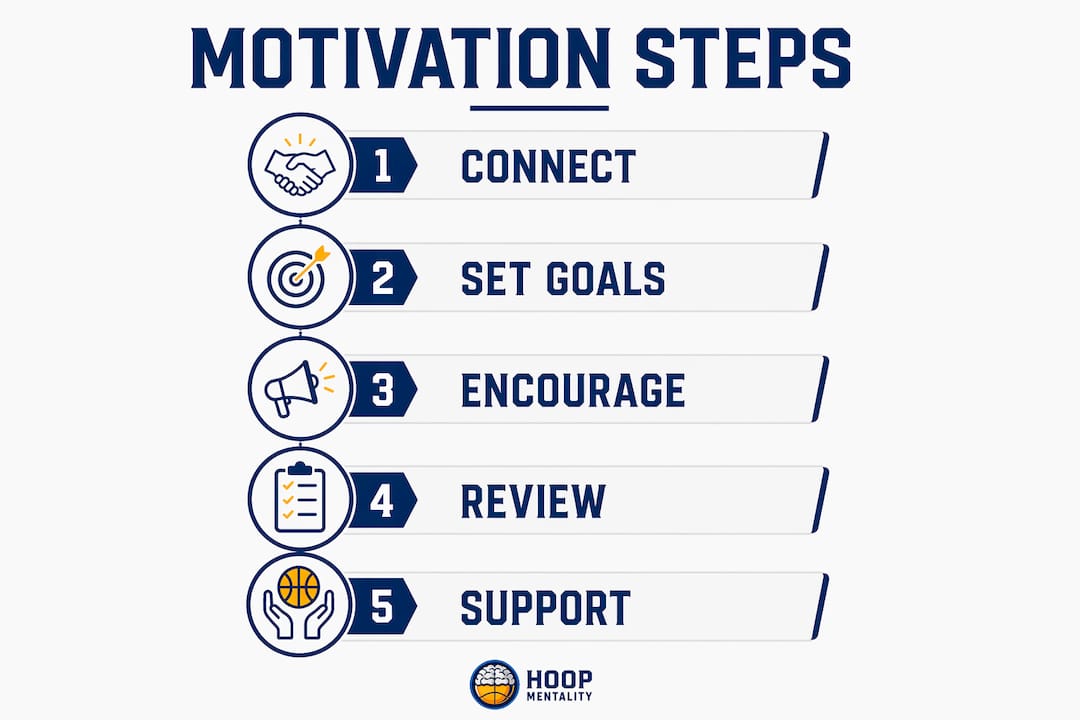
Motivational interviewing is a communication method developed in clinical psychology and now widely applied in sports coaching. It replaces directive commands with collaborative conversation that draws out a player’s own motivation. The core principle is that lasting internal motivation comes from evoking “change talk,” not from telling players what to do.
Here is how to apply it in practice:
- Ask open-ended questions. Instead of “Did you work hard today?” ask “What felt different about your defense in the second half?” Open questions require reflection, not a yes or no.
- Use scaling questions. Ask a player, “On a scale of 0 to 10, how committed do you feel to this week’s goal?” Then ask, “What would move you one point higher?” This technique builds self-awareness and internal accountability.
- Practice reflective listening. Repeat back what a player says in your own words. “So you’re saying you feel more confident when you know the play before the ball is inbounded.” This signals that you heard them, which builds trust.
- Affirm effort and process. Say “You fought through that screen twice in a row” instead of “Good job.” Specific affirmations tied to behavior reinforce the actions you want repeated.
- Collaborate on goals. Players who help set their own targets are more committed to reaching them. Agenda mapping, where you and the player agree on what to work on together, creates buy-in that no speech can manufacture.
Pro Tip: After a tough loss, resist the urge to lecture. Ask one question: “What’s one thing you want to do differently next game?” Then listen. You will learn more about your players in two minutes than in a full film session.
For more on effective coach-player communication, the principles above apply at every level from youth leagues to varsity programs.
How to create a motivation-supportive team culture
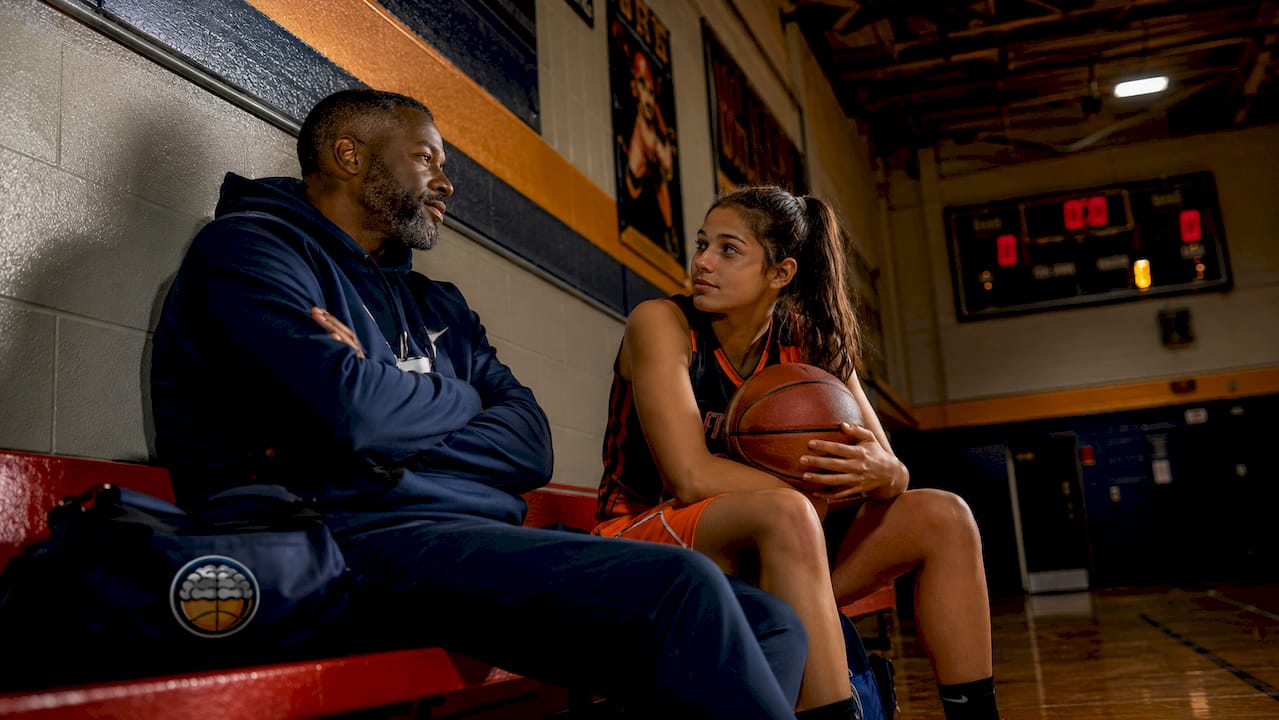
Culture is not built in a locker room speech. Team culture is coded in daily habits, such as consistent post-practice debriefs and recognizing effort over outcome, not in sporadic pep talks. Coaches who want to energize a team long-term must design the environment, not just manage the mood.
- Calibrate emotionally before practice. Spend 10 minutes before practice on emotional connection rather than tactical overload. Pre-practice emotional calibration is recommended over loading players with schemes before they are mentally present. Ask how players are feeling. Address tension before it becomes distraction.
- Make mistakes safe. A player who fears being benched for an error will not take the risks that lead to growth. Motivation is designed by creating a safe environment where learning from mistakes is natural, reducing pressure and cognitive load. Name this expectation out loud at the start of the season.
- Delegate motivational leadership. Delegating motivational roles to team captains and assistants mirrors successful professional systems and sustains player buy-in. Captains who reinforce the team’s values in the locker room extend your influence without you being present.
- Run consistent post-practice debriefs. End every session with a structured two-minute review. Name one team win and one area to improve. Consistency signals that growth is the standard, not the exception.
“Motivation is built through hundreds of small, low-stakes moments that establish psychological safety essential for learning and growth. One speech does not build a team. Three hundred small moments do.”
Strong coaching leadership traits are the foundation of this culture. Players follow coaches who are consistent, fair, and genuinely invested in their development.
What are practical steps for motivating struggling players?
Unmotivated players are rarely lazy. They are usually disconnected, frustrated, or playing for the wrong reasons. The first step is identifying which motivational archetype fits each player. Different player archetypes require tailored approaches. The three most common types are the competitor (driven by winning), the social player (driven by belonging), and the learner (driven by mastery).
- Identify the archetype. Watch what energizes each player. Does a player light up in one-on-one drills? That is a competitor. Does a player work harder when paired with a friend? That is a social player. Does a player ask “why” after every drill? That is a learner. Match your approach to the type.
- Set small process goals. A struggling player cannot connect to a season-long outcome goal. Set a goal for this week’s practice only. “Make 15 of 20 mid-range shots before we move on.” Small wins rebuild confidence faster than any pep talk.
- Give specific, private feedback. Public criticism shuts players down. Praising effort publicly and whispering criticism privately protects confidence while still delivering the message. Vague feedback like “you need to play harder” gives a player nothing to act on.
- Balance challenge and fun. Drills that are too easy produce boredom. Drills that are too hard produce anxiety. The sweet spot is a task where a player succeeds about 60–70% of the time. That ratio keeps engagement high.
- Avoid false praise and generic pep talks. Players detect insincerity immediately. A hollow “great job” after a poor performance destroys trust. Acknowledge the difficulty honestly, then redirect to what the player can control next.
Use player feedback methods that are specific and tied to observable behavior. That specificity is what separates coaches who get results from coaches who get compliance.
Key Takeaways
The most effective approach to player motivation combines evidence-based techniques, collaborative communication, and a culture built on daily habits rather than one-time interventions.
| Point | Details |
|---|---|
| Motivation is a system | Build daily habits like progress tracking and post-practice debriefs, not one-time speeches. |
| Match technique to player type | Identify each player as a competitor, social player, or learner, then tailor your approach. |
| Use motivational interviewing | Open-ended and scaling questions build internal drive more effectively than directives. |
| Make mistakes safe | Psychological safety reduces pressure and allows players to take the risks that lead to growth. |
| Praise effort, not just outcome | Specific, process-focused feedback sustains motivation longer than generic praise. |
Motivation is designed, not demanded
I have coached players at multiple levels, and the biggest shift in my thinking came when I stopped asking “how do I get this player to care?” and started asking “what environment am I creating that makes caring easy or hard?” Those are completely different questions, and they lead to completely different coaching decisions.
The coaches I have seen struggle most with motivation are the ones who treat it as a personality trait. They label a player as “unmotivated” and move on. The coaches who get the most out of their rosters treat motivation as a design problem. They look at their practice structure, their feedback habits, their communication style, and they ask what they can change.
One thing I have learned the hard way: you cannot force effort, but you can absolutely kill it. Coercion, public embarrassment, and vague criticism are the fastest ways to drain a locker room. The research backs this up, and so does every honest conversation I have had with players who quit.
The practical shift is small but significant. Spend less time preparing what you will say to your team and more time preparing how you will listen. The players who feel heard work harder. That is not a theory. That is what I have seen on the floor, season after season.
— Dejan
Coaching resources from Hoop Mentality
Building a motivated team takes more than good intentions. It takes organized practices, clear systems, and tools that save you time so you can focus on your players.
Hoop Mentality offers practical resources built for coaches at every level. The Basketball Starter Pack for Coaches includes practice plans, drills, and strategy guides developed through real coaching experience. These tools give you the structure to run purposeful sessions where players know what they are working toward. When players see a clear plan, they show up ready to compete. Browse the full coaching template bundle to find resources that fit your program.
FAQ
What is the most effective way to motivate players?
The most effective way to motivate players is to connect each athlete to their personal reason for competing, then reinforce that connection through specific feedback, achievable goals, and a consistent team culture built on daily habits.
How does goal setting help with player motivation?
SMART goals give players a clear target to work toward, which reduces anxiety and keeps focus on improvement. Athletes who track their progress are 2.5 times more likely to reach their goals.
What is motivational interviewing in coaching?
Motivational interviewing is a communication method that uses open-ended questions and reflective listening to draw out a player’s own internal drive. It builds trust and produces more lasting motivation than directive coaching.
How do you re-engage an unmotivated player?
Identify the player’s motivational archetype, set a small process goal for the current week, and deliver specific private feedback tied to observable behavior. Avoid generic pep talks and false praise.
How can coaches build a motivating team culture?
Coaches build a motivating culture through consistent daily habits such as post-practice debriefs, emotional calibration before sessions, and delegating motivational leadership to team captains. Culture is built in small moments, not big speeches.