

TL;DR:
- Basketball-specific conditioning outperforms general fitness by replicating game movements and fatigue.
- Structured high-intensity interval training improves endurance, speed, and agility effectively.
- Integrating skill-based drills under fatigue enhances individual performance and team cohesion.
Most coaches assume that running laps or general cardio is enough to get players game-ready. It is not. Basketball-specific conditioning outperforms general fitness training by replicating the short bursts, agility demands, and recovery patterns players face in real games. The difference shows up late in the fourth quarter, when your players are still sharp and your opponents are fading. This guide breaks down exactly why conditioning drills matter, what the research says, and how you can apply proven methods at any level to get measurable results from your team.
Table of Contents
- Why basketball conditioning drills outperform general fitness
- Proven impacts: Science-backed benefits of conditioning drills
- Conditioning drills as a foundation for team and player development
- Optimizing conditioning: Frequency, progression, and tailoring for all levels
- Why the conventional approach to conditioning drills limits real player progress
- Take the next step: Tools and plans to maximize your team conditioning
- Frequently asked questions
Key Takeaways
| Point | Details |
|---|---|
| Game-like conditioning matters | Drills that mirror basketball’s demands build lasting skills and fitness unlike generic routines. |
| Evidence supports specific drills | Research shows conditioning drills improve endurance, agility, and explosive power crucial for basketball. |
| Balance intensity and rest | Coaches should plan 2-3 weekly conditioning sessions with built-in recovery and skill integration. |
| Tailor drills by level | Youth players need variety and fun, while elites benefit from advanced, decision-based challenges. |
| Purpose over punishment | Integrating conditioning with skills and competition leads to better engagement and development. |
Why basketball conditioning drills outperform general fitness
General fitness training builds a base. Endurance runs improve cardiovascular capacity. Weight room sessions add strength. Both have value. But neither one prepares a player to execute a pick-and-roll correctly at the end of a tight game. That is where basketball-specific conditioning drills pull ahead.
The core issue is specificity. Basketball is not a steady-state sport. Players sprint, stop, change direction, jump, and recover, all within seconds. General cardio does not train those patterns. Conditioning drills do. They force players to perform skill-based actions under the same physical stress they face in games.
| Training type | Game realism | Skill retention under fatigue | Agility focus |
|---|---|---|---|
| General cardio | Low | Low | Minimal |
| Strength training | Low | Moderate | Minimal |
| Basketball conditioning drills | High | High | Strong |
The table above makes it clear. Drills that accelerate skill development do so because they combine physical output with technical execution. You are not just training the body. You are training the body and the brain at the same time.
“The most game-ready players are not the ones who ran the most miles. They are the ones who practiced making correct decisions while physically exhausted.”
Think about a full-court press break. Running it fresh in practice is one thing. Running it correctly in the final two minutes of a close game is another. Conditioning drills close that gap. They teach players to maintain form, read the defense, and communicate when their lungs are burning.
This is also why coaches who rely only on general fitness often see a drop in execution quality as games progress. Players are fit, but not basketball-fit. The movements, decisions, and skills have not been trained under fatigue. Conditioning drills fix that directly.
With the difference established, let’s examine what science says about the effects of specific conditioning drills.
Proven impacts: Science-backed benefits of conditioning drills
The research on basketball conditioning is clear and consistent. You do not need to guess whether these methods work. The data backs them up.
High-intensity interval training (HIIT), which alternates short bursts of maximum effort with brief recovery periods, produces strong results across multiple performance markers. HIIT conditioning improves Yo-Yo endurance test scores with an effect size of 1.02, 20-meter sprint times with an effect size of 0.59, and agility with a standardized mean difference of 0.86 when reaction-based training is included. Those are significant gains.
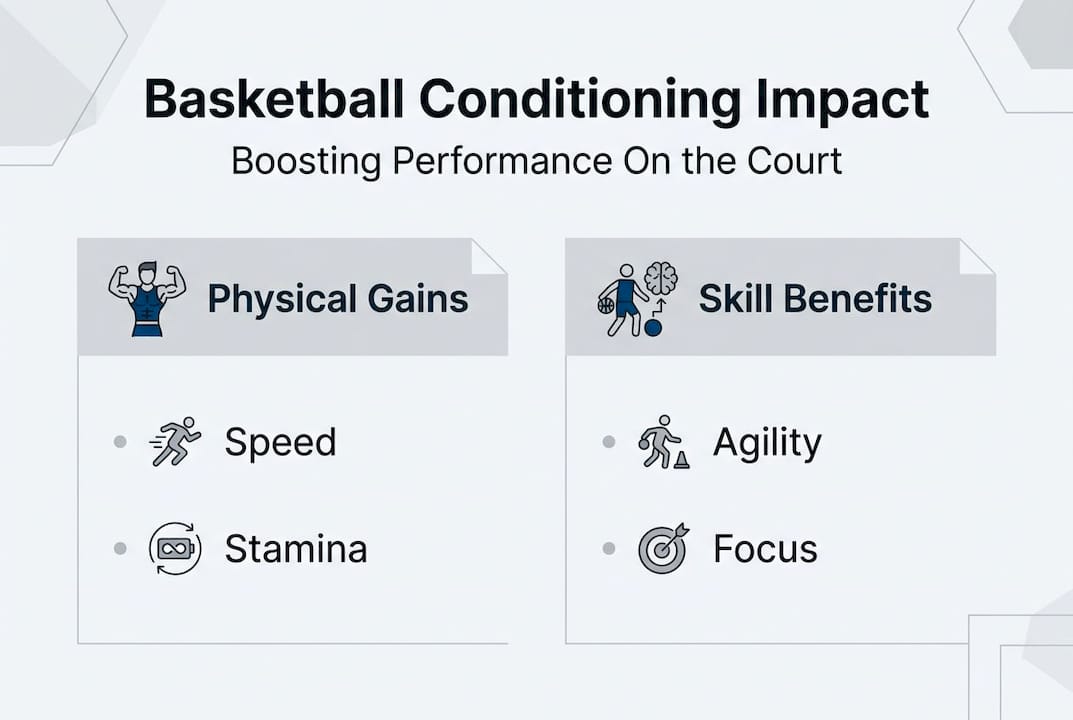
| Performance marker | Effect size / improvement |
|---|---|
| Yo-Yo endurance | ES = 1.02 |
| 20m sprint speed | ES = 0.59 |
| Agility (reaction training) | SMD = 0.86 |
| Change of direction (COD) | Measurable improvement |
Beyond HIIT, plyometric and strength conditioning also deliver results. High-intensity actions in games increase by 3 to 7 percent when players follow a structured plyometric and strength program with variable recovery. That means more explosive first steps, sharper cuts, and better defensive positioning throughout a full game.
Here is what those numbers mean for your team:
- Faster recovery between plays means players stay active and engaged longer
- Better sprint speed translates to transition offense and defensive rotations
- Improved agility supports on-ball defense and closeouts
- Stronger change of direction reduces injury risk on cuts and screens
New intensity action research also supports combining conditioning formats rather than relying on a single method. Rotating between interval runs, plyometrics, and skill-based conditioning gives players a broader physical base while keeping training fresh.
For practical application, basketball cardio drills built around these principles are a strong starting point. Pairing them with practice drills for performance ensures your players are developing fitness and skill at the same time.
Now that we know the science behind conditioning’s impact, let’s look at how conditioning drills fuel both individual and team development.
Conditioning drills as a foundation for team and player development
Conditioning drills do more than build fitness. Done right, they shape the character and culture of your team.
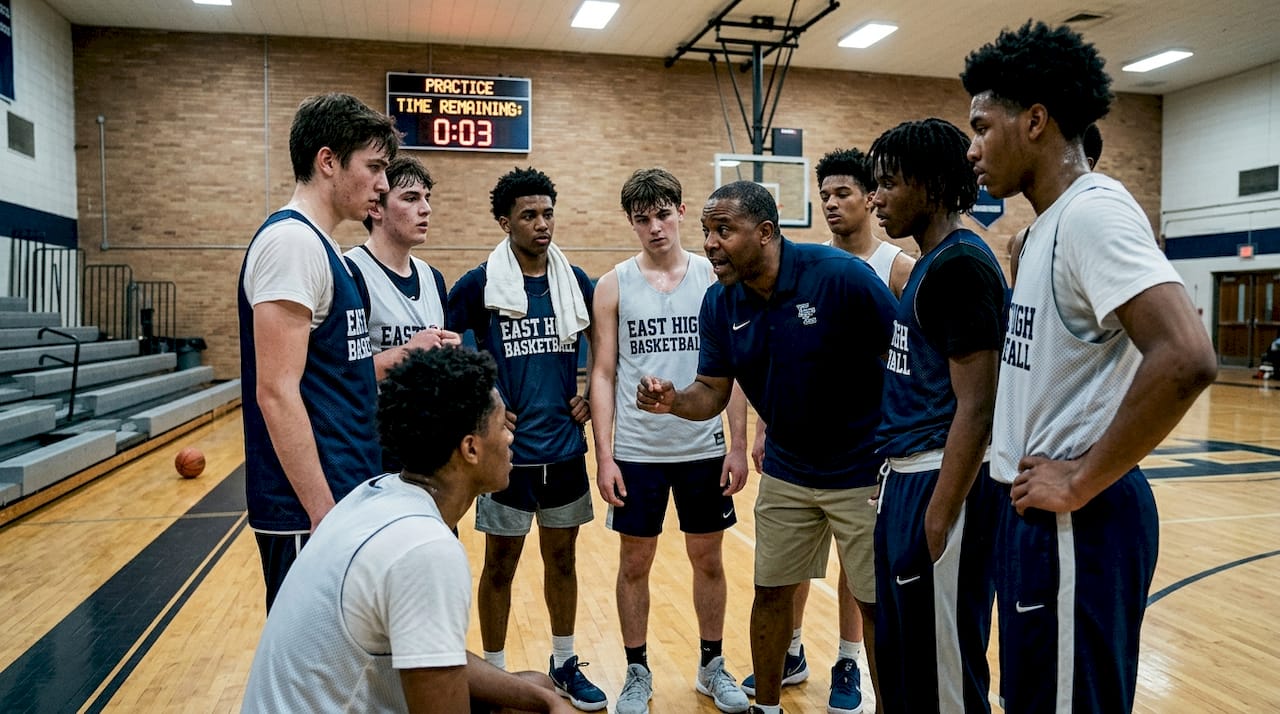
When players push through a tough conditioning set together, they build trust. They see who works hard, who encourages others, and who leads by example. That social dynamic carries directly into games. Teams that condition together tend to communicate better and compete harder when it counts.
Here are the broader development benefits you get from structured conditioning:
- Leadership: Players naturally step up to motivate teammates during hard sets
- Resilience: Repeating difficult drills under fatigue teaches players to stay composed
- Communication: Drills requiring coordination force verbal and non-verbal cues
- Mental focus: Maintaining technique when tired trains concentration under pressure
Optimal conditioning methodology recommends 2 to 3 sessions per week over 8 to 12 week cycles, integrated with skill work and monitored for overtraining. This structure gives players time to adapt while keeping the training load sustainable.
The key benefits of drills extend well beyond the physical. Coaches who use structured basketball drills consistently report better team cohesion and player accountability across the season.
Smart fatigue management strategies also play a role here. Tracking how players respond to conditioning loads helps you adjust before fatigue becomes a problem.
Pro Tip: Combine a conditioning drill with a skill component in every session. For example, run a full-court sprint and finish with a layup or pull-up jumper. Players learn to execute under physical stress, which is exactly what games demand.
To make the benefits stick, it’s vital to apply the right structure and progression in your training approach.
Optimizing conditioning: Frequency, progression, and tailoring for all levels
Knowing the benefits is one thing. Knowing how to structure your program is another. Here is a practical framework you can apply right now.
- Set a weekly schedule. Aim for 2 to 3 dedicated conditioning sessions per week. Space them out to allow recovery between high-intensity efforts.
- Plan an 8 to 12 week cycle. Gradual progression over this window allows players to adapt without breaking down. Start with lower intensity and build from there.
- Integrate skill work. Every conditioning session should include a skill component. This reinforces technique under fatigue and maximizes practice time.
- Adjust for your level. Youth players respond best to varied, fun drills that keep engagement high. Fun warm-up drills are a great entry point for younger athletes.
- Use reactive drills for elite players. Advanced athletes benefit from modern training methods that include decision-making under game-speed pressure.
- Monitor for overtraining. Watch for signs like persistent fatigue, declining performance, or low motivation. These are signals to reduce load, not push harder.
Youth and elite players need different approaches. Younger athletes thrive with variety and encouragement. Elite players benefit most from reactive and computerized agility tools that sharpen decision-making alongside physical output.
Reviewing overtraining prevention tips is especially useful if you are working with players who train year-round or compete in multiple leagues.
Pro Tip: Use a simple weekly log to track drill completion, player effort ratings, and any complaints of soreness or fatigue. Even a basic spreadsheet gives you data to make smarter adjustments over time.
Let’s step back and reframe how most coaches think of conditioning drills and explain what truly makes a difference.
Why the conventional approach to conditioning drills limits real player progress
Here is an uncomfortable truth. Many coaches still use conditioning as punishment. Miss a free throw, run a sprint. Lose a drill, do push-ups. That approach creates a negative association with hard work and does nothing to improve basketball performance.
The other common mistake is treating conditioning as separate from skill development. Coaches run fitness at the end of practice, players are exhausted, and nobody learns anything. It becomes a checkbox, not a tool.
The shift worth making is this: conditioning should always reinforce game-relevant decisions and skills. When players are tired and still executing correctly, that is real progress. Competitive drills for decision speed are built on this idea. They create pressure, force choices, and build the mental and physical habits that show up in games.
Coaches who integrate competitive, skill-relevant conditioning see better buy-in from players. The work feels purposeful. Players understand why they are doing it. That mindset shift alone changes the energy in your gym.
Take the next step: Tools and plans to maximize your team conditioning
You now have the framework. The next step is putting it into action with the right resources.

Hoop Mentality offers ready-to-use tools built for coaches at every level. Start with a practice plan template to organize your conditioning sessions with structure and clarity. If you coach big men or want position-specific conditioning, the big man conditioning drill delivers targeted work that translates directly to game situations. Each resource is built from real coaching experience, so you spend less time planning and more time developing your players.
Frequently asked questions
What is the main purpose of conditioning drills in basketball?
Conditioning drills prepare players for the physical and mental demands of real games by replicating short bursts, agility demands, and recovery patterns they face on court. They also train skill execution under fatigue, which general fitness cannot replicate.
How often should basketball conditioning drills be done?
Research supports 2 to 3 conditioning sessions per week, integrated with skill work, over an 8 to 12 week cycle for optimal results and recovery.
Do conditioning drills prevent injuries?
Yes. Plyometric and strength conditioning improves explosive movement control and reaction speed, which directly reduces injury risk during sudden direction changes and contact situations in games.
How can coaches avoid overtraining with conditioning drills?
Monitor player fatigue levels regularly, vary drill intensity across the week, and build in scheduled rest. Adjust frequency and load based on player feedback and performance trends rather than a fixed schedule alone.
Recommended
- Competitive Drills Boost Decision Speed by 50% – Hoop Mentality
- Practice drills to boost basketball skills and performance – Hoop Mentality
- 7 Key Benefits of Basketball Drills for Youth Coaches – Hoop Mentality
- Why Drills Boost Basketball Development by 30% Faster – Hoop Mentality
- How to Enhance Athletic Focus Naturally for Intense Training – Interval