


Most coaches believe tall players dominate rebounding, but defensive rebounding is a teachable skill rooted in positioning, timing, and relentless pursuit. Mastering defensive rebounding goes beyond height. It controls possession, prevents second-chance scoring, and sparks transition offense. This guide breaks down the essential techniques, drills, and strategies coaches need to transform their team’s defensive boards and elevate overall performance.
Table of Contents
- Understanding Defensive Rebounding: Definition And Importance
- The Four Pillars Of Defensive Rebounding
- Common Misconceptions And Coaching Challenges
- Drills, Techniques, And Training Methodologies
- Measuring And Enhancing Team Rebounding Performance
- Bringing It All Together: Creating A Defensive Rebounding Culture
- Elevate Your Team’s Defensive Rebounding With Hoop Mentality
Key takeaways
| Point | Details |
|---|---|
| Defensive rebounding ends opponent possessions and fuels fast breaks | Securing defensive boards prevents second-chance points and creates transition scoring opportunities. |
| Four pillars drive rebounding success: boxing out, pursuit, positioning, communication | Mastering these fundamentals transforms individual effort into coordinated team dominance on the glass. |
| Team coordination outperforms individual talent in rebounding battles | Communication and assigned roles amplify effectiveness beyond relying on physical attributes alone. |
| Consistent drills and film analysis sharpen rebounding habits and identify weaknesses | Structured practice and video review build muscle memory and reveal positioning lapses to correct. |
| Measuring rebound percentage and second-chance points allowed tracks improvement | Data-driven goals and performance metrics enable coaches to monitor progress and adjust training focus. |
Understanding defensive rebounding: definition and importance
Defensive rebounding occurs when your team secures possession after an opponent misses a shot. Unlike offensive rebounding, where players fight for their own team’s missed attempts to create second-chance points, defensive rebounding ends the opponent’s possession and shifts control to your squad. This distinction matters because defensive boards prevent easy putbacks, limit three-point second-chance attempts, and kill opponent momentum.
When your team consistently wins defensive rebounds, you dictate game flow. Each secured board stops the opponent’s scoring window and launches your transition offense. Teams that dominate defensive rebounding force opponents into longer possessions, reduce their shooting efficiency, and create fast break scoring chances. The psychological impact is undeniable. A string of defensive boards energizes your defense and frustrates opposing offenses.
Basketball rebounding fundamentals emphasize defensive over offensive rebounding for good reason. Defensive rebounds happen more frequently than offensive ones, and controlling them directly impacts win probability. Consider these critical impacts:
- Prevents second-chance points that often demoralize defenses
- Fuels transition offense before opponents set their defense
- Builds defensive confidence and reinforces effort-based culture
- Reduces opponent possessions per game, limiting their scoring opportunities
Coaches who prioritize defensive rebounding fundamentals create teams that control tempo and impose their will. The ability to end possessions consistently separates championship-caliber defenses from average ones.
The four pillars of defensive rebounding
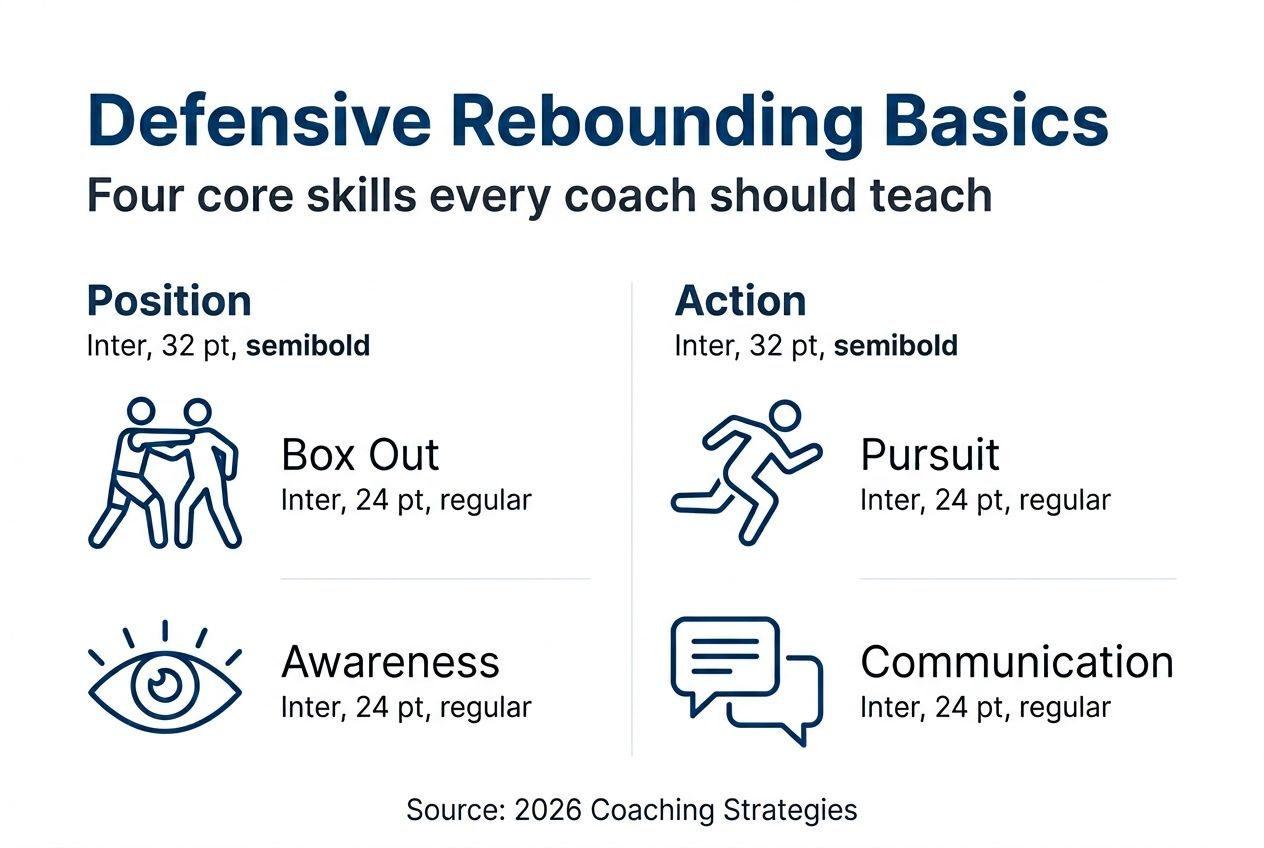
Four core techniques form the foundation of elite defensive rebounding. Master these pillars and your team transforms from passive observers into aggressive board hunters.
Boxing out establishes your advantage before the ball descends. Initiate contact immediately when the shot releases. Position your body between your opponent and the basket, maintaining a wide base with bent knees and active hands. Your hips and shoulders create a barrier that prevents penetration. Early contact matters more than size because it controls space and limits opponent movement.
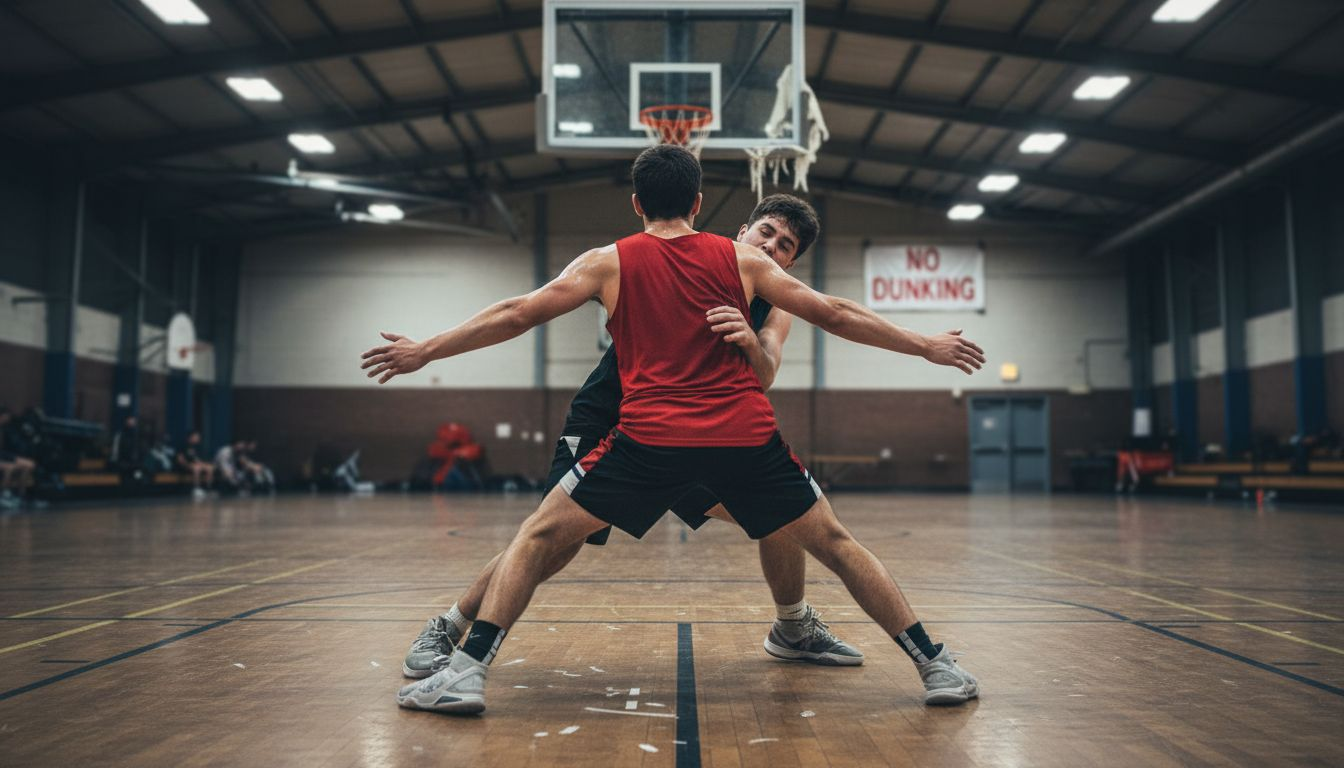
Pursuit separates elite rebounders from average ones. Tracking the ball’s trajectory and actively hunting it after boxing out determines who secures possession. Elite rebounders never wait passively. They explode toward the ball with two hands extended, attacking the highest point possible. This aggressive pursuit mindset turns good positioning into actual possession.
Positional awareness means anticipating rebound locations based on shot angles and adapting instantly. Shots from the wing typically rebound to the opposite side. Corner three-pointers often carom long toward mid-range. Quick footwork adjustment after initial boxing out positions you exactly where the ball lands. Read the shooter’s release, track the arc, and move purposefully.
Communication strategies amplify individual technique into team dominance. Coordinated effort among all five players drastically enhances defensive rebounding effectiveness. Vocal calls assign boxing out responsibilities, alert teammates to crashers, and coordinate pursuit. Clear communication prevents confusion and ensures every opponent faces physical contact.
Pro Tip: Teach players to initiate boxing out the instant the ball leaves the shooter’s hands, not when it hits the rim. This split-second head start creates the positional advantage that wins rebounding battles.
| Technique | Primary Focus | Key Action |
|---|---|---|
| Boxing Out | Establishing position early | Create physical barrier between opponent and basket at shot release |
| Pursuit | Aggressive ball hunting | Explode toward ball with two hands at highest point possible |
| Positioning | Spatial awareness | Anticipate rebound location based on shot angle and adjust quickly |
| Communication | Team coordination | Assign responsibilities and alert teammates through vocal calls |
These four pillars work together, not in isolation. Boxing out without pursuit leaves rebounds unclaimed. Pursuit without positioning wastes energy chasing wrong locations. Positioning without communication creates confusion and missed assignments. Master all four and your team controls the glass.
Common misconceptions and coaching challenges
Height does not guarantee rebounding success. Coaches who believe tall players automatically dominate the glass overlook positioning, timing, and desire. A 6-foot guard with proper technique and relentless effort outrebounds a 6-foot-8 forward who boxes out lazily. Focus your coaching on teachable skills rather than unchangeable attributes.
Another myth suggests that once you establish a box out, the rebound belongs to you. Reality differs sharply. The ball still requires active pursuit after initial contact. Players who relax after boxing out watch opponents crash from weak side or see the ball bounce away unclaimed. Emphasize that boxing out creates opportunity, but pursuit secures possession.
Many coaches underestimate anticipation’s role in rebounding excellence. Players who track the ball’s path from release to rim position themselves advantageously. Those who react only after the miss arrive late and out of position. Teaching players to read shot trajectories during practice builds this anticipation naturally. Basketball rebounding fundamentals stress the importance of visual tracking throughout the shot’s flight.
Relying on individual effort instead of coordinated team schemes reduces rebounding effectiveness dramatically. A single player boxing out perfectly loses impact if teammates neglect their assignments. Opponents exploit these gaps, crashing from weak side or slipping behind lazy defenders. Common coaching mistakes include failing to assign clear rebounding responsibilities during defensive schemes.
Pro Tip: Challenge the mindset that rebounding depends on physical gifts. Reinforce daily that hustle, anticipation, and technique determine rebounding success. Players who internalize this belief outwork and outposition naturally talented opponents.
Avoid these additional pitfalls:
- Allowing players to admire their defensive stops instead of finishing with a rebound
- Teaching boxing out as a static position rather than dynamic, continuous contact
- Neglecting weak-side rebounding assignments in defensive schemes
- Failing to celebrate effort-based rebounds as enthusiastically as scoring plays
Coaches who address these misconceptions directly and build training around corrected principles see immediate improvement. Your defensive rebounding coaching guide should explicitly counter these myths with evidence and demonstration.
Drills, techniques, and training methodologies
Structured practice builds defensive rebounding excellence systematically. Begin with fundamental skill development, then progress to competitive game-like scenarios that reinforce proper habits under pressure.
Progressive drill sequences help players master each pillar before combining them:
- Start with stationary boxing out against passive resistance to establish proper body positioning and contact points
- Add live opponents who apply moderate pressure, forcing players to maintain position through contact
- Introduce shot simulation where coaches shoot and players must box out, track, and secure the rebound
- Progress to competitive rebounding scrambles with multiple players pursuing live rebounds
- Finish with full five-on-five scrimmages emphasizing rebounding within complete defensive possessions
This numbered progression ensures players build confidence at each stage before facing more complex challenges. Rushing to competitive drills before mastering fundamentals creates bad habits that persist.
Proper footwork enables quick adjustments to box out effectively and react to the ball’s trajectory. Incorporate these footwork and balance exercises:
- Pivot drills where players locate imaginary opponents and establish box out positions rapidly
- Lateral shuffle patterns that simulate adjusting to shot angles from different court positions
- Jump and land exercises emphasizing two-foot balance for explosive vertical pursuit
- Reaction drills with visual or auditory cues triggering immediate box out movements
Game-like drills build urgency and rebounding instincts that transfer directly to competition. Set up small-sided games where rebounding statistics determine winners, not scoring. Create scenarios where defensive stops only count if followed by secured rebounds. These competitive elements teach players that defense remains incomplete without possession.
Film study accelerates improvement by revealing technique flaws invisible during live action. Review game footage specifically for rebounding sequences, pausing to analyze positioning, pursuit angles, and communication breakdowns. Players seeing their own mistakes on screen internalize corrections faster than verbal coaching alone provides.
Pro Tip: Use video analysis to identify pursuit errors specifically. Record practice rebounding drills from multiple angles, then show players the exact moment they stopped pursuing or adjusted their path incorrectly. Visual evidence eliminates excuses and clarifies exactly what to improve.
Integrate defensive drills that boost overall defense by ending each drill with mandatory rebounding. This reinforces that defensive possessions conclude only with secured boards. Similarly, emphasize basketball footwork importance through rebounding footwork drills that connect movement patterns to rebounding success.
Consistency matters more than intensity. Daily rebounding emphasis for 10 minutes outperforms occasional marathon rebounding sessions. Build these drills into every practice, making defensive rebounding an automatic priority rather than an occasional focus.
Measuring and enhancing team rebounding performance
Quantifiable metrics reveal whether your defensive rebounding training translates to game performance. Track these essential statistics to monitor progress and identify improvement areas:
- Defensive rebound percentage: the proportion of available defensive rebounds your team secures
- Second-chance points allowed: opponent scoring directly following offensive rebounds
- Rebound-to-possession conversion: percentage of defensive rebounds that successfully initiate offense
- Individual rebound rates per player to identify consistent contributors and expose weak links
Film study complements statistics by exposing the why behind the numbers. Isolate possessions where opponents secured offensive rebounds, then analyze what broke down. Did players fail to locate opponents? Did someone abandon their box out prematurely? Did weak-side help arrive late? Identifying these patterns enables targeted corrections.
Set quantifiable team goals that stretch current performance without seeming impossible. If your team currently secures 68% of available defensive rebounds, target 73% over the next month. Break this goal into weekly increments, celebrating progress publicly. Defensive rebounding metrics provide accountability and focus for improvement efforts.
| Metric | Current Average | Target Goal | Impact |
|---|---|---|---|
| Defensive Rebound % | 68% | 75% | Reduces opponent possessions significantly |
| Second-Chance Points Allowed | 12 per game | 8 per game | Prevents easy scoring and maintains defensive energy |
| Team Rebounds per Game | 32 | 38 | Increases transition opportunities and possession control |
Communication quality directly affects rebounding outcomes but proves harder to measure numerically. During film sessions, note possessions where clear communication prevented confusion versus situations where silence led to missed assignments. Make communication a specific evaluation criterion, not an assumed behavior.
Team communication strategies extend beyond rebounding but apply directly to coordinating defensive glass efforts. Implement specific verbal calls that signal rebounding assignments and alert teammates to crashers. Consistent terminology eliminates confusion during chaotic rebounding scrambles.
Create practice accountability by tracking individual rebounding statistics during scrimmages. Display these numbers publicly, rewarding high effort players regardless of their scoring output. When guards who typically score see their rebounding contributions celebrated equally, it reinforces that every player owns defensive rebounding responsibility.
Regularly assess whether improved statistics correlate with better game outcomes. Winning the rebounding battle should correspond with increased win probability. If your rebounding numbers improve but wins remain stagnant, examine whether turnovers or other factors negate the advantage. Holistic analysis ensures rebounding emphasis supports overall team success.
Bringing it all together: creating a defensive rebounding culture
Transforming defensive rebounding from a skill into a team identity requires cultural emphasis that permeates every practice and game. Rebounding mentality means players instinctively pursue every missed shot with maximum effort, viewing defensive possessions as incomplete until possession is secured.
Consistent reinforcement embeds rebounding priorities into team DNA. Begin and end every practice with rebounding emphasis. Reference rebounding statistics as frequently as scoring numbers. Celebrate effort-based rebounds as enthusiastically as highlight-reel dunks. When players recognize that rebounding earns genuine praise and playing time, they commit fully.
Clarify individual player roles related to boxing out and rebounding assignments within your defensive system. Post players own paint rebounding. Wings crash from weak side when guards handle ball-side responsibilities. Guards locate perimeter shooters and prevent three-point putback attempts. Clear role definition eliminates confusion and ensures comprehensive coverage. Effective team communication reinforces these roles through constant verbal reminders during games.
Instill these cultural practices to build lasting rebounding excellence:
- Implement rebounding statistics into player evaluation criteria alongside scoring and assists
- Create practice competitions where rebounding determines team selection for scrimmages
- Award a weekly rebounding champion based on effort and technique, not just total numbers
- Require verbal communication on every defensive possession, making silence unacceptable
- Film and publicly review exceptional rebounding effort to model desired intensity
Collective ownership transforms rebounding from individual responsibility into team mission. When all five players accept that defensive possessions conclude only with secured boards, opponents face overwhelming disadvantage. This shared commitment creates accountability where teammates push each other to maintain standards.
Sustained effort separates good rebounding teams from great ones. Physical and mental fatigue tempt players to relax late in games, precisely when rebounding battles often decide outcomes. Condition players specifically for rebounding endurance through drills that simulate fourth-quarter fatigue. Mental toughness training reinforces that effort standards never drop regardless of score or exhaustion.
Your coaching emphasis signals priorities clearly. If you discuss offensive sets for 20 minutes but mention rebounding briefly, players understand what truly matters to you. Allocate practice time proportionally to importance. Dedicate substantial segments specifically to rebounding technique, drills, and competitive situations. This time investment demonstrates genuine commitment that players mirror.
Elevate your team’s defensive rebounding with Hoop Mentality
Ready to transform your defensive rebounding from weakness into strength? Hoop Mentality provides battle-tested resources that complement the techniques you have learned here.

Explore the Big Man Dual Action Drill to sharpen post players’ rebounding positioning and finishing skills. This drill builds the physical toughness and spatial awareness that dominate interior rebounding battles. Structure your entire practice efficiently using the Basketball Practice Plan Template, ensuring rebounding emphasis receives consistent attention every session. These proven tools help you implement improvements immediately, backed by resources developed through real coaching experience. Visit Hoop Mentality to access the complete collection of playbooks, drills, and strategy guides designed to elevate every aspect of your coaching.
FAQ
What is the difference between defensive and offensive rebounding?
Defensive rebounding occurs when your team gains possession after an opponent misses a shot, ending their offensive possession and creating transition opportunities. Offensive rebounding happens when your team retrieves its own missed shots, generating second-chance scoring possibilities and extending possessions.
How can coaches teach effective boxing out to their players?
Emphasize establishing body position between opponent and basket immediately at shot release, maintaining contact through the rebound. Use drills simulating game situations with live opponents applying realistic pressure and timed reactions. Consistent practice builds muscle memory and positioning instincts that transfer automatically to competition. Review the defensive rebounding coaching guide for detailed teaching progressions.
What common mistakes should I avoid when coaching defensive rebounding?
Never rely solely on player height instead of teaching positioning, timing, and anticipation fundamentals. Prevent players from waiting passively after initial box out rather than actively pursuing the ball to secure possession. Avoid neglecting team communication and clear rebounding role assignments during both practice and games. Address these common coaching mistakes systematically to maximize rebounding effectiveness.
How does team communication improve defensive rebounding success?
Verbal calls assign specific boxing out responsibilities, eliminating confusion about who covers each opponent during rebounding scrambles. Communication alerts teammates to weak-side crashers and coordinates pursuit when multiple players converge on rebounds. Clear, consistent terminology creates automatic responses that function under game pressure without requiring conscious thought.
What metrics should coaches track to measure rebounding improvement?
Monitor defensive rebound percentage to assess how effectively your team secures available boards compared to opponents. Track second-chance points allowed to measure how well rebounding prevents extended possessions. Analyze rebound-to-possession conversion rates revealing whether secured boards successfully initiate offensive opportunities or result in turnovers.