

What separates a winning basketball team from the rest often comes down to how well players rebound after missed shots. For youth coaches, teaching these skills means more than building physical strength or relying on taller athletes. Rebounding demands precision in positioning, quick reflexes, and teamwork, making it a uniquely challenging aspect of the game. This guide breaks down key techniques and roles that help high school coaches develop smarter, tougher rebounders and elevate their overall team performance.
Table of Contents
- The Basics of Basketball Rebounding
- Types of Rebounds and Key Distinctions
- Essential Rebounding Techniques and Skills
- Roles and Responsibilities for Effective Rebounding
- Mistakes to Avoid When Coaching Rebounding
Key Takeaways
| Point | Details |
|---|---|
| Rebounding is a Critical Skill | Exceptional rebounding requires a blend of positioning, timing, strength, and strategic awareness. The ability to recover the ball dramatically impacts both defensive and offensive strategies. |
| Types of Rebounds Matter | Understanding the distinctions between offensive, defensive, and team rebounds is essential for maximizing possession opportunities and shifting game momentum. |
| Technique Over Height | Effective rebounding emphasizes technique, anticipation, and communication over mere physical attributes like height and strength. Players of all sizes can excel with the right skills. |
| Collective Effort is Key | Successful rebounding involves all players on the court, requiring teamwork, communication, and individual accountability to secure possession effectively. |
The Basics of Basketball Rebounding
Basketball rebounding represents a critical skill that transforms defensive and offensive strategies. At its core, rebounding is the art of recovering the ball after a missed shot, involving complex physical and perceptual skills that separate average players from exceptional ones. Comprehensive basketball research) reveals rebounding requires a combination of positioning, timing, strength, and strategic awareness.
Rebounding can be categorized into two primary types:
- Offensive Rebounds: When the shooting team recovers the ball after a missed shot, maintaining possession
- Defensive Rebounds: When the defending team gains possession after an unsuccessful shot attempt
The fundamental mechanics of rebounding involve several key physical components. Players must develop:
- Quick reflexes
- Strong spatial awareness
- Precise jumping technique
- Balance and body control
- Strategic positioning near the basket
Physical Attributes play a significant role in rebounding effectiveness. Typically, centers and power forwards excel due to their height and strength, but skilled positioning can help shorter players compensate for vertical limitations. Basketball fundamentals research emphasizes that rebounding is not just about height, but about technique, anticipation, and commitment.
Pro tip: Practice reading the ball’s trajectory immediately after a shot to improve your rebounding instincts and positioning.
Types of Rebounds and Key Distinctions
Basketball rebounds are complex interactions that go beyond simple ball recovery, representing strategic moments that can dramatically shift game momentum. Comprehensive basketball research) identifies three primary categories of rebounds that coaches and players must understand to maximize their defensive and offensive potential.
The main types of rebounds include:
- Offensive Rebounds: Occur when the shooting team recovers the ball after a missed shot
- Defensive Rebounds: Happen when the defending team secures the ball following a missed shot
- Team Rebounds: Involve collective ball recovery efforts by multiple players
Each rebound type carries unique strategic implications. Offensive rebounds provide additional scoring opportunities, allowing teams to reset their attack or immediately attempt a second shot. Defensive rebounds, which constitute the majority of rebounds, are crucial for stopping opponent scoring and initiating counterattacks. Team rebounding dynamics emphasize the importance of coordinated positioning and collective effort in successfully securing possession.
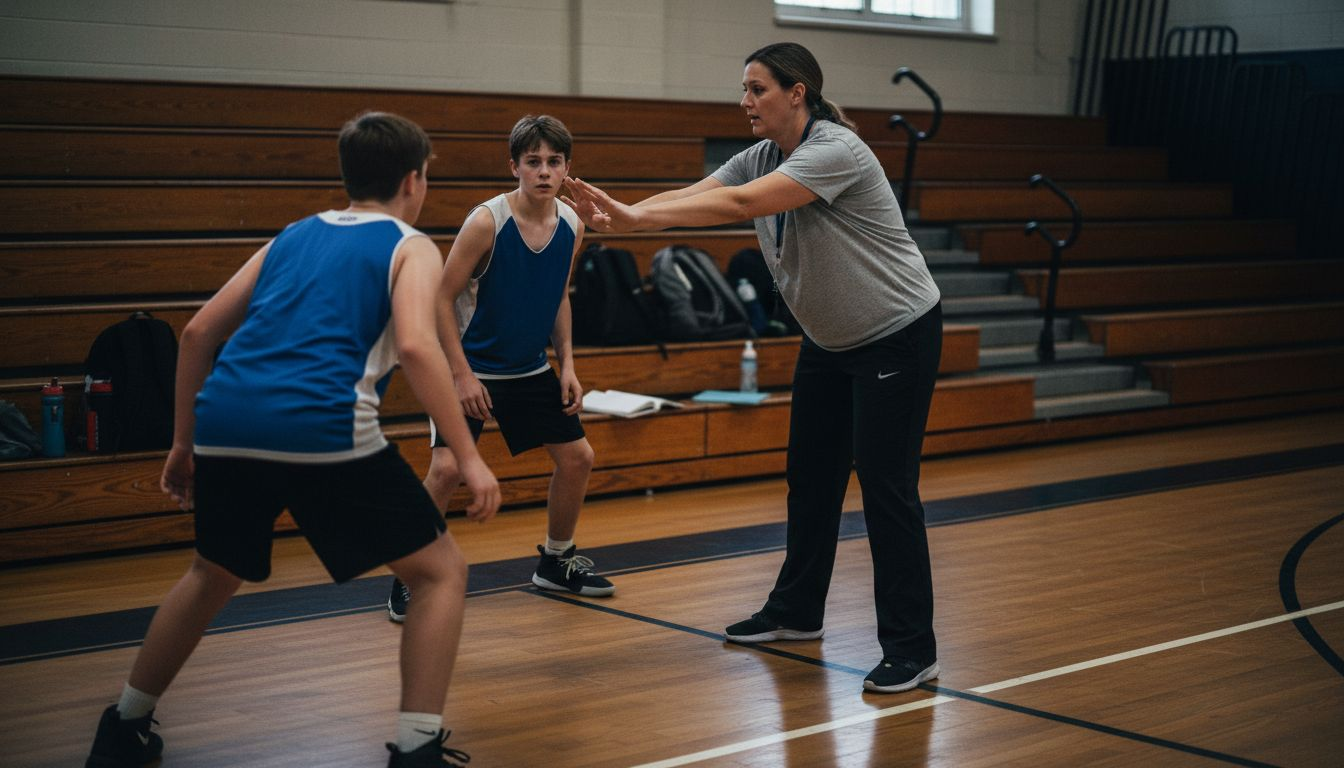
Here’s a comparison of rebound types and their game impact:
| Rebound Type | Frequency in Games | Impact on Possession | Typical Players Involved |
|---|---|---|---|
| Offensive Rebound | Less frequent | Creates second chance shot | Power forwards, centers |
| Defensive Rebound | Most frequent | Starts fast break offense | Centers, guards, forwards |
| Team Rebound | Occasional | Retains team control | Multiple players, all positions |
Understanding these distinctions requires players to develop nuanced skills beyond mere physical attributes. While height and strength contribute to rebounding success, strategic positioning, anticipation, and communication play equally critical roles in effective ball recovery.
Successful rebounding is 70% positioning, 20% timing, and 10% pure athletic ability.
Physical Attributes and Rebounding Roles:
- Centers typically excel at defensive rebounds due to proximity to the basket
- Power forwards often provide strong support in both offensive and defensive rebounding
- Guards must develop anticipation and quick reflexes to compete for rebounds
Pro tip: Practice reading shot trajectories from different court positions to improve your rebounding anticipation and positioning skills.
Essential Rebounding Techniques and Skills
Successful rebounding transcends raw athleticism, requiring a sophisticated blend of technical skills, strategic awareness, and physical preparation. Advanced rebounding techniques emphasize the critical role of precise body positioning, anticipation, and disciplined execution in securing possession.
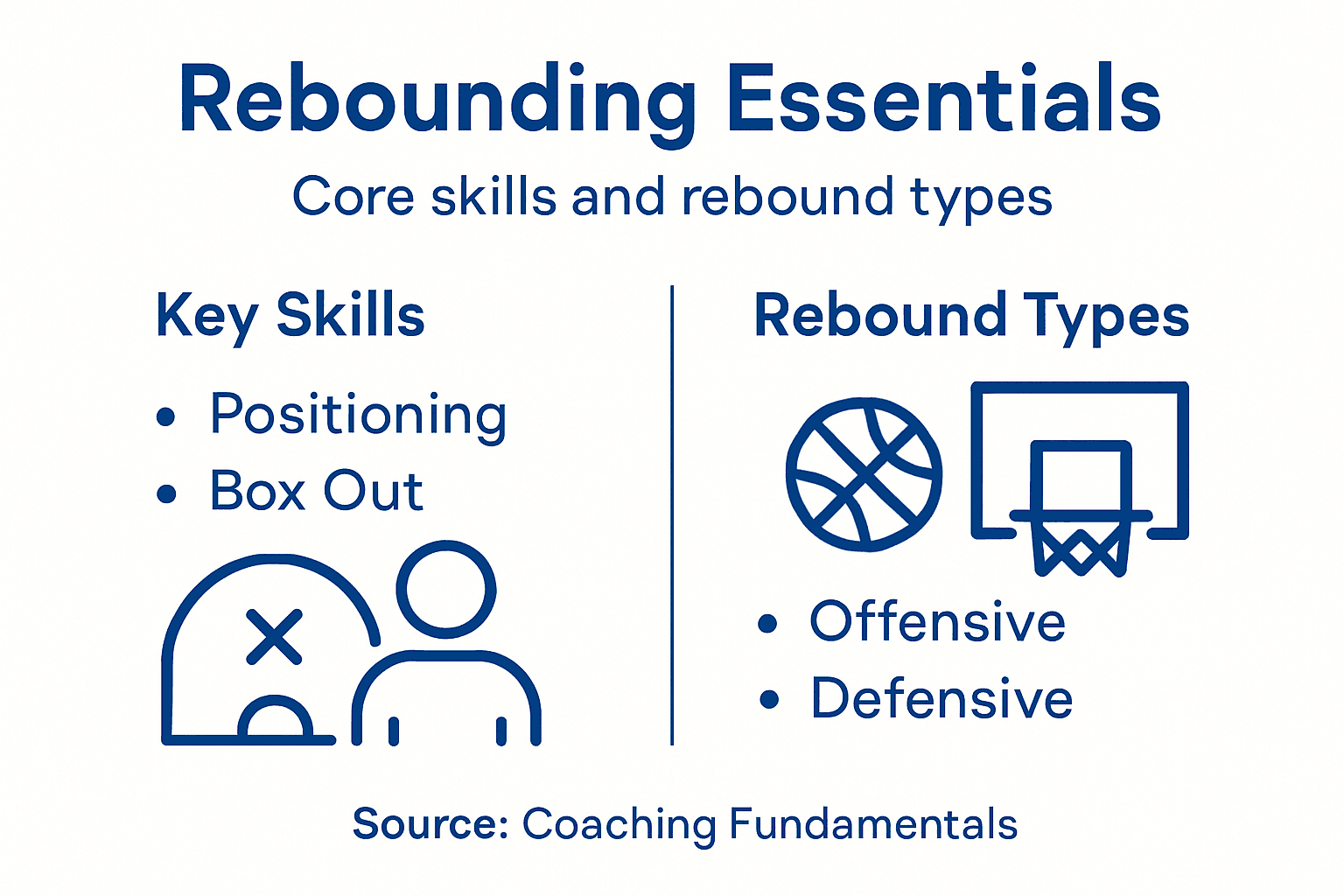
Key technical skills for effective rebounding include:
- Positioning: Establishing strategic court location relative to the basket
- Boxing Out: Creating physical barriers between opponents and potential ball trajectory
- Ball Tracking: Reading shot angles and predicting rebound directions
- Hand Preparation: Keeping hands active and ready to secure the ball
- Body Control: Maintaining balance and explosive movement
Footwork Fundamentals play a crucial role in rebounding success. Players must develop:
- Quick lateral movements
- Low center of gravity
- Ability to pivot rapidly
- Sliding techniques to maintain defensive position
Basketball rebounding research highlights that anticipation is as important as physical skill. Understanding shot trajectories, recognizing shooting patterns, and predicting potential rebound locations can significantly enhance a player’s ability to secure possession.
Rebounding is 80% mental preparation and 20% physical execution.
Mastering rebounding requires consistent practice and a strategic approach that combines physical skills, court awareness, and mental preparation. Players must develop not just strength and jumping ability, but also the nuanced skills of positioning, timing, and aggressive ball pursuit.
The table below summarizes key rebounding skills and their primary benefits:
| Skill Area | Description | Primary Benefit |
|---|---|---|
| Positioning | Strategic location near hoop | Improved ball recovery |
| Boxing Out | Shielding opponents | Limits rival scoring chances |
| Ball Tracking | Predicting shot direction | Faster reaction to misses |
| Hand Preparation | Ready, active hands | Secure possession quickly |
| Footwork | Quick, balanced movements | Maintains defensive stance |
Pro tip: Practice peripheral vision drills to improve your ability to track ball movement and anticipate rebound opportunities without directly staring at the ball.
Roles and Responsibilities for Effective Rebounding
Basketball team rebounding strategies reveal that successful rebounding demands collective effort and individual accountability across all five court positions. Rebounding is not just a center or power forward’s responsibility, but a team-wide commitment requiring strategic coordination and disciplined execution.
Key positional responsibilities include:
- Centers: Primary interior rebounding specialists
- Power Forwards: Strong secondary rebounding support
- Small Forwards: Provide supplementary rebounding assistance
- Shooting Guards: Help secure perimeter rebounds
- Point Guards: Initiate fast break transitions after defensive rebounds
Team-Wide Rebounding Fundamentals require players to:
- Locate and neutralize assigned opponents
- Establish strong boxing-out positions
- Communicate court positions
- Maintain aggressive pursuit of the basketball
- Develop peripheral court awareness
Comprehensive rebounding research demonstrates that effective rebounding involves precise technical execution. At the moment of shot release, players must instantly transition into defensive positioning, using wide stances, raised elbows, and strategic body placement to secure possession.
Successful rebounding is a team skill, not an individual achievement.
Communication emerges as a critical component of effective rebounding. Players must continuously signal potential rebound opportunities, warn teammates about opponent movements, and coordinate defensive assignments to maximize possession chances.
Pro tip: Practice peripheral awareness drills that help you track both the ball and your assigned opponent simultaneously during game scenarios.
Mistakes to Avoid When Coaching Rebounding
Basketball rebounding techniques reveal critical coaching errors that can significantly undermine a team’s rebounding effectiveness. Understanding and addressing these common mistakes is essential for developing consistent, high-performance rebounding skills.
Key mistakes coaches frequently make include:
- Ball Watching: Allowing players to focus on the ball instead of opponent positioning
- Neglecting Footwork: Failing to teach proper balance and movement techniques
- Insufficient Box-Out Training: Not emphasizing critical defensive positioning
- Ignoring Vertical Leap Development: Overlooking physical conditioning aspects
- Undervaluing Aggressive Mentality: Not cultivating a competitive rebounding mindset
Fundamental Rebounding Errors coaches must recognize:
- Players chasing balls without strategic positioning
- Lack of two-handed ball securing techniques
- Poor peripheral court awareness
- Inconsistent effort across different game scenarios
- Minimal emphasis on transition rebounding
Comprehensive coaching research demonstrates that many coaches fail to break down rebounding into teachable component skills. Effective coaching requires systematic skill deconstruction, allowing players to master individual aspects before integrating them into full-court performance.
Rebounding excellence emerges from deliberate, structured training—not accidental skill development.
Successful coaches understand that rebounding is both a physical and mental skill. They must consistently reinforce technical fundamentals while simultaneously developing players’ competitive spirit and situational awareness.
Pro tip: Design specific rebounding drills that isolate and strengthen individual components of successful ball recovery.
Take Your Team’s Rebounding to the Next Level with Proven Coaching Resources
Mastering basketball rebounding requires more than just athleticism. As the article highlights, positioning, boxing out, anticipation, and team-wide coordination are vital for turning rebounds into game-changing possessions. Many coaches struggle to systematically teach these skills while also developing their players’ mental toughness and strategic awareness. If you want to overcome common challenges like poor footwork, ball-watching, and lack of communication, then you need coaching tools designed to build these essentials with clarity and structure.

Discover how Hoop Mentality’s collection of expert-designed Basketball Drills and Basketball Workouts can help you develop disciplined rebounding fundamentals across all positions. Our practical guides and practice plans break down complex skills like boxing out and reading shot trajectories into easy-to-follow steps so your team can execute with confidence under pressure. Start improving your team’s rebounding performance today by exploring our comprehensive coaching resources at Hoop Mentality. Don’t wait to turn rebounding mistakes into winning plays.
Frequently Asked Questions
What are the different types of rebounds in basketball?
The three main types of rebounds are offensive rebounds, defensive rebounds, and team rebounds. Offensive rebounds occur when the shooting team recovers the ball after a missed shot, while defensive rebounds happen when the defending team gains possession after a missed shot. Team rebounds involve multiple players working together to recover the ball.
How can players improve their rebounding skills?
Players can enhance their rebounding skills by focusing on key techniques such as positioning, boxing out, ball tracking, and body control. Practicing peripheral vision drills can also help in anticipating rebound opportunities.
Why is communication important in rebounding?
Communication is crucial in rebounding as it ensures that players can coordinate their efforts, signal each other about opponent movements, and establish clear assignments on the court. This teamwork maximizes the chances of securing possession.
What mistakes should coaches avoid when teaching rebounding?
Coaches should avoid common mistakes such as allowing players to focus too much on the ball (ball watching), neglecting proper footwork training, and not emphasizing the importance of boxing out and jumping techniques. Effective training should break down rebounding into manageable skills for players to master.