

What is a matchup zone, and why does it work?
A matchup zone defense is a hybrid defensive system that combines man-to-man and zone principles. Defenders guard areas of the court, but when an offensive player enters their zone, they match up and cover that player tightly, just like man-to-man.
The result is a defense that looks like a zone from one angle and man-to-man from another. Opponents struggle to read it. That confusion is the whole point.
Key features at a glance:
- On-ball defenders apply tight, man-to-man pressure
- Off-ball defenders provide help coverage within their zones
- Defenders switch and communicate constantly as players move
- The defense adapts to offensive personnel without changing its base structure
- It can present a 2-1-2 front, prompting opponents to adjust their offensive sets
Table of Contents
- Key characteristics that set this defense apart
- Common matchup zone formations you should know
- How does matchup zone compare to man-to-man and traditional zones?
- Practical tips for implementing matchup zone defense
- Advantages and disadvantages of the matchup zone
- Drills and practice routines for matchup zone defense
- Coaches and teams known for running the matchup zone
- Hoop Mentality resources for matchup zone coaches
- Key Takeaways
- FAQ
Key characteristics that set this defense apart
The matchup zone’s biggest strength is its ability to confuse opponents. Offenses are trained to attack zones with skip passes and corner threes, and to attack man-to-man with screens and isolation plays. The matchup zone fits neither category cleanly.
“A matchup zone forces opponents to ‘think’ rather than react, leading to hesitation and mistakes such as rushed passes and hurried shots.” — Jay Bilas, ESPN
Communication is the engine that keeps this defense running. Defenders must call out screens, announce switches, and pass cutters off to teammates. Without that constant chatter, the defense develops gaps that skilled offenses will find quickly.
The defense also demands physical versatility. Guards need to handle post situations when rotations pull them inside. Bigs must be mobile enough to hedge on ball screens at the perimeter. Every player has to be comfortable in multiple roles.
- Constant verbal communication between all five defenders
- Active switching on cuts and screens without losing defensive shape
- Perimeter players must prevent driving lanes and close out on shooters
- Post players stay connected to both the paint and the ball
Common matchup zone formations you should know
The 2-1-2 matchup zone
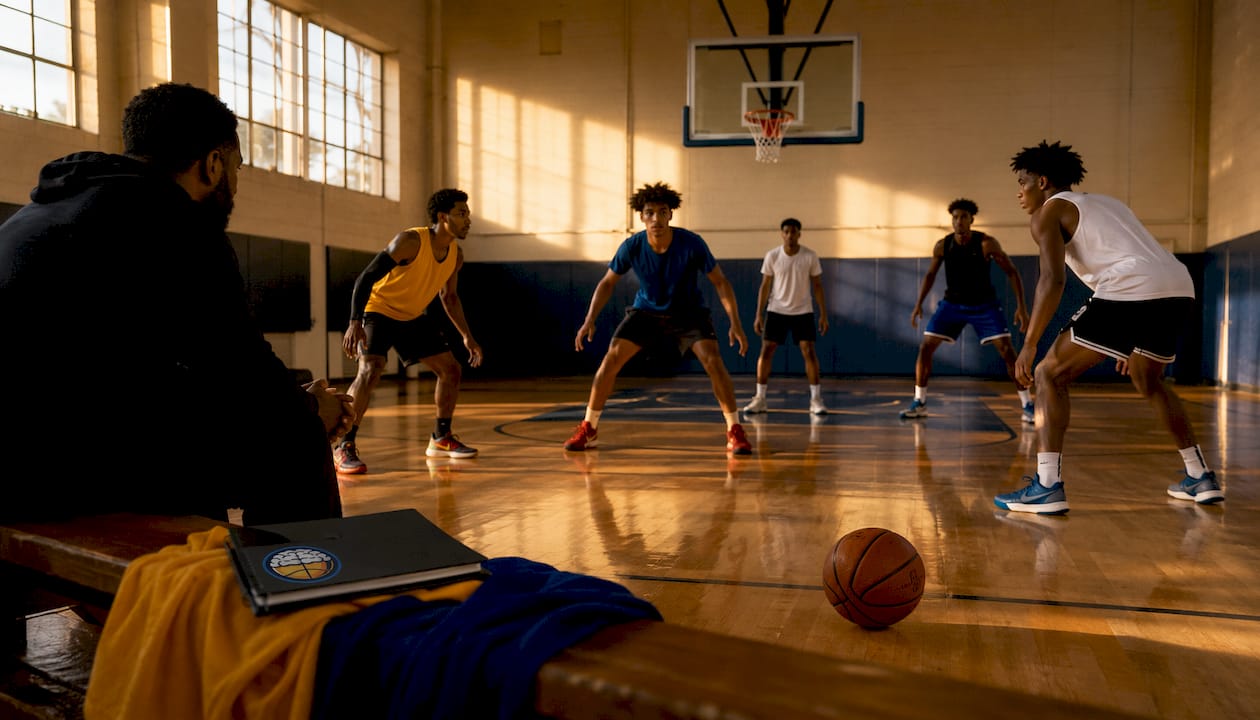
The 2-1-2 matchup zone places two guards at the top, one player at the elbow, and two players along the baseline. It is the most common starting point for coaches new to the system. The two top defenders pressure ball handlers and deny wing entries. The middle player covers the high post and helps on drives. The two baseline defenders protect the paint and contest corner shots.
The 1-3-1 matchup zone
The 1-3-1 sets one player at the point, three across the middle, and one at the baseline. It is aggressive and designed to trap ball handlers in the corners. The Complete 1-3-1 Zone Defense Guide V2.0 from Hoop Mentality covers this formation in full detail, including rotations, trapping triggers, and how to handle skip passes. The 1-3-1 works best against teams that rely on perimeter ball movement and lack a strong interior presence.

Formation selection depends on your personnel. A team with long, athletic wings fits the 1-3-1 well. A team with a dominant shot-blocker at center is better suited to the 2-1-2, where that player anchors the paint.
How does matchup zone compare to man-to-man and traditional zones?
| Feature | Man-to-Man | Traditional Zone | Matchup Zone |
|---|---|---|---|
| Player responsibility | Specific opponent | Court area | Area plus matching up |
| On-ball pressure | High | Moderate | High |
| Help defense | Rotational | Built-in | Built-in plus matching |
| Confusion factor | Low | Moderate | High |
| Communication demand | Moderate | Moderate | Very high |
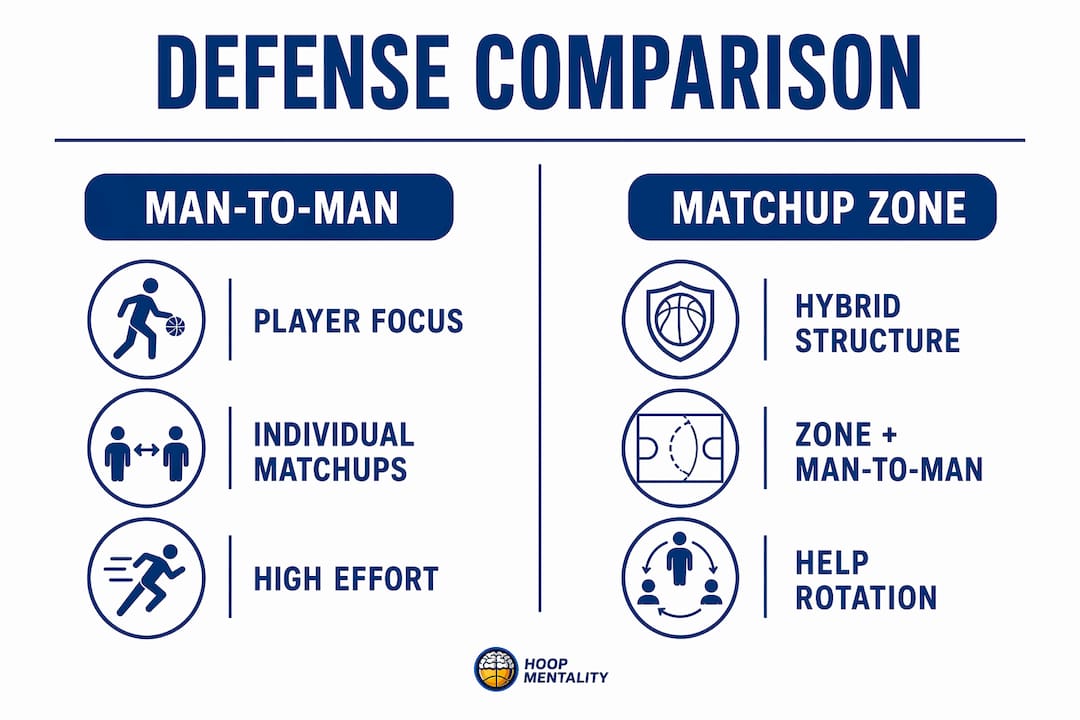
Man-to-man defense assigns each defender a specific opponent for the entire possession. It is straightforward but physically demanding, and it breaks down when defenders get screened or beaten off the dribble.
Traditional zone defense assigns court areas. It conserves energy and protects the paint, but skilled teams can pick it apart with patient ball movement and corner shooting.
The matchup zone takes the best of both. You get the pressure and accountability of man-to-man, plus the help structure and positional flexibility of a zone. The tradeoff is complexity. Coaches who run it well have put in the practice time to make the communication automatic.
Pro Tip: Use the matchup zone as a secondary package when your man-to-man defense is getting attacked by screens. Switching to it mid-game forces the offense to reset and re-read your coverage.
Practical tips for implementing matchup zone defense
Coaches who install this defense successfully follow a clear progression. Start with man-to-man principles. Players need to understand individual coverage before they can handle the switching demands of the matchup zone.
- Teach man-to-man first: footwork, on-ball pressure, and help-side positioning
- Introduce zone concepts second: area responsibility and defensive shape
- Run 4v3 drills to force communication and rotation under pressure
- Add cutters and screeners gradually to simulate game conditions
- Move to full 5v5 only after rotations are automatic
Centers play a critical role that coaches often underestimate. In a matchup zone, your center must hedge laterally on ball screens, stay between the ball and the rim, and close out on corner shooters when rotations demand it. That is far more movement than a traditional zone asks of a big man.
Perimeter defenders must pass cutters off and bump teammates during rotations. A “flat” zone, where defenders stop moving after the ball moves, creates driving gaps that offenses exploit immediately.
Advantages and disadvantages of the matchup zone
Advantages:
- Creates genuine confusion for opponents who cannot identify the defensive scheme
- Applies man-to-man pressure on the ball while maintaining help coverage
- Disrupts standard offensive sets designed for pure zone or pure man-to-man
- Gives coaches flexibility to adjust matchups based on opponent personnel
- Protects against both perimeter shooting and interior drives
Disadvantages:
- Requires high communication and basketball IQ from all five players
- Difficult to install quickly; needs significant practice time to run correctly
- Vulnerable to teams with multiple ball handlers who can force rotations
- Can break down if one defender fails to communicate or rotate properly
- Physically demanding because defenders must cover both area and individual assignments
The matchup zone rewards teams that practice it consistently. It punishes teams that try to run it without the foundational communication habits in place.
Drills and practice routines for matchup zone defense
4v3 Rotation Drill
Put four offensive players against three defenders. The defense must rotate, communicate, and cover every player. This drill forces defenders to talk constantly and move before the ball does. It is the fastest way to build the habits the matchup zone requires.
Cutter Recognition Drill
Set up two offensive players who cut through the lane while defenders practice passing them off. The goal is to hand off coverage cleanly without losing sight of the ball. Run this at half speed first, then increase the pace.
Ball Screen Hedge Drill
Pair a ball handler with a screener and have your center practice lateral hedges. The center steps out to disrupt the screen, then recovers to the paint. This drill directly addresses the most common breakdown point in the matchup zone. For more zone defense drills, Hoop Mentality has a full library of progressive practice plans.
5v5 Shell Drill
Run a full shell drill with the matchup zone rules active. Stop play whenever a defender fails to communicate or loses their matchup. Repetition in this format builds the automatic habits the defense needs to work in games.
Coaches and teams known for running the matchup zone
John Chaney, the legendary Temple University head coach, built his program’s identity around the matchup zone. Saint Joseph’s coach Phil Martelli described Chaney’s system alongside the Princeton offense as one of only two truly unique tactical systems in college basketball. That is a strong statement about how distinctive and effective the scheme became under Chaney’s direction.
The matchup zone has appeared at every level of the game, from high school programs looking to neutralize athletic mismatches to college programs using it to disrupt offenses built around set plays. Coaches who understand zone defense at a deep level tend to reach for the matchup zone when their man-to-man coverage is getting exploited, using it as a change-up that forces opponents to slow down and think.
Hoop Mentality resources for matchup zone coaches
Hoop Mentality gives you the tools to install and run the matchup zone with confidence. No searching through scattered notes or generic videos.
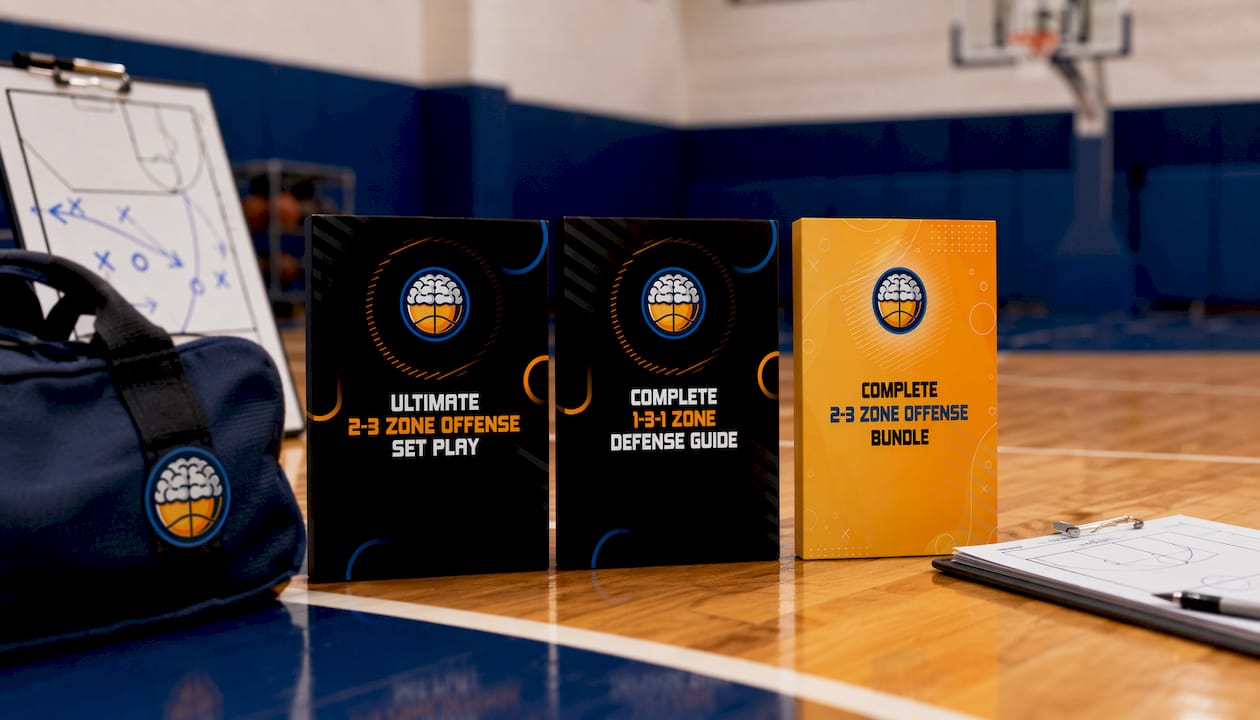
The Complete 2-3 Zone Offense Bundle and the Ultimate 2-3 Zone Offense Set Play show you exactly how offenses attack zone structures, which makes you a sharper defensive coach. Understanding what the offense is trying to do is the fastest way to tighten your matchup zone rotations. Add the Complete 1-3-1 Zone Defense Guide V2.0 for a full breakdown of the 1-3-1 matchup formation, including drills, rotations, and game-ready adjustments. Browse all resources at Hoop Mentality and add what fits your team directly to your cart.
Key Takeaways
The matchup zone is the most disruptive defense a coach can run when players have the communication skills to execute it correctly.
| Point | Details |
|---|---|
| Hybrid structure | The matchup zone combines man-to-man pressure with zone area coverage. |
| Communication first | All five defenders must talk constantly; one silent player breaks the whole system. |
| Install man-to-man first | Coaches build matchup zone on top of solid man-to-man fundamentals. |
| Centers do more | Post players must hedge on ball screens and close out on corners, not just protect the paint. |
| Hoop Mentality | Hoop Mentality offers playbooks, drills, and zone defense guides to help coaches install and run the matchup zone at any level. |
FAQ
What is a matchup zone in basketball?
A matchup zone is a combination defense where defenders cover court areas but match up individually with offensive players who enter their zone. It blends man-to-man pressure with zone structure.
Is zone defense illegal in any level of basketball?
Zone defense is legal in college, high school, and international basketball. The NBA prohibited it for decades but eventually lifted the ban, allowing teams to play zone legally at the professional level.
What does “matchup” mean in basketball?
A matchup refers to the pairing of a defender against a specific offensive player. In a matchup zone, those pairings shift based on where offensive players move, rather than staying fixed for the entire possession.
What did Michael Jordan say about zone defense?
Jordan was famously critical of zone defense, viewing it as a way to hide weaker defenders. His perspective reflected the NBA’s long preference for man-to-man coverage before the league’s rules changed to permit zone defense at the professional level.
How do you beat a matchup zone offense?
Offenses attack the matchup zone with ball reversal, skip passes, and dribble penetration to force rotations. The 2-3 zone offense principles that exploit traditional zones apply here as well, with added emphasis on reading how defenders are matching up.