

TL;DR:
- The flex offense is a continuous basketball system using screens, cuts, and ball reversals to generate open shots against man-to-man defense. It relies on precise timing, spacing, and layered teaching to maintain rhythm and effectiveness while countering modern defensive switches. When executed with discipline, it develops fundamental skills and creates high-percentage scoring opportunities for players at all levels.
The flex offense is a continuity basketball system built on a repeating sequence of screens, cuts, and ball reversals designed to generate open shots against man-to-man defense. Unlike set plays that run once and reset, the flex cycles through the same pattern until a scoring opportunity opens. Coaches at every level use it because it creates structure without requiring elite individual talent. Understanding flex offense fundamentals gives you a system that works for developmental teams and competitive programs alike.
What is a flex offense and how does it work?
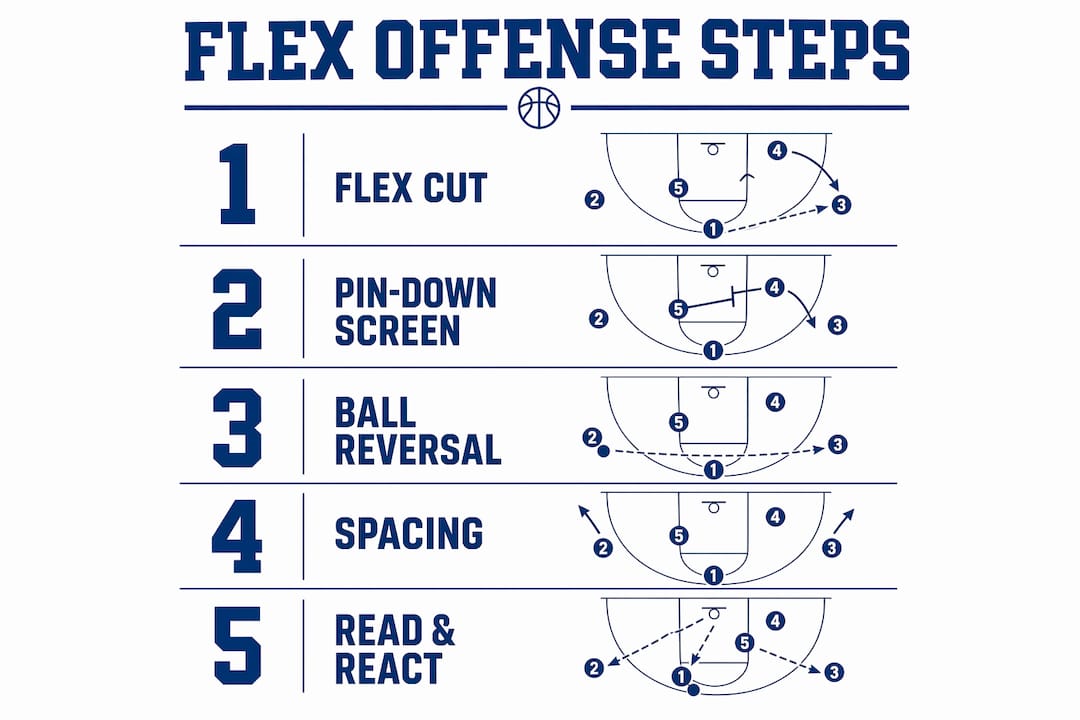
The flex offense is defined by three chained actions: the flex cut (a baseline cross screen), the pin-down screen, and the ball reversal. These three actions repeat side to side in a continuous loop. The offense starts in a 4-out formation, with four perimeter players and one interior screener, giving the floor enough spacing to make cuts and passes viable.
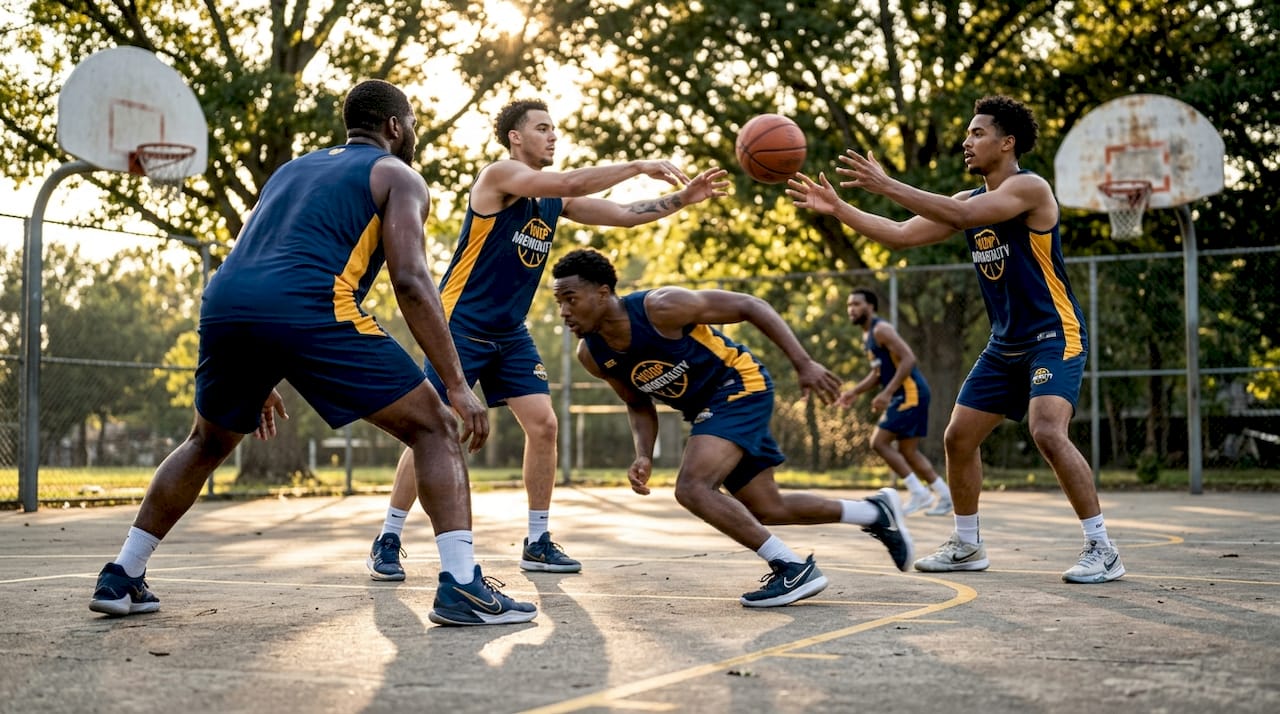
Here is how the sequence runs in practice. The ball starts on one wing. The player in the corner on the weak side cuts off a baseline screen set by the post player. That cutter receives the ball at the elbow or scores at the rim. If the defense denies the cut, the ball reverses to the top, and a pin-down screen is set for the next player in the sequence. The pattern then mirrors to the other side and repeats.
The table below breaks down the three core actions and what each one accomplishes:
| Action | Description | Primary purpose |
|---|---|---|
| Flex cut | Baseline cut off a cross screen | Attack the basket, force defensive rotation |
| Pin-down screen | Down screen after ball reversal | Free a perimeter shooter at the elbow |
| Ball reversal | Pass from wing to top to opposite wing | Reset spacing, shift defensive pressure |
The concept of positionless basketball fits naturally here. Any player can fill any spot in the rotation, which makes the flex useful for teams without a defined star. Chaining these actions with proper timing is what separates a functioning flex from a disorganized motion offense.
Pro Tip: Run the flex cut and pin-down as a two-part sequence in early practice sessions. Players who learn both actions together develop better timing than those who drill each action in isolation.
What are the benefits and challenges of the flex offense?
The flex offense creates scoring opportunities in two primary areas: the flex cut under the basket and jump shots from the elbows. Most scoring comes from these two spots, which are high-percentage locations on the floor. The offense is especially effective against man-to-man defense because the continuous screening forces defenders to fight through contact on every possession.
Core benefits of running the flex offense:
- Continuity rhythm. The repeating pattern keeps all five players moving, which prevents defensive recovery time.
- Player development. Players learn to set screens, read defenders, cut with purpose, and pass on time. These are transferable skills across any offensive system.
- Natural shot creation. The offense generates open looks without requiring isolation plays or broken-play improvisation.
- Spacing control. The 4-out setup keeps the paint open for cutters and gives ball handlers clear passing lanes.
Common challenges coaches face:
- Predictability. A defense that has scouted the flex knows the cut is coming. Without counters, the offense becomes easy to guard.
- Defensive switching. Teams that switch screens disrupt the timing of the sequence and can neutralize the flex cut entirely.
- Floor shrinking. If players drift inside their spots, passing lanes close and cuts become contested. Poor offensive spacing is the single fastest way to kill the flex offense.
Pro Tip: Check your spacing before every possession. Each perimeter player should be at least 15 feet from the nearest teammate. If two players are within 10 feet of each other, the defense can cover both with one defender.
The flex offense rewards disciplined teams. It punishes teams that cut early, screen late, or drift out of position. That is both its strength and its demand.
How do modern coaches adapt the flex against today’s defenses?
Predictability is the flex offense’s biggest vulnerability, and modern defenses are built to exploit it. Switching defenses, in particular, can neutralize the standard flex sequence by taking away the cutter before the screen is even set. The solution is not to abandon the flex. It is to build counters that launch from the same starting positions.
Wider spacing and counters are the two most effective modern adjustments. Wider spacing stretches the defense horizontally, which creates larger gaps for cutters and makes switching more costly. Counters give players a second option when the defense takes away the primary action.
The table below compares traditional flex execution with a modernized approach:
| Feature | Traditional flex | Modernized flex |
|---|---|---|
| Spacing | Standard 4-out | Extended 4-out with corner spacing |
| Counter options | Minimal | Built-in reads after defensive switches |
| Screening reads | Fixed sequence | Player reads defender before screening |
| Ball handler role | Passive reversal passer | Active decision maker with drive options |
| Mismatch exploitation | Incidental | Deliberate, pre-taught reactions |
The most effective counters target the switch directly. When a defense switches, a big-little mismatch often appears on the perimeter or in the post. Teaching players to recognize that mismatch and attack it immediately turns a defensive adjustment into a scoring advantage.
Key modern adjustments to install alongside the base flex:
- Slip the screen when the defender cheats over early
- Post up the mismatch when a guard switches onto a bigger player
- Drive the gap when the defense collapses to help on the cutter
- Kick out to the corner shooter when the help defender leaves to stop the drive
These reads do not replace the flex pattern. They extend it. Players who understand the base sequence first will pick up counters faster because they already know what the defense is reacting to.
How to run the flex offense: coaching and implementation
Teaching the flex offense effectively requires a step-by-step progression. Coaches who try to install the full sequence on day one usually end up with players who know the pattern but cannot execute it under pressure. Build the offense in layers.
- Teach the flex cut in isolation. Run the baseline cross screen and the cut without any defense. Focus on the cutter reading the screen and timing the cut to arrive as the screen is set.
- Add the pin-down screen. Once players can run the flex cut cleanly, attach the pin-down. The screener from the flex cut becomes the pin-down screener. This teaches the two-action chain.
- Add ball reversal. Introduce the pass from wing to top to opposite wing. Emphasize that the reversal triggers the next flex cut. The ball and the cut must happen together.
- Run the full sequence 5-on-0. Walk through the complete pattern at half speed. Timing and synchronization matter more than speed at this stage. Players should move together, not react to each other.
- Add passive defense. Use defenders who contest but do not steal or block. This forces players to read defenders without the chaos of live defense.
- Install counters. Once the base pattern is automatic, add one counter at a time. Start with the slip screen, then the mismatch post-up.
Patience and trust in timing are the two qualities coaches must build in their players. A player who cuts before the screen is set disrupts the entire sequence. A player who waits for the screen but then hesitates on the cut gives the defense time to recover.
For youth teams, simplified flex versions must still preserve the 4-out spacing and the two-action chain. Removing the pin-down or collapsing the spacing turns the flex into a static set play, which defeats its purpose. Keep the core intact and reduce the speed of execution instead.
The offensive flow guide from Hoopmentality covers rhythm and continuity concepts that pair directly with flex offense teaching progressions.
Key takeaways
The flex offense succeeds when players execute the flex cut, pin-down screen, and ball reversal in a synchronized, repeating sequence with proper 4-out spacing.
| Point | Details |
|---|---|
| Core structure | Three chained actions (flex cut, pin-down, reversal) repeat side to side continuously. |
| Primary scoring spots | The flex cut under the basket and elbow jump shots produce most scoring opportunities. |
| Biggest vulnerability | Predictability from defensive switching, addressed by counters and wider spacing. |
| Teaching progression | Build the offense in layers: cut first, then add screens, then reversal, then counters. |
| Youth application | Simplified versions must retain 4-out spacing and continuous movement to stay effective. |
Why timing is the real secret to the flex offense
I have run the flex offense with teams at multiple levels, and the single most common mistake I see is players who know the pattern but play it on their own clock. A player cuts when they feel ready. A screener sets the screen when they get there. The result looks like the flex but does not function like it. The defense has a full second to recover, and the cutter gets nothing.
The flex offense is not about knowing where to go. It is about arriving exactly when the screen is set. That requires players to watch each other, not just the ball. Most teams spend 90% of practice time tracking the ball. In the flex, you need players who track the screener.
I have also seen coaches try to modernize the flex by adding so many counters that the base pattern disappears. Players end up confused about which action they are running. My advice: install one counter per week, not one per practice. Let the base pattern become automatic before you layer in reads.
The flex offense is genuinely one of the best developmental systems in basketball. It teaches every player to screen, cut, pass, and read defenders. A player who spends two seasons in a well-run flex offense understands team basketball at a level that individual skill work cannot replicate.
— Dejan
Build your flex offense with Hoopmentality resources
Coaching the flex offense well requires the right drills and practice structure. Hoopmentality has you covered.

The Big Man Dual Action Drill targets the screening and cutting mechanics that sit at the core of the flex offense. It builds the habits your players need to execute the flex cut and pin-down with proper timing. Pair it with the Basketball Practice Plan Template to organize your installation sessions by progression, from base pattern to counters. Both resources are built from real coaching experience and designed to save you time while giving your team a clear, structured path to running the flex offense with confidence.
FAQ
What is the flex cut in basketball?
The flex cut is a baseline cut made by a player coming off a cross screen set near the low post. It is the primary scoring action in the flex offense, targeting the area under the basket against man-to-man defense.
Is the flex offense effective against zone defense?
The flex offense is designed primarily for man-to-man defense. Against zone defenses, the screening actions lose effectiveness because zone defenders guard areas rather than specific players. Most coaches run separate zone attack sets alongside the flex.
How long does it take to install the flex offense?
A basic flex sequence can be taught in two to three practices using a layered progression. Full installation, including counters and live-defense reads, typically takes two to four weeks depending on player experience and practice frequency.
What spacing do you need to run the flex offense?
The flex offense requires a 4-out formation, with four players on the perimeter and one interior screener. Perimeter players should maintain at least 15 feet of separation to keep passing lanes open and prevent the defense from covering multiple players with one defender.
Can youth teams run the flex offense?
Yes. Simplified versions work well for youth teams as long as coaches preserve the 4-out spacing and the two-action chain. Removing the core structure turns the offense into a static set play and eliminates the developmental benefits of continuous movement and screening.