

Every basketball program runs on four team leadership roles: the head coach owns program vision and game strategy; assistant coaches handle positional development, scouting, and logistics; team captains drive daily culture, accountability, and peer communication; and informal leaders carry influence without a title. Support staff (athletic trainer, manager, volunteers) keep operations moving.
Two things to do this week:
-
Hold a 15-minute coach-captain kickoff. Align on expectations, authority limits, and communication norms.
-
Publish a one-page captain job description to the team. Use USA Basketball’s player-development curriculum and NHSBCA job-description standards as your baseline. Hoop Mentality templates give you a ready-made starting point.
Key Takeaways
Defining team leadership roles in writing, then backing them with weekly check-ins and printed checklists, is the single fastest way to build a consistent team culture.
| Point | Details |
|---|---|
| Publish a captain job description | A written description prevents popularity-driven selection and sets clear accountability from day one. |
| Run weekly 10–15 minute check-ins | Short, structured coach-captain meetings reduce role misalignment more than any motivational talk. |
| Use the 12 daily to-dos | Hand captains a printed checklist on day one so expectations are concrete, not assumed. |
| Define staff roles functionally | Assign delegator, recruiter, and promoter functions to reduce overlap and protect head coach time. |
| Hoop Mentality templates | The Starter Pack and Template Bundle include ready-to-edit job descriptions, checklists, and agendas. |
Table of Contents
- What are the core team leadership roles in basketball?
- How do you select captains and set clear expectations?
- What does a captain actually do every day?
- How should coaches mentor captains?
- How do you build communication and accountability protocols?
- What leadership activities build captain skills?
- How do you organize staff roles and delegate effectively?
- How do you evaluate captain performance and adjust roles?
- Ready-to-use captain job description and orientation checklist
- The part most coaches skip
- Hoop Mentality templates save you the build time
- Sources
- FAQ
What are the core team leadership roles in basketball?
The NHSBCA head coach job description breaks head coach duties into seven areas: program philosophy, management, individual development, team systems, role definition, game preparation, and staff mentorship. That structure applies at every level from youth to college.
Assistant coaches own specific practice stations, break down film, handle travel logistics, and lead positional groups. At programs with recruiting responsibilities, one assistant typically leads that function.
Team captains enforce standards, model effort, lead warm-ups, and translate coach direction into player-facing language. The captain role spans modeling behavior, communication, motivation, team cohesion, and conflict management. Informal leaders do the same work without the title. Identify them early. Left unmanaged, they either amplify your culture or quietly undermine it.
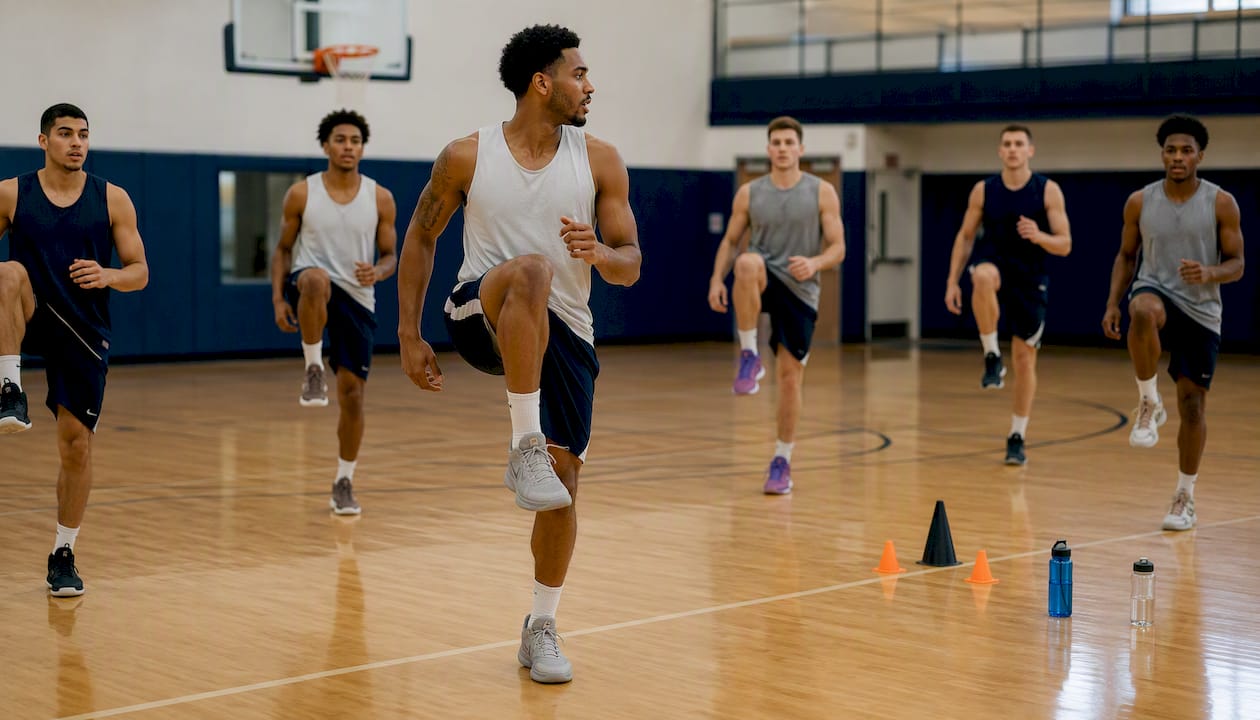
Support staff (athletic trainer, manager, scorekeeper, parent volunteers) handle equipment, medical coverage, scorekeeping, and travel coordination.
| Role | Core Deliverables |
|---|---|
| Head coach | Program philosophy, game plan, staff leadership, compliance |
| Assistant coach | Positional coaching, film breakdown, scouting, logistics |
| Team captain | Culture enforcement, warm-up leadership, peer accountability |
| Informal leader | Peer influence, morale, locker-room tone |
| Support staff | Equipment, medical, travel, scorekeeping |
How do you select captains and set clear expectations?
Three methods exist: coach appointment, player vote, and application plus nomination. Each has trade-offs.
Coach appointment gives you full control but can feel top-down. Player vote builds buy-in but often rewards popularity over leadership readiness. Application plus nomination is the most effective option. It filters for candidates who want the responsibility and gives you written evidence of their thinking before you commit.
A written captain job description is what separates a real selection process from a popularity contest. When candidates apply against a defined standard, accountability is built in from day one.
Selection workflow:
- Distribute the job description and nomination form (Day 1–2)
- Collect applications (Day 3–4)
- Run 10-minute coach interviews with each candidate (Day 5)
- Announce selection with a brief explanation of criteria (Day 7)
Interview questions to ask candidates:
- Describe a time you held a teammate accountable. What happened?
- How do you handle a teammate who skips treatment or shows up late?
- What does the team need most from its captain this season?
What does a captain actually do every day?
Captains need a concrete list, not a vague title. The IHSAA captain handbook describes captain duties as spanning modeling, communication, motivation, cohesion, and conflict management. Turn that into a daily checklist.
12 daily captain to-dos:
- Arrive early before the first player
- Set up equipment or confirm manager has done it
- Lead dynamic warm-ups with energy and precision
- Check in with the coach before practice starts (two minutes max)
- Own at least one drill station during practice
- Address any effort or attitude issue in the moment, privately
- Communicate coach corrections to the group clearly
- Monitor locker-room tone before and after practice
- Report any unresolved conflict to the coach after practice
- Model the standard on every rep, not just the hard ones
- Close practice with a team huddle and one focus point
- Send a brief post-practice text to the coach if anything needs follow-up
Weekly rhythm: Pre-week check-in with the coach (Sunday or Monday), team meeting mid-week, game-day responsibilities (warm-up, starting huddle, halftime tone), and a post-game reflection with the coach.
Adapt the list by age group. Youth captains focus on energy and modeling. High school captains add accountability conversations. Club and college captains take on recruiting culture and film leadership.
Pro Tip: Print the 12 daily to-dos and hand them to your captain on day one. The Basketball Starter Pack For Coaches from Hoop Mentality includes a printable version you can give out at your first captain meeting.
How should coaches mentor captains?
Most high school captains receive little formal training before taking the role. Mentoring through explicit conversations is the primary way captains develop leadership skills faster than those left to figure it out alone.
The coach-captain check-in structure from Coach & Athletic Director recommends weekly 10–15 minute check-ins plus a monthly one-on-one development session. The most effective onboarding exercise: both coach and captain independently write their top 10 expectations for the captain role, then compare lists. Gaps in that comparison reveal exactly where conflict will emerge if left unaddressed.
Sample script for a tough conversation:
Coach to captain before a difficult teammate conversation: “Your job isn’t to be their friend right now. It’s to tell them what you see and give them a chance to fix it. Start with what you’ve noticed, not what you feel. Keep it short.”
Coach debriefing a bad game with the captain: “What did you see in the locker room at halftime? What did you say? What would you do differently?”
Pro Tip: After each mentoring session, write three sentences: what you discussed, what the captain committed to, and what you’ll check next week. That record becomes your captain evaluation file.
How do you build communication and accountability protocols?
The most common breakdown between coaches and captains is missing structure, not missing effort. Captains often wait for explicit direction on authority limits, so weekly check-ins reduce misalignment more than any motivational talk.
Coach-captain weekly agenda (10 minutes):
- Team pulse: any conflicts, absences, or attitude issues?
- Upcoming focus: what does the team need to hear this week?
- Captain authority check: any handled matters that need coach awareness?
Captain-to-teammate phrasing for common situations:
Effort issue: “I need more from you in these drills. The standard is [X]. Can you give me that?”
Attendance: “Coach needs everyone here. If something’s going on, tell me before practice, not after.”
Attitude: “That tone affects the whole group. Let’s reset.”
Escalation rules:
- Captain handles: effort, attitude, minor tardiness
- Coach steps in: repeated behavior, team-wide issues, anything affecting safety
- Administration notified: conduct violations, parent conflicts, eligibility concerns
For official interactions, captains speak briefly and respectfully. One question, one comment, then step back. The coach models this behavior first.
What leadership activities build captain skills?
Emotional intelligence, consistent modeling, and feedback phrasing are trainable through role-play and structured practice. Use these formats across the season.
10-minute weekly check-in agenda: Team pulse (3 min), upcoming game or practice focus (4 min), one leadership skill to practice this week (3 min).
30-minute preseason onboarding agenda: Role overview and job description review (10 min), expectations comparison exercise (10 min), first 30-day plan (10 min).
Three leadership drills:
- Role-play confrontation (10 min): Captain and a staff member act out a teammate accountability conversation. Debrief on tone, word choice, and outcome.
- Public speaking huddle (5 min): Captain addresses the team with one focus point before a drill. Coach gives feedback on clarity and confidence.
- Small-group problem solving (15 min): Present a real team scenario (low energy, losing streak). Captain-led groups propose solutions and present to the full team.
Film sessions work well for developing leadership skills when captains lead the breakdown. Assign a captain to present two clips per film session. It builds communication and earns respect from teammates.
Place onboarding activities in preseason, recalibration exercises at the midseason mark, and reflection sessions in the final week of the season.
How do you organize staff roles and delegate effectively?
At elite levels, coaching staffs use a functional structure with clear role specialization: a delegator (head coach or operations lead), a recruiter (lead on scouting and talent identification), and a promoter (community and outreach). Defining these roles reduces overlap and protects head coach time for vision and game planning.
Delegation examples:
| Staff Role | Primary Deliverables |
|---|---|
| Head coach (delegator) | Season plan, game strategy, staff direction |
| Assistant (recruiter) | Scouting reports, film breakdown, recruiting contacts |
| Assistant (promoter) | Community events, social media, parent communication |
| Manager / ops | Travel logistics, equipment, scheduling |
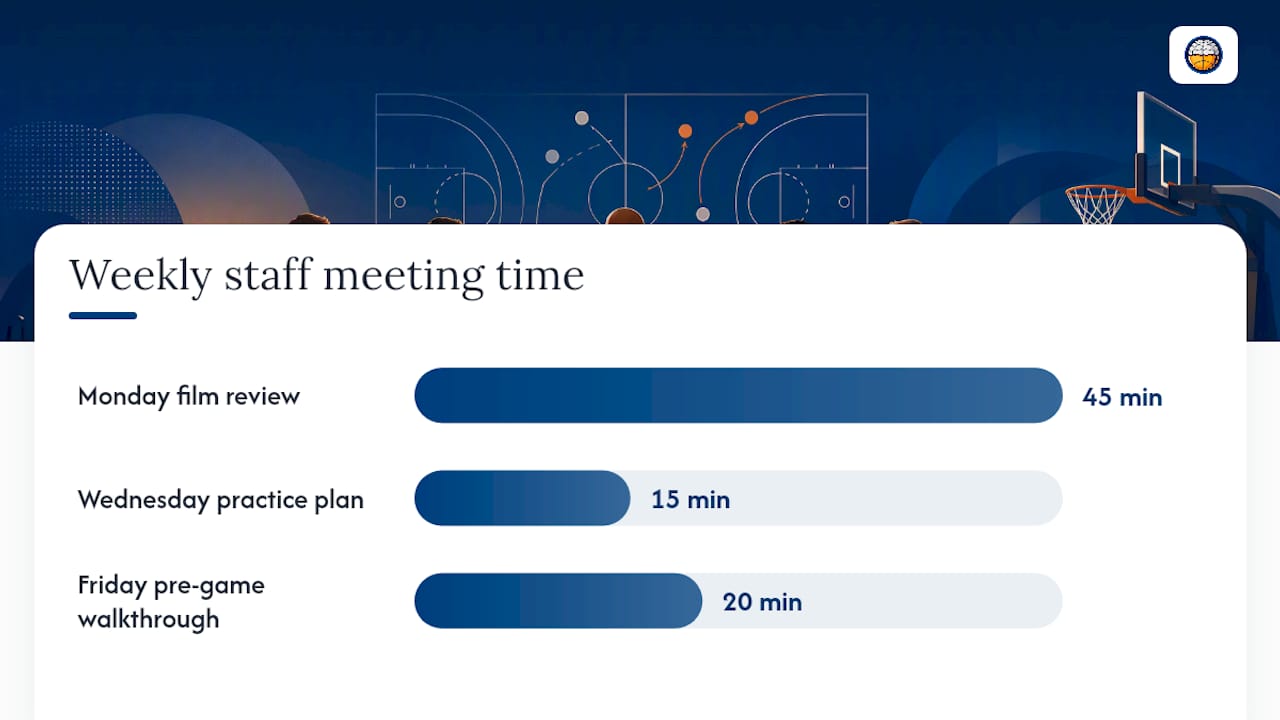
Weekly staff meeting rhythm: Monday film review and game plan (45 min), Wednesday practice plan confirmation (15 min), Friday pre-game walkthrough and assignments (20 min).
Assign one assistant to own the editable scouting report template each week. The head coach reviews, not builds, the report.
How do you evaluate captain performance and adjust roles?
Evaluate captains on five criteria: consistency (attendance and effort), peer influence (teammate feedback), communication quality, accountability outcomes, and coach feedback. Collect 360 input from two or three teammates and one assistant coach at the midseason mark.
Sample review form fields:
- Does the captain model the standard daily? (1–5 scale)
- Does the captain address issues directly and fairly? (1–5 scale)
- Does the captain communicate coach direction clearly? (1–5 scale)
- Open comment: what should the captain do more or less of?
If a captain falls short, run a remediation sequence: one direct mentoring conversation, a written plan with two or three specific behaviors to change, and a two-week check-in. Only move to role adjustment if the behavior doesn’t shift. When a change is necessary, announce it privately to the captain first, then to the team with a brief, neutral explanation.
Ready-to-use captain job description and orientation checklist
Team Captain Job Description
Purpose: Represent the coaching staff’s standards on and off the court. Serve as the primary communication link between players and coaches.
Core duties: Lead warm-ups, model effort and behavior on every rep, address teammate conduct issues directly, communicate coach direction to the group, and report unresolved conflicts to staff.
Essential functions: Arrive early, maintain academic and conduct eligibility, attend all captain check-ins, and complete the 12 daily to-dos consistently.
Adapted by level: Youth captains focus on energy and modeling. High school captains add accountability conversations and game-day leadership. Club and college captains take on film leadership and recruiting culture.
First-week orientation checklist:
- Meet with the head coach to review the job description
- Complete the expectations comparison exercise
- Lead one full warm-up under coach observation
- Observe and debrief one teammate accountability situation with the coach
- Confirm weekly check-in schedule
The part most coaches skip
Clarifying captain roles on paper feels administrative. It isn’t. The moment you hand a captain a written job description and run the expectations comparison exercise, the dynamic shifts. The captain stops guessing and starts leading with confidence. Teammates stop testing boundaries because the standard is visible.
The coaches who see the fastest culture change aren’t the ones with the most talented captains. They’re the ones who treat captain onboarding like a coaching assignment, not an afterthought. Run the one-week selection workflow. Hold the first check-in this week. The role of team captain becomes a real leadership position the moment you treat it like one.
Hoop Mentality templates save you the build time
Every artifact in this guide exists as a ready-to-edit file in Hoop Mentality’s coaching resource library. The Basketball Starter Pack For Coaches includes the printable captain checklist and onboarding agenda. The Basketball Template Bundle For Coaches gives you editable job descriptions, meeting agendas, and weekly check-in forms you can copy-paste into your program today.
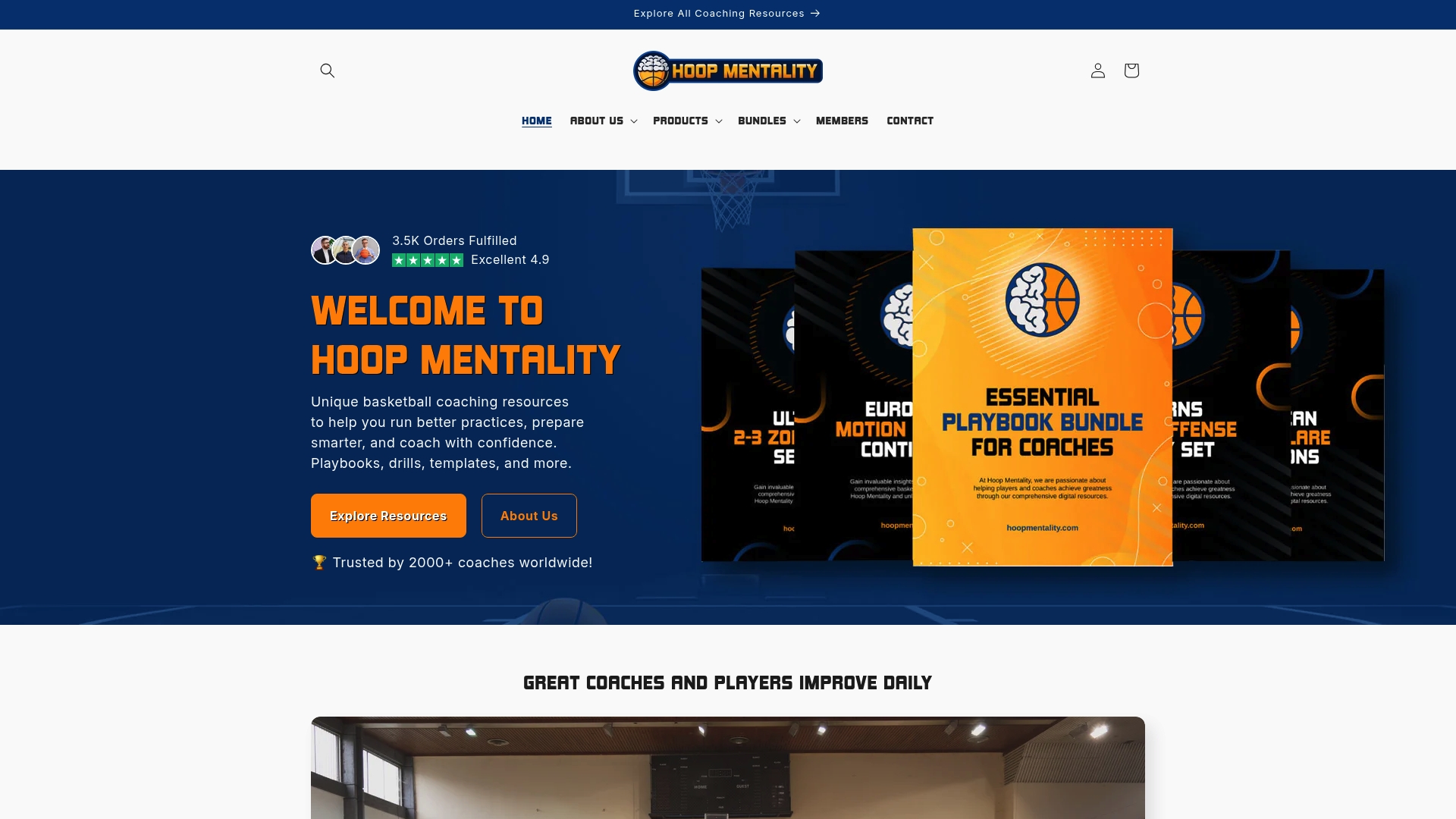
For scouting delegation, the Basketball Scouting Report Template gives your assistant a prebuilt format to fill in each week. The Basketball Shooting Bundle For Coaches covers drill station templates for practice structure. Browse the full library at Hoop Mentality and download what fits your program level.
Sources
- USA Basketball Player Development Curriculum - USA Basketball
- Create a Job Description for Your Captain
- Stronger bonds between coach & team captain | Coach & Athletic Director
FAQ
What are the main team leadership roles on a basketball team?
The four primary roles are head coach (program vision and game strategy), assistant coaches (positional development, scouting, logistics), team captains (daily culture and peer accountability), and informal leaders (peer influence without a formal title). Support staff handle operations.
How should a coach select a team captain?
The application-plus-nomination method produces the best results. Distribute a written job description, collect applications, run short interviews, and announce the selection with clear criteria. This process filters for leadership readiness rather than popularity.
How often should a coach meet with the team captain?
Weekly short check-ins plus a monthly one-on-one development session. Short, consistent meetings reduce misalignment and give captains explicit direction on authority boundaries.
What is the captain’s job during practice?
Captains arrive early, lead warm-ups, own at least one drill station, address effort or attitude issues in the moment, and check in with the coach before and after practice. The 12 daily to-dos checklist covers each responsibility.
How do you evaluate whether a captain is performing well?
Rate consistency, peer influence, communication quality, and accountability outcomes on a simple 1–5 scale. Collect brief feedback from two or three teammates and one assistant coach at midseason, then use the results to guide a direct mentoring conversation.