

Every youth basketball coach knows how challenging it can be to help young players master teamwork and decision-making under pressure. The pick and roll stands out as a powerful tactic, turning ordinary offensive sets into moments that demand quick thinking and coordinated movement. By focusing on teamwork, timing, and control, this guide shows you how to break down the pick and roll so your players can create better scoring chances and develop essential skills for long-term success.
Table of Contents
- Defining The Pick And Roll Action
- Types Of Pick And Roll In Youth Basketball
- Core Steps And Teaching Progressions
- Roles Of Ball Handler And Screener
- Common Pitfalls And How To Avoid Them
Key Takeaways
| Point | Details |
|---|---|
| Understanding the Pick and Roll | The pick and roll is a key offensive strategy involving a ball handler and a screener, requiring precise coordination for success. |
| Youth Variations | Coaches should teach various pick and roll types, like high and side screens, to enhance offensive capabilities for young players. |
| Roles and Communication | Players must understand and execute their roles effectively, with constant communication being crucial for successful execution. |
| Common Pitfalls | Coaches should address common mistakes, such as improper screening and poor communication, to improve player development and team performance. |
Defining the Pick and Roll Action
Basketball’s pick and roll is a foundational offensive strategy that transforms simple player movements into complex defensive challenges. A sophisticated offensive play, the pick and roll involves two primary actors: the ball handler and the screener, working in precise coordination to create scoring opportunities.
At its core, the pick and roll involves one player (typically a forward or center) setting a stationary screen for a teammate with the basketball. After establishing the screen, the screener then quickly moves toward the basket, creating multiple potential outcomes. These potential scenarios might include a direct pass from the ball handler, drawing defensive attention, or creating a momentary mismatch that can be exploited.
The strategic complexity of the pick and roll lies in its ability to force defensive players into challenging decision-making scenarios. By strategically positioning the screen, offensive players can create spatial advantages that disrupt traditional defensive alignments. Successful execution requires exceptional timing, court awareness, and seamless communication between players.
Pro tip: Practice the pick and roll with consistent repetition, focusing on communication and timing between the ball handler and screener to develop muscle memory and intuitive understanding.
Types of Pick and Roll in Youth Basketball
Youth basketball coaches have several foundational pick and roll variations to develop strategic offensive capabilities. Effective basketball plays require understanding these core variations that help young players create scoring opportunities and improve team dynamics.
The primary pick and roll types include the high pick and roll, where the screen is set near the top of the key, allowing multiple passing and driving options. The side pick and roll occurs closer to the wing, creating different angle advantages for ball handlers. Low post pick and rolls can exploit interior defensive weaknesses, especially when a smaller defender is matched against a stronger screener.
Additional nuanced variations include the drag screen in transition, where a trailing player sets an immediate screen to disrupt defensive positioning, and the slip screen, where the screener quickly changes direction before making full contact. Each variation requires precise timing, player communication, and understanding of spatial relationships on the court.
Pro tip: Focus on teaching young players the fundamental communication skills and body positioning needed to execute different pick and roll variations effectively, emphasizing teamwork over individual performance.
Here’s a summary of common pick and roll variations and the advantages they offer to youth basketball teams:
| Variation Type | Key Court Location | Offensive Advantage | Defensive Challenge |
|---|---|---|---|
| High Pick and Roll | Top of the key | Opens driving and passing lanes | Forces defenders to rotate |
| Side Pick and Roll | Wing area | Creates angle advantages | Difficult close-outs |
| Low Post Pick & Roll | Near basket | Exploits mismatches | Weakens interior defense |
| Drag Screen | Transition/Top of key | Disrupts early defensive set | Rushes help defense |
| Slip Screen | Various locations | Surprises defenders, frees screener | Causes missed switches |
Core Steps and Teaching Progressions
Mastering the pick and roll requires a systematic approach to basketball skill development, breaking down the complex movement into manageable learning stages for youth players. Coaches must create a progressive learning framework that builds fundamental skills sequentially and reinforces proper technique at each stage.
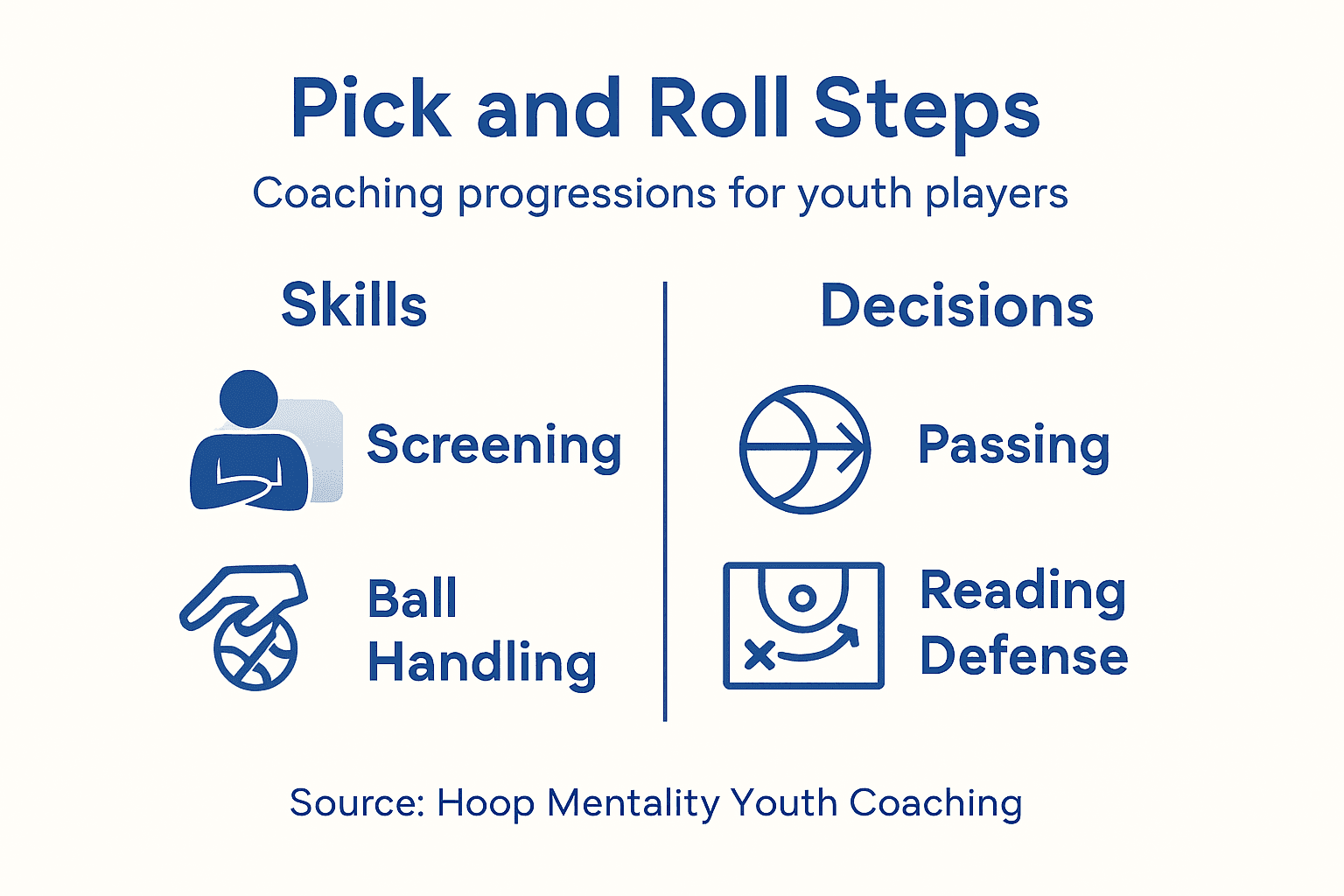
The teaching progression typically begins with individual skill isolation. Players first learn proper screening techniques, focusing on body positioning, angle creation, and maintaining a legal screen without drawing a moving violation. Ball handlers simultaneously practice dribble control, reading defensive reactions, and decision-making options when approaching a screen. These foundational skills are practiced separately before combining them into a coordinated team movement.
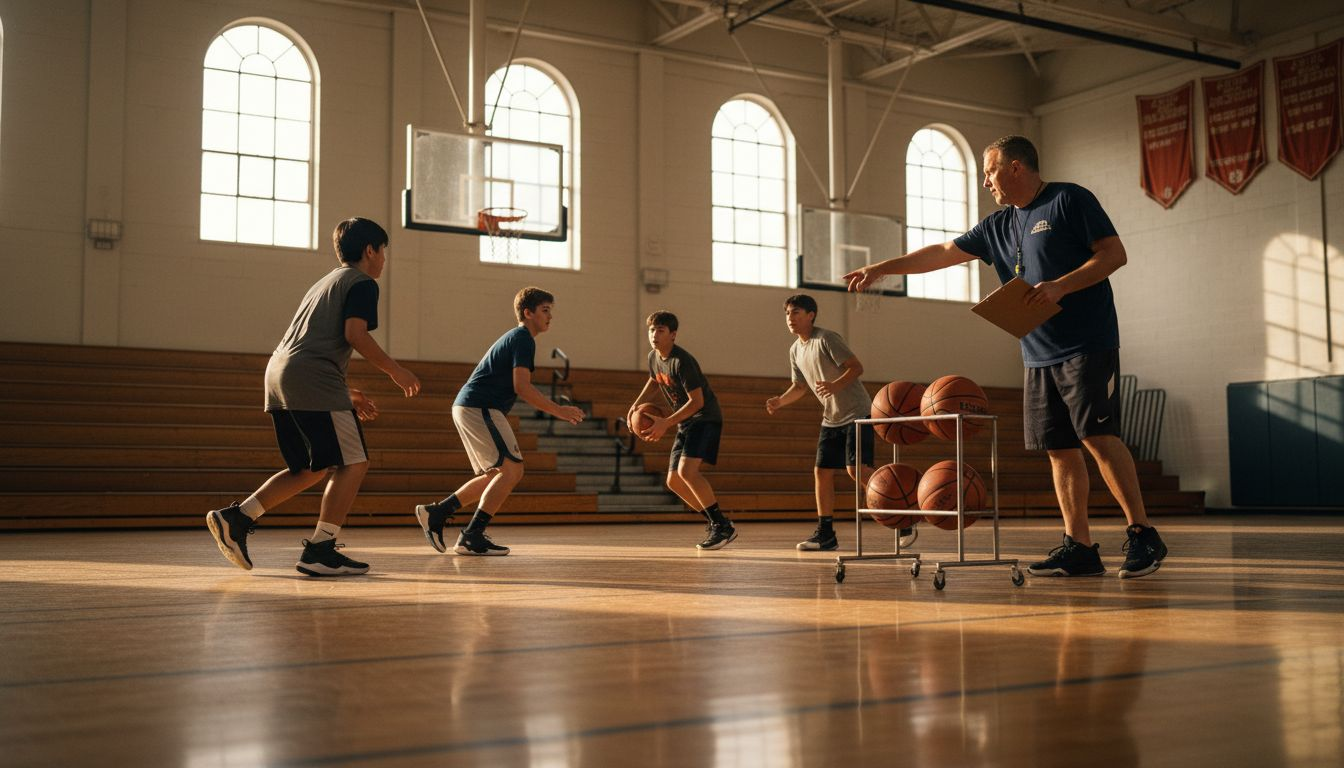
Advanced progression stages introduce more complex scenarios, such as handling defensive switches, creating passing lanes, and understanding spatial relationships between screener and ball handler. Coaches should implement controlled drills that gradually increase complexity, allowing players to develop muscle memory and intuitive understanding of pick and roll dynamics. Video analysis, demonstration, and repetitive practice become critical tools for helping young athletes internalize these sophisticated offensive strategies.
Pro tip: Start with stationary screening drills and progressively add movement, always emphasizing communication and proper body mechanics to build a solid technical foundation.
Roles of Ball Handler and Screener
In the complex dance of the pick and roll, the ball handler and screener must execute precise basketball screen techniques with near-perfect synchronization. These two players have distinct yet interconnected responsibilities that determine the play’s success, requiring exceptional communication and court awareness.
The ball handler’s primary role involves reading defensive positioning and making split-second decisions. As the screener establishes position, the ball handler must determine whether to drive, shoot, or pass based on how defenders react. This requires advanced spatial intelligence, quick processing of defensive movements, and the ability to exploit even the smallest windows of opportunity created by the screen.
The screener’s responsibilities are equally nuanced. Beyond setting a legal, solid screen, they must quickly transition into either a roll toward the basket or a strategic pop-out for a jump shot. Their positioning, angle, and timing are critical in creating separation and generating scoring opportunities. Successful screeners understand how to leverage their body to create space while remaining adaptable to different defensive responses.
Pro tip: Teach youth players to communicate constantly during pick and roll drills, using verbal and non-verbal cues to develop intuitive understanding of each other’s movements and intentions.
For quick reference, here’s a comparison of ball handler and screener roles in the pick and roll action:
| Role | Primary Focus | Key Decision Points | Essential Skills |
|---|---|---|---|
| Ball Handler | Reading defense | Pass, shoot, or drive | Dribble control, vision |
| Screener | Screen timing | Roll or pop after screen | Positioning, footwork |
Common Pitfalls and How to Avoid Them
Youth basketball coaches must be vigilant about recognizing and addressing common coaching mistakes when teaching the pick and roll. Some fundamental errors can significantly undermine player development and team performance, making strategic awareness critical.
One prevalent pitfall involves improper screening technique. Young players often fail to set solid, legal screens by moving or not maintaining a wide base. This results in offensive fouls and lost scoring opportunities. Coaches should emphasize the importance of establishing a stable, stationary position with feet shoulder-width apart and maintaining contact without leaning or shifting during the screen.
Another significant challenge is poor communication between the ball handler and screener. Miscommunication leads to mistimed plays, defensive misreads, and broken offensive sequences. Youth players must learn to develop verbal and non-verbal cues, understanding each other’s intentions and reading defensive responses in real-time. This requires extensive practice and mutual trust between players who are executing the pick and roll.
Pro tip: Implement weekly pick and roll communication drills that focus on player synchronization, using both verbal instructions and non-verbal body language to enhance team coordination.
Elevate Your Pick and Roll Mastery with Proven Coaching Tools
Understanding the pick and roll is vital for any youth basketball coach aiming to build smart offensive plays that rely on precision, timing, and communication. If you find yourself struggling to teach proper screening techniques or coordinating ball handlers and screeners effectively, you are not alone. Many coaches face challenges in breaking down these complex actions into manageable drills that develop player confidence and team synergy.
At Hoop Mentality, we provide an extensive collection of Basketball Playbooks and Basketball Drills designed specifically to help you implement the pick and roll with clarity and ease. Whether it is improving communication during screens or mastering fundamental skills, our resources act as your trusted play-calling partner.

Start transforming your coaching approach today by accessing ready-to-use tools and strategies that save you valuable time and boost your team’s performance. Visit Hoop Mentality to discover practical solutions that bring results on and off the court.
Frequently Asked Questions
What is a pick and roll in basketball?
A pick and roll is an offensive play where one player sets a screen for a teammate handling the basketball, who can then choose to drive, pass, or shoot based on how the defense reacts.
What are the different types of pick and rolls used in youth basketball?
Common types include the high pick and roll, side pick and roll, low post pick and roll, drag screen, and slip screen, each offering unique strategic advantages depending on the court location and player matchups.
How can coaches teach the pick and roll effectively to youth players?
Coaches can introduce the pick and roll through progressive drills that focus on individual skills like screening and ball handling, emphasizing communication and timing between players.
What are some common mistakes made when executing the pick and roll?
Common mistakes include improper screening techniques, such as moving screens or poor positioning, and lack of communication between players, leading to mistimed plays and lost scoring opportunities.