

TL;DR:
- Effective team conflict resolution involves a structured process, emphasizing psychological safety and active listening. Leaders must diagnose conflict types correctly and respond with suitable interventions to prevent escalation. Creating a culture of open communication and early addressing disputes fosters stronger team trust and performance.
Team conflict resolution is the structured process of identifying, addressing, and repairing disagreements between team members before they damage performance or trust. Knowing how to deal with conflict in a team is one of the most practical leadership skills you can build. Structured conflict frameworks improve team performance by roughly 30%, according to MIT Sloan research. That number reflects a simple truth: teams that handle disagreements well outperform those that avoid them. The foundation for doing this right includes psychological safety, active listening, and a repeatable resolution process.
How to deal with conflict in a team: tools and prerequisites
Effective conflict management starts before any conversation happens. The environment you create determines whether people speak honestly or go silent.

Psychological safety is the foundation of high-performing teams. It is not the absence of conflict. It is the presence of conditions where people feel safe enough to raise concerns, admit mistakes, and disagree without fear of punishment. Without it, conflict goes underground and becomes toxic.
Listening is the second prerequisite. Most mediators jump to solutions too fast. Active paraphrasing and slow listening reduce defensiveness and improve outcomes. When someone feels genuinely heard, they become far more willing to consider another perspective.
Communication format matters more than most leaders realize. Mediation done via text-based platforms like Slack or email escalates emotional volatility instead of reducing it. Always hold conflict conversations live or on video. Non-verbal cues carry most of the emotional signal in a difficult conversation.
Pro Tip: Before any conflict meeting, send a brief agenda to all parties. It reduces anxiety and signals that the process is fair and structured.
| Tool or skill | Why it matters |
|---|---|
| Psychological safety | People speak honestly only when they feel safe doing so |
| Active listening | Reduces defensiveness and opens people to solutions |
| Neutral facilitation | Prevents bias from shaping the outcome |
| Live or video meetings | Preserves tone and non-verbal cues that text strips away |
| Written ground rules | Sets expectations and keeps conversations productive |
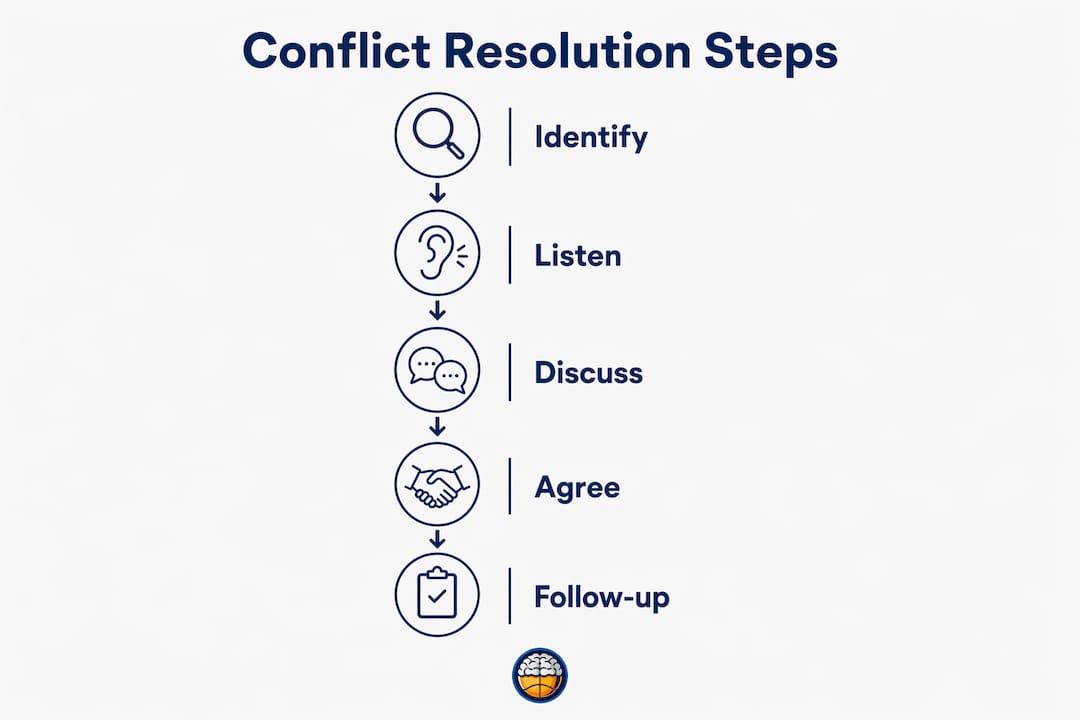
What is the step-by-step process for resolving team conflict?
The five-step conflict resolution process is the industry standard recommended by MindTools and FirstTimeManagers as of 2026. Each step builds on the last. Skipping one typically means the conflict resurfaces.
-
Individual talks. Meet with each person separately before bringing anyone together. Ask open questions. Listen more than you speak. Your goal here is to understand each person’s perspective, not to judge it. Take notes. Look for the gap between what each person says they want and what they actually need.
-
Group meeting. Bring the parties together once you understand both sides. Set clear ground rules at the start: no interrupting, no personal attacks, and one person speaks at a time. Restate each person’s position in neutral language before opening the floor. This signals fairness and reduces the urge to fight for airtime.
-
Wider team input. If the conflict affects the broader team, gather input from others. This step is often skipped, but it matters. Conflict rarely exists in a vacuum. Other team members often hold context that neither party in the dispute can see. Use a brief anonymous survey or a structured group check-in.
-
Written action plan. Verbal agreements dissolve fast. Document what each person has agreed to do, by when, and how progress will be measured. A written plan creates accountability without requiring anyone to rely on memory or goodwill alone.
-
Follow-up. Schedule a check-in two to four weeks after the resolution meeting. This step is what separates lasting resolution from temporary calm. If the agreement is holding, acknowledge it. If new friction has appeared, address it before it escalates again.
Pro Tip: During the group meeting, open with a shared goal both parties care about. It shifts the frame from “us vs. them” to “us vs. the problem.”
The individual talks stage is where most leaders make their biggest error. Rushing to solve before fully understanding the conflict increases defensiveness and reduces the chance of a lasting outcome. Slow down at step one. The rest of the process moves faster when you do.
For a deeper look at handling team conflict in sports and group settings, Hoop Mentality covers the full resolution lifecycle with practical examples.
What are the main types of team conflict and how do you handle each one?
Not all conflict is the same. Treating every disagreement the same way is one of the most common mistakes leaders make. Diagnosing the conflict type before choosing a response is the critical first move.
Task conflict vs. relationship conflict
Task conflict is disagreement about how work should be done. Two teammates argue about which defensive scheme to run or how to structure a practice plan. Moderate task conflict improves decision-making quality and can drive better outcomes when it stays focused on ideas rather than personalities. The goal with task conflict is to channel it, not eliminate it.
Relationship conflict is personal. It involves tension, disrespect, or hostility between individuals. This type does not improve outcomes. It drains energy, reduces trust, and spreads to the wider team if left unaddressed. Relationship conflict requires direct intervention and a structured resolution process.
When conflict becomes bullying
Bullying is fundamentally different from conflict. It involves consistent mistreatment by one person toward another. Treating it as a conflict to be mediated implies shared responsibility, which is both inaccurate and harmful. Bullying requires immediate, direct disciplinary intervention. Do not bring both parties to a mediation table when one party is the aggressor.
| Conflict type | Key signal | Right response |
|---|---|---|
| Task conflict | Disagreement about methods or decisions | Facilitate structured discussion; channel toward better outcomes |
| Relationship conflict | Personal tension, hostility, or disrespect | Direct intervention with structured resolution process |
| Bullying | Repeated mistreatment by one party | Immediate disciplinary action; no mediation |
Diagnosing correctly matters because the wrong response makes things worse. Mediating a bullying situation protects the aggressor. Treating healthy task conflict as a crisis shuts down the kind of productive friction that builds team cohesion over time.
How do you stop team conflict from escalating?
Most conflicts escalate because of avoidable mistakes. Knowing what not to do is as useful as knowing the right steps.
Common mistakes that make conflict worse:
- Rushing to solve. Leaders who jump to solutions before listening fully signal that they have already decided who is right. This shuts down honest communication immediately.
- Mediating by text. Slack messages and emails strip tone and context. What reads as neutral often lands as cold or accusatory. Always move conflict conversations to a live or video format.
- Waiting too long. Small friction ignored for weeks becomes entrenched resentment. Address tension early, when it is still easy to resolve.
- Taking sides. Even subtle signals of favoritism destroy your credibility as a mediator and make the other party feel the process is rigged.
If a manager is personally involved in the conflict, they must step back from the mediator role entirely. Bring in a neutral third party, whether that is an HR professional, a senior colleague, or an external facilitator. Neutrality is not optional. A mediator with a personal stake in the outcome cannot be trusted to run a fair process.
Pro Tip: After resolving a conflict, schedule a 15-minute team check-in two weeks later. Frame it as a routine update, not a conflict review. It normalizes follow-up and catches new friction early.
Proactive communication is the best long-term defense against escalation. Effective teams accept some conflict as normal and build habits around open discussion. Regular one-on-ones, clear role definitions, and shared team norms reduce the frequency and severity of disputes before they start. Coaches and team leaders who invest in communication strategies early spend far less time managing crises later.
Key Takeaways
Effective conflict resolution requires a structured process, the right environment, and the ability to diagnose conflict type before choosing a response.
| Point | Details |
|---|---|
| Structured frameworks work | Teams using structured conflict resolution improve performance by roughly 30%. |
| Psychological safety comes first | Without a safe environment, conflict goes underground and becomes harder to resolve. |
| Follow the five-step process | Individual talks, group meeting, team input, written plan, and follow-up produce lasting results. |
| Diagnose before you act | Task conflict, relationship conflict, and bullying each require a different response. |
| Never mediate by text | Live or video conversations preserve tone and reduce emotional escalation. |
What I have learned about conflict that most guides get wrong
Most conflict resolution advice focuses on process. Follow these five steps, use this script, schedule this meeting. The process matters. But in my experience working with teams, the real variable is almost never the process. It is whether the leader is willing to sit with discomfort long enough to actually listen.
The teams I have seen resolve conflict well share one habit: they slow down before they act. They resist the urge to fix things fast. They ask one more question when they think they already understand the situation. That pause is where the real information lives.
The other thing most guides underplay is the difference between a leader who is curious and one who is just going through the motions. Team members can tell the difference immediately. If you enter a conflict conversation with a conclusion already formed, the other person senses it. The conversation becomes theater. Nothing real gets resolved.
Psychological safety is the concept that gets cited most often in this space, and for good reason. But it is worth being specific about what it actually requires from a leader. It requires you to respond to bad news without punishing the messenger. It requires you to say “I was wrong” in front of your team. It requires you to treat a teammate raising a concern as a signal of trust, not a threat to your authority. That is harder than any five-step framework.
The leaders who build teams that handle conflict well are not the ones who are best at resolving disputes. They are the ones who create conditions where disputes stay small and get addressed early. That is a culture question, not a process question. And culture is built one conversation at a time.
— Dejan
Coaching resources that support team leadership
Team conflict does not exist in isolation. It shows up when roles are unclear, communication breaks down, or structure is missing. Hoop Mentality builds resources that give coaches the structure they need to lead teams with clarity.
The Basketball Template Bundle includes practice plans, scouting templates, and strategy guides built from real coaching experience. These tools help coaches communicate expectations clearly, which reduces the friction that leads to conflict in the first place. Clear structure is one of the most effective conflict prevention tools available to any team leader. Hoop Mentality resources are practical, ready to use, and built for coaches at every level.
FAQ
What is the fastest way to resolve a team conflict?
The fastest effective method is a structured one-on-one conversation with each party before any group meeting. Listening fully before proposing solutions reduces defensiveness and shortens the overall resolution timeline.
How do you deal with conflict between two team members?
Meet with each person separately first, then bring them together with clear ground rules. Document any agreements in writing and schedule a follow-up to confirm the resolution is holding.
When should a manager not mediate a team conflict?
A manager should not mediate if they are personally involved in the dispute. Personal involvement disqualifies a manager from the mediator role; a neutral third party should step in instead.
What is the difference between task conflict and relationship conflict?
Task conflict is disagreement about work methods and can improve decision quality when managed well. Relationship conflict is personal tension between individuals and requires direct intervention to prevent lasting damage to team trust.
How do you prevent team conflict from escalating?
Address friction early, hold all conflict conversations live or on video, and build regular check-ins into your team routine. Proactive communication habits reduce both the frequency and severity of disputes over time.