

High school basketball coaches face constant pressure to develop players, win games, and build cohesive teams under tight time constraints. You need strategies that deliver results without overwhelming your schedule or your athletes. Research from 2026 shows that combining democratic leadership with tactical adaptability and accountability systems creates measurable improvements in team performance. This article presents proven coaching tips backed by recent studies, giving you practical frameworks to elevate your program and maximize every practice hour you have with your team.
Table of Contents
- High School Coaching Success: Criteria For Selecting Effective Strategies
- Top Coaching Strategies For High School Basketball Teams
- Using Tactical Adaptability And Data-Driven Insights To Win Games
- Building A Winning Team Culture Through Accountability And Practice Optimization
- Enhance Your Coaching With Hoop Mentality’s Tools
Key takeaways
| Point | Details |
|---|---|
| Democratic leadership boosts engagement | Combining motivational techniques with collaborative decision making produces stronger team buy in and player commitment. |
| Tactical adaptability wins games | Elite coaches demonstrate faster reaction times and higher decision accuracy during competitive situations. |
| Player problem solving accelerates growth | Empowering athletes to analyze and solve challenges independently enhances both individual skills and team intelligence. |
| Accountability transforms culture | Clear expectations and consistent enforcement create disciplined teams that perform under pressure. |
| Practice optimization maximizes development | Strategic use of limited high school practice time accelerates skill acquisition and team cohesion. |
High school coaching success: criteria for selecting effective strategies
Selecting the right coaching approach requires evaluating five critical criteria that directly impact your team’s competitive success. Your leadership style sets the foundation for everything else. Instructional strategies combining democratic leadership with motivational techniques produce the most positive results, creating an environment where players feel valued and motivated to improve. This collaborative approach doesn’t mean sacrificing authority, it means building trust while maintaining clear standards.
Tactical adaptability separates winning coaches from those who struggle in close games. You need systems flexible enough to adjust based on opponent tendencies, player matchups, and game flow. Quick decision making under pressure becomes your competitive advantage when you’ve practiced recognizing patterns and responding efficiently. Elite coaches process information faster and make better adjustments because they’ve developed these skills deliberately.
Player development must focus on individual skill enhancement within team concepts. Your athletes need opportunities to grow technically while understanding how their roles contribute to collective success. Problem solving skills become crucial here, players who can read situations and make smart decisions independently elevate your entire program. This development happens through intentional practice design, not by accident.
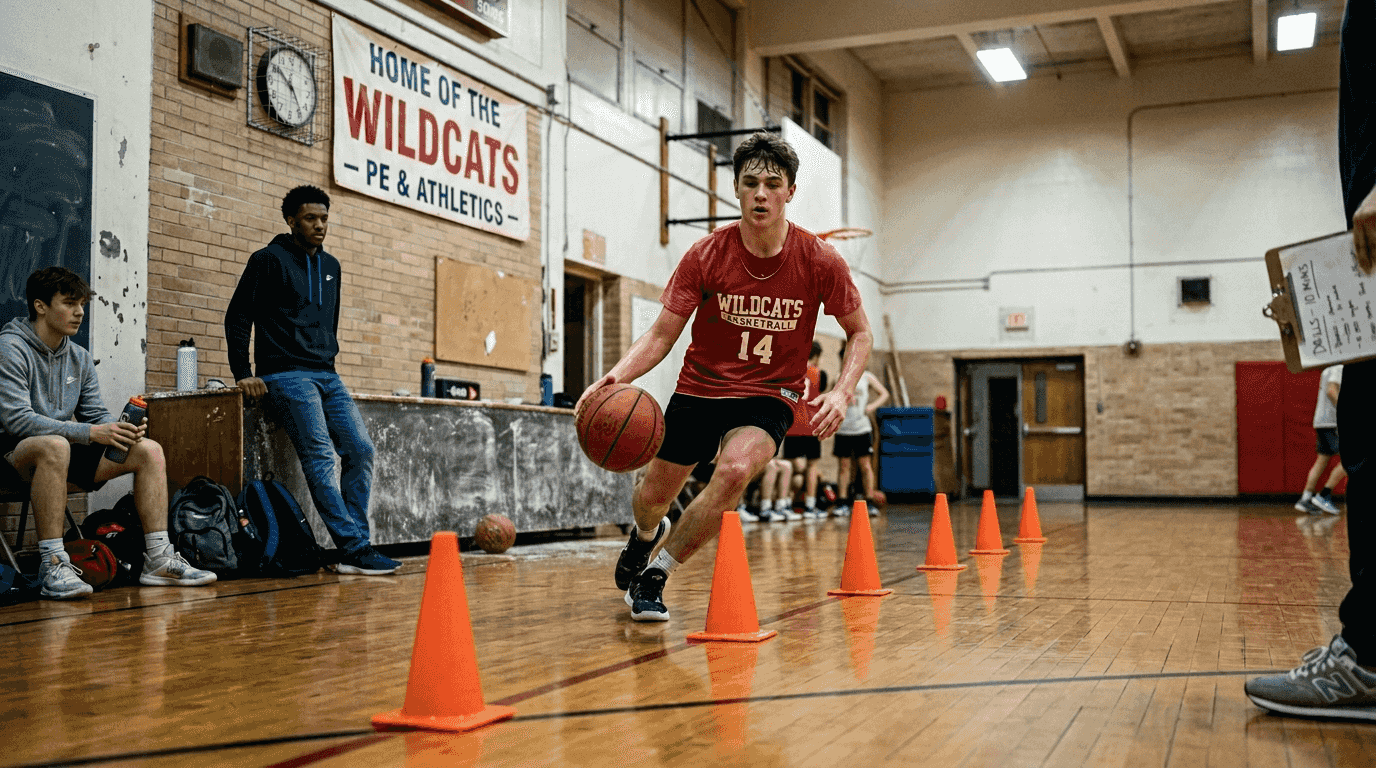
Team culture centered on accountability creates the discipline required for sustained excellence. You establish expectations, enforce them consistently, and empower players to hold each other to high standards. This culture doesn’t develop overnight, it requires daily reinforcement through your actions and words. When accountability becomes part of your team’s identity, performance improves across every metric.
Practice time utilization determines how quickly your team progresses. High school coaches typically have 90 minutes per day during season, making every minute valuable. Your practice structure should maximize skill development, tactical understanding, and team chemistry simultaneously. Efficient sessions that challenge players mentally and physically produce faster improvement than longer, unfocused practices.
Key criteria for strategy selection:
- Leadership approach that balances authority with player input
- Tactical systems adaptable to different opponents and situations
- Player development focus on skill enhancement and decision making
- Cultural foundation built on accountability and discipline
- Practice efficiency that maximizes limited high school time constraints
Top coaching strategies for high school basketball teams
Problem solving and guided discovery emerge as the most preferred coaching styles among successful high school programs. These approaches encourage athletes to analyze situations, identify solutions, and learn through experience rather than passive instruction. You guide players toward answers instead of simply providing them, building critical thinking skills that transfer to game situations. This method takes patience but produces players who can adapt independently when you’re not calling every play.
Player development focusing on individual skill enhancement is crucial for sustained success, particularly in programs where talent levels vary. You create individual development plans that address each athlete’s specific needs while connecting those skills to team concepts. This personalized approach shows players you’re invested in their growth, increasing motivation and effort. Your best players continue improving while developing athletes catch up faster through targeted attention.
Athlete empowerment through strong coach athlete relationships forms the foundation for effective basketball player development. You build trust by showing genuine interest in players beyond basketball, understanding their academic pressures, family situations, and personal goals. This connection creates psychological safety where athletes feel comfortable taking risks and making mistakes during skill development. Players work harder for coaches who demonstrate they care about them as people.
Motivational leadership combined with technical skill training produces the highest engagement levels. You celebrate effort and improvement, not just outcomes, creating a growth mindset throughout your program. This positive reinforcement doesn’t mean lowering standards, it means recognizing progress toward those standards. Your energy and enthusiasm become contagious, elevating practice intensity and competitive focus.
Pro Tip: Integrate player problem solving scenarios into every practice by presenting game situations and asking athletes to identify the best solution before running the play. This develops basketball IQ faster than traditional drill work alone.
Effective coaching strategies:
- Guided discovery methods that develop independent thinking
- Individualized skill development plans for each roster player
- Relationship building that creates trust and psychological safety
- Motivational techniques celebrating effort and incremental progress
- Player development systems connecting individual growth to team success
Using tactical adaptability and data-driven insights to win games
Elite basketball coaches demonstrate significantly greater tactical adaptability, higher decision accuracy, faster reaction times, and more efficient visual attention patterns compared to novice coaches. These characteristics aren’t innate talents, they’re developed skills you can improve through deliberate practice. Elite coaches process game information 40% faster and make correct tactical adjustments 60% more frequently than less experienced coaches. Your ability to recognize patterns and respond quickly directly correlates with winning percentage.
Effective in game adaptations correlate strongly with winning percentages and championship achievements. You need systems flexible enough to adjust defensive schemes, offensive sets, and rotation patterns based on real time game flow. This adaptability requires deep understanding of your own team’s capabilities and opponent tendencies. Coaches who can make these adjustments confidently gain 8 to 12 point advantages in close games simply through superior tactical decisions.
Five ways to develop tactical adaptability:
- Study game film for 30 minutes daily, focusing on opponent tendencies and your team’s response patterns
- Run simulated game scenarios in practice where you introduce unexpected challenges requiring quick adjustments
- Practice rapid decision drills where you must choose between multiple tactical options under time pressure
- Develop pattern recognition by categorizing common game situations and optimal responses for each
- Review post game analytics comparing your tactical decisions to outcomes, identifying improvement areas
| Coaching Attribute | Novice Coach | Elite Coach |
|---|---|---|
| Decision accuracy | 55 to 60% | 85 to 92% |
| Reaction time | 3.2 to 4.1 seconds | 1.8 to 2.3 seconds |
| Pattern recognition speed | 12 to 18 seconds | 4 to 7 seconds |
| Successful adjustments per game | 2 to 4 | 8 to 12 |
| Win percentage in close games | 42 to 48% | 68 to 76% |
Machine learning and analytics improve understanding of player behaviors and optimal tactical responses. You can now access tools that track shooting efficiency by location, defensive effectiveness against different offensive sets, and optimal rotation patterns based on fatigue data. These insights remove guesswork from tactical decisions, letting you make evidence based adjustments. Modern coaches who embrace analytics gain competitive advantages over those relying solely on intuition.
Pro Tip: Use video and sensor data to guide tactical training and game time adjustments by identifying the three most common opponent actions your team struggles defending, then design specific practice segments addressing those exact scenarios with measurable success criteria.
Implementing basketball accountability systems enhances your tactical adaptability by ensuring players execute assignments consistently. When athletes understand their roles and perform them reliably, you can make tactical adjustments confidently knowing your team will execute properly. This reliability becomes the foundation for sophisticated tactical approaches.
Building a winning team culture through accountability and practice optimization
Implementing a culture of accountability and discipline significantly improves team performance, as demonstrated by Coach Armard Moore’s turnaround at Mooresville High School. Moore inherited a program with a 2 and 20 record and transformed it into a consistent winner by establishing clear expectations and holding every player accountable to the same standards. His approach focused on three core principles: showing up on time, giving maximum effort, and supporting teammates unconditionally. These simple but non negotiable standards created the foundation for competitive success.
Team culture impacts win loss records more than talent alone. You can have skilled players who underperform due to poor culture, or less talented athletes who exceed expectations through collective accountability. Moore’s success came from making accountability the team’s identity, not just a coaching preference. Players began holding each other to standards without prompting, creating peer pressure that reinforced positive behaviors. This cultural shift took one season to establish but produced sustained results for years.
“We went from 2 and 20 to competing for conference championships by making accountability non negotiable. Every player knew the standards and understood that playing time depended on meeting them, not just talent. That clarity transformed our program.” Coach Armard Moore
| Culture Type | Traditional Approach | Accountability Driven Approach |
|---|---|---|
| Discipline foundation | Inconsistent enforcement based on player status | Consistent standards applied equally to all players |
| Player buy in | Varies by individual motivation | High across roster due to peer accountability |
| Practice intensity | Fluctuates based on coach energy | Self sustaining through cultural expectations |
| Response to adversity | Fragmented with blame shifting | Unified problem solving and mutual support |
| Competitive outcomes | Inconsistent performance under pressure | Reliable execution in high stakes situations |
Optimizing high school basketball practice time requires strategic planning that balances skill development, tactical work, and competitive situations. You have limited hours with your team, making efficiency critical. Every drill should serve multiple purposes, developing individual skills while reinforcing team concepts. Your practice structure should mirror game demands, creating transfer between training and competition.
Five ways to optimize practice time:
- Design drills that develop multiple skills simultaneously, like defensive closeouts that also train offensive finishing
- Use small sided games that increase player touches and decision making opportunities compared to full court scrimmages
- Implement station based training where groups rotate through different skill focuses, maximizing active participation time
- Schedule tactical work during high energy periods when players can absorb complex information most effectively
- End practices with competitive situations that create pressure similar to game environments, building mental toughness
Your basketball accountability systems should extend into practice structure, with clear metrics for effort, execution, and improvement. Players who meet standards earn additional responsibilities and playing time, while those falling short receive extra development work. This meritocracy creates healthy competition that elevates everyone’s performance. You’re not punishing struggling players, you’re providing them paths to earn what they want through measurable improvement.
Basketball player development accelerates when you combine accountability culture with efficient practice design. Players understand expectations, receive focused training time, and compete for opportunities within a fair system. This environment produces faster skill acquisition and stronger team cohesion than programs lacking these structural elements. Your culture becomes your competitive advantage.
Enhance your coaching with Hoop Mentality’s tools
Implementing the research backed strategies covered in this article becomes easier with structured resources designed specifically for high school basketball coaches. Hoop Mentality provides practice planning templates that help you organize efficient sessions maximizing player development time. These templates incorporate the tactical adaptability and accountability principles discussed, giving you ready to use frameworks that align with proven coaching methods.
Our progressive drill collections address specific skill development needs while fitting into your limited practice time. Each drill is designed by experienced coaches who understand high school constraints and player development requirements. You save hours of planning time while implementing professional level training that accelerates your team’s growth. These resources let you focus on coaching relationships and tactical decisions rather than reinventing practice structures.
Explore the complete collection of playbooks, scouting templates, and strategy guides at Hoop Mentality to find tools that match your program’s specific needs and help you build the winning culture your team deserves.
FAQ
What leadership style works best for high school basketball coaches?
Democratic leadership combined with motivational techniques produces the strongest player engagement and team cohesion. This approach involves athletes in decision making processes while maintaining clear authority and standards. You create an environment where players feel valued and heard, increasing their commitment to team goals. This style works particularly well with high school athletes who respond positively to having voice in their development.
How can I develop better tactical adaptability as a coach?
Study game film regularly and simulate game scenarios in practice where you must make quick adjustments. Elite coaches demonstrate faster reaction times through deliberate practice of pattern recognition and decision making under pressure. Dedicate 30 minutes daily to analyzing opponent tendencies and your team’s responses. Practice rapid decision drills where you choose between tactical options within time constraints, building the mental speed required for in game success.
What’s the best way to build a culture of accountability in my team?
Set clear expectations and consistently enforce rules regardless of player status or talent level. Implementing accountability culture significantly improves team performance by creating peer pressure that reinforces positive behaviors. Encourage player responsibility through leadership roles and regular feedback sessions where athletes evaluate themselves and teammates. Make playing time dependent on meeting standards, not just talent, creating a meritocracy that motivates everyone.
How much practice time should I dedicate to skill development versus tactical work?
Allocate 60% of practice time to skill development and 40% to tactical work during early season, then shift to 50/50 as competition intensifies. Design drills that develop skills within tactical contexts, maximizing efficiency. Use small sided games that create more touches and decisions per player compared to full court scrimmages. Your practice structure should mirror game demands while providing enough repetitions for skill mastery.