

More than half of American basketball coaches struggle to keep teams consistently accountable while balancing player development and building trust. This challenge matters because accountability systems shape not only game outcomes, but also the culture within every locker room. Understanding the fundamentals and functions of basketball accountability frameworks helps both coaches and players move past surface-level monitoring and create environments where teamwork and commitment actually thrive.
Table of Contents
- Defining Basketball Accountability Systems
- Types Of On‑Court Accountability Practices
- Functional Feedback And Monitoring Tools
- Building A Player‑Led Accountability Culture
- Common Pitfalls And Avoidance Strategies
Key Takeaways
| Point | Details |
|---|---|
| Basketball Accountability Systems Enhance Performance | Structured frameworks track player performance and behavior, fostering team cohesion and growth. |
| On-Court Practices Promote Discipline | Coaches utilize various accountability strategies, encouraging collective responsibility and individual performance tracking. |
| Functional Tools Drive Insights | Advanced monitoring technologies provide coaches with actionable data to improve team dynamics and foster continuous development. |
| Player-Led Cultures Empower Teams | Shifting responsibility to players fosters ownership of performance and supports intrinsic motivation and collaboration. |
Defining Basketball Accountability Systems
Basketball accountability systems represent structured frameworks that track player performance, behavior, and commitment while establishing clear expectations and consequences within a team environment. These systems go far beyond simple statistical tracking, creating comprehensive mechanisms for player growth and team cohesion.
At its core, a basketball accountability system functions through multiple interconnected components. These typically include performance tracking mechanisms that monitor individual and collective player metrics, behavioral guidelines that define team standards, and consequence structures that reinforce desired conduct. The NCAA’s show-cause penalty provides an extreme example of institutional accountability, demonstrating how systematic approaches can maintain professional standards.
Key elements of effective basketball accountability systems often encompass:
- Performance Metrics: Quantitative assessments of player contributions
- Behavioral Standards: Clear expectations for team conduct
- Feedback Mechanisms: Regular communication channels
- Consequence Frameworks: Structured responses to performance or behavioral deviations
Research indicates that implicit accountability systems, often governed by opportunity rather than explicit criteria, can be less effective than well-defined, transparent frameworks. Coaches who develop clear, communicative accountability systems tend to create more cohesive teams with higher overall performance and player engagement.
Types Of On‑Court Accountability Practices
On-court accountability practices are critical mechanisms coaches use to maintain team performance, discipline, and collective responsibility during basketball training and competition. These practices go beyond simple performance monitoring, creating a comprehensive system that drives player development and team cohesion.
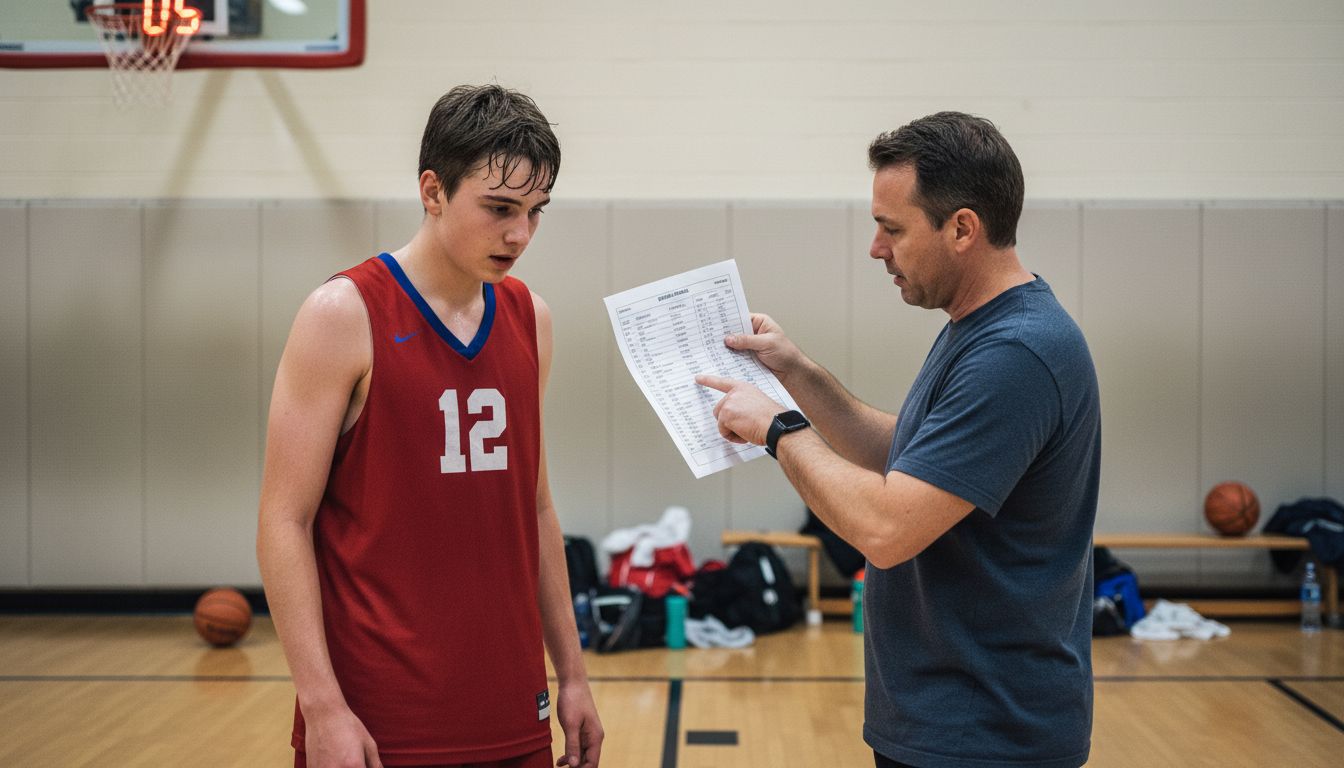
Coaches typically implement multiple accountability strategies that help build strong team leadership. Research indicates that coaches predominantly use implicit accountability systems during training sessions, with performance feedback occurring primarily through opportunity-based interactions rather than explicit performance criteria.
Key types of on-court accountability practices include:
- Individual Performance Tracking: Measuring individual player statistics and contributions
- Public Performance Evaluation: Conducting team-wide performance assessments
- Consequence Structures: Implementing clear repercussions for underperformance
- Peer Accountability: Encouraging team members to hold each other responsible
Additional on-court accountability methods draw from youth athlete accountability principles, such as establishing punctuality standards, designating team leaders, and creating environments where players set positive examples for one another. These approaches transform accountability from a punitive concept into a collaborative process of mutual growth and team development.
Functional Feedback And Monitoring Tools
Functional feedback and monitoring tools represent sophisticated technological and strategic approaches that enable coaches to track, analyze, and improve player and team performance with unprecedented precision. These tools transform raw data into actionable insights, bridging the gap between observation and meaningful performance enhancement.
Advanced tracking technologies have revolutionized basketball performance analysis. Deep learning approaches like NETS utilize sophisticated tracking data to recognize group activities and player interactions, providing coaches with nuanced insights into team dynamics. Spatio-temporal analytical frameworks further decompose basketball performance data, enabling coaches to evaluate offensive and defensive strategies with remarkable depth.
Key functional feedback and monitoring tools include:
- Performance Tracking Software: Digital platforms recording individual and team metrics
- Video Analysis Systems: Tools that break down game footage for detailed review
- Biomechanical Monitoring Devices: Wearable technologies tracking physical performance
- Statistical Analysis Platforms: Comprehensive data management systems
These tools transform accountability from a subjective process into a data-driven approach. By providing objective, granular performance insights, coaches can develop targeted improvement strategies, communicate expectations clearly, and create a culture of continuous professional development. The integration of technological monitoring allows for personalized feedback mechanisms that respect individual player differences while maintaining team-wide performance standards.
Building A Player‑Led Accountability Culture
Player-led accountability represents a transformative approach to team dynamics, shifting responsibility from coaches to team members themselves. This strategy empowers athletes to take ownership of their collective and individual performance, creating a more intrinsic and sustainable system of team management.
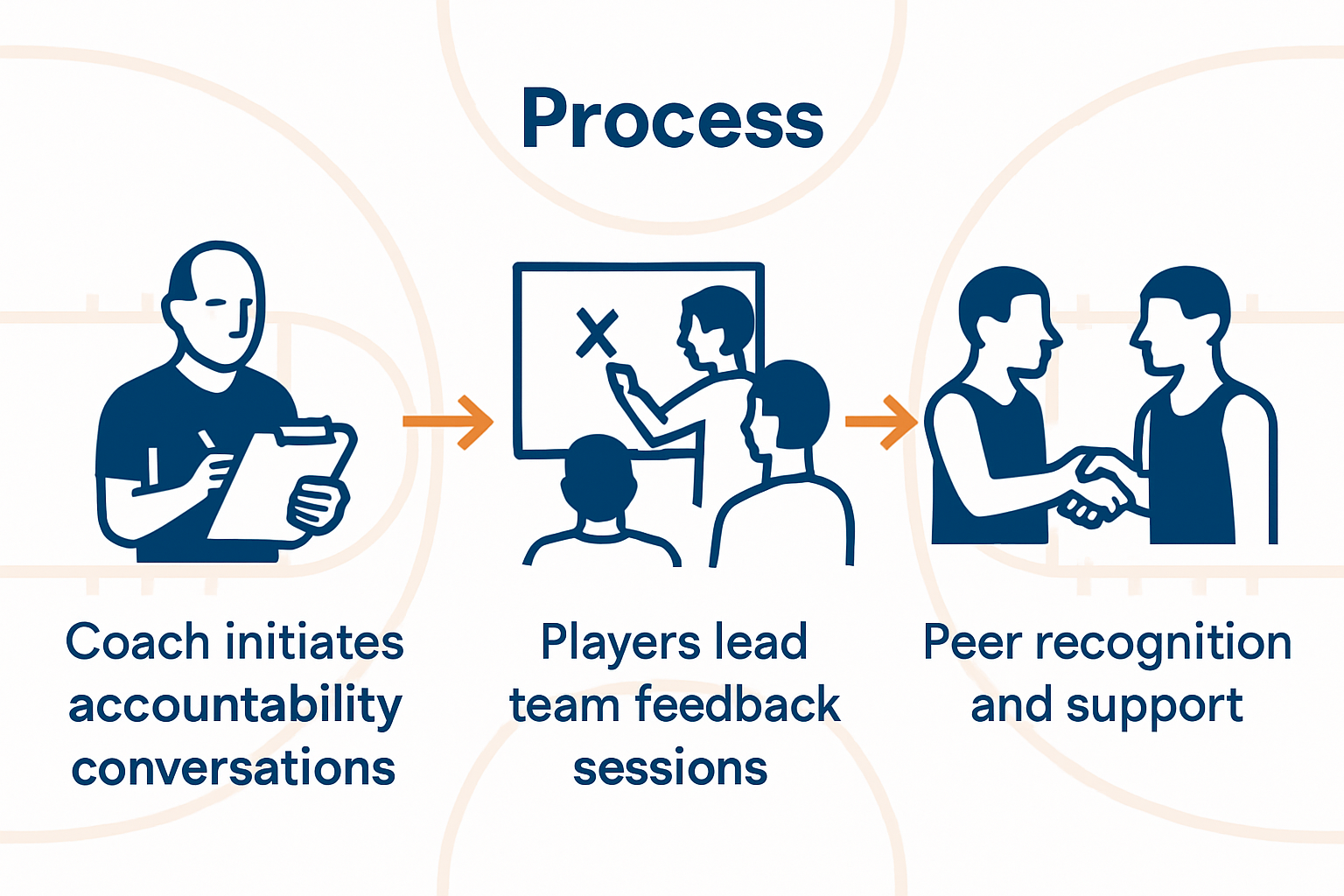
Building this culture requires strategic implementation of leadership development principles. Team leaders play a critical role by setting expectations, mentoring younger athletes, and exemplifying responsible behavior. Restorative justice principles can further enhance this approach by encouraging players to address conflicts and performance issues through collaborative problem-solving.
Key strategies for developing a player-led accountability culture include:
- Peer Mentorship Programs: Connecting experienced and newer players
- Collective Goal Setting: Collaboratively establishing team and individual objectives
- Open Communication Channels: Creating safe spaces for honest feedback
- Shared Decision-Making Processes: Involving players in team strategy discussions
Successful implementation requires coaches to gradually transfer leadership responsibilities, creating an environment where players feel empowered to hold themselves and each other accountable. This approach transforms accountability from an external enforcement mechanism into a collaborative, intrinsic process of mutual growth and team development.
Common Pitfalls And Avoidance Strategies
Basketball accountability systems can quickly become ineffective when coaches and teams fall into predictable traps that undermine their core objectives. Understanding these potential challenges is crucial for developing robust, sustainable accountability frameworks that genuinely drive team performance.
Research consistently reveals that coaches frequently fail by not establishing explicit performance criteria and inconsistently addressing unmet tasks. Team accountability strategies can be systematically strengthened by proactively identifying and mitigating common organizational weaknesses.
Common accountability system pitfalls include:
- Vague Performance Expectations: Lacking clear, measurable performance standards
- Inconsistent Enforcement: Applying rules and consequences unevenly
- Punitive Approach: Focusing on punishment rather than improvement
- Communication Breakdowns: Failing to provide constructive feedback
Successful avoidance strategies require coaches to develop transparent, consistent frameworks that emphasize growth, maintain clear communication channels, and create an environment where accountability feels collaborative rather than confrontational. By transforming accountability from a potential source of tension into a mutual development process, teams can build stronger, more resilient performance cultures.
Elevate Your Team’s Accountability With Proven Coaching Resources
Struggling to build a clear and consistent basketball accountability system that motivates your players and enforces performance standards can leave your team underprepared and frustrated. This guide highlights key challenges like vague expectations, inconsistent enforcement, and communication breakdowns that often undermine team success. If you want to transform accountability from a source of tension into a culture of growth and leadership, you need practical tools designed for real coaching situations.

Explore our Basketball Templates for ready-to-use frameworks that impose clear performance and behavioral standards. Combine these with targeted Basketball Drills to develop player skills while reinforcing accountability on the court. With resources created from genuine coaching experience, Hoop Mentality empowers you to implement structured accountability systems confidently. Visit Hoop Mentality now to access the tools that make building a player-led, feedback-driven culture straightforward and effective.
Frequently Asked Questions
What are basketball accountability systems?
Basketball accountability systems are structured frameworks that track player performance, behavior, and commitment within a team. They establish clear expectations and consequences, enhancing player growth and team cohesion.
How do on-court accountability practices work?
On-court accountability practices involve various strategies used by coaches to maintain team performance and discipline. These practices include individual performance tracking, public evaluations, consequence structures, and fostering peer accountability among players.
What tools are used for monitoring player performance in basketball?
Functional feedback and monitoring tools include performance tracking software, video analysis systems, biomechanical monitoring devices, and statistical analysis platforms that provide coaches with detailed insights into player and team performance.
How can a coach create a player-led accountability culture?
To build a player-led accountability culture, coaches can implement peer mentorship programs, encourage collective goal setting, maintain open communication channels, and involve players in shared decision-making processes, fostering a sense of ownership among team members.