

TL;DR:
- Most youth coaches focus less than five minutes on rebounding, despite its importance to success.
- Effective drills teach boxing out, ball pursuit, and mental grit, adapting to different age groups.
- Building a team-wide rebounding culture with effort and pressure is more crucial than size alone.
Rebounding wins games. Yet most youth coaches spend practice time on shooting and ball-handling while rebounding gets five minutes at the end. The result: players who can score but lose the ball right back. Studies confirm that defensive rebounding is among the top predictors of team success, and youth training programs that include rebounding work boost explosive power measurably. The good news is you do not need fancy equipment or complex schemes. You need the right drills, clear coaching cues, and a plan. This guide gives you all three.
Table of Contents
- How to evaluate rebounding drills: Core mechanics and criteria
- Top rebounding drills for youth and recreational teams
- Comparing drill effectiveness: Defensive vs offensive rebounding
- Adapting rebounding practice: Tips for age groups and team skill levels
- What most coaches miss about rebounding drills
- Take your rebounding skills further with Hoop Mentality
- Frequently asked questions
Key Takeaways
| Point | Details |
|---|---|
| Box-out comes first | Establishing box-out and contact sets the foundation for successful rebounding drills. |
| Mental toughness wins | Aggression and persistent effort matter more than technical skill or height. |
| Drills must progress | Use a structured session that moves from stationary skills to dynamic, competitive rebounding. |
| Adapt for age and skill | Modify drills and intensity for different player ages and levels, prioritizing safety and engagement. |
| Team-wide rebounding | Guards and wings must be included in rebounding training, not just big players. |
How to evaluate rebounding drills: Core mechanics and criteria
Before picking drills, you need to know what you are actually trying to build. Too many coaches choose drills that look active and physical without connecting them to specific skills. A good rebounding drill teaches at least one of three things: boxing out, ball pursuit, or mental grit.
Boxing out is the foundation. Players must establish contact with their opponent, pivot toward the basket, and hold a wide, low stance. The goal is to create space before the ball even hits the rim. Without this step, you are just hoping your players are taller than the other team.
Aggressive ball pursuit comes next. Rebounding mechanics require players to use two hands on the catch, keep their head up for court vision, and attack the ball at its highest point. Sloppy one-handed grabs lead to fumbles and fouls.
Mental grit is the piece most coaches skip. The “every ball is yours” mentality is what separates average rebounders from elite ones. Defensive rebounding strategies at the youth level work best when players believe the board belongs to them before the shot goes up.
When evaluating any drill, ask these questions:
- Does it teach contact first, then pursuit?
- Does it work both sides of the floor?
- Can you modify it for younger age groups like U8 or U10?
- Does it have a competitive element that builds mental toughness?
Scientific analysis confirms that defensive rebounding is the top NBA success predictor and that rebounding practice noticeably boosts explosive power in youth athletes. That means you are not just building one skill. You are building athleticism.
For younger groups, U8 and U10, reduce physical contact and focus on positioning and footwork. For U12 and older, you can introduce more realistic contact and competitive pressure.
Pro Tip: Use three-word cues to drive the core sequence: “hit, find, pursue.” Hit means establish contact. Find means locate the ball. Pursue means attack it with two hands. Repeat this cue every drill.
With selection criteria in mind, let’s break down the most effective rebounding drills for youth and rec coaches.
Top rebounding drills for youth and recreational teams
These five drills cover every rebounding skill your team needs. Each one has a clear purpose, a player role structure, and age-appropriate modifications.
-
Mikan Box-Out Drill. Based on the classic Mikan layup pattern, this drill adds a box-out step before the catch. One player shoots a short miss off the board, a second player boxes them out, and then both pursue the ball. The shooter becomes the defender after each rep. For U8/U10, remove the physical box-out contact and focus purely on footwork and the two-hand catch. This is the best entry-level drill for building habits.
-
Two-Line Box-Out. Players split into two lines at the elbows. A coach shoots from the free-throw line. Both lines must locate their opponent, establish contact, and box out simultaneously. This teaches full-team rebounding coverage rather than just individual effort. It mirrors game situations closely.
-
Pursuit Drill. A coach throws the ball unpredictably off the backboard or the side wall. Players must react, chase, and secure the ball with two hands. This trains reaction time and teaches players not to freeze on missed shots. It is messy on purpose. The chaos is the point.
-
Three-Player Rotation. Three players work in a triangle: one shoots, one boxes out, one crashes from the weak side. Rotate roles every possession. This builds communication and teaches players to coordinate without calling out every assignment. It scales well for mixed-skill rec teams.
-
Rodman Rebound Drill. Named after the greatest rebounder in NBA history, this drill places one player in traffic and forces one-handed tip attempts before securing with two hands. It builds toughness and teaches finishing in contact.
For a full 60-minute session, try: 10 minutes Mikan, 10 minutes Two-Line Box-Out, 10 minutes Pursuit, 15 minutes Three-Player Rotation, and 15 minutes small-group scrimmage with rebounding as the scoring metric. These basketball practice drills build on each other progressively, moving from isolated skills to game-like competition.
Pro Tip: Add basketball cardio drills between rebounding sets. Fatigued players reveal real rebounding instincts. Train tired, perform sharp.
The
Comparing drill effectiveness: Defensive vs offensive rebounding
Not every drill serves both sides of the floor equally. Knowing which drills build defensive versus offensive rebounding helps you design sessions based on your team’s actual weaknesses.
Defensive rebounding drills prioritize establishing inside position, maintaining contact, and using head-up vision to track the ball. The Two-Line Box-Out and Mikan Box-Out both fall here. They teach your players to deny opponents second-chance points.
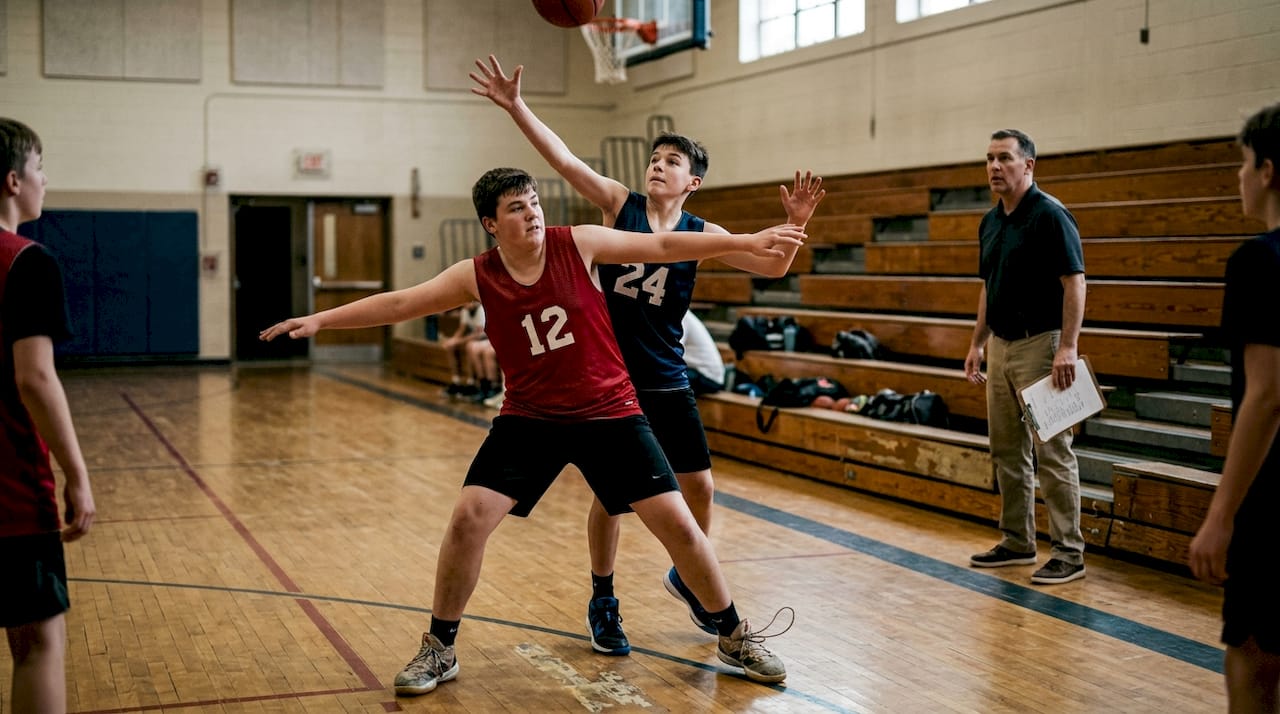
Offensive rebounding drills teach something different. Your offensive rebounding strategies should focus on attacking from outside position using swim moves, reading shot trajectories early, and pursuing with aggression. The Rodman Drill and Pursuit Drill lean offensive.
One thing most coaches overlook: guards and wings need to crash the boards too. Long rebounds travel to the perimeter. If only your bigs chase, you give up fast-break opportunities and easy second chances. Teach all five players to pursue.
Here is a comparison table to help you decide which drills to emphasize:
| Drill | Type | Age range | Primary focus |
|---|---|---|---|
| Mikan Box-Out | Defensive | U10 and up | Boxing out, contact, two-hand catch |
| Two-Line Box-Out | Defensive | U10 and up | Full-team coverage, court vision |
| Pursuit Drill | Offensive | U12 and up | Reaction, aggressive pursuit |
| Three-Player Rotation | Both | U10 and up | Communication, weak-side crashes |
| Rodman Rebound Drill | Offensive | U14 and up | Toughness, tips in traffic |
The defensive rebounding guide is clear: defensive drills foster better court vision and anticipation, while offensive rebounding drills encourage aggression and second-effort instincts. You need both in your rotation.
“Offensive rebounds require attacking from outside position using swim moves. Defensive drills focus on sustaining contact and boxing out.”
For teams that struggle to hold leads, prioritize defensive rebounding drills. For teams that score well but cannot generate second-chance points, shift toward offensive pursuit work. Your basketball defense tips should reinforce the same positioning cues you use in rebounding drills.
Adapting rebounding practice: Tips for age groups and team skill levels
The biggest mistake coaches make is running the same drill the same way for every group. A Rodman Drill for a U10 team is a liability. A contact-free Mikan for a U16 team is a wasted rep. Adaptation is not optional. It is the job.
For U8/U10 players:
- Remove physical contact from all drills
- Focus on footwork and two-hand catches only
- Keep reps short, 30 to 45 seconds per drill
- Use verbal cues and visual demonstrations before each drill
For U12/U14 players:
- Introduce light contact in box-out drills
- Add competitive scoring to pursuit and rotation drills
- Begin teaching swim moves and weak-side crashes
- Increase drill duration and reduce rest intervals
For U16 and up or intermediate rec teams:
- Full contact drills including Rodman and live rebounding scrimmages
- Video review after practice to show positioning errors
- Add plyometric prep before rebounding drills to build vertical
- Introduce unpredictable ball tosses to develop reaction instincts
Youth explosive power research confirms that age-appropriate modifications are not just about safety. They directly affect engagement and skill retention. Kids who are overwhelmed or underchallenged disengage fast.
For age-appropriate rebounding drills that fit your specific group, start with the foundational movements and add complexity as players show mastery. A clean box-out at U10 is worth more than a sloppy contact drill.
Pro Tip: Tip drills and messy competitive scrimmages matter more than clean textbook reps. Messy drill formats teach players to rebound in real game conditions, not ideal practice conditions. Prioritize chaos over control at least once per session.
Build a clear skill progression. Track each player’s improvements session to session. Adjust the drill intensity based on what you see, not what you planned.
What most coaches miss about rebounding drills
Here is the uncomfortable truth: most youth coaches treat rebounding as a size game. If your team is big, you rebound. If not, you hope for the best. That thinking costs games.
Rebounding is 80% mental, built on will, aggression, and skill working together. A five-foot guard with a locked-in mentality will out-rebound a six-foot post player who is just going through the motions.
The real edge comes from building a mental approach to rebounding into your entire roster, not just your bigs. Teach every player to crash. Teach every player the “hit, find, pursue” sequence. Make rebounding a team value, not a position role.
The coaches who win on the boards run messy, competitive drills that force players to fight for possessions under pressure. They reward effort and second attempts. They build team-wide rebounding culture from day one of the season. Technique matters. But grit and culture matter more.
Take your rebounding skills further with Hoop Mentality
You now have the drills, the comparisons, and the session structure. The next step is putting it all together in a format your players can follow and your practices can repeat consistently.

Hoop Mentality has ready-made tools built for coaches exactly like you. The big man dual action drill gives post players a structured progression for contact rebounding and finishing. The basketball practice plan template helps you organize every session with clear timing, drill order, and coaching cues already mapped out. Stop building from scratch every week. Use resources developed from real coaching experience and get more out of every practice.
Frequently asked questions
What makes a rebounding drill effective for youth teams?
Effective drills teach boxing out and mental grit as core skills and adapt to each age group for safety and engagement. A drill that builds only one skill without competition or adjustment is not enough.
How should rebounding drills be modified for younger players?
For U8/U10, use no-contact versions of drills and focus on controlled footwork movements. The Mikan Box-Out drill is a strong starting point when physical contact is removed for younger groups.
Are offensive and defensive rebounding drills equally important?
Yes. Defensive rebounding builds box-out and anticipation skills, while offensive rebounding drills develop aggression and second-effort instincts. Both should appear in every full rebounding session.
What is the recommended drill session structure for youth teams?
A 60-minute progressive session built around Mikan, Two-Line Box-Out, Pursuit Drill, Three-Player Rotation, and small-group scrimmages gives youth teams a complete rebounding workout with clear skill progression.