

Most coaches assume a team with 20 assists per game automatically runs a better offense than one with 15 assists. This assumption overlooks critical context like pace, possessions, and turnover rates. Assist ratio offers a more nuanced metric by measuring the percentage of possessions that end in an assist, revealing genuine offensive efficiency rather than raw assist totals. This guide explains how to calculate assist ratio, interpret the data accurately, and apply this metric to improve your team’s offensive performance through strategic coaching decisions.
Table of Contents
- Understanding What Assist Ratio Is And How To Calculate It
- The Impact Of Assist Ratio On Offensive Efficiency And Team Success
- Factors Influencing Assist Ratio And Strategic Coaching Approaches
- Nuances And Limitations Of Assist Ratio In Basketball Analytics
- Improve Your Team’s Assist Ratio With Hoop Mentality Drills
- Frequently Asked Questions
Key takeaways
| Point | Details |
|---|---|
| Assist ratio measures offensive efficiency | Assist ratio calculates the percentage of team possessions ending in assists, providing context beyond raw assist counts. |
| Higher ratios correlate with better offense | Teams with elevated assist ratios typically score more points per possession and demonstrate superior ball movement. |
| Context matters for interpretation | Assist ratio must be analyzed alongside turnover rates, shot quality, and offensive scheme to assess true team effectiveness. |
| Coaching strategies can improve ratios | Implementing motion offense systems and targeted passing drills sustainably increases assist ratio. |
| Limitations exist in the metric | Not all assists reflect equal value, and efficient offenses can succeed with lower assist ratios through other methods. |
Understanding what assist ratio is and how to calculate it
Assist ratio represents the percentage of possessions ending in assists rather than field goal attempts, free throws, or turnovers. This metric provides coaches with a standardized measure of how frequently your team creates scoring opportunities through assisted baskets compared to total offensive possessions.
The standard formula calculates assist ratio as: (Assists × 100) / (FGA + FTA × 0.44 + Assists + Turnovers). The 0.44 weighting factor adjusts for free throws being worth less than field goals in possession calculations. For example, if your team records 18 assists, 65 field goal attempts, 20 free throw attempts, and 12 turnovers in a game, your assist ratio equals (18 × 100) / (65 + 20 × 0.44 + 18 + 12) = 17.5%.
Assist ratio differs from assist percentage, which measures individual player assists relative to teammates’ made field goals while the player is on court. Assist ratio focuses on team-level efficiency across all possessions. Understanding this distinction helps coaches evaluate whether offensive schemes like continuity offense strategies generate enough assisted scoring opportunities.
Several calculation variations exist depending on available data. Some analysts exclude offensive rebounds from the denominator to focus purely on initial possessions. Others adjust the free throw multiplier based on league-specific shooting foul rates. Coaches should maintain consistency in whichever formula they choose for tracking trends over time.
Pro Tip: Track assist ratio game by game rather than relying solely on season averages to identify when offensive sets fail or succeed under different defensive pressures and matchups.
The impact of assist ratio on offensive efficiency and team success
Teams with higher assist ratios often score more points per game and maintain elevated offensive ratings. Research shows high assist ratios correlate strongly with offensive efficiency and points scored per possession, with correlation coefficients exceeding 0.7 in professional basketball analytics.
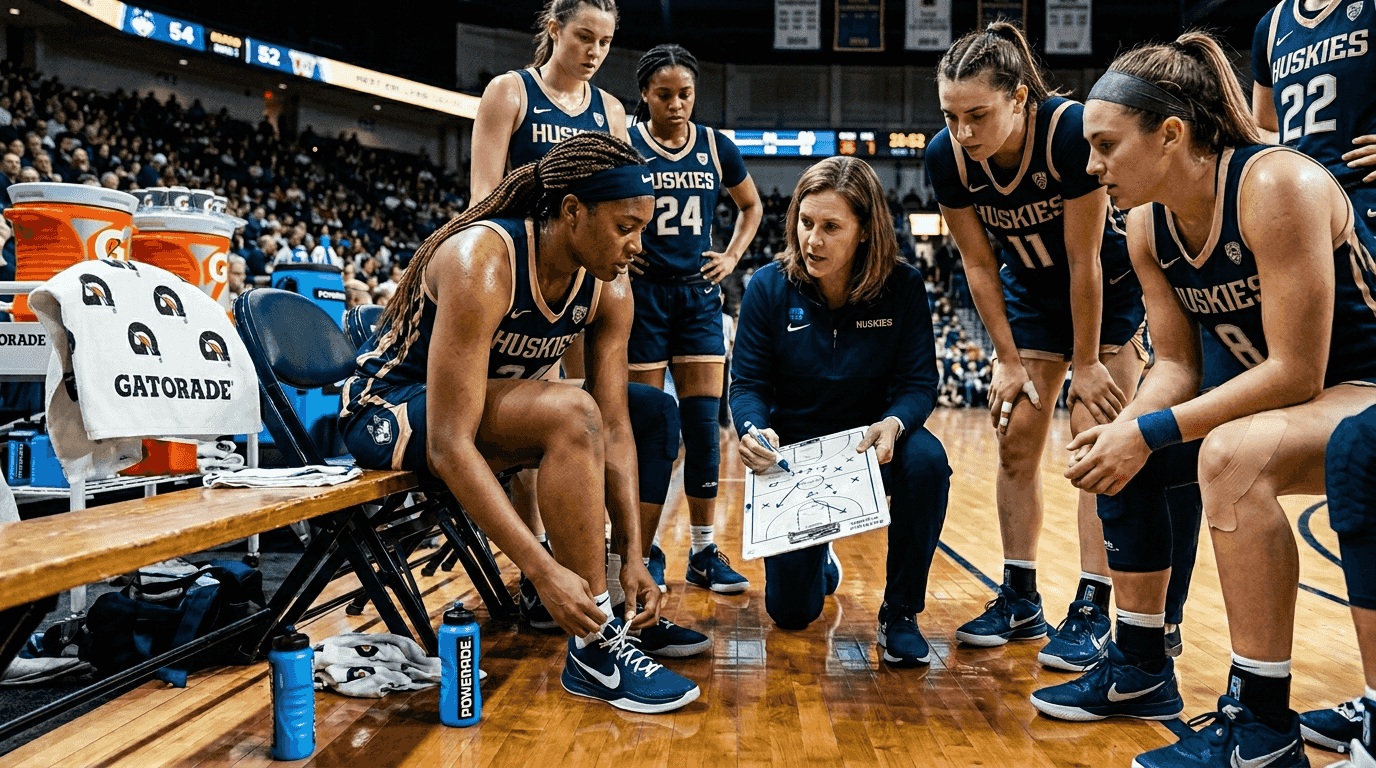
The assist-to-turnover ratio serves as a complementary metric. Higher assist-to-turnover ratios generally indicate better ball movement and decision-making, as teams create scoring opportunities without sacrificing possessions through careless mistakes. Coaches should evaluate both metrics together to assess offensive quality comprehensively.
Data from NCAA and NBA statistics reveals clear patterns. Teams maintaining assist ratios above 18% typically rank in the top quartile for offensive efficiency. Those below 14% often struggle to generate consistent scoring unless they compensate through exceptional individual shot creation or free throw generation.
| Assist Ratio Range | Typical Offensive Outcome | Coaching Focus |
|---|---|---|
| Below 14% | Isolation heavy, lower efficiency | Develop passing skills, improve spacing |
| 14% to 16% | Average ball movement | Implement motion principles, reduce turnovers |
| 16% to 18% | Good offensive flow | Maintain current system, refine execution |
| Above 18% | Elite ball movement | Ensure shot quality matches assist frequency |
Basketball analyst John Hollinger notes that assist ratio provides valuable context but requires interpretation within each team’s offensive philosophy and personnel capabilities rather than serving as an absolute measure of success.
Coaches who track these metrics can identify when offensive schemes break down. If your assist ratio drops significantly during conference play, it signals defensive adjustments opponents are making to disrupt your ball movement patterns. This awareness enables better time management in practice by focusing on counters to those defensive strategies.
Factors influencing assist ratio and strategic coaching approaches
Offensive systems promoting ball movement, spacing, and pick-and-roll actions significantly increase assist ratios. Motion offenses naturally generate more assists by creating multiple passing opportunities and forcing defenses to rotate, opening assisted scoring chances.
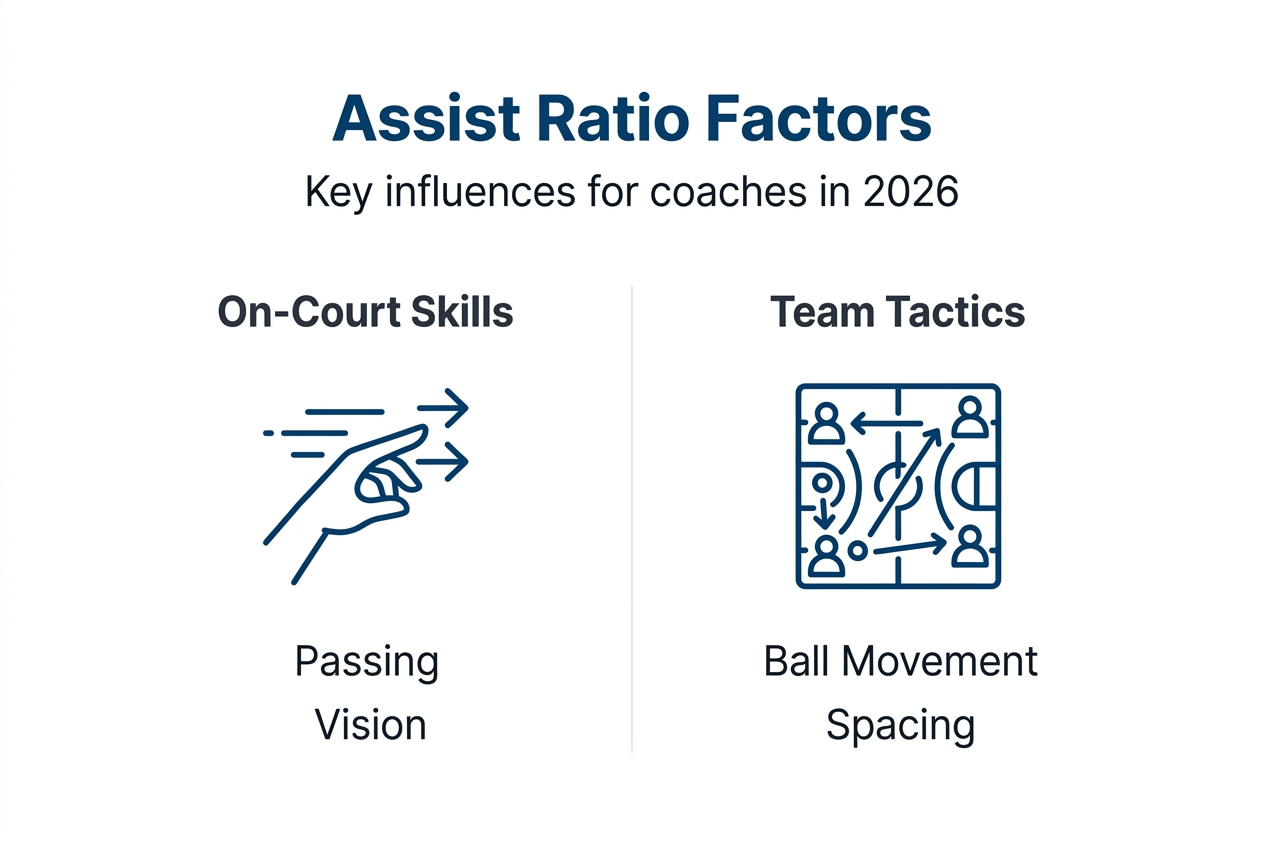
Player court vision and passing skill directly impact assist generation. Guards with exceptional decision-making recognize when teammates gain advantages and deliver accurate passes that lead to quality shots. Big men who pass effectively from the post or short roll create additional assisted baskets that many teams overlook.
Ball security remains essential for maintaining assist opportunities. Every turnover reduces possessions available for potential assists. Teams averaging 15 turnovers per game sacrifice roughly 15% of their total possessions, dramatically limiting assist ratio ceiling regardless of passing skill.
Coaches can implement specific strategies to boost assist ratio:
- Emphasize man-to-man offensive principles that create driving lanes and kick-out opportunities
- Install read-and-react systems where players make decisions based on defensive reactions
- Practice two-man games extensively to develop natural passing chemistry between position pairs
- Incorporate skip passes and ball reversal drills to stretch defenses and create better assist angles
Coaches should focus on improving passing skills and reducing turnovers to boost the assist-to-turnover ratio simultaneously. Film sessions highlighting quality assists versus forced passes help players recognize the difference.
Pro Tip: Design practice segments specifically testing decision-making under pressure, such as contested passing drills or scrimmages with limited dribbles, to improve real-game assist ratio while maintaining ball security.
Effective communication strategies between coaches and players ensure everyone understands offensive roles and passing priorities, directly impacting assist ratio improvement sustainability.
Nuances and limitations of assist ratio in basketball analytics
Raw assist counts don’t distinguish between passes leading to wide-open layups versus contested mid-range jumpers. Not all assists reflect equal value because shot quality and defensive contest levels significantly affect scoring efficiency regardless of whether an assist occurred.
Shot location dramatically influences the relationship between assists and offensive success. A team generating 20 assists per game on three-pointers and layups produces far better offensive results than one recording the same assist total on long two-point attempts. Coaches must evaluate where assisted shots occur, not just their frequency.
Some highly efficient offenses maintain relatively low assist ratios through alternative approaches. Teams can have efficient offenses despite low assist rates by excelling in free throws, ball control, and offensive rebounds. Isolation-heavy systems featuring elite scorers may sacrifice assist ratio while maintaining strong points per possession.
| Offensive Efficiency Driver | Impact When Assists Are Low | Coaching Consideration |
|---|---|---|
| Free throw rate | Compensates through foul drawing | Develop post players and drivers |
| Offensive rebounding | Creates second-chance points | Emphasize crashing the glass |
| Shot selection discipline | Maintains efficiency on unassisted shots | Track effective field goal percentage |
| Individual shot creation | Elite scorers generate quality looks | Balance with team offensive principles |
Factors where assists matter less include:
- Transition offense where players finish before defenses set
- Isolation possessions designed for one-on-one scoring
- Offensive rebounding putbacks and tip-ins
- Drawing shooting fouls that lead to free throw attempts
Understanding motion offense principles helps coaches recognize when low assist ratios reflect scheme choice rather than offensive dysfunction. Teams running five-out spacing with heavy ball screen usage may naturally record fewer assists than those implementing Princeton-style cutting systems.
Coaches should also consider pace when interpreting assist ratio. Faster-paced teams generate more total possessions, potentially inflating or deflating assist ratio depending on whether transition baskets result from assists or individual fast-break scoring. Comparing assist ratio across teams requires accounting for offensive technique differences and tempo variations.
Improve your team’s assist ratio with Hoop Mentality drills
Elevating your team’s assist ratio requires systematic practice focused on passing accuracy, court vision, and decision-making under defensive pressure.

Hoop Mentality offers proven training resources specifically designed to develop these critical skills. Our big man dual action drill teaches post players to recognize and execute high-percentage assist opportunities from the paint, creating scoring chances that directly boost team assist ratio. The basketball practice plan template helps you organize efficient training sessions that balance skill development with tactical implementation, ensuring your team consistently improves offensive metrics throughout the season. These resources provide the structure and proven methods coaches need to transform assist ratio from a tracked statistic into a competitive advantage.
Frequently asked questions
What is the difference between assist ratio and assist percentage?
Assist ratio measures the percentage of team possessions ending in assists, calculated against total field goal attempts, free throws, assists, and turnovers. Assist percentage measures an individual player’s assists relative to teammates’ made field goals while that player is on court. Both metrics provide valuable context but measure different aspects of passing effectiveness and offensive contribution.
How can coaches effectively improve their team’s assist ratio?
Focus on offensive schemes that promote ball movement, player spacing, and multiple passing options before shots. Improve passing skills through targeted drills emphasizing accuracy under pressure and reading defensive rotations. Emphasize ball security to reduce turnovers, which directly limits possessions available for potential assists.
Does a high assist ratio guarantee team success?
High assist ratio generally indicates effective ball movement but doesn’t guarantee winning outcomes. Other factors like shot quality, turnover frequency, defensive performance, and free throw generation also significantly influence team success. Coaches should use assist ratio as one component within broader offensive analysis rather than treating it as the sole measure of offensive effectiveness.
What assist ratio should youth basketball teams target?
Youth teams should target assist ratios between 12% and 16% as players develop passing skills and court awareness. Younger players naturally record lower assist ratios due to developing decision-making abilities and limited offensive system complexity. Coaches should emphasize gradual improvement and fundamental skill development rather than demanding elite assist ratios that may encourage forced passing and increased turnovers.