

TL;DR:
- Effective ball movement in basketball generates high-percentage shots by exhausting defenses through continuous passes. It emphasizes spatial unpredictability, involving all court zones equally to prevent defenders from anticipating the attack. Coaches should focus on structured passing patterns, secondary actions, and practice habits rather than adding new plays to improve offense.
Ball movement in basketball is defined as the deliberate, continuous passing of the ball to create open shots, exploit defensive gaps, and generate high-percentage scoring opportunities for the entire team. Coaches at every level ask why emphasize ball movement, and the answer is direct: teams that move the ball consistently outperform isolation-heavy offenses in efficiency, shot quality, and defensive pressure generated. The Houston Rockets and Orlando Magic have both demonstrated this principle at the NBA level in recent seasons. This guide breaks down the science, the strategy, and the practical coaching methods behind effective ball movement, drawing on 2026 coaching insights and spatial research.
Why emphasize ball movement for offensive efficiency
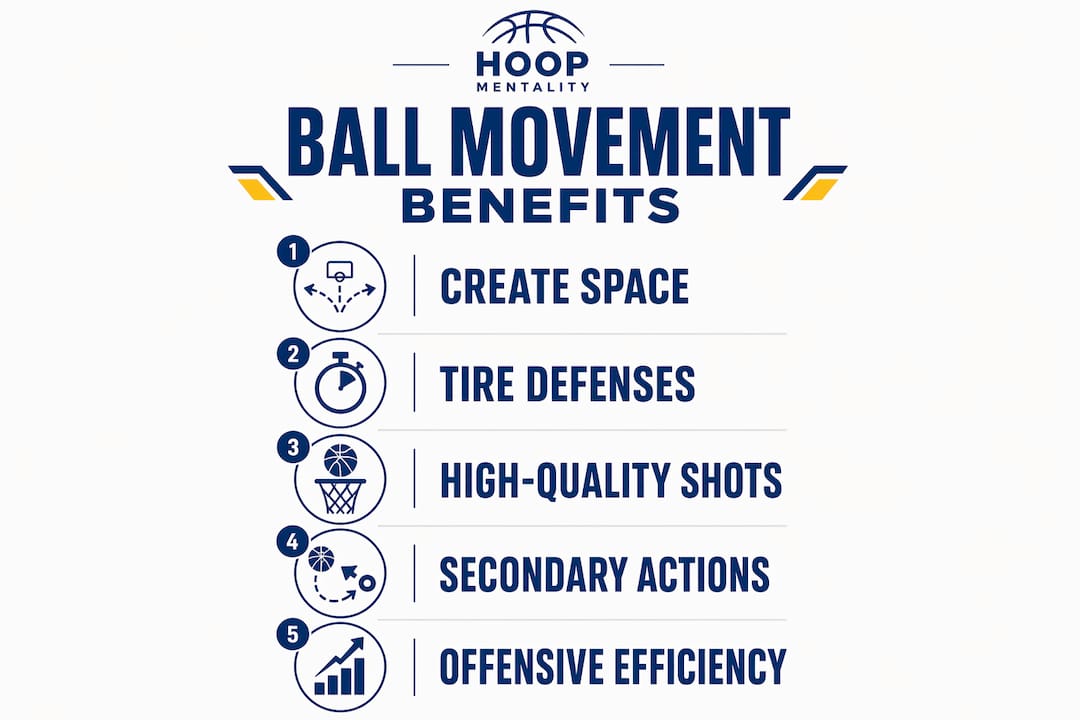
Ball movement is the single most reliable method for generating high-percentage shots because it forces defenses to make decisions faster than they can recover. Midseason teams emphasizing ball movement show measurable increases in offensive efficiency, reducing turnovers and improving shooting opportunities. That shift matters because fewer turnovers mean more possessions, and more possessions compound over a full game.
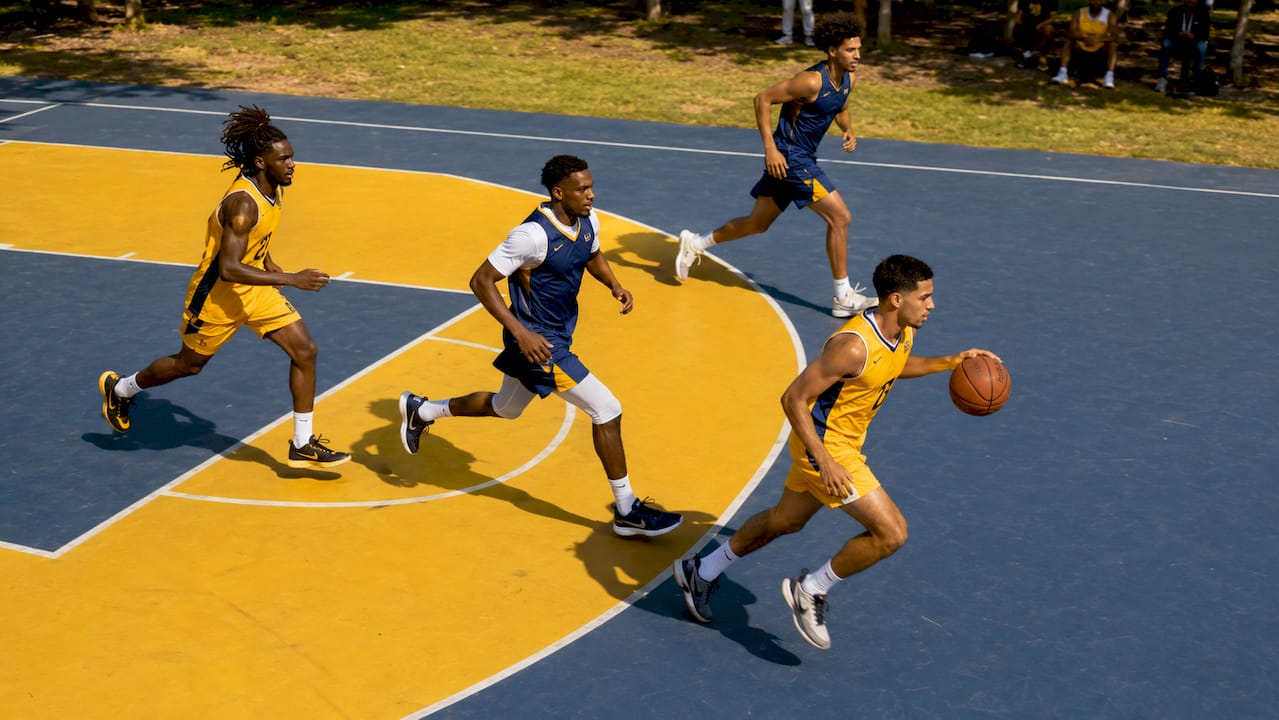
The key mechanism is defensive exhaustion. Ball movement causes physical and mental fatigue for defenses by forcing constant lateral shifts. A defense that has rotated four times in five seconds is a defense that will eventually break down and leave a shooter open.
Coach Jamahl Mosley of the Orlando Magic puts it plainly: “The ball has energy,” and sharing touches, especially in the paint, collapses defenses and enables easier scoring. That observation is not motivational language. It describes a tactical reality: ball movement into the paint forces help defenders to commit, which opens perimeter shooters.
Teams that reward the extra pass, the pass that leads to an even better shot, consistently create high-quality looks and outperform teams that settle for the first available option. Building that culture starts in practice, not in games.
Pro Tip: After every pass, require your players to make a secondary action: a cut, a screen, or a spacing move. The pass alone does not beat the defense. The movement after the pass does.
Understanding motion offense principles gives coaches a structural framework for teaching these secondary actions systematically rather than hoping players figure it out on their own.
How does spatial unpredictability improve ball movement results?
Spatial unpredictability is the tactical concept of distributing ball movement across the entire court so defenses cannot predict where the next attack will come from. Studies using the Spatial Event Distribution Randomness metric link wide spatial unpredictability directly with winning probability. Teams that cluster their ball movement in predictable zones are easier to defend, even if individual passes are quick and accurate.
The research goes further. Utilizing both dominant and rare court regions equally maximizes spatial unpredictability, forcing defenses to cover more ground and increasing scoring chances. In practical terms, this means your offense should attack the corners, the short corners, and the mid-post with the same regularity as the three-point arc and the paint.
Here is how different entropy levels affect offensive outcomes:
| Ball movement pattern | Spatial entropy level | Effect on defense | Scoring impact |
|---|---|---|---|
| Concentrated in paint only | Low | Predictable rotations | Limited shot variety |
| Perimeter-focused only | Low | Sag and recover easily | Low-percentage pull-ups |
| Mixed paint and perimeter | Medium | Forced two-way rotation | More catch-and-shoot looks |
| Full court, all zones used | High | Constant lateral movement | High-percentage open shots |
The table shows a clear progression. Low entropy offenses give defenses a map. High entropy offenses give defenses a problem with no clean solution.
Pro Tip: Chart your team’s shot origins for two games. If more than 60% of your attempts come from two zones, your ball movement is predictable. Add one drill per week that forces action from an underused court region.
Common coaching mistakes when teaching ball movement
The most common mistake coaches make is telling players to “stop playing for yourself” without giving them a structured alternative. Teaching unselfishness without clear structure creates passive players, and passive players do not move the ball. They hesitate, they hold, and they wait for someone else to make a decision.
Effective ball movement training requires structured, accountable patterns. Players need to know exactly what to do after they pass, where to move, and what read to make next. Generic commands do not build those habits. Specific, repeatable patterns do.
Here are the most common coaching pitfalls to avoid:
- Rewarding the shot, not the pass. If your post-game feedback only highlights scorers, your players learn that scoring is what gets recognized. Highlight the extra pass in film sessions with the same energy you use for highlight dunks.
- Running ball movement drills without defense. Passing drills without a defender teach mechanics, not decision-making. Add a token defender early so players learn to read pressure.
- Ignoring player confidence. Players often stop moving the ball due to fear of mistakes. A player who fears a turnover will hold the ball. Build confidence by creating practice environments where the extra pass is always the right call, even when it does not result in a score.
- Overloading with rules. Ball movement systems with too many constraints produce robotic players who cannot adapt. Give players two or three clear principles and let them problem-solve within those boundaries.
Strong team chemistry is the foundation that makes these patterns stick. Players who trust each other pass earlier, cut harder, and read the floor together.
Practical strategies to improve ball movement in practice
The most effective ball movement drills share one characteristic: they require a decision after every pass. Passing for the sake of passing does not improve offense. Passing that triggers a read, a cut, or a screen does.
Here is a comparison of four drills that develop different aspects of ball movement:
| Drill | Primary skill | Best for | Key constraint |
|---|---|---|---|
| 3-man weave with cut | Pass and secondary action | All levels | Passer must cut after every pass |
| 5-out motion drill | Spacing and reads | Intermediate and up | No dribble allowed until a screen is set |
| Shell drill (4-on-4) | Defensive rotation awareness | Advanced | Offense scores only on the third pass or later |
| Continuous fast break | Transition ball movement | All levels | Ball must touch three players before a shot |
Beyond drills, the following methods build ball movement as a team habit:
- Use basketball communication methods to teach players to call for the ball, signal cuts, and verbally confirm screens. Silent offenses stall. Vocal offenses flow.
- Set a “pass before shot” rule in scrimmages for the first two weeks of a new system. Players who take the first available shot run a sprint. This is not punishment. It is a pattern-building constraint.
- Film review is non-negotiable. Show players the moment the defense broke down, which is almost always one pass before the shot. That visual teaches them to see the floor, not just react to it.
- Midseason offensive improvements correlate with increased ball movement emphasis, which develops players’ ability to read the defense collaboratively rather than relying on isolation plays. Start the shift early in the season so it is second nature by playoff time.
Secondary actions after passes are the most undercoached element in youth and high school basketball. Teams that move the ball quickly and use secondary actions consistently create open shots by forcing defenses to shift and slow. Teach the cut, the screen, and the spacing move as part of the same rep as the pass itself.
Key takeaways
Ball movement is the most direct path to offensive efficiency because it forces defenses to make more decisions than they can execute cleanly.
| Point | Details |
|---|---|
| Ball movement drives efficiency | Teams that move the ball reduce turnovers and generate higher-percentage shots consistently. |
| Spatial unpredictability wins games | Using all court zones equally forces defenses to cover more ground and break down faster. |
| Secondary actions complete the pass | Movement after the pass, not the pass itself, is what creates open shots against set defenses. |
| Structure beats slogans | Teaching “be unselfish” without patterns creates passive players; structured drills build real habits. |
| Culture starts in film | Highlighting the extra pass in film sessions teaches players what the team actually values. |
Ball movement is the system, not a style choice
I have watched coaches spend entire seasons trying to fix their offense by adding plays. New sets, new actions, new terminology. The offense still stalls. The reason is almost always the same: the players do not move the ball because they have not been trained to move the ball. They have been told to move the ball, which is a completely different thing.
The teams I have seen make the biggest offensive jumps mid-season are the ones that stopped adding plays and started building ball movement habits. They ran fewer sets and more structured passing patterns. They reviewed film for the pass before the shot, not just the shot itself. They created practice environments where the extra pass was celebrated, not just tolerated.
The spatial research backs this up. Unpredictability is not chaos. It is disciplined variety. The best ball movement teams are not freelancing. They are executing a system that uses the entire court, rewards the extra pass, and demands secondary actions after every touch.
One thing I would push back on: the idea that ball movement is only for teams without elite scorers. The Houston Rockets built their offense around ball movement precisely because it makes every player, including their best scorers, harder to guard. When a defense cannot predict where the ball is going, it cannot load up on your best player. Ball movement protects your stars as much as it develops your role players.
If you coach at any level and your offense feels stuck, do not add a play. Add a passing standard.
— Dejan
Build your ball movement system with Hoopmentality
Hoopmentality has the tools to put these principles into practice immediately.
The Big Man Dual Action Drill is built specifically to develop passing decisions and secondary actions, the two skills that separate teams with real ball movement from teams that just pass and stand. Pair it with the Basketball Practice Plan Template to structure your sessions around ball movement development from the first day of practice. Both resources are designed by coaches for coaches, giving you a clear, repeatable system to implement without starting from scratch.
FAQ
Why does ball movement improve offensive efficiency?
Ball movement forces defenses to rotate continuously, creating physical fatigue and defensive lapses that open high-percentage shots. Teams that move the ball reduce reliance on isolation plays and generate more catch-and-shoot opportunities.
What is the role of spatial unpredictability in ball movement?
Spatial unpredictability means distributing ball movement across all court zones so defenses cannot predict the next attack point. Research using entropy-based metrics shows that teams using both dominant and rare court regions consistently increase their win probability.
How do you teach ball movement without creating passive players?
Replace generic “be unselfish” commands with structured passing patterns and clear secondary actions for every player after each pass. Accountability in practice, combined with film review that highlights the extra pass, builds active decision-makers rather than passive ball-handlers.
What is a secondary action in ball movement?
A secondary action is the movement a player makes immediately after passing: a cut, a screen, or a spacing move to a new position. Teams that combine quick passing with secondary actions consistently break down defenses faster than teams that pass and stand.
How quickly can ball movement changes improve a team’s offense?
NBA and youth coaching data from 2026 show measurable offensive improvements when teams shift their emphasis to ball movement mid-season. The key is consistent practice repetition and film review, not just in-game reminders.