

A team scout (or scout team) is a group of reserve players who simulate an upcoming opponent’s formations and play style so starters can practice against realistic looks before game day. This is the core meaning in American football at every level, from high school through the NFL.
Three things to know right away:
- Pregame prep value: Scout teams give coaches a live, opponent-specific practice environment that film alone cannot replicate.
- Player development pathway: For walk-ons, redshirts, and backups, scout-team reps are often the fastest route to earning game-day snaps.
- Two different roles: A “scout team” (practice simulation) is not the same as a talent “scout” (a professional evaluator who assesses players for drafting or signing). Both matter, but they do completely different jobs.
Hoop Mentality covers both sides of this equation with ready-to-use templates that help coaches turn scouting intel into structured practice plans.
Table of Contents
- What does a scout team actually do during practice week?
- Who plays on scout teams and what can it do for your career?
- How does a scout team differ from a practice squad, and what do players get paid?
- How coaches turn opponent film into scout-team scripts
- Practical templates coaches can use right now
- How to join a scout team
- How scout team roles compare across different sports
- Key Takeaways
- Scout teams are underused as a development tool
- Get structured scouting tools from Hoop Mentality
- Useful sources
- FAQ
What does a scout team actually do during practice week?
A scout team’s job is to replicate the opponent accurately enough that starters face real decision-making pressure in practice. That means running the opponent’s base plays, matching their tempo, and mimicking personnel groupings, hand signals, and formation shifts.
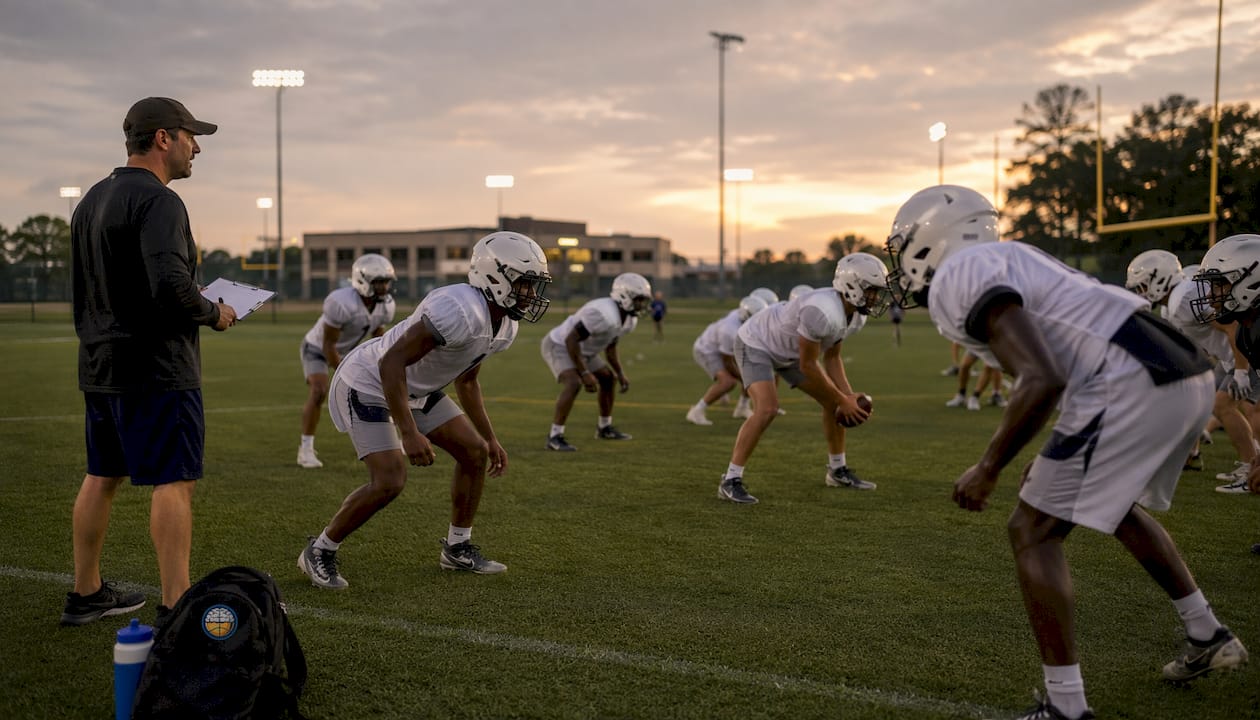
Here is how a typical three-day practice week breaks down:
| Day | Focus | Scout-Team Task |
|---|---|---|
| Day 1 | Base install | Run opponent’s top formations and core run/pass packages |
| Day 2 | Situational work | Replicate red-zone, two-minute, and third-down tendencies |
| Day 3 | Full-speed dress rehearsal | Special teams, tempo, and personnel substitution patterns |
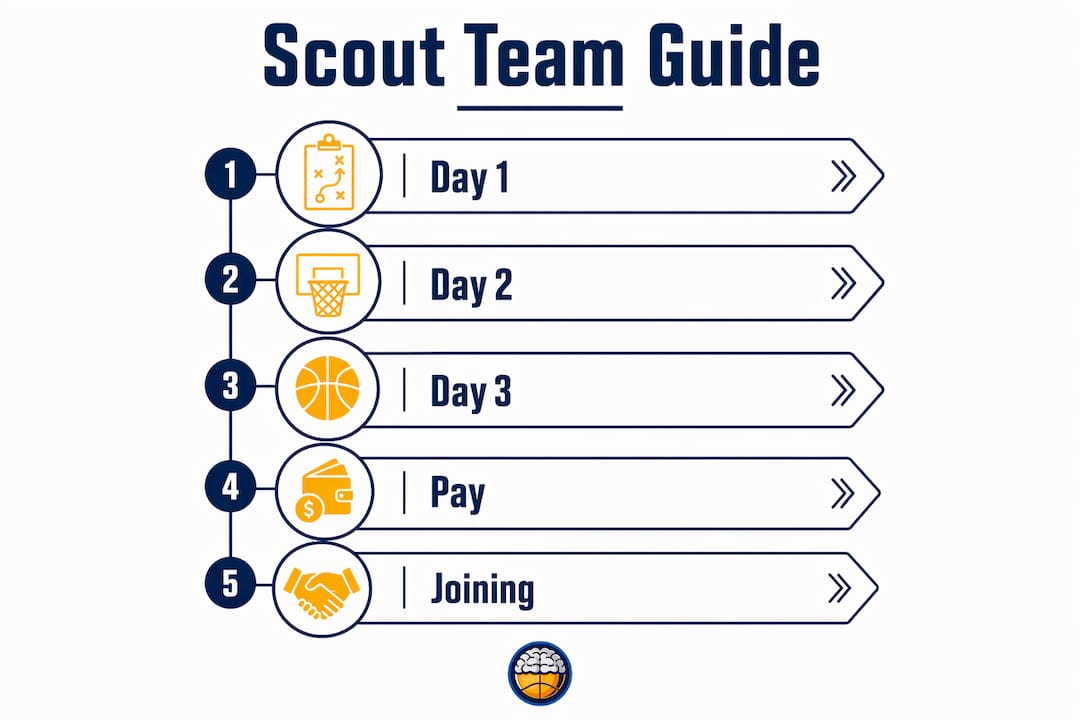
Scripts change week to week based on the opponent. A spread-tempo offense demands different scout-team behavior than a power-run team. Coaches pull the opponent’s top tendencies from film and build a script that reflects those patterns, not a generic playbook.
Pro Tip: When practice time is tight, prioritize the opponent’s top two scoring packages. Starters get the most game-ready reps by seeing the plays they will actually face in critical moments, not every play in the opponent’s catalog.
Who plays on scout teams and what can it do for your career?
Scout-team rosters typically include:
- Walk-ons filling positional gaps and earning their place on the depth chart
- Redshirt players preserving eligibility while building technique and football IQ
- Backups and reserves staying sharp and showing coaches they belong on the field
- NFL practice-squad players replicating opponent personnel at the professional level
The Wiktionary entry for “scout team” confirms this usage across college and high-school reporting, where the term consistently refers to reserves running opponent looks.
The benefits for players go beyond just getting reps. Every scout-team snap is a chance to show up on film. Coaches watch practice tape, and a reserve who consistently wins his assignment against a starter gets noticed. Special-teams units are another direct pathway: scout-team players who demonstrate effort and execution there often earn a spot on the game-day roster before a two-deep offensive or defensive player does.
Consider a college linebacker who spends his redshirt year on scout team, studying the opponent’s tight-end routes every week. By the time he sees live game action, he has already defended those route combinations hundreds of times. That repetition compresses development in a way that individual drills simply cannot.
How does a scout team differ from a practice squad, and what do players get paid?
These terms get mixed up constantly. Here is the plain breakdown:
- Scout team: Any reserve group running opponent looks in practice. Exists at every level. Not an official roster designation.
- Practice squad: An NFL-specific roster mechanism. Players are under contract, protected from being signed by other teams without compensation, and paid a weekly salary.
- Talent scout: A professional evaluator who watches athletes on film and in person to assess them for drafting, trading, or signing. Per Wikipedia’s scout overview), this role focuses on projecting future performance, not preparing for this week’s opponent.
- Starters: The first-team players who benefit from scout-team reps.
Pay varies sharply by level:
- High school: No pay. Eligibility rules apply through state athletic associations.
- College: No direct pay for scout-team work. Scholarship players receive tuition, room, and board. Redshirt rules are governed by NCAA regulations.
- NFL practice squad: Players typically earn between $9,200 and $13,000 per week during the in-season period, depending on experience and the collective bargaining agreement.
A talent scout’s compensation is a separate question entirely. Professional scouts at the NFL level are salaried staff who travel extensively, combine live observation with film study, and often spend months on the road. The Chicago Bears’ Breck Ackley notes that detail orientation and persistent curiosity are the traits that separate good evaluators from elite ones.
One more distinction worth noting: “Team Scout” is also the name of a digital management platform (teamscout.co) that handles scheduling, registration, and payments. That software product has nothing to do with on-field scouting or practice simulation.

How coaches turn opponent film into scout-team scripts
Tactical scouts) prepare opponent dossiers using film and analytics. Coaches then translate those dossiers into on-field scout-team behavior. Here is the workflow:
- Film review and trend spotting. Watch the opponent’s last three to four games. Tag formation frequencies, motion tendencies, and situational play-calling patterns.
- Distill the top three packages. Identify the opponent’s base offense or defense, their primary scoring package, and their situational package (third down, red zone, two-minute).
- Write the scout-team script. Build a play-by-play call sheet the scout team runs in practice. Scripts should mirror the opponent’s actual play sequence, not a randomized mix.
- Assign personnel and teach tell signs. Match scout-team players to the opponent’s personnel groupings. Teach the scout team the opponent’s pre-snap signals, motion triggers, and alignment shifts.
- Run reps and adjust from practice film. Watch practice tape the same night. Correct scout-team alignment errors before the next session so starters see accurate looks throughout the week.
Coaches who integrate AI-powered coaching tools can identify opponent tendencies faster, reducing the time between film review and script writing. Short video clips tagged by formation or down-and-distance make scout-team teaching faster and more precise than a written call sheet alone.
Practical templates coaches can use right now
Two template types cover the full scout-team workflow.
Scouting report template fields to capture from opponent film:
- Formation frequencies and personnel groupings
- Tendencies by down, distance, and field zone
- Key individual matchup threats
- Tempo and substitution patterns
- Situational play-call tendencies (red zone, two-minute, fourth down)
Scout-team practice plan template fields to structure reps:
- Daily rep counts by package
- Personnel assignments for each scout-team grouping
- Script sequence with formation and motion cues
- Evaluation criteria for scout-team execution
| Template | Primary Use | Key Fields |
|---|---|---|
| Scouting Report | Capture opponent intel from film | Formations, tendencies, personnel, tempo |
| Practice Plan | Structure scout-team reps on the field | Rep counts, scripts, assignments, evaluation |
Both templates adapt across levels. At the high-school level, simplify the formation fields and focus on two or three core tendencies. At the college level, add situational breakdowns and analytics tags. NFL staff typically layer in data exports from video platforms.
The Hoop Mentality Basketball Scouting Report Template and Editable Scouting Report Template apply the same structure to basketball, covering opponent tendencies, personnel, and situational notes in a format coaches can fill out and share with players immediately. Check the scouting templates overview for a full breakdown of template types and when to use each.
How to join a scout team
For players:
- Show up to every practice, including voluntary sessions.
- Ask your position coach directly. Express that you want scout-team reps.
- Volunteer for special teams. It is the fastest way to get on the field.
- Film your scout-team reps and use them as a highlight package for coaches.
For parents:
- Focus on development, not immediate playing time. Scout-team reps build skills that pay off later.
- Confirm academic eligibility requirements with the school’s athletic director before tryouts.
- Ask coaches about practice schedules and time commitments before committing.
Three questions every player should ask when trying out:
- What is the weekly practice schedule and expected time commitment?
- How does the coaching staff evaluate scout-team performance?
- What does a scout-team player need to demonstrate to earn game-day consideration?
How scout team roles compare across different sports
The scout-team concept exists beyond football, though the terminology and structure shift by sport.
In basketball, the equivalent is a practice group that runs the upcoming opponent’s sets and defensive schemes. Coaches script opponent plays for the scout team to run against starters in walk-throughs and live sessions. The pregame scout role in basketball mirrors football’s scout-team function closely: study the opponent, replicate their tendencies, and give starters realistic preparation.
In association football (soccer), tactical scouts) prepare dossiers on upcoming opponents, and training sessions often include shape-based replication of the opponent’s system. The scout does not always run a separate “scout team” per se, but the function of simulating the opponent in training is standard at professional clubs worldwide.
In baseball, advance scouts watch upcoming opponents and deliver reports on pitch tendencies, defensive positioning, and lineup patterns. Hitters and pitchers then prepare based on those reports rather than facing a live scout-team group.
The common thread across every sport: someone studies the opponent, distills the key patterns, and delivers that information to the players who need to prepare. The delivery method changes. The purpose does not.
Key Takeaways
A scout team’s core function is opponent simulation, and every level of organized football uses one to give starters realistic preparation before game day.
| Point | Details |
|---|---|
| Scout team definition | Reserve players who replicate upcoming opponents in practice so starters face realistic looks. |
| Primary function | Run opponent formations, tempo, and situational packages across a structured practice week. |
| Who fills the role | Walk-ons, redshirts, backups, and NFL practice-squad players; all benefit from the reps. |
| NFL practice-squad pay | Players typically earn a weekly salary during the in-season period, which varies depending on experience and agreements. |
| Hoop Mentality templates | The Basketball Scouting Report Template and Editable Scouting Report Template give coaches a ready-made structure for capturing opponent intel and planning scout-team reps. |
Scout teams are underused as a development tool
Most coaches treat the scout team as a service unit for the starters. That framing is incomplete. The players running scout-team reps are studying an opponent’s system in real time, taking live reps against the best players on the roster, and building the football IQ that separates depth players from contributors.
The coaches who get the most out of scout teams treat those players as students, not props. They teach the scout team why the opponent runs a play, not just what play to run. That extra step takes five minutes of meeting time and produces a scout team that replicates the opponent accurately instead of just going through the motions.
The same principle applies to the templates and scripts coaches use. A scouting report that captures formations and tendencies in a consistent format is faster to teach from than a set of handwritten notes. The structure does the organizational work, so the coach can focus on the teaching.
Get structured scouting tools from Hoop Mentality
Coaches who want a faster path from film study to practice-ready scripts can use Hoop Mentality’s downloadable templates. The Basketball Scouting Report Template covers opponent tendencies, personnel, and situational notes in a format you can fill out and hand to players the same day. The Editable Scouting Report Template lets you customize fields for your level and opponent week to week.
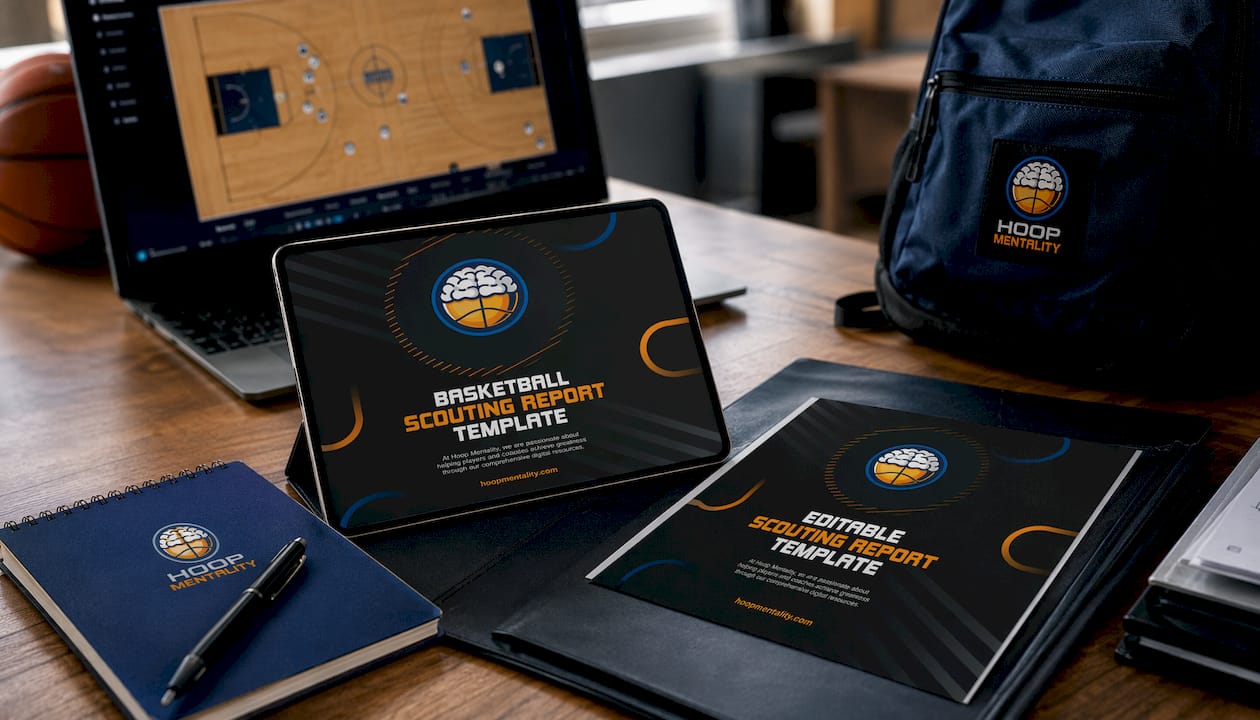
Both templates are built from real coaching workflows, not generic forms. You get a consistent structure that saves prep time, keeps your staff aligned, and gives players clear, readable opponent information before every practice. Download either template directly from Hoop Mentality and have your scout-team script ready before the next practice week starts.
Useful sources
- Scout team, Wikipedia: Core definition of the scout-team function in American football.
- Scout (sport), Wikipedia): Covers both talent scouts and tactical scouts; useful for distinguishing the two roles.
- Scout (association football), Wikipedia): Explains tactical and player scouting in soccer; good cross-sport reference.
- Scout team, YourDictionary: Plain-language definition with usage examples.
- Scout team, Collins Dictionary: Real-world example sentences confirming common usage.
- Scout team, Wiktionary: American football-specific usage and example sentences.
- NFL practice-squad pay, ZipRecruiter: Sourced weekly pay range for NFL practice-squad players.
- Scouts as the lifeblood of NFL teams, Chicago Bears: First-person perspective from NFL scouting staff on what the job actually requires.
Note: For level-specific eligibility rules, contact your local high-school athletic director or your college’s compliance office. NCAA rules change annually; always verify current standards at NCAA.org before making roster or scholarship decisions.
FAQ
What does the scout team do?
The scout team runs the upcoming opponent’s plays and formations in practice so starters can prepare against realistic looks. Their job is accurate simulation, not winning the rep.
Do scout team players get paid?
At the high-school and college levels, scout-team players are not paid directly for those reps. NFL practice-squad players, who often fill the scout-team role, typically earn between $9,200 and $13,000 per week during the season.
How much does an NFL scout get paid?
A talent scout’s salary varies by organization and experience level; the ZipRecruiter data covers practice-squad pay ranges rather than front-office scout salaries, which are not publicly standardized. Check the NFL Players Association resources for current CBA figures.
How do I join a scout team?
Attend every practice, ask your position coach for scout-team reps, and volunteer for special teams. Consistent effort and willingness to study the opponent’s system are what coaches look for.
What is the difference between a scout team and a practice squad?
A scout team is an informal practice group at any level; a practice squad is a formal NFL roster designation with a contract and weekly pay. All practice-squad players may serve scout-team roles, but not all scout-team players are on the practice squad.