

TL;DR:
- Timeouts in basketball help manage momentum, rest players, and execute specific plays during critical moments. Coaches who use their limited timeouts strategically make better decisions and improve their team’s performance. Proper practice and disciplined management of timeout resources are essential for effective in-game coaching.
The role of timeouts in basketball is to stop play and give coaches a controlled window to manage momentum, adjust tactics, rest players, and execute specific plays during critical moments. Timeouts are a scarce resource. Every one you call either builds your team’s advantage or wastes an opportunity you cannot get back. Timeouts serve six primary functions: stopping momentum, resting players, executing set plays, managing substitutions, maintaining possession, and controlling the clock and score. Coaches who treat timeouts as a precious inventory, not a convenience, consistently make better in-game decisions.
What is the role of timeouts in basketball strategy?
Timeouts are the most direct tool a coach has to influence a game in real time. Each one gives you a chance to reset your team’s focus and redirect the game’s flow. Understanding the six core objectives makes every timeout call more purposeful.
- Stopping momentum. When the opponent goes on a scoring run, a timeout breaks their rhythm. It forces the other team to stop, cool down, and wait. This is one of the most common and effective uses of a timeout at every level of play.
- Managing player fatigue. A timeout gives your key players 60–75 seconds to catch their breath. This matters most in the fourth quarter when legs are heavy and decision-making slows down.
- Executing After-Timeout (ATO) plays. ATO plays are pre-designed sets run immediately after a timeout. Coaches with a library of Baseline Out of Bounds (BOB) and Sideline Out of Bounds (SLOB) plays can score quickly from set pieces when the defense is not yet set.
- Substitutions and foul trouble management. A timeout creates a clean window to swap players without disrupting live play. It also lets you address foul trouble before a key player picks up a disqualifying fifth foul. Effective roster management during timeouts prevents costly lineup mistakes late in games.
- Maintaining possession. When your team is about to lose the ball on a jump ball or a five-second call, a timeout saves the possession. One possession in a close game can be the difference between winning and losing.
- Clock and score management. Late in a game, timeouts let you stop the clock, set up a play, and control the pace. They also give your team time to process the score and decide whether to foul, press, or run down the clock.
How do the three types of timeouts differ in deployment?
Three main timeout categories exist before crunch time: momentum-stoppers, riot act timeouts, and strategy-shift timeouts. Each serves a different purpose, and confusing them leads to wasted calls.
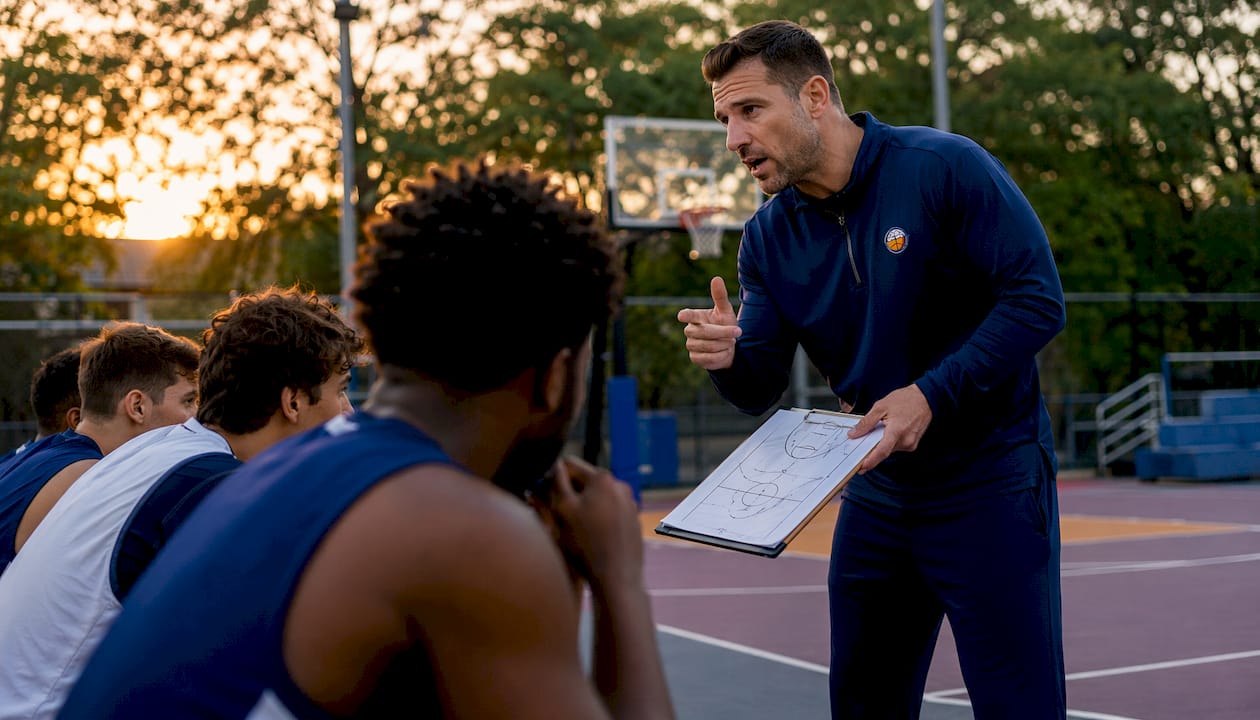
Momentum-stopping timeouts are called when the opponent goes on a run and your team loses its footing emotionally and tactically. NBA coaches use these frequently and deliberately. At the high school level, coaches underuse them, often waiting too long before the run becomes a blowout. The goal is not to draw up a play. The goal is to break the opponent’s energy and give your players a reset.
Riot act timeouts are the most misused category. These are called when a coach wants to confront the team about poor effort or attitude. Used occasionally, they can refocus a distracted group. Used repeatedly, they lose all impact. Players tune out a coach who yells every timeout. The message becomes noise.
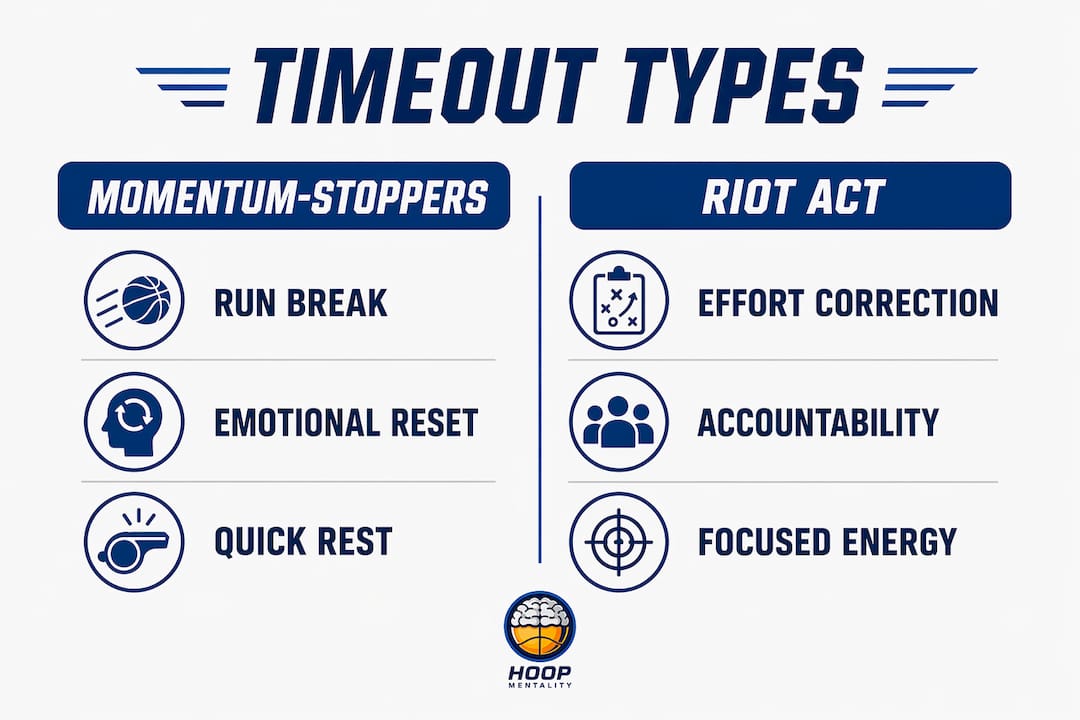
Pro Tip: Reserve riot act timeouts for genuine effort failures, not execution mistakes. Players respond to accountability, not repeated frustration.
Strategy-shift timeouts are reserved for major tactical changes. Switching from man-to-man to a zone press, changing your offensive system, or adjusting your defensive matchups all qualify. These timeouts require clear, specific communication. A strategy-shift timeout called for a minor tweak wastes a resource that should be saved for the fourth quarter.
Knowing which type of timeout fits the moment is a skill. It comes from preparation, not instinct alone. Coaches who study basketball timeout strategies before games make faster, better calls when the pressure is highest.
What are the common pitfalls in timeout management?
Timeout inventory management is one of the most underrated skills in coaching. Coaches who lose track of their timeout count put their teams at serious risk. The Chris Webber incident in the 1993 NCAA Championship is the most famous example. He called a timeout Michigan did not have, resulting in a technical foul that cost them the game. Losing count of timeouts can forfeit games at any level.
Here are the most common pitfalls coaches face, and how to avoid them:
- Calling timeouts for rest alone. Rest is a valid secondary benefit, but it should never be the primary reason for a timeout call. Timeouts misused for rest disrupt your team’s rhythm and burn resources you need in the final two minutes.
- Overloading the message. Coaches who try to fix five problems in one timeout fix none of them. Limit core messaging to one or two key points per timeout. Players cannot process a lecture in 60 seconds.
- Ignoring pre-timeout protocols. Pro teams require point guards to declare time, score, timeouts remaining, and foul count before play restarts. This game management check keeps the whole team situationally aware, not just the coach.
- Saving timeouts too long. Hoarding timeouts until the final minute is just as dangerous as burning them early. If your team is down 12 with three minutes left and you have three timeouts, use them. A timeout you never call helps no one.
Pro Tip: Write your timeout count on a whiteboard or wristband before every game. Check it every quarter. Never rely on memory alone under pressure.
Clear communication during timeouts requires structure. Use seating arrangements to keep players focused. Use shorthand for plays your team has practiced. In loud arenas, written communication on a clipboard works better than shouting. Effective communication strategies during timeouts separate organized coaches from reactive ones.
How do coaches integrate timeout strategy into practice?
Timeout strategy only works if players have practiced it. A coach can draw up the perfect ATO play, but if players have never run it under pressure, it falls apart. Practices should include at least 10 minutes of situational timeout scenario drills. That time builds the instincts players need when communication breaks down in a loud gym.
Two scenarios every team must rehearse are “Protect the Lead” and “The Scramble.” Protect the Lead teaches players how to handle a timeout when you are up by three with 30 seconds left. The Scramble simulates a timeout called when your team is down two with one possession remaining. Both scenarios require players to know their roles before the coach finishes speaking.
Game management is a blend of scientific preparation and intuitive decision-making. Don Sicko of Hoop Coach describes it as part science, part art, requiring rulebook knowledge, emotional control, and pre-planned scenario work. The science is the preparation. The art is reading the game and knowing when to deviate from the plan.
The table below shows how timeout types map to practice scenarios and coaching goals.
| Timeout type | Practice scenario | Primary coaching goal |
|---|---|---|
| Momentum-stopper | Opponent on a 6-0 run | Reset team focus and energy |
| ATO play execution | BOB or SLOB from timeout | Score or create a clean look |
| Strategy shift | Switching defense mid-game | Communicate new system clearly |
| Clock management | Down 2, final 30 seconds | Control pace and possession |
| Foul and sub management | Key player with 4 fouls | Protect player, adjust lineup |
Coaching staff coordination matters just as much as player readiness. Assign one assistant to track timeouts and fouls at all times. That assistant’s only job during a timeout is to confirm the inventory and relay it to the head coach before the huddle ends. This single habit eliminates one of the most preventable errors in basketball.
Key takeaways
Timeouts are a finite resource that directly shape game outcomes when used with clear purpose and preparation.
| Point | Details |
|---|---|
| Six core functions | Timeouts serve momentum control, rest, ATO plays, substitutions, possession, and clock management. |
| Three timeout types | Momentum-stoppers, riot act, and strategy-shift timeouts each require different triggers and messages. |
| Inventory discipline | Track timeouts every quarter; losing count can cost a game, as the Chris Webber incident proved. |
| Communication clarity | Limit each timeout message to one or two points; overloading players reduces execution quality. |
| Practice integration | Run at least 10 minutes of situational timeout drills per practice to build late-game instincts. |
What I have learned about timeouts after years on the sideline
Coaches talk about timeouts as if calling one automatically fixes the problem. It does not. A timeout is only as good as what happens inside it.
The biggest shift in my thinking came when I started treating timeouts the way a team treasurer treats a budget. You have a fixed number. Every call is a withdrawal. When the account hits zero, you are on your own for the rest of the game. That mindset changed how I evaluated every potential timeout call. I stopped calling them out of frustration and started calling them with a specific outcome in mind.
The second thing I learned is that players do not absorb complex information under pressure. I used to walk into a timeout huddle with three adjustments and a new play. Players nodded, walked out, and ran the wrong thing. Now I walk in with one message and one play. The execution rate went up immediately.
The hardest part of timeout management is the riot act timeout. Every coach has called one. Sometimes it works. More often, it creates tension that lingers into the next possession. I now reserve those moments for genuine effort failures, not execution errors. Players make mistakes. That is different from not trying. Knowing the difference makes your timeouts more respected and more effective.
Situational drills are the single best investment you can make in your timeout effectiveness. When players have rehearsed the scenario, the timeout becomes a confirmation, not a lesson. That is when timeouts actually win games.
— Dejan
Coaching resources from Hoop Mentality
Timeout strategy is only effective when it is backed by organized preparation.

Hoop Mentality offers coaching resources built for exactly this kind of preparation. The Basketball Starter Pack for Coaches includes playbooks, ATO sets, and BOB and SLOB play libraries ready to use in your next game. The Game Preparation Guide with Weekly Practice Plan gives you a structured framework for building situational timeout drills into every practice week. The Basketball Template Bundle for Coaches provides ready-made templates to organize your timeout communication, game plans, and player protocols. Each resource is built from real coaching experience and designed to save you time while improving your team’s execution.
FAQ
What is the primary role of timeouts in basketball?
Timeouts stop play to let coaches manage momentum, adjust tactics, rest players, and execute set plays. They serve six core functions and are most effective when used with a clear, specific purpose.
How many timeouts are teams typically allowed per game?
Timeout allocations vary by level. NBA teams receive seven timeouts per game, while high school and college rules differ by state and conference. Coaches should confirm the specific rules for their league before each season.
What is an ATO play in basketball?
An ATO (After-Timeout) play is a pre-designed offensive set run immediately after a timeout. BOB (Baseline Out of Bounds) and SLOB (Sideline Out of Bounds) are the most common ATO formats used to create quick scoring opportunities.
How do timeouts affect game momentum?
Timeouts reduce opponent scoring runs by about 2.5 points on average in EuroLeague play. They stabilize performance rather than completely reversing momentum, making early intervention more effective than waiting for a large deficit.
How should coaches communicate during a timeout?
Limit timeout messaging to one or two key points to avoid player confusion. Use shorthand, seating arrangements, and written communication in loud environments to keep the message clear and fast.