


TL;DR:
- Pregame scouting involves transforming opponent observations into strategic decisions that guide team play before the game begins. It requires concise, targeted reports based on thorough film analysis to inform tactical choices and reduce on-court surprises. Integrating scouting into the broader preparation process enhances decision-making, confidence, and overall team performance.
Most coaches think pregame scouting means watching the other team play. It doesn’t. The role of pregame scout is far more specific: converting what you observe into strategic decisions that shape how your team plays before the opening tip. The difference between passive observation and purposeful analysis determines whether your players walk onto the court with clarity or confusion. This article covers the full scope of pregame scouting: what it involves, how it works, the report formats it produces, and how to integrate it into your broader preparation system.
Table of Contents
- Key takeaways
- The role of pregame scout explained
- Pregame analysis techniques that work
- Scouting report formats and practical use
- How scouting improves team performance
- Integrating scouting into your preparation workflow
- My perspective on the pregame scout role
- Upgrade your game preparation resources
- FAQ
Key takeaways
| Point | Details |
|---|---|
| Scouting goes beyond watching | Advance scouts translate opponent behavior into specific tactical instructions, not just summaries. |
| Reports must be concise | Players and coaches have limited time pregame, so reports need to be short and immediately usable. |
| Film work drives the process | Hours of opponent film study form the foundation of every effective scouting workflow. |
| Scouting informs every layer | Defensive assignments, offensive sets, and practice drills should all connect back to scouting findings. |
| Integration matters most | Scouting delivers results only when it is built into the full preparation workflow, not treated as a standalone step. |
The role of pregame scout explained
There is a distinction worth drawing clearly. General scouting refers to evaluating talent, often for recruiting or roster decisions. Pregame scouting is narrower and more urgent. It focuses entirely on the upcoming opponent and what your team needs to know before the game starts.
The advance scout’s core job) is to watch the specific opponent and deliver insights the coaching staff can act on. That includes identifying tactical tendencies, recognizing key personnel roles, and flagging exploitable patterns. A scout attends games or studies film specifically for the team you face next, not for general program intelligence.
What makes this role strategically significant is timing. The findings have a short shelf life. A scouting report produced three weeks out has less value than one finalized 48 hours before tipoff. This means the pregame scout operates under constant deadline pressure, and every hour spent reviewing film must produce something usable.
Here is what a pregame scout is specifically responsible for:
- Identifying the opponent’s primary offensive sets and how they initiate them
- Noting key personnel: who scores in isolation, who runs the pick-and-roll, who is vulnerable defensively
- Logging defensive tendencies: zone versus man preferences, where they apply pressure, how they switch
- Flagging situational patterns: late-clock plays, out-of-bounds sets, and transition triggers
- Delivering findings in a format the coaching staff can use directly in preparation
Pro Tip: Track not just what opponents do, but when they do it. A team’s fourth-quarter offensive tendencies often differ significantly from their first-half patterns, and that distinction shapes late-game preparation.
Pregame analysis techniques that work
The foundation of any effective scouting process is film. Scouts spend hours breaking down opponent footage, looking for patterns that repeat across multiple games. One game is context. Three games is a trend. That distinction matters when you’re building a defensive game plan.
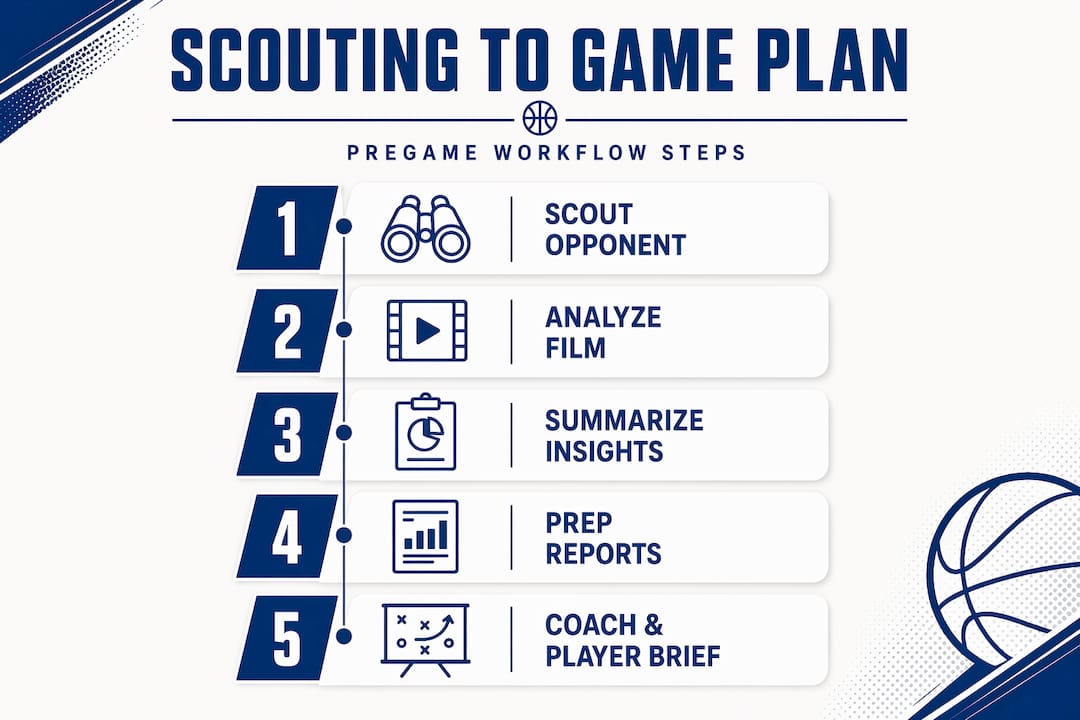
The pregame evaluation process typically follows this sequence:
- Select film samples. Pull footage from the opponent’s three to five most recent games. Weight recent games more heavily; teams change.
- Categorize offensive sets. Log every half-court set you see. Note frequency, how they enter each action, and which players initiate.
- Map defensive assignments. Identify who guards whom, where they allow drives, and where they force the ball.
- Chart player-specific tendencies. Note shooting preferences (pull-up versus catch-and-shoot), ball-handling habits under pressure, and free-throw patterns.
- Build situational notes. Document ATO plays, press-break schemes, and any late-clock patterns.
- Draft the report. Translate raw notes into a format coaches and players can absorb quickly.
Assistant coaches study opponent tape for hours and deliver briefings prior to tipoff. That timeline is intentional. The closer to game time the briefing happens, the more likely players retain and act on the information.
Tools vary by level. At the professional level, video software like Synergy or similar platforms allow scouts to tag specific actions and export clip packages. At the high school and college levels, YouTube, Hudl, and similar platforms can replicate much of the same workflow without the software cost. The tool matters less than the discipline of the process.
Pro Tip: Limit your clip packages to seven to ten plays per category. Showing players twenty pick-and-roll variations creates noise, not clarity. Fewer examples, repeated and reinforced, do more work in a pregame setting.
Scouting report formats and practical use
The format of a scouting report determines whether the information gets used. A dense ten-page document handed to a player forty minutes before tip looks thorough but gets skimmed. A one-page summary with the five things they need to know gets read twice.
NBA players receive a condensed report placed in their lockers before warmups. That format is deliberate. The goal is not to overwhelm but to orient. The player should finish reading and immediately know the two or three most important things about tonight’s opponent.
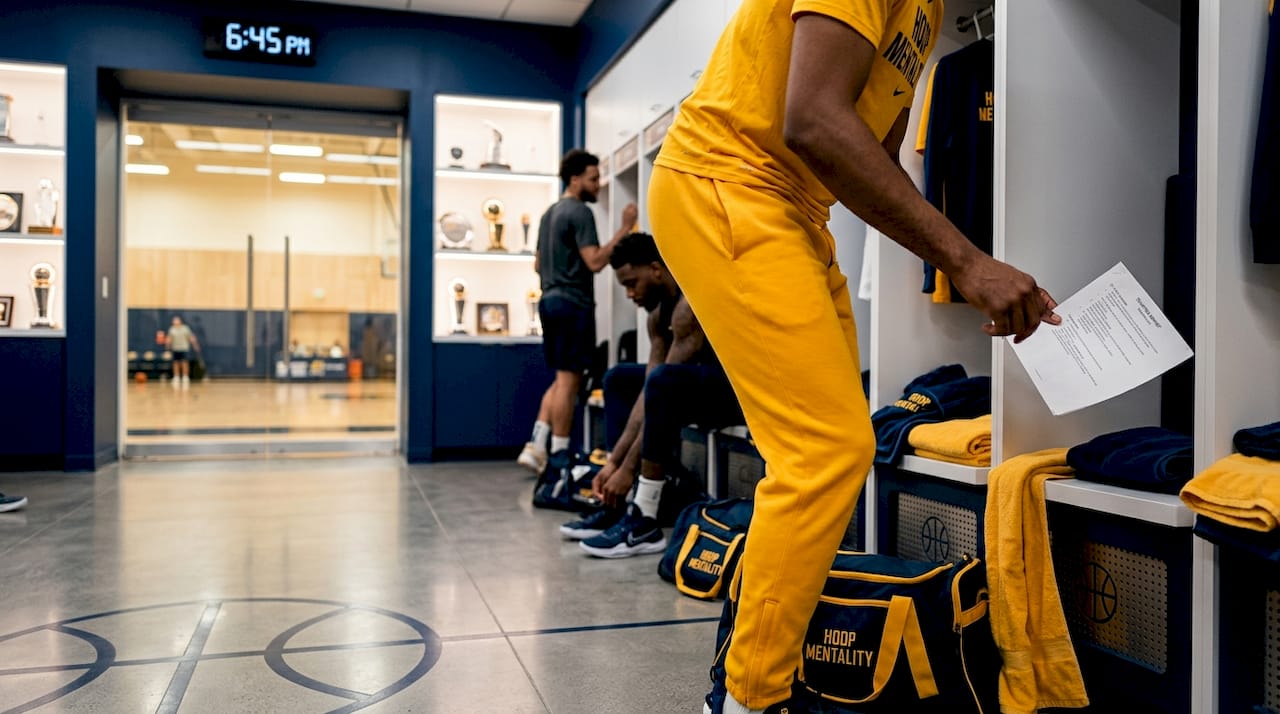
Coaching staffs use a different version. Coaches analyze film with whiteboard diagrams and condensed reports that highlight offensive and defensive patterns. These materials go deeper than what players need but remain organized around the same priorities.
Here is how the main report types compare:
| Report type | Primary user | Main benefit | Ideal timing |
|---|---|---|---|
| One-page player summary | Players | Quick orientation, warmup focus | 60 to 90 minutes pregame |
| Whiteboard diagram set | Coaches | Visual breakdown of key plays | Morning walkthrough or shootaround |
| Full written analysis | Coaching staff | Deep tactical reference | 24 to 48 hours before game |
| Clip package | Players and coaches | Visual reinforcement of tendencies | Film session, one to two days out |
The content of each format should stay consistent. Coaches build defensive instructions around stopping the opponent’s five to ten most frequently used plays. That same list of plays should appear in the whiteboard session, the player summary, and the coaching analysis. Repetition across formats is not redundancy. It is reinforcement.
Players use the one-page summary during warmups to prime their attention. They are not learning during warmups. They are reminding themselves. The report serves as a mental checklist before the game starts. Coaches rely on the full analysis during in-game adjustments, pulling specific notes to counter what they are seeing on the floor.
You can find strong scouting report examples that show how professional-level formats translate to high school and college programs.
How scouting improves team performance
The clearest benefit of quality pregame scouting is the reduction of surprises. When your players have seen the opponent’s high ball-screen action five times on film before the game, the first live repetition does not catch them off guard. They respond from preparation, not reaction.
Tactical preparation reduces surprises and improves decision-making during games. That is the core performance argument for investing in the scouting process. Fewer surprises mean faster adjustments. Faster adjustments mean fewer wasted possessions.
The performance impact shows up in specific areas:
- Defensive assignments become precise. Your perimeter defender knows the opposing point guard goes left on his drive 70% of the time. He does not guess.
- Offensive sets become targeted. If the opponent struggles defending the short roll, you run more two-man game and attack that area specifically.
- Situational play improves. Knowing the opponent’s press-break tendencies means your press is designed to disrupt what they prefer, not what a generic press attacks.
- Player confidence increases. Walking into a game with a clear picture of the opponent reduces anxiety and increases execution speed.
“Scouting information is most valuable when synthesized into easily referenced materials that fit into the fast pace of game-day preparation.” — Inside the Mind of an NBA Coach
When scouting is neglected, the costs are real. Coaches call timeouts to diagnose actions they should have recognized before the game. Players switch defensive assignments reactively and out of position. Halftime adjustments take the entire fifteen minutes to implement because the staff is identifying patterns that a scout should have flagged three days earlier.
Integrating scouting into your preparation workflow
Scouting works best when it is not a separate step. It should run through your entire preparation workflow, from the practice plan to the pregame warmup to in-game adjustments.
Here is how effective programs build scouting into the full preparation cycle:
- Scouts and assistant coaches review film together. The scout flags tendencies; the assistant translates them into practice scenarios and defensive assignments.
- Practice sessions include opponent-specific drills. If the upcoming opponent lives in the pick-and-roll, Tuesday’s practice has extra time on pick-and-roll defense. The connection is explicit, not assumed.
- Report delivery has a set schedule. Full analysis goes to coaches 48 hours out. Player summaries are ready by shootaround. Nothing is produced at the last minute.
- Warmup drills reflect scouting findings. The timing of your warmup defensive reps should match what the opponent actually does, not generic movements.
Assistant coaches arrive early and coordinate drills and reports aligned with scouting findings. Athletic directors can support this by protecting scouting time on the staff calendar and ensuring scouts have access to the film tools they need. Treating the scouting role as optional or assigning it without structure produces inconsistent output. Treating it as a scheduled, integrated function produces reliable preparation.
The importance of scouting reports is not just about knowing your opponent. It is about organizing your entire preparation around a shared, specific picture of what you face.
My perspective on the pregame scout role
I’ve watched programs at every level treat scouting as something you do when you have time. That mindset produces mediocre preparation, and coaches feel it in the first quarter without always knowing why.
What I’ve learned is that the most effective scouts don’t just collect data. They make decisions. They decide which tendencies matter enough to build a game plan around and which are noise. That editorial judgment is what separates a useful scouting report from a long document nobody reads twice.
In my experience, the communication piece gets underestimated most. You can have the best film breakdown in the league, but if the information doesn’t land with your players in a form they can act on, it never happened. The best scouts I’ve seen build their reports backward: they start with what a player needs to execute, then work back to what film evidence supports it.
Technology has changed the workflow, but it hasn’t changed the standard. Video platforms make clip access faster. They don’t make analysis sharper. That still requires a human who understands the game well enough to know what they are looking at. Coaches who lean on software without investing in scouting judgment end up with more data and less clarity.
— Dejan
Upgrade your game preparation resources
Hoopmentality has built resources specifically for coaches who want to connect scouting intelligence directly to player development and practice structure.
The Game Preparation Guide With Weekly Practice Plan gives you a ready-made system for turning scouting findings into organized, game-focused practice sessions. It removes the guesswork from how scouting informs your week.
For developing your big men in ways that match what scouting reveals about opponent post defense, the Big Man Dual Action Drill provides targeted, film-informed development work. Both resources are designed to save you preparation time and improve what your team executes on game day.
FAQ
What is the role of a pregame scout?
A pregame scout watches the upcoming opponent and delivers specific tactical intelligence to the coaching staff before game day. The role focuses on identifying offensive sets, defensive tendencies, and key player matchups that inform the game plan.
How is a pregame scouting report used?
Players receive condensed one-page summaries before warmups to orient their mindset, while coaches use full written analyses and whiteboard diagrams during game-day meetings and in-game adjustments.
What pregame analysis techniques do scouts use?
Scouts review three to five recent opponent games on film, categorize offensive sets and defensive schemes, chart individual player tendencies, and build clip packages and written reports organized around the opponent’s most-used plays.
Why does the importance of game scouting matter?
Quality scouting reduces the number of surprises a team faces during a game. Players respond from preparation rather than reaction, which speeds up defensive rotations, sharpens offensive targeting, and improves situational execution.
How should athletic directors support the scouting role?
Athletic directors can protect scouting time on the staff calendar, provide access to film tools, and build the scouting function into the preparation schedule as a structured, recurring responsibility rather than an optional task.