

TL;DR:
- A rebounding drill trains players to secure possession after missed shots through footwork, boxing out, and pursuit. Progressive drills focus on individual skills, team coordination, and applying techniques under game pressure, emphasizing positioning and physicality over height. Proper coaching avoids common mistakes by sequencing skills and using tools like video review to develop consistent rebounding habits.
A rebounding drill is a structured practice exercise that trains players to secure possession after a missed shot through footwork, boxing out, and ball pursuit. The best rebounding drill list for coaches builds these skills progressively, starting with isolated technique and advancing to full-team competitive scenarios. Coaches who structure drills this way develop players who win possessions through positioning and physicality, not just height. Rebounding relies more on leverage and positioning than height, which means every player on your roster can become a reliable rebounder with the right training.
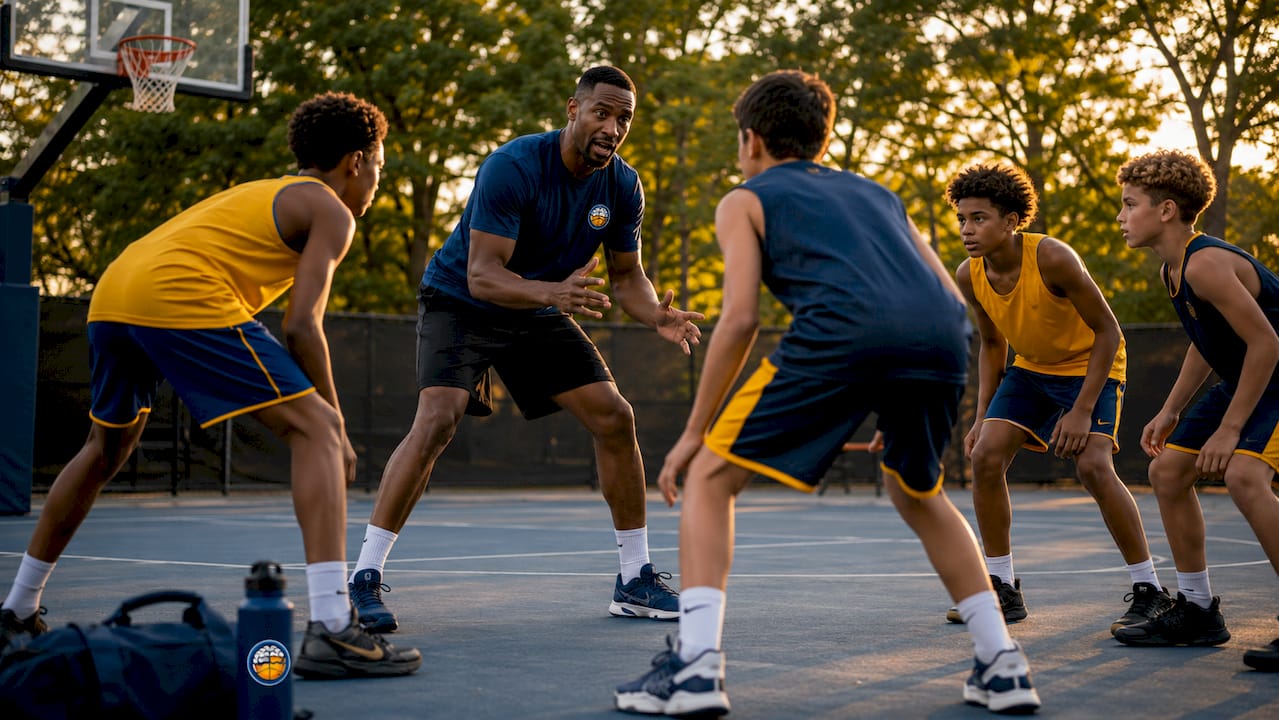
What is the essential rebounding drill list for coaches?
A complete rebounding drill list covers five core areas: individual footwork, physical box-out contact, ball pursuit, team coordination, and live-game application. Each area targets a different layer of the rebounding skill set. Skipping any layer leaves gaps that show up in games. The drills below move from foundational to advanced, giving you a clear progression to follow.
1. Mikan box-out drill
The Mikan Box-Out Drill builds footwork and physical contact habits at the same time. One defender and one offensive player start near the block. The defender initiates contact with the hips in a low-to-high motion, seals the offensive player, and secures the rebound with two hands. Effective box-out uses low-to-high hip contact to legally displace opponents before the ball arrives. This drill is the right starting point for players at U12 and above, once basic footwork is stable.
Pro Tip: Cue players to make contact before looking for the ball. The sequence is contact first, then locate, then fetch. Reversing that order causes players to reach instead of seal.
2. Two-line box-out drill
The Two-Line Box-Out Drill trains players to identify their opponent and engage physically in one motion. Two lines face each other at the free-throw line. On the coach’s signal, each defender finds their match, makes contact, and boxes out while a shot goes up. This drill builds the habit of simultaneous opponent identification and physical engagement, which is exactly what players need in transition defense. Run it with 10 repetitions per pair before rotating.
3. Pursuit drill
The Pursuit Drill develops competitive instincts and the ability to chase loose balls. The coach rolls or throws the ball away from the basket. Two players sprint from opposite sides to secure it. The first player to control the ball with two hands wins the possession. Two-hand rebounding reduces turnovers and builds secure catching habits, especially in contested situations. This drill conditions players to treat every missed shot as a live ball worth chasing.
4. Active hands tipping drill
The Active Hands Tipping Drill trains soft touch and neuromuscular control under pressure. Players stand in a line near the basket. Each player tips the ball against the backboard repeatedly without catching it, keeping it alive with fingertip control. San Jose State Coach Tim Miles advocates for constant hand activity and team tip drills to build rebounding success. This drill directly improves a player’s ability to tip a rebound to a teammate when a clean catch is not possible.
5. Three-player rebounding rotation
The Three-Player Rebounding Rotation develops team coordination and communication around the basket. Three players position themselves at the two blocks and the elbow. The coach shoots. Each player calls out their box-out assignment, makes contact, and the group works together to secure the rebound. This drill teaches players that team rebounding requires coordinated boxing out, not individual effort. Run it for five minutes, then rotate the three players so every combination gets repetitions.
6. Live scrimmage with rebounding constraints
Live scrimmage with rebounding constraints applies all drill skills under real game pressure. Set a rule: a team scores a point only if they secure the rebound after a made or missed shot. This forces every player to box out on every possession, not just when they feel like it. Game-like constraints reinforce rebounding fundamentals under pressure and improve communication and positioning recall. Run this format for the final 10 minutes of any rebounding-focused practice session.
How do these drills build specific rebounding skills?
Each drill in this list targets a different physical and mental component of rebounding. Understanding what each drill builds helps you choose the right one for your team’s current weakness.
- Footwork and pivoting. The Mikan Box-Out Drill builds the pivot mechanics and body positioning that create leverage against taller opponents. Players who master this move opponents without fouling.
- Physical contact habits. The Two-Line Box-Out Drill conditions players to initiate contact automatically. Most players avoid contact by instinct. This drill rewires that habit.
- Ball pursuit and competitive drive. The Pursuit Drill trains players to sprint toward loose balls rather than watch them. This is a mental habit as much as a physical one.
- Soft hands and ball control. The Active Hands Tipping Drill builds the fingertip sensitivity needed to control a rebound that cannot be caught cleanly. Constant hand movement creates rebound opportunities that passive players miss entirely.
- Team communication. The Three-Player Rotation teaches players to call assignments out loud. Silent rebounding leads to collisions and missed possessions.
- Game-pressure application. The Live Scrimmage format forces players to apply every skill simultaneously. Drills done in isolation do not automatically transfer to games without this step.
How to structure a rebounding-focused practice session
A well-structured 60-minute rebounding session follows a clear progression from individual technique to team application. The table below shows a practical breakdown coaches can use directly.
| Segment | Drill | Duration | Focus |
|---|---|---|---|
| Warm-up | Active Hands Tipping | 10 min | Soft touch, hand activation |
| Skill block 1 | Mikan Box-Out Drill | 12 min | Footwork, hip contact |
| Skill block 2 | Two-Line Box-Out Drill | 12 min | Opponent identification, engagement |
| Skill block 3 | Pursuit Drill | 10 min | Ball chase, competitive instincts |
| Team block | Three-Player Rotation | 8 min | Communication, coordination |
| Application | Live Scrimmage with Constraints | 8 min | Full integration under pressure |
Progress from isolated footwork drills to full-team reactive drills within every session. Starting with team drills before players have individual technique locks in bad habits at scale.
Pro Tip: Use video analysis after the live scrimmage segment. Video helps coaches identify positioning mistakes that are invisible in real time. Even a short phone recording of two possessions gives players concrete feedback they can act on immediately.
Which drills work best for different age groups?
Drill selection depends on the player’s developmental stage. Physical contact drills introduced too early create foul trouble and frustration. Introduced too late, they leave players unprepared for competitive play.
| Age Group | Recommended Drills | Contact Level | Key Focus |
|---|---|---|---|
| U8–U10 | Active Hands Tipping, Pursuit Drill | None | Coordination, ball pursuit |
| U11–U12 | Mikan Box-Out, Two-Line Box-Out | Light, introduced gradually | Footwork, basic box-out |
| U13–U15 | All individual drills plus Three-Player Rotation | Moderate | Team coordination, positioning |
| U16 and above | Full drill list including Live Scrimmage | Full competitive contact | Game-pressure application |
Players aged U8–U14 should progress from isolated footwork to full-team coordination drills, with physical contact in boxing out introduced at U12 after footwork mastery. This progression protects younger players while building the foundation that makes contact drills effective later. For youth-specific progressions, the Hoop Mentality guide on rebounding drills for youth coaches provides additional age-adjusted options.
What are the most common coaching mistakes in rebounding drills?
Coaches who run rebounding drills without a clear framework often reinforce the wrong habits. These are the mistakes that cost teams possessions.
- Skipping the “Hit” step. The “Hit – Find – Fetch” sequence taught by Michigan State’s Tom Izzo is foundational. Coaches who teach players to find the ball first produce rebounders who watch instead of seal.
- Rushing past footwork. Adding contact drills before players can pivot correctly creates foul habits. Footwork mastery must come first.
- Ignoring hand position. Players who catch rebounds with one hand give up the ball under pressure. Reinforce two-hand securing on every repetition.
- Running drills without competition. Drills done cooperatively do not build the toughness needed in games. Add a winner and a loser to every drill possible.
- No feedback loop. Drills without correction are just exercise. Stop play, show the mistake, and repeat the rep correctly before moving on.
“Rebounding is not about who jumps highest. It is about who gets to the right spot first and holds it.” This principle, reflected in the work of coaches like Tom Izzo and Tim Miles, should drive every rebounding drill you run.
For a deeper look at building these habits across your full defensive system, the Hoop Mentality defensive rebounding guide covers positioning principles that complement this drill list directly.
Key takeaways
The most effective rebounding drill list builds skills in sequence: footwork first, physical contact second, team coordination third, and live-game application last.
| Point | Details |
|---|---|
| Sequence matters | Progress from footwork drills to contact drills to team drills before adding live scrimmage. |
| Contact technique | Use low-to-high hip contact to legally displace opponents before securing the ball. |
| Two-hand rule | Always finish with two hands to reduce turnovers in contested rebound situations. |
| Age-appropriate contact | Introduce physical boxing out at U12, only after footwork mechanics are stable. |
| Live constraints close the loop | Scrimmage with rebounding scoring rules forces players to apply every skill under pressure. |
Rebounding wins games when you coach it right
Coaches underestimate how much rebounding is a teachable skill. I have seen undersized players become dominant rebounders simply because they mastered the box-out sequence before their opponents did. The physical tools matter less than the habits.
The mistake I see most often is coaches treating rebounding drills as conditioning filler at the end of practice. That placement signals to players that rebounding is an afterthought. Put it in the first 30 minutes when players are fresh and focused. The habits formed early in practice are the ones that stick in games.
The “Hit – Find – Fetch” framework from Tom Izzo is the clearest teaching model I have used. It gives players a three-word cue they can recall under pressure. Pair that with consistent video review after live scrimmage segments and you will see measurable improvement within two weeks of focused practice. Communication drills like the Three-Player Rotation also pay dividends that show up in unexpected ways. Teams that talk on rebounds tend to talk on defense too. The habits are connected.
— Dejan
Ready-made tools for your rebounding practice plans
Building a complete rebounding practice from scratch takes time coaches rarely have. Hoop Mentality’s Basketball Template Bundle gives you ready-made practice plan templates, drill organization sheets, and session structures you can adapt immediately.

Each template is built around real coaching workflows. You get clear drill progressions, timed segments, and player tracking tools in one place. Coaches using the bundle spend less time planning and more time coaching. If you want a focused drill resource for big men working on post rebounding, the Big Man Dual Action Drill is a direct complement to the drills covered here.
FAQ
What is the most important rebounding drill for beginners?
The Mikan Box-Out Drill is the best starting point. It builds the footwork and hip contact mechanics that every other rebounding skill depends on.
When should youth players start contact rebounding drills?
Physical boxing out should be introduced at U12, after players have stable footwork and pivot mechanics. Introducing contact earlier creates foul habits before technique is set.
How long should a rebounding drill session last?
A focused rebounding session fits within 60 minutes when structured into timed segments of 8–12 minutes per drill, progressing from individual technique to live scrimmage application.
What does “Hit – Find – Fetch” mean in rebounding?
“Hit – Find – Fetch” is a three-step sequence where the player initiates hip contact first, then locates the ball, then secures it with two hands. It is a core teaching model used by coaches like Tom Izzo at Michigan State.
How do you improve team rebounding, not just individual skills?
Run the Three-Player Rebounding Rotation and live scrimmage with rebounding constraints. These drills force players to call assignments, coordinate box-outs, and apply individual skills in a team context.