

TL;DR:
- The offensive rebounding process is a structured, teachable system involving anticipation, positioning, and execution. Players improve by reading shot trajectories, using modern contact techniques, and following a team-centered strategy. Proper coaching emphasizes grading opportunities and practicing drills to turn rebounding into a consistent tactical advantage.
The offensive rebounding process is a systematic, teachable approach to securing missed shots before defenders can clear the ball. Angel Reese tied the second-most offensive rebounds in a single WNBA game with 11 in june 2026, proving elite offensive rebounding changes games. Meanwhile, the OKC Thunder posted a 22.3% offensive rebounding rate, third worst in the NBA, showing exactly what poor rebounding costs a team. This guide breaks down the skills, team systems, drills, and corrections that turn offensive boards from hustle plays into a repeatable tactical advantage.
What is the offensive rebounding process in basketball?
The offensive rebounding process is the structured sequence of reading, positioning, contacting, and securing a missed shot on the offensive end. Coaches at the collegiate and professional level now treat it as a core tactical assignment, not a random hustle play. The distinction matters because hustle is unpredictable. A system is repeatable.
The standard industry term for this skill set is “offensive rebounding,” but the process behind it covers three distinct phases: anticipation, positioning, and execution. Each phase has teachable mechanics. When you understand all three, you stop relying on athleticism alone and start winning boards through preparation.
Programs like Michigan State, Duke, and Purdue have built historic scoring seasons partly on the back of disciplined offensive rebounding. The common thread across those programs is measurement. They grade every rebounding opportunity in practice, every single day.
What are the essential skills behind effective offensive rebounding?
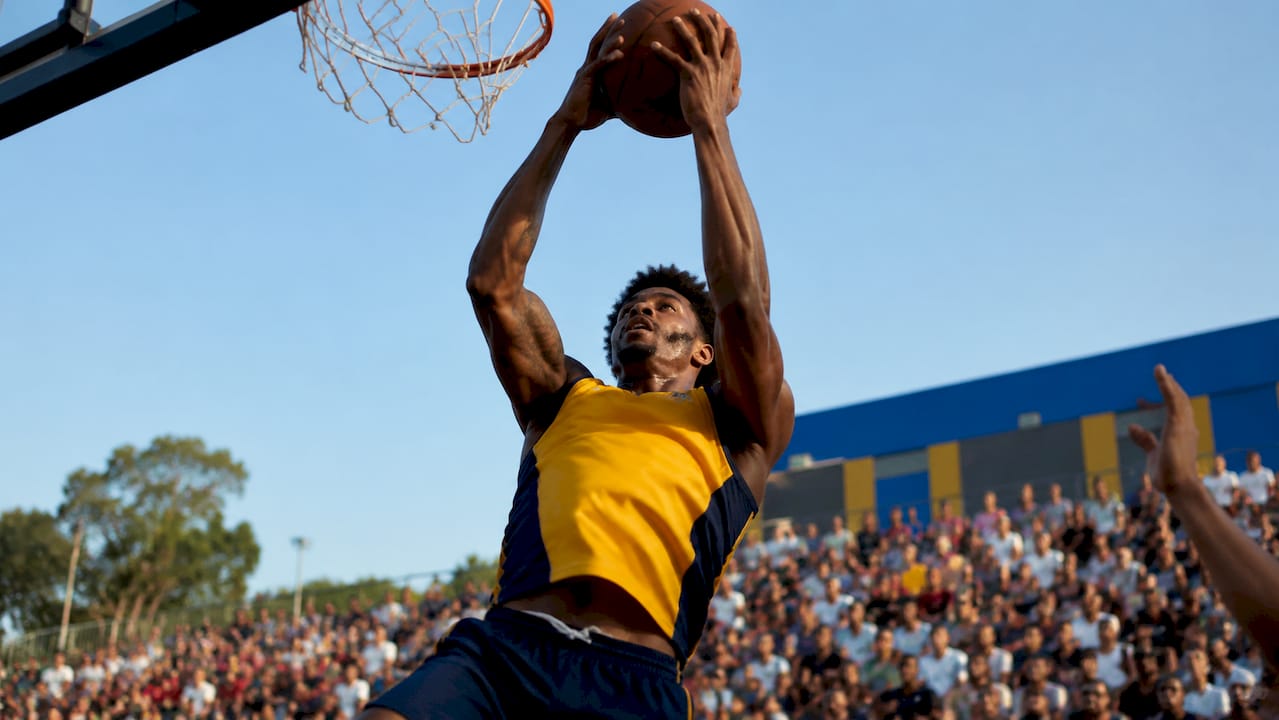
Reading the shooter’s release is the first skill in any solid offensive rebounding guide. The ball’s arc, the shooter’s release point, and the angle of the shot all predict where the rebound will land. A flat shot bounces long. A high-arc shot drops short. Players who study these patterns get a half-step head start on every possession.
The Rebounding Manifesto teaches players to read shot arcs and anticipate ball landing spots before the ball even hits the rim. That anticipation is what separates good rebounders from great ones. You are not reacting to the miss. You are predicting it.
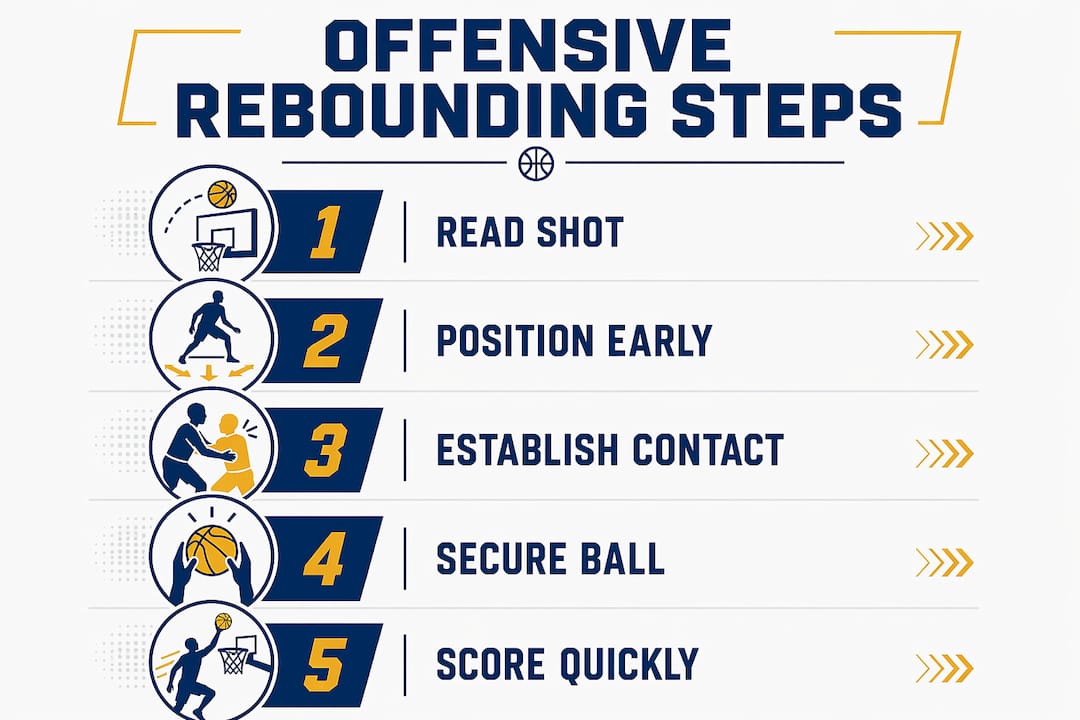
Modern contact techniques have replaced the traditional box-out in high-level play. Frontal hits, swim moves, and quick footwork now define how offensive rebounders establish position. Instead of backing into a defender, you attack from the front, using your hips and legs to create separation. This approach prevents defenders from ever gaining inside position in the first place.
Key physical skills for effective offensive rebounding:
- Shot trajectory reading: Track the shooter’s arc and release angle before the ball reaches the rim.
- Timing your jump: Leave the ground at the peak of the ball’s descent, not when it hits the rim.
- Hip and leg contact: Use your lower body to seal defenders, not your arms.
- Swim move: Extend one arm over the defender’s arm to break their box-out and gain inside position.
- Two-hand grab: Secure the ball with both hands immediately to prevent strips.
Pro Tip: Watch the shooter’s elbow during practice film sessions. A low elbow almost always means a flat arc and a long rebound. A high elbow means a steep arc and a short drop. Train your players to read this cue before the shot goes up.
How to organize team strategies for offensive rebounding success
Team-wide rebounding starts with identity. Coaches who grade offensive rebounding as a daily tactical assignment treat a missed rebound opportunity the same way they treat a defensive breakdown. That mindset shift changes how players prioritize the skill. It stops being optional.
The biggest structural change in modern offensive boards strategies is positional expansion. Guards and wings now crash the boards alongside bigs. The Portland Fire, facing consistent size disadvantages, built a collective rebounding system where every player on the floor has a designated role on a missed shot. That approach works at every level.
A practical team system for offensive rebounding looks like this:
- Assign roles before the shot. Designate one or two players as primary crashers and one as a safety outlet on every possession.
- Grade every opportunity. After each practice, review film and score each player on whether they pursued their assigned rebound role.
- Use daily drills. Embed rebound positioning into warm-ups so the habit becomes automatic.
- Review mistakes in film sessions. Show players the exact moment they stopped moving toward the glass.
- Hold guards accountable. Wings and guards who crash the weak side create the most unexpected second-chance opportunities.
“Offensive rebounding must be measured daily and treated as a core identity element, not just hustle.” — Coaches at the collegiate and professional level, as reported by FOX Sports
Defensive rebounding strategies follow a similar accountability model. Understanding both sides of the glass makes your overall rebounding system more complete.
What are the best drills to improve offensive rebounding?
The best rebounding drills develop timing, positioning, physicality, and decision-making at the same time. Single-skill drills rarely transfer to game situations. The drills below combine multiple elements and can be run in 10–20 minutes per session.
| Drill | Duration | Primary Focus | Key Technique |
|---|---|---|---|
| Shadow Box-Out | 8 minutes | Positioning and contact | Hip and leg seals against a live defender |
| Bouncing Ball Scramble | 10 minutes | Timing and aggression | Reading ball bounce and attacking the glass |
| Rebound and Score | 12 minutes | Finishing after the board | Catching, protecting, and converting in traffic |
| Swim Move Repetitions | 6 minutes | Breaking box-outs | Arm-over technique against a stationary defender |
| 3-on-3 Crash Drill | 15 minutes | Team coordination | Assigned roles with live defensive resistance |
Drills like Shadow Box-Out, Bouncing Ball Scramble, and Rebound and Score develop rebounding timing, positioning, and finishing in a single session. Each drill builds on the last, so run them in sequence when possible.
Conditioning matters inside these drills. Tired players stop crashing the boards first. Build short sprints into the Bouncing Ball Scramble to simulate late-game fatigue. Players who can maintain their rebound technique at the end of a fourth quarter are the ones who change outcomes.
Pro Tip: Film your Rebound and Score drill from a side angle. Players almost always think they are jumping at the right time, but the video usually shows they are leaving the ground too early. Show them the footage. One viewing corrects the habit faster than ten verbal reminders.
For youth-focused variations, rebounding drills for youth coaches offer progressions that build the same mechanics at a lower intensity.
What common mistakes hurt offensive rebounding and how do you fix them?
Poor offensive rebounding almost always comes down to three repeatable errors. Jumping too early, watching the ball instead of the opponent, and using arms instead of the body are the most common mistakes at every level. Each one has a direct fix.
Jumping too early is the most costly mistake. A player who leaves the ground before the ball hits the rim is already descending when the rebound comes off. The fix is a simple cue: wait for the rim contact sound before initiating your jump. Drill this in practice until it becomes automatic.
Watching the ball is the second major error. Players who track the ball lose sight of their defender. The defender then steps in front of them and secures inside position. The correct focus sequence is: read the shot arc, locate your defender, make contact, then find the ball.
Common mistakes and their corrections:
- Jumping too early: Wait for rim contact before leaving the ground. Practice the timing cue in Shadow Box-Out drills.
- Watching the ball: Keep eyes on your assigned defender until you have established body contact.
- Using arms to box out: Drop your hips and use your legs to create width. Arms used for boxing out draw fouls and lose leverage.
- Standing still after the shot: Move toward the glass the moment the shot leaves the shooter’s hand.
- Giving up after one attempt: Offensive rebounds often come on second or third taps. Stay active until the ball is secured.
Pro Tip: Run a “no arms” box-out drill once a week. Players must establish position using only their hips and legs. It feels awkward at first, but it builds the correct muscle memory faster than any verbal instruction.
The OKC Thunder’s 22.3% offensive rebounding rate in the 2025–2026 season shows what happens when these mistakes go uncorrected at scale. Individual errors compound into a team-wide possession problem.
Key Takeaways
The offensive rebounding process works when players read shot trajectories, use modern contact techniques, and operate within a team system that grades every opportunity.
| Point | Details |
|---|---|
| Anticipate, don’t react | Read the shooter’s arc and release angle before the ball reaches the rim. |
| Use hips and legs, not arms | Frontal hits and swim moves beat traditional box-outs at every level of play. |
| Make it a team system | Assign roles before each shot and grade every rebounding opportunity in practice. |
| Drill timing specifically | Wait for rim contact before jumping. Film sessions correct this faster than verbal cues. |
| Fix mistakes by position | Guards, wings, and bigs each have distinct errors. Address them separately in film review. |
Why I think most teams are still coaching offensive rebounding wrong
Coaches spend hours on half-court offense and defensive rotations, then treat offensive rebounding as something that just happens. That is the wrong frame. After years of watching teams at multiple levels, the pattern is clear: teams that treat rebounding as a measurable, graded skill outperform teams that treat it as effort.
The shift I keep pushing is simple. Stop praising players for “wanting it more.” Start grading whether they executed their assigned role on a missed shot. Those are two completely different things. One rewards personality. The other builds a system.
The frontal hit and swim move combination changed how I think about teaching this skill. Traditional box-out coaching tells players to find their man and back them down. Modern rebound techniques basketball demands you attack the defender’s front before they can establish position. That is a fundamentally different movement pattern, and it takes dedicated drill time to build.
The teams I have seen transform their second-chance scoring fastest are the ones that committed to rebounding fundamentals as a daily non-negotiable. Not a weekly emphasis. Not a monthly focus. Every single practice, graded, reviewed, and corrected.
— Dejan
Build your offensive rebounding system with Hoopmentality
Hoopmentality has the tools to put this system into practice immediately. The Big Man Dual Action Drill develops front-court rebounding skills through progressive, position-specific repetitions that build both timing and physicality. It is built for coaches who want their bigs to dominate the offensive glass.

For a full team approach, the Game Preparation Guide with Weekly Practice Plan gives you a structured weekly schedule that embeds rebounding accountability into every session. Both resources are built from real coaching experience and designed to save you time while building a more disciplined team.
FAQ
What is the offensive rebounding process?
The offensive rebounding process is a structured system of reading shot trajectories, establishing early position through contact, and securing missed shots before defenders can clear the ball. It is a teachable, measurable skill, not a random hustle play.
Why are offensive rebounds so important?
Offensive rebounds create second-chance scoring opportunities and extend possessions without the opposing team ever touching the ball. Teams with low offensive rebounding rates, like the OKC Thunder at 22.3% in 2025–2026, consistently leave points on the floor.
What are the best drills for offensive rebounding?
Shadow Box-Out, Bouncing Ball Scramble, and Rebound and Score are three of the most effective drills for developing timing, positioning, and finishing. Run them in sequence for the best transfer to game situations.
How do you fix jumping too early on offensive rebounds?
Train players to wait for the sound of rim contact before leaving the ground. Reinforce this timing cue in Shadow Box-Out drills and use side-angle film to show players exactly when they are jumping too soon.
Should guards crash the offensive boards?
Guards and wings crashing the weak side create the most unexpected second-chance opportunities. Modern team rebounding systems assign every player a role on a missed shot, regardless of position.