

The best basketball conditioning drills train skill under fatigue, not just lungs and legs. That means sideline sprints like 17s and Sweet 16s for speed endurance, with-ball work like full-court layup lines and dribble-pass-sprint circuits, without-ball drills like lane slides and rim touches, and game-situation reps like 3-on-3 rolling subs and the Hokie drill.
- 17s and Sweet 16s — best for high school and varsity speed endurance benchmarks
- Suicides — best for youth and HS baseline conditioning tests
- Full-court layup lines — best for all levels, teaches finishing while tired
- Dribble-pass-sprint circuits — best for HS/varsity guards
- Lane slides / defensive slide laps — best for lateral endurance, all levels
- Tap/rim-touch drill — best for building vertical repeat power, HS/varsity
- 3-on-3 rolling subs — best for game-realistic conditioning, HS/varsity
- Hokie drill — best for varsity teams needing full-speed transition reps
- Sprint+shoot combos — best for testing shot mechanics under fatigue, all levels
Key Takeaways
The best basketball conditioning drills combine sprinting, lateral movement, and skill execution so players learn to perform under the same fatigue they face late in games.
| Point | Details |
|---|---|
| Prioritize skill-under-fatigue drills | Combine sprinting with shooting, dribbling, or passing instead of running conditioning in isolation. |
| Sequence sessions correctly | Place speed and agility work early with full rest, save fatigue-based conditioning for later in practice. |
| Progress volume gradually | Increase sprint volume by roughly 10 to 15% weekly over a 4-week block while holding top speed steady. |
| Scale down for youth | Cap high-intensity reps at 30 seconds with equal or longer rest to protect developing joints. |
| Use Hoop Mentality templates | The Basketball Starter Pack and Practice Plan Template turn these sessions into an editable, repeatable weekly plan. |
Table of Contents
- Basketball Conditioning Drills That Build Real Game Fitness
- How to Program Conditioning Across a Season
- Three Ready-to-Run Conditioning Sessions
- Why These Drills Reflect Real Coaching Practice
- Nutrition and Hydration for Basketball Conditioning
- What Each Type of Conditioning Drill Actually Builds
- Conditioning Should Teach, Not Punish
- Turn These Sessions Into a Repeatable Practice Plan
- Sources
- FAQ
Basketball Conditioning Drills That Build Real Game Fitness
Group your drills by what they actually train, and the whole conditioning conversation gets simpler. Coaching resources consistently organize basketball conditioning into four buckets: sideline sprints, with-ball work, without-ball work, and game-situation conditioning. Each bucket targets a different physical quality, and mixing them across a week keeps players sharp instead of just gassed.
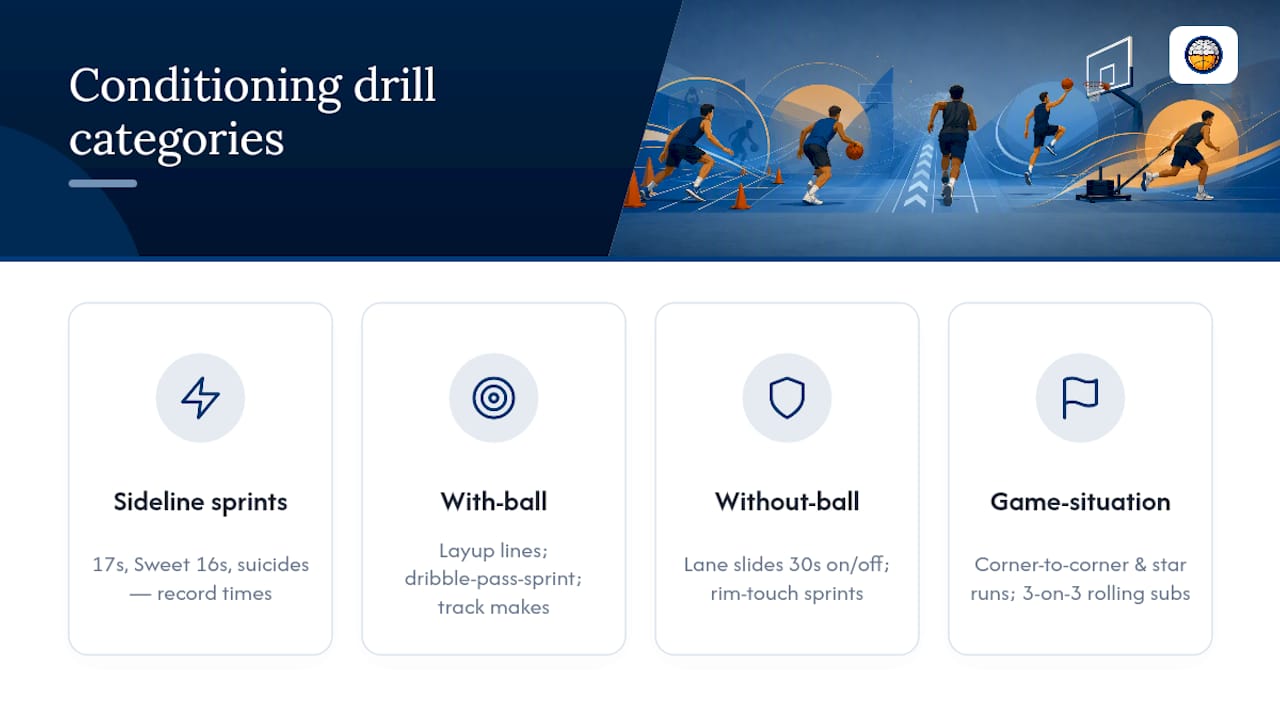
1. Sideline sprint drills. Set up 17s by having players sprint sideline to sideline multiple times within a short time, a benchmark used widely for gauging game-specific endurance. Sweet 16s follow a similar format with multiple reps and a slightly adjusted time cap. Suicides (touch the free throw line, half court, far free throw line, and baseline, sprinting back after each) round out the classic set without specific timing targets. Record every time. A stopwatch and a simple spreadsheet turn these into a season-long tracking tool, not just a one-off gut check.
2. With-ball conditioning drills. Full-court layup lines force players to sprint, catch, finish, and get back in line, which mimics transition offense far better than a straight sprint does. Dribble-to-finish drills add a live defender chasing from behind. The dribble-pass-sprint circuit works in threes: dribble length of court, pass ahead, sprint to fill the lane, repeat for four minutes straight. Measure makes versus attempts as fatigue builds, not just total reps.
3. Without-ball conditioning. Lane slides target lateral endurance directly. Have players slide from block to block for 30 seconds, rest 30 seconds, and repeat for six to eight sets. The tap/rim-touch drill adds vertical demand: players sprint the length of the floor and jump to touch the backboard or rim on both ends, which builds repeat jump power under fatigue. Defensive slide laps around the perimeter of the court work well as a finisher when you want burning legs without ball-handling breakdown.
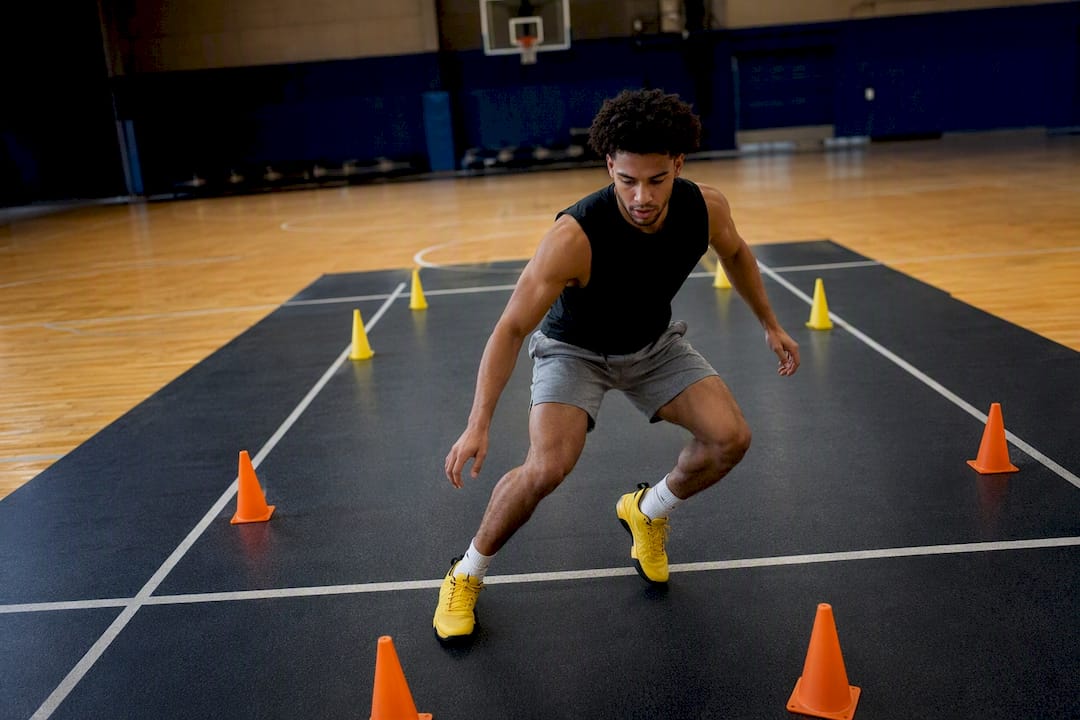
4. Game-situation conditioning. This is where curvilinear sprinting patterns like corner-to-corner runs and star drills earn their place. They mimic the actual arcs players run in games far better than straight lines do. Layer in 3-on-3 rolling subs, where a fresh trio steps in every 90 seconds while the previous group sprints off, and you get live decision-making without ever letting intensity drop. The Hokie drill combines full-court sprints with a shooting component at the end, testing whether players can still hit shots after their legs are dead.
Common mistakes show up fast. Coaches let players walk between reps instead of jogging, they skip recording times so there is no way to measure progress, and they run every drill at max volume regardless of age or season phase. Scale intensity before you scale duration. A tired 12-year-old with bad footwork is building bad habits, not fitness.
Pro Tip: Pair every conditioning benchmark with a skill outcome. Have players shoot two free throws immediately after finishing 17s and log the percentage. That number tells you far more about game readiness than the sprint time alone.
How to Program Conditioning Across a Season
Placement matters as much as the drills themselves. Speed and agility work belongs early in practice with full rest between reps, while conditioning that intentionally induces fatigue should come later, once skill work is already covered.
- Frequency: two to three conditioning-focused sessions per week during preseason, tapering to one during a heavy game schedule.
- Work:rest ratios: roughly 1:3 for pure speed work (10 second sprint, 30 second rest), and 1:1 for repeated-sprint conditioning like defensive slides.
- 4-week progression: increase total sprint volume by roughly 10 to 15% each week while holding top-speed reps steady, a structure drawn from university-level summer conditioning programming.
- Youth scaling: cap high-intensity work at 30 seconds with equal or longer rest, and prioritize mechanics over speed.
Overuse injuries in young athletes climb fast when volume jumps without a plan. Keep a simple log of weekly sprint counts so you can catch a spike before it becomes a hamstring pull.
Three Ready-to-Run Conditioning Sessions
Copy these directly into your next practice plan.
- Youth session (30 minutes). Dynamic warm-up (5 min), lane slides at 20 seconds on/40 off for six sets (8 min), Half-court 17s scaled to half distance (7 min), light shooting game (5 min), static stretch cool-down (5 min).
- High school session (40 minutes). Warm-up with ladder footwork (7 min), dribble-pass-sprint circuit for four rounds (10 min), tap/rim-touch drill for five sets (8 min), Hokie drill combining sprints with shooting under fatigue (10 min), cool-down and free throw log (5 min).
- Varsity session (45 minutes). Warm-up with curvilinear star sprints (8 min), full 17s benchmark test (5 min), 3-on-3 rolling subs for 12 minutes straight, dribble-to-finish under live defense (10 min), cool-down with recorded shooting percentage after fatigue (10 min).
Log every session’s benchmark time and post-fatigue shooting percentage in the same spreadsheet. Comparing week 1 to week 4 tells you whether the conditioning drills are actually improving performance or just wearing players out.
Why These Drills Reflect Real Coaching Practice
These drills follow published coaching frameworks, not guesswork.
- Written by Dejan, whose coaching guides cover practice planning and player development at multiple levels.
- Hoop Mentality builds downloadable playbooks, drill packs, and practice templates coaches use directly on the floor.
- The core idea here, teaching skills under fatigue rather than treating conditioning as separate punishment, comes straight from practitioner coaching guidance, and it shows up in how quickly players execute plays late in close games.
Nutrition and Hydration for Basketball Conditioning
Conditioning work is wasted if a player shows up dehydrated or underfed. Water alone during a two-hour practice with repeated sprint work often isn’t enough once players start sweating heavily; many teams use an electrolyte drink for sessions running past 60 minutes to help replace sodium and potassium lost through sweat.
Timing matters as much as content. A light carbohydrate snack, like a banana or a granola bar, 30 to 60 minutes before a conditioning-heavy practice gives players usable energy without the sluggishness of a full meal. After practice, protein paired with carbohydrates within an hour supports recovery, which matters more during a 4-week conditioning progression when volume is climbing week over week.
Watch for the warning signs of poor hydration during high-intensity drills: cramping during suicides, a noticeable drop-off in sprint times late in a session, or players reporting headaches. Those symptoms usually show up before a player says anything, so build a water break into every session rather than waiting for someone to ask. Youth players especially need reminders since they tend to underreport thirst compared to older athletes. A five-minute water break built into the practice plan costs almost nothing and prevents the kind of fade that makes the back half of a session pointless.
What Each Type of Conditioning Drill Actually Builds
Sideline sprints like 17s and suicides train the anaerobic energy system, the same system players rely on for back-to-back defensive possessions without a stoppage. Repeated short sprints with brief recovery build tolerance to lactic acid buildup, which is why a player’s fourth sprint feels dramatically harder than the first even though the distance never changes.
With-ball drills add a coordination demand on top of the conditioning stimulus. Sprinting while dribbling or finishing at the rim trains the nervous system to keep fine motor control (ball handling, footwork, shot mechanics) intact while the cardiovascular system is under stress. This is the gap most steady-state cardio never closes. A player can run three miles and still fall apart dribbling in the fourth quarter, because running alone doesn’t train the skill-under-fatigue pattern basketball actually demands.
Without-ball lateral work, like lane slides, builds the hip and ankle stability that prevents the kind of lateral collapse that leads to ankle sprains during closeouts. The tap/rim-touch drill trains repeat vertical power, distinct from a single max-effort jump, which matters because rebounding and shot contests happen in bursts, not isolated jumps.
Game-situation conditioning ties it together by forcing decision-making circuits to keep firing under the same fatigue that shows up in the fourth quarter. That’s the piece a stationary bike or a treadmill run can never replicate.
Conditioning Should Teach, Not Punish
I’ve always pushed back on the idea that conditioning exists to make players suffer for missed shots or blown assignments. That framing wastes a training opportunity. When a drill combines sprinting with a decision, a pass read, a shot, a defensive rotation, players are learning to execute under the exact stress they’ll face in the fourth quarter of a real game.
One version of this I’ve seen work well: end a 17s benchmark with two free throws before players catch their breath. The shooting percentage tells the story better than the sprint time ever could.
Pro Tip: Announce the post-sprint shooting number out loud every time. Players compete against their own fatigue-shooting percentage far harder than they compete against a stopwatch.
— Dejan
Turn These Sessions Into a Repeatable Practice Plan
Running these drills consistently is harder than writing them down, which is exactly the gap Hoop Mentality’s resources close. The Basketball Starter Pack For Coaches bundles practice plans, drill sheets, and conditioning progressions into one ready-to-use set, so you’re not rebuilding a session from scratch every week.
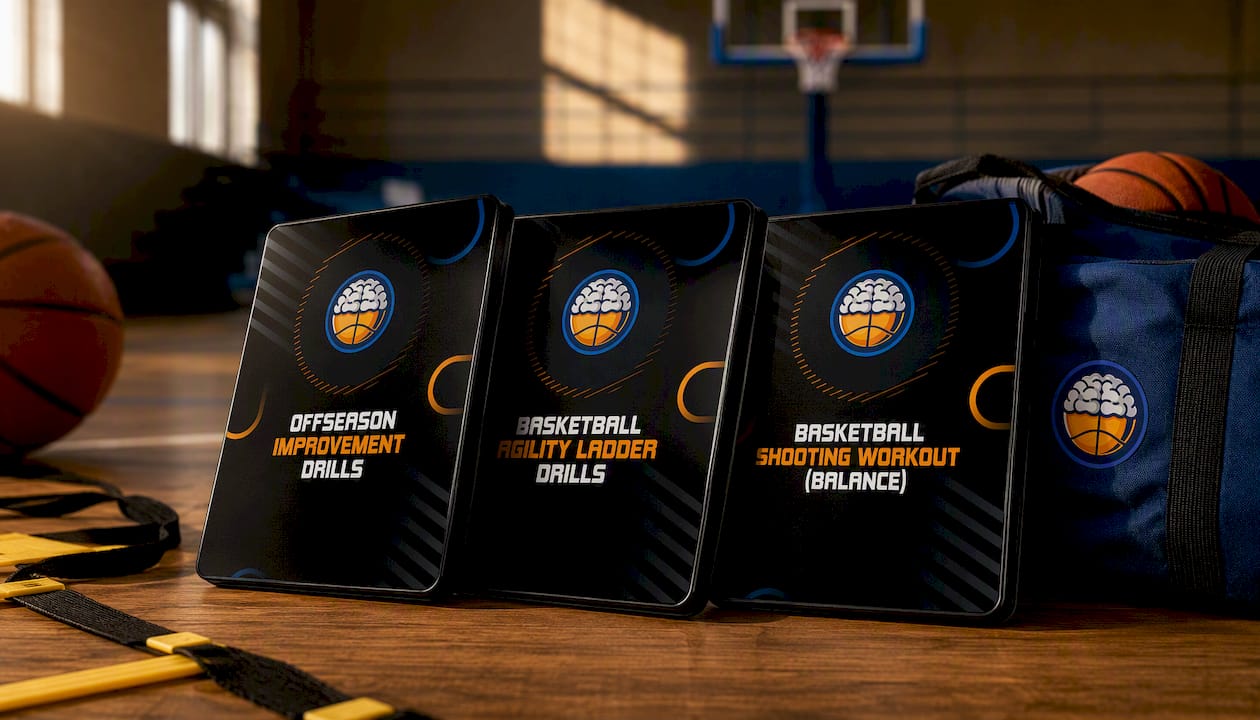
Coaches get editable practice plans with drill timing built in, printable drill sheets for sideline and with-ball conditioning, and session templates that scale from youth to varsity without a redesign. Pair it with the Basketball Practice Plan Template to slot the three sample sessions above directly into your weekly schedule with the timing already mapped out. Download the starter pack, plug in this week’s conditioning block, and hand your assistants a plan that runs itself.
Sources
FAQ
What Is Sweet 16 Conditioning?
Sweet 16s are a sideline sprint benchmark where players run sideline to sideline 16 times within a set time cap, used to measure game-specific speed endurance similar to 17s.
How Do NBA Players Have Such Good Conditioning?
NBA-level conditioning comes from year-round training that blends sprint-based, change-of-direction, and plyometric work rather than long slow distance running, plus in-season maintenance sessions built around game schedules.
How Often Should Teams Run Conditioning Drills?
Two to three focused sessions per week during preseason works well, tapering to one per week once game schedules get heavy.
Can Conditioning Drills Improve Shooting Under Pressure?
Yes. Pairing a sprint benchmark like 17s with immediate free throws trains players to execute shooting mechanics while fatigued, which transfers directly to late-game situations.
What’s the Easiest Way to Organize These Sessions?
Editable templates like the Basketball Practice Plan Template let coaches drop these drills into a weekly schedule without rebuilding session timing from scratch.
Recommended
- Why use conditioning drills? Boost basketball performance – Hoop Mentality
- How to Create Conditioning Drills That Boost Basketball Performance – Hoop Mentality
- 7 Essential Basketball Cardio Drills for Youth Coaches – Hoop Mentality
- Basketball Sprinting Drills for Players and Coaches – Hoop Mentality