

Six drills cover almost everything a team needs: full-court linear sprints, 17s, suicides, the T-drill, defensive slide circuits, and full-court layup conditioning. Each targets a different piece of game speed. Straight-line sprints build acceleration and top-end speed, while cutting drills like the T-drill build change-of-direction, and neither transfers fully to the other — so both belong in your plan.
- Full-court and half-court linear sprints
- 17s (sideline-to-sideline endurance test)
- Suicides and modified suicides
- T-drill and pro-lane agility patterns
- Defensive slide circuits
- Full-court layup conditioning with skill under fatigue
What follows is the full breakdown: sets, reps, work:rest ratios, progressions, and the benchmarks you can use to track whether any of it is working.
Key Takeaways
Basketball speed improves fastest when short, max-effort sprints are trained separately from longer conditioning intervals, and both are paired with skill actions under fatigue.
| Point | Details |
|---|---|
| Train speed and conditioning separately | Short max-effort sprints build speed; longer intervals with shorter rest build conditioning. |
| Match work:rest to the goal | Use roughly 1:3 for speed work and shift toward 1:2 for conditioning as fitness improves. |
| Add skill under fatigue | Pair sprints with layups, passes, or free throws so players train decisions while tired. |
| Retest every 4-8 weeks | Use 17s, full-court sprint time, and 10m splits under identical conditions to track real progress. |
| Use ready-made programming | Hoop Mentality’s agility ladder and offseason drill packs turn these progressions into plug-and-play sessions. |
Table of Contents
- Shortlist: The 6 Go-To Basketball Sprinting Drills
- Warm-Up, Safety, and Work:Rest Rules That Actually Matter
- Drill-By-Drill Instructions and Progressions
- Sample Weekly Sessions: In-Season vs Offseason
- How to Measure Real Progress
- Coach Conditioning Like It’s Teaching, Not Punishment
- Ready-Made Drill Packs That Save You Planning Time
- Sources
- FAQ
Shortlist: The 6 Go-To Basketball Sprinting Drills
Every team needs a small rotation of drills, not a new one every week. Here’s the core six and what each one is actually training.
- Full-court sprints — pure acceleration and top speed, no equipment needed.
- 17s — sideline-to-sideline repeated sprints that test and build game-speed endurance.
- Suicides / modified suicides — court-line interval sprints for conditioning and deceleration control.
- T-drill / pro-lane pattern — cone-based lateral quickness and change-of-direction (needs 4 cones).
- Agility ladder drills — footwork speed and coordination (needs a ladder).
- Defensive slide circuit — lateral quickness paired with stance and reaction work.
Use full-court sprints and the ladder when the session goal is pure speed. Use 17s, suicides, and the slide circuit when the goal is conditioning. Save with-ball variants for when you want players making decisions while gassed.
Warm-Up, Safety, and Work:Rest Rules That Actually Matter
Skip the static stretch circle. A better on-court warm-up runs 8 to 10 minutes: dynamic mobility (leg swings, walking lunges, hip openers), activation work (lateral band walks or bodyweight squats), then two or three short build-up sprints at increasing effort. This primes the nervous system without pre-fatiguing the legs before real work starts.
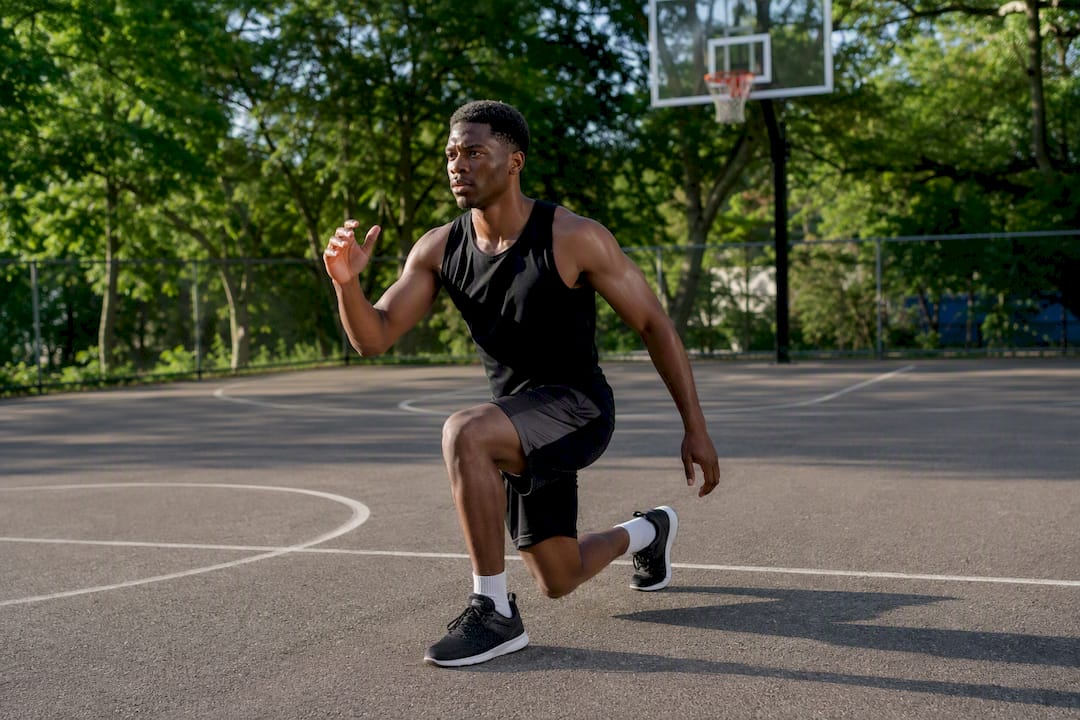
Court surfaces raise their own risks. Check shoe traction before ladder work, since a sweaty or dusty floor turns quick footwork drills into a slip hazard. For younger players, cap ladder and cutting volume and prioritize control over speed until movement quality is solid.
Work:rest ratio depends on what you’re training. For pure speed and neuromuscular quality, use roughly 1:3, since short bursts followed by full recovery keeps every rep close to maximum effort. For conditioning, start around 1:3 early in the season and shift toward 1:2 as players adapt, tightening the ratio to challenge anaerobic capacity as fitness improves.
Lengthen it before adding volume.*
Drill-By-Drill Instructions and Progressions
Here’s how to run each drill, how many reps to prescribe, and how to progress it over a training block.
Progression follows a simple pattern: start with the movement alone at moderate speed, add max effort once form holds, then layer in a ball or a finish. The pro-lane pattern and agility ladder both need dry, gripped floors to avoid slipping, especially with younger athletes still building body control.
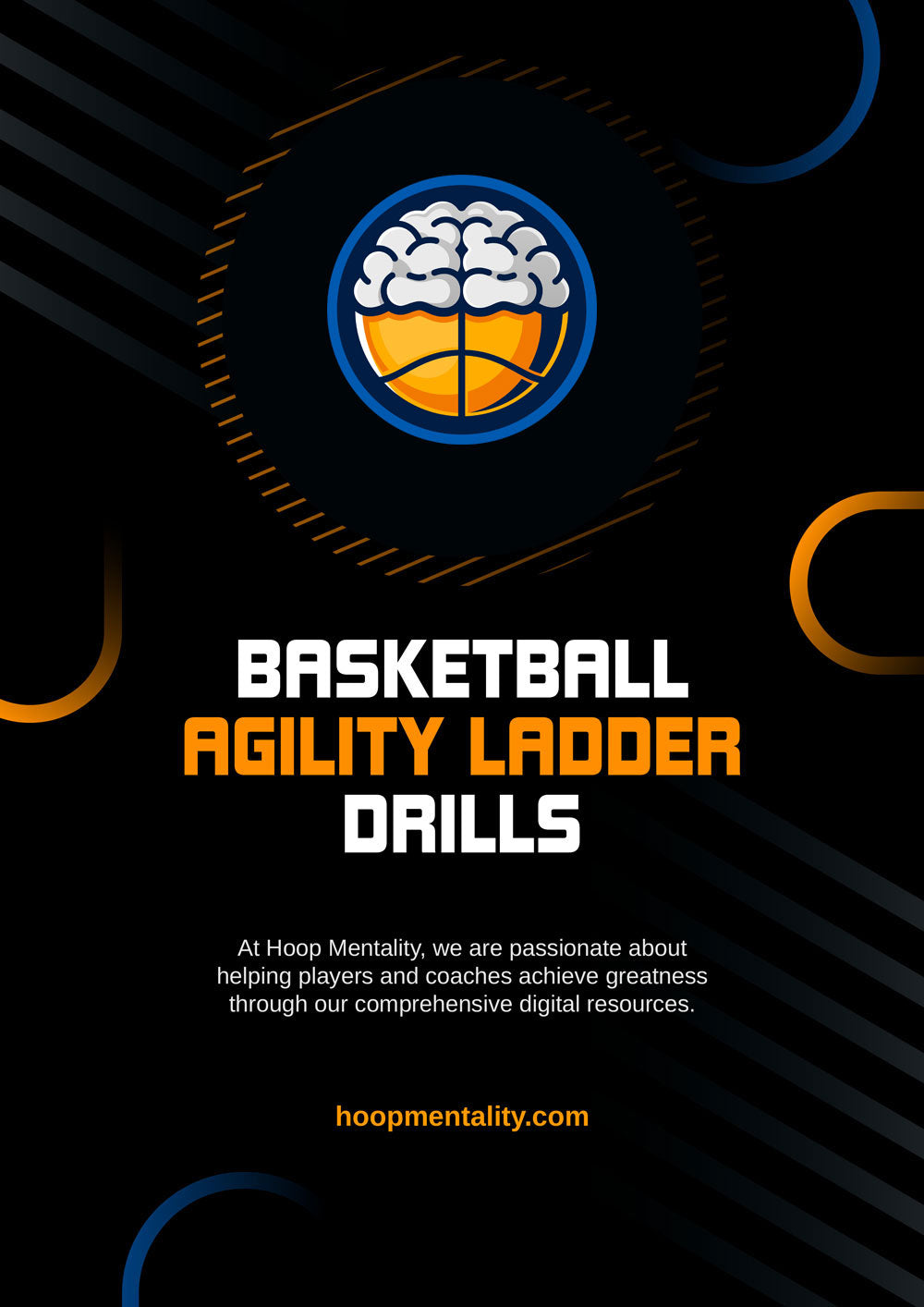
For advanced players, add a shooting or passing action to the end of any sprint drill. Practicing free throws right after high-intensity shuttle sprints teaches players to shoot with tired legs, which is closer to what a fourth quarter actually feels like. With limited court time, cut set count before cutting drill variety. Two quality drills beat five rushed ones.
Sample Weekly Sessions: In-Season vs Offseason
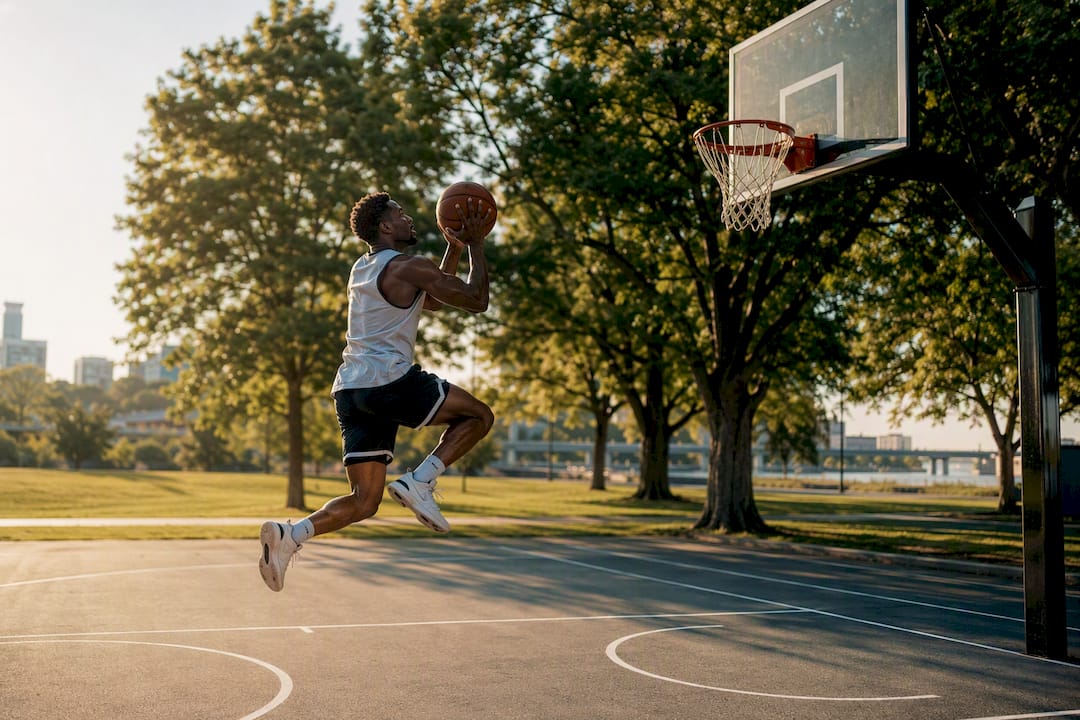
Placement matters as much as the drills themselves. Speed work belongs early, right after the warm-up, when the nervous system is fresh enough for true max-effort reps. Conditioning goes at the end, when you want players executing skills while tired.
In-season microcycle (3 practices/week):
- Monday: Warm-up, full-court sprints (4 reps), skill work, defensive slide circuit at close
- Wednesday: Warm-up, agility ladder + T-drill, scrimmage, light suicides
- Friday (pre-game): Warm-up, 2-3 short sprints only, no heavy conditioning
Offseason microcycle (4-5 sessions/week):
| Day | Focus | Drills |
|---|---|---|
| Day 1 | Speed | Full-court sprints, resisted starts |
| Day 2 | Agility | T-drill, ladder, pro-lane |
| Day 3 | Conditioning | 17s, suicides, layup conditioning |
| Day 4 | Skill under fatigue | Sprint + shooting circuits |
Track total sprint volume weekly and deload (cut volume by roughly a third) every fourth week or whenever sprint times start slipping across sessions, not just within one. A resource like Hoop Mentality’s offseason improvement drills lays out a full progressive block if you’d rather not build one from scratch.
How to Measure Real Progress
Test the same way every time or the numbers mean nothing. The 17s test, full-court sprint time, and 10-meter split times are the three most useful benchmarks for basketball speed specifically, and each is simple enough to run with a stopwatch and a assistant coach.
- 17s baseline-to-baseline: many programs use a target range of times for high school and college-age players, though standards vary by level and should be treated flexibly as a range rather than a fixed cutoff.
- Full-court sprint: time baseline to baseline, retest every 4-8 weeks under identical conditions.
- 10m/30m splits: isolates acceleration from top-end speed, useful for spotting which quality needs more work.
Statistic Callout: Eight weeks of structured sprint training measurably improves max-speed phase output (20 to 40 meters), while resisted sprint work with light loading around 5 kg improves the first 10 meters of acceleration specifically. Different training tools fix different problems.
Record test day, surface, footwear, and time of day. A phone stopwatch or a basic timing app works fine. Consistency in conditions matters more than the app you use.
Coach Conditioning Like It’s Teaching, Not Punishment
The biggest mistake in basketball conditioning isn’t volume. It’s framing. Running players for missed defensive assignments teaches nothing except resentment. Pairing sprint work with a skill task, like a finish, a read, or a free throw, teaches players to execute when tired, which is the actual game skill you’re after.
Pro Tip: Grade the finish, not just the sprint. A player who beats the clock but bricks the layup hasn’t passed the drill.
Keep buy-in high with three habits: explain the “why” behind each drill before running it, track and post times so players see progress, and rotate in fresh drill variations monthly. Short, explosive reps build speed; longer intervals with shorter rest build conditioning — know which one you’re coaching that day.
A Coach’s Note on Running These Drills
Teams that treat conditioning as skill work, not a penalty, buy in faster and hold form longer under fatigue. Start with two drills, run them consistently, and let the times do the convincing.
Ready-Made Drill Packs That Save You Planning Time
Building out sprint and conditioning progressions from scratch eats hours you don’t have between practices and film. Hoop Mentality’s Basketball Agility Ladder Drills pack gives you the ladder progressions, coaching cues, and session structures covered above, ready to print and run.
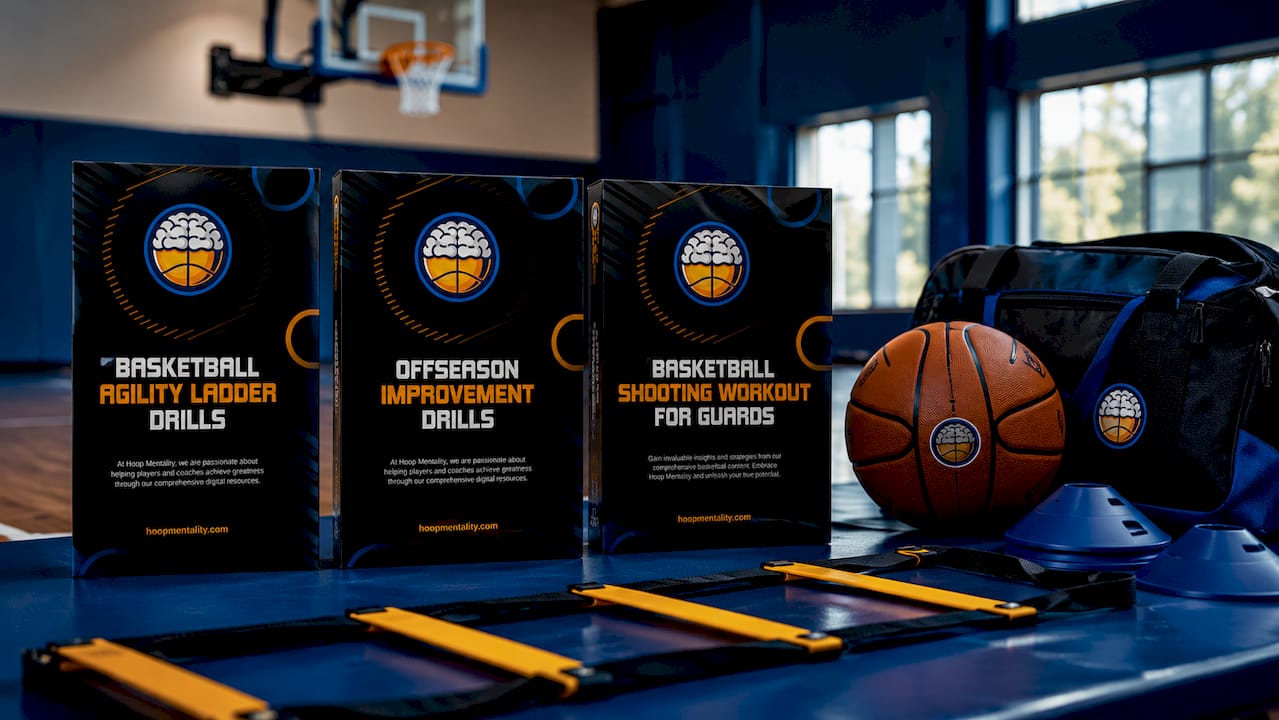
If you’re building a longer training block, the Basketball Offseason Improvement Drills bundle lays out a full progressive plan for speed, conditioning, and strength across weeks, not just single sessions. Guards specifically benefit from pairing conditioning with finishing work, and the Basketball Shooting Workout For Guards pack pairs footwork and conditioning with catch-and-shoot reps so players train shooting under the exact fatigue conditions described above. All three are downloadable PDFs and videos you can hand to an assistant coach today and start using at your next practice.
Sources
- Speed and Agility Training for Basketball - NASM Blog
- Basketball Speed Training - Lee Taft Athletic Consulting
- The fatigue free-throws drill - USA Basketball
FAQ
How Do I Sprint Faster in Basketball?
Focus on short, max-effort sprints with full recovery between reps, drive your arms hard in the first five steps, and train acceleration and top speed as separate qualities from cutting and lateral quickness.
What Are 17s Sprints?
17s are a sideline-to-sideline conditioning drill where a player touches the line 17 times against a target time, commonly used as both a training drill and a repeatable fitness test.
What Is the 5-on-5 Drill?
A 5-on-5 drill is a full-team scrimmage format used to apply conditioning and skill work in live game conditions, rather than a standalone sprint drill.
How Often Should Teams Run Sprinting Drills?
Two to three sessions per week is enough for in-season maintenance, while offseason blocks can run speed and conditioning work four to five days per week with planned deload weeks.
Do Agility Ladder Drills Improve Game Speed?
Ladder drills improve footwork coordination and quickness, but they should be paired with linear sprints and change-of-direction work like the T-drill, since agility and straight-line speed transfer only partially to each other.