

Game tempo in basketball is more than just a number on a stat sheet. For high school coaches across the United States, mastering tempo means unlocking the hidden rhythms that shape each quarter and influence every outcome. From possession frequency to momentum swings, the ability to read and control pace can turn close games into clear wins. This guide breaks down the elements that define tempo and provides practical insights for building smarter, more adaptive strategies.
Table of Contents
- Defining Basketball Game Tempo And Pace
- Types Of Tempo: Fast, Slow, And Balanced Styles
- Key Factors That Influence Game Tempo
- Strategic Tools For Tempo Control And Management
- Common Pitfalls And Effective Adjustments
Key Takeaways
| Point | Details |
|---|---|
| Understanding Tempo is Crucial | Game tempo influences a team’s strategy and flow, impacting possession, shot selection, and scoring opportunities. |
| Adaptability is Key | Teams must develop the ability to transition between fast, slow, and balanced tempos to exploit opponent weaknesses effectively. |
| Player Conditioning Matters | Superior fitness levels allow teams to maintain higher tempos, creating consistent pressure on opponents. |
| Strategic Tools Enhance Control | Effective substitution strategies, timeouts, and tailored defensive and offensive schemes can significantly influence game tempo. |
Defining Basketball Game Tempo and Pace
Basketball game tempo represents the speed and rhythm at which a team moves the ball, executes plays, and creates scoring opportunities during a competition. Understanding tempo goes far beyond simple numerical metrics - it encompasses the strategic flow and energy of gameplay. Strategic pace manipulation involves carefully controlling the number of possessions, shot selection, and overall game momentum.
Modern basketball analytics break tempo into several critical components. Possession frequency measures how quickly teams transition between offensive and defensive states. Shot clock management determines how aggressively teams pursue scoring opportunities within their allocated time. Transition speed highlights a team’s ability to rapidly move from defense to offense, creating unpredictable scoring chances. These elements combine to create a dynamic picture of a team’s strategic approach.
Researchers have developed sophisticated methods to quantify game tempo. Machine learning techniques now segment possessions into high-frequency, normal-frequency, and low-frequency tempo segments, providing coaches with granular insights into gameplay rhythms. By analyzing these detailed tempo variations, coaches can develop more nuanced strategies that adapt to changing game conditions and opponent tactics.
Pro tip: Track your team’s average possessions per quarter and identify specific game situations where tempo shifts most dramatically to develop more responsive strategic approaches.
Types of Tempo: Fast, Slow, and Balanced Styles
Basketball teams develop distinct tempo styles that fundamentally shape their strategic approach to gameplay. Fast-paced tempo characterizes aggressive, high-energy teams that prioritize quick transitions, rapid ball movement, and maximizing possession opportunities. These teams typically aim to overwhelm opponents through speed, creating numerous scoring chances before defensive alignments can stabilize.

Conversely, slow-paced tempo represents a methodical, calculated approach where teams deliberately control game rhythm, limit total possessions, and focus on precise offensive execution. Such strategies often involve deliberate shot selection, extended offensive sets, and tactical ball control designed to minimize opponent scoring opportunities. Euroleague pace analysis reveals how these tempo variations correlate directly with offensive efficiency and strategic outcomes.
The balanced tempo emerges as a nuanced middle ground, allowing teams to dynamically adapt their pace based on game situations, opponent strategies, and player strengths. Balanced tempo teams maintain flexibility, seamlessly transitioning between fast and slow approaches. This adaptability enables them to exploit defensive weaknesses, manage game clock effectively, and maintain strategic unpredictability throughout competition.
Pro tip: Develop player conditioning and practice drills that enable smooth transitions between different tempo styles, allowing your team to effectively switch strategies during gameplay.
Here’s a comparison of basketball tempo styles and their influence on game strategy:
| Tempo Style | Key Characteristics | Impact on Opponent | Best Used When |
|---|---|---|---|
| Fast-Paced | Quick transitions, aggressive | Overwhelms defenses | Opponent lacks stamina |
| Slow-Paced | Methodical, controlled sets | Limits possession, frustrates | Need to preserve energy |
| Balanced | Flexible, adaptive | Exploits weaknesses, unpredictable | Game demands versatility |
Key Factors That Influence Game Tempo
Multiple interconnected factors dynamically shape a basketball team’s game tempo, creating a complex strategic landscape. Player fitness emerges as a critical determinant, with athletes’ conditioning directly impacting their ability to maintain high-intensity play throughout the game. Teams with superior cardiovascular endurance can sustain faster tempos, creating persistent pressure on opponents and generating more scoring opportunities.
Situational game dynamics reveal that coaching strategies profoundly influence tempo control. Tactical decisions such as player substitutions, defensive formations, and offensive set designs can dramatically alter game rhythm. Experienced coaches understand how to manipulate tempo by selecting specific player combinations, adjusting defensive pressure, and strategically managing game clock usage.
Psychological and momentum factors also play substantial roles in tempo management. Momentum perception significantly impacts a team’s ability to control game pace, with point differentials and player confidence creating cascading effects on performance. Teams that effectively read and respond to these psychological shifts can more successfully adapt their tempo, exploiting opponent vulnerabilities and maintaining strategic flexibility.
Pro tip: Develop a comprehensive tempo adaptation strategy that includes specific player conditioning drills, psychological preparation techniques, and flexible tactical approaches to seamlessly shift game rhythm.
Strategic Tools for Tempo Control and Management
Coaches possess several strategic tools to effectively manage and control game tempo, transforming rhythm into a competitive advantage. Substitution strategies represent a primary mechanism for maintaining desired pace, allowing teams to inject fresh energy, adjust playing style, and disrupt opponent momentum through calculated player rotations.
Timeouts emerge as a critical tactical instrument in tempo management. Strategic timeout deployment offers coaches a powerful method to interrupt opponent rhythm, reset team strategy, and potentially reverse competitive momentum. Skilled coaches understand that timeouts are not merely rest periods, but strategic interventions designed to control game tempo and psychological dynamics.
Advanced tempo control also involves sophisticated defensive and offensive scheming. This includes implementing full-court press strategies to accelerate game pace, utilizing zone defenses to slow opponent progression, and designing offensive sets that either compress or expand time usage. Coaches can manipulate possession length, shot selection, and transitional speed to create desired tempo variations that exploit opponent weaknesses and align with team strengths.
Pro tip: Develop a comprehensive tempo management playbook that outlines specific player combinations, timeout protocols, and strategic interventions for different game scenarios to maximize your team’s adaptive capabilities.
Below is a summary of strategic tools for effective tempo management in basketball:
| Tool | Primary Purpose | Typical Game Effects |
|---|---|---|
| Substitution Rotations | Refresh energy, adjust style | Maintains chosen tempo |
| Timeouts | Disrupt opponent rhythm | Resets momentum, refocuses team |
| Defensive Schemes | Control pace, pressure ball | Accelerates or slows game |
| Offensive Sets | Manage shot clock, create opportunities | Compresses or expands possessions |
Common Pitfalls and Effective Adjustments
Mismanaging game tempo can critically undermine a basketball team’s performance, turning potentially winnable games into frustrating defeats. Overaggressive tempo represents a primary strategic pitfall, where coaches push teams into unsustainable playing speeds that lead to increased turnovers, defensive breakdowns, and player exhaustion. High school teams frequently struggle with maintaining consistent energy levels when attempting to play at an artificially accelerated pace.
Game momentum challenges highlight the importance of situational awareness and adaptive strategy. Coaches often make critical errors by failing to recognize when tempo adjustments are necessary. These mistakes include rigidly adhering to a predetermined game plan, neglecting player fatigue signals, and missing opportunities to disrupt opponent rhythm through strategic tempo modifications.
Effective tempo management requires nuanced understanding of team capabilities and opponent vulnerabilities. Successful coaches develop flexible approaches that allow seamless transitions between different playing speeds, using substitutions, defensive schemes, and strategic timeouts to control game flow. This adaptability enables teams to exploit opponent weaknesses, manage player energy, and maintain competitive momentum throughout different game stages.
Pro tip: Create a dynamic tempo adjustment matrix during practice sessions that maps specific player combinations, defensive strategies, and situational responses to help your team smoothly transition between different game rhythms.
Master Basketball Game Tempo to Win More High School Matches
Understanding how to control basketball game tempo is essential for any coach aiming to turn close contests into victories. This article highlights the challenges of managing pace, such as avoiding overaggressive tempo and adapting strategies based on player fitness and psychological momentum. Coaches want clear tools to implement flexible tempo adjustments that keep their team energized and unpredictable.
Hoop Mentality supports your coaching journey with a comprehensive collection of resources tailored to these exact needs. Explore our Basketball Drills designed to enhance player conditioning and transition fluidly between fast and slow tempo. Use our Basketball Templates to create adaptable practice plans and manage substitutions that optimize your team’s energy. These practical tools save you time and deliver clarity so you can focus on developing strategies that put you ahead.

Ready to take control of your team’s tempo and start winning more games today Visit Hoop Mentality now for expert coaching solutions crafted to help you lead with confidence and achieve lasting success.
Frequently Asked Questions
What is basketball game tempo and why is it important?
Basketball game tempo refers to the speed and rhythm at which a team plays, impacting their offensive execution and defensive performance. Understanding tempo helps teams create scoring opportunities and control game dynamics, which can influence wins.
How can a team’s tempo affect their chances of winning?
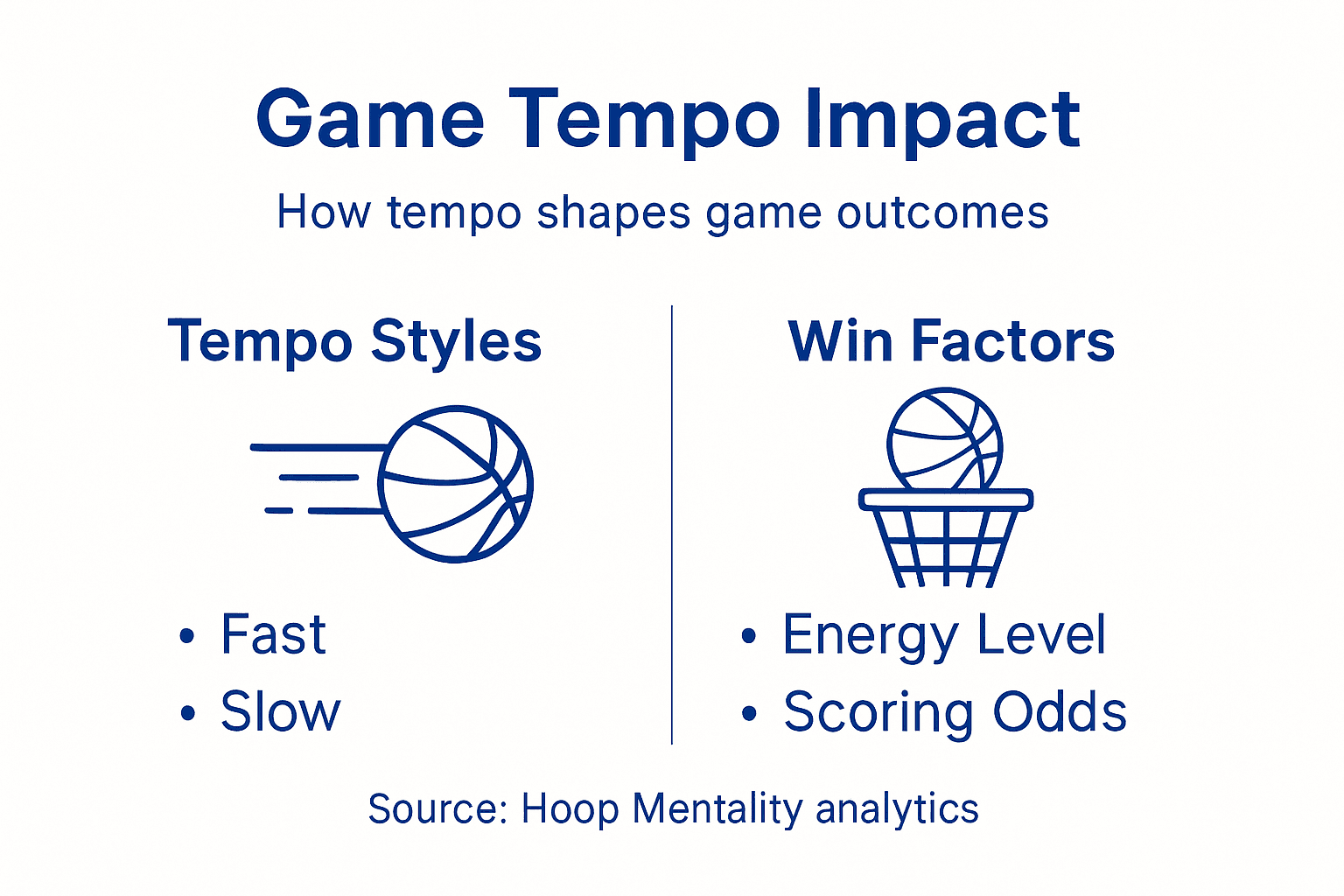
A team’s tempo can affect their scoring ability, energy levels, and defensive effectiveness. Fast-paced teams may overwhelm opponents, while slow-paced teams can frustrate them, leading to strategic advantages that increase win potential.
What strategic tools can coaches use to manage game tempo?
Coaches can utilize substitution strategies, timeouts, and advanced defensive or offensive schemes to manage tempo. These tools help to maintain the desired pace, adapt to in-game situations, and exploit opponent weaknesses.
How do player fitness and conditioning influence a team’s tempo?
Player fitness significantly impacts a team’s ability to maintain a desired tempo. Teams with better conditioning can sustain higher energy levels, allowing them to play at a faster pace and generate more scoring opportunities, thereby increasing their chances of winning.