

Most American youth basketball teams achieve stronger results when coaches build around clearly defined values and standards. As you enter your fourth season courtside, refining your coaching philosophy can dramatically shape team chemistry and player growth. Backed by research showing that core principles impact athlete motivation and development, this guide delivers practical approaches to help you create team alignment, set expectations, and communicate effectively for competitive improvement.
Table of Contents
- Step 1: Define Core Values For Your Coaching Approach
- Step 2: Establish Team Standards And Expectations
- Step 3: Implement Communication Strategies With Players
- Step 4: Apply Philosophy To Practice Planning And Games
- Step 5: Evaluate And Refine Your Coaching Results
Quick Summary
| Key Insight | Explanation |
|---|---|
| 1. Define Core Values Clearly | Establish fundamental principles to shape team culture and guide player interactions. |
| 2. Set Comprehensive Standards | Develop clear, measurable expectations for all aspects of team behavior and performance. |
| 3. Implement Effective Communication | Use diverse communication methods to connect with players and enhance their understanding. |
| 4. Integrate Philosophy into Practices | Translate core values into actionable practice drills and game strategies for better team cohesion. |
| 5. Regularly Evaluate Coaching | Assess your coaching effectiveness through various metrics and adjust strategies for improvement. |
Step 1: Define core values for your coaching approach
Defining your core values as a basketball coach establishes the foundation for team culture and player development. Your coaching philosophy serves as a roadmap that guides player interactions, practice strategies, and competitive approaches.
Start by identifying the fundamental principles that matter most in your basketball program. Research demonstrates that effective coaching values significantly influence athlete experiences. Consider core values such as teamwork, personal growth, discipline, respect, and continuous improvement. These principles should reflect both athletic performance and character development.
Translate these abstract values into concrete behaviors and expectations. For example, if teamwork is a core value, demonstrate this through practice drills that require collaborative problem solving, communication, and mutual support. Basketball coaching research highlights the importance of empowering athletes through transparent coaching methods that build trust and motivation.
Pro tip: Write down your core values and share them clearly with your team to create alignment and mutual understanding.
Here’s a comparison of common basketball coaching core values and how they guide team behaviors:
| Core Value | What It Promotes | Practical Example |
|---|---|---|
| Teamwork | Collaboration & support | Group problem-solving drills |
| Discipline | Consistent effort & focus | On-time practice attendance |
| Respect | Positive interactions | Encouraging fair play |
| Personal Growth | Continuous improvement | Setting individual goals |
| Accountability | Ownership of actions | Player-led feedback sessions |
Step 2: Establish team standards and expectations
Creating clear team standards and expectations is crucial for building a successful basketball program. These guidelines serve as the blueprint for team behavior, performance, and collective goals, transforming individual players into a unified squad.
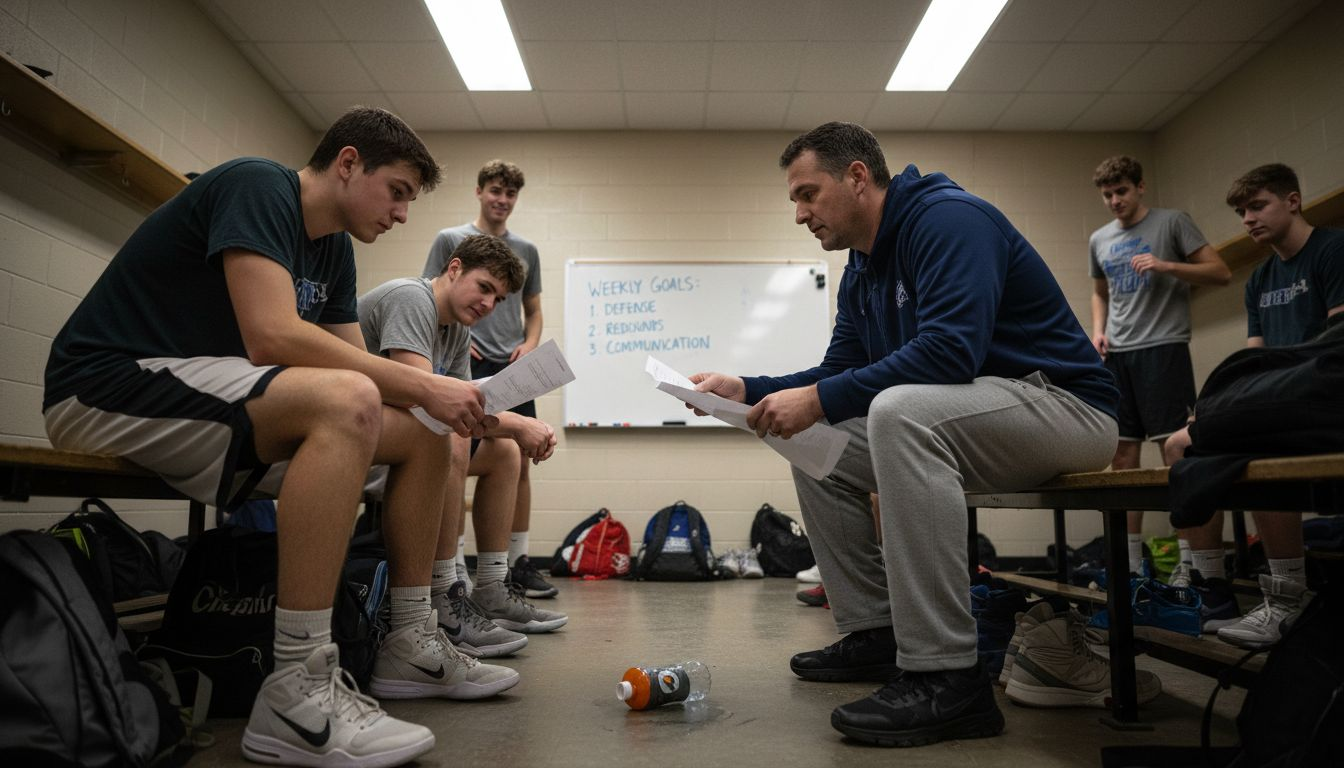
Start by developing comprehensive standards that cover multiple dimensions of team life. Basketball team dynamics require consistent expectations in areas such as practice attendance, effort level, communication, academic performance, and personal conduct. Break these standards into specific measurable behaviors. For instance, practice attendance might mean arriving 15 minutes early, being fully dressed and prepared, and demonstrating 100% mental and physical engagement during training sessions.
Communicate these standards transparently and consistently. Hold a team meeting where you clearly articulate each expectation, explaining not just the rule but the underlying principle. Involve team leaders and senior players in this process to reinforce accountability and create a sense of collective ownership. Ensure every player understands that these standards are non negotiable and apply equally to everyone regardless of skill level or position on the team.
Pro tip: Create a written team standards document that players sign at the beginning of the season, making expectations formal and mutually understood.
Step 3: Implement communication strategies with players
Effective communication is the cornerstone of successful basketball coaching. Your ability to connect with players determines team performance, individual motivation, and overall team chemistry. Communication styles significantly impact coaching effectiveness and require intentional strategy and practice.
Develop a multifaceted communication approach that includes verbal and non verbal methods. During practices and games, use clear concise language that players can quickly understand and act upon. Learn each player’s communication preference some respond better to direct instruction while others need more encouragement and detailed explanation. Create individual communication plans that recognize each player’s unique learning and motivation style. This might mean using different tones video analysis technical breakdown or motivational language depending on the specific player and situation.
Establish consistent communication channels that extend beyond the court. Schedule regular one on one meetings with players to discuss their individual progress goals and challenges. Implement team communication platforms such as group messaging apps or team meetings where players can openly share concerns and feedback. By creating multiple communication touchpoints you demonstrate that you value player input and are committed to their holistic development.
Pro tip: Practice active listening during player interactions by maintaining eye contact asking clarifying questions and reflecting back what you hear to ensure mutual understanding.
Step 4: Apply philosophy to practice planning and games
Transforming your coaching philosophy from abstract principles into concrete practice requires strategic and intentional planning. Coaching philosophy guides practice design and team development by providing a consistent framework for every training session and game strategy.
Break down your core values into specific actionable components within your practice structure. If teamwork is a primary value create drills that demand collaborative problem solving and communication. Design scenarios where players must work together to overcome challenges rather than focusing exclusively on individual skill development. This approach ensures that your philosophical principles are not just words but lived experiences for your team. Simulate game situations that reflect your core values such as resilience adaptability and collective accountability.
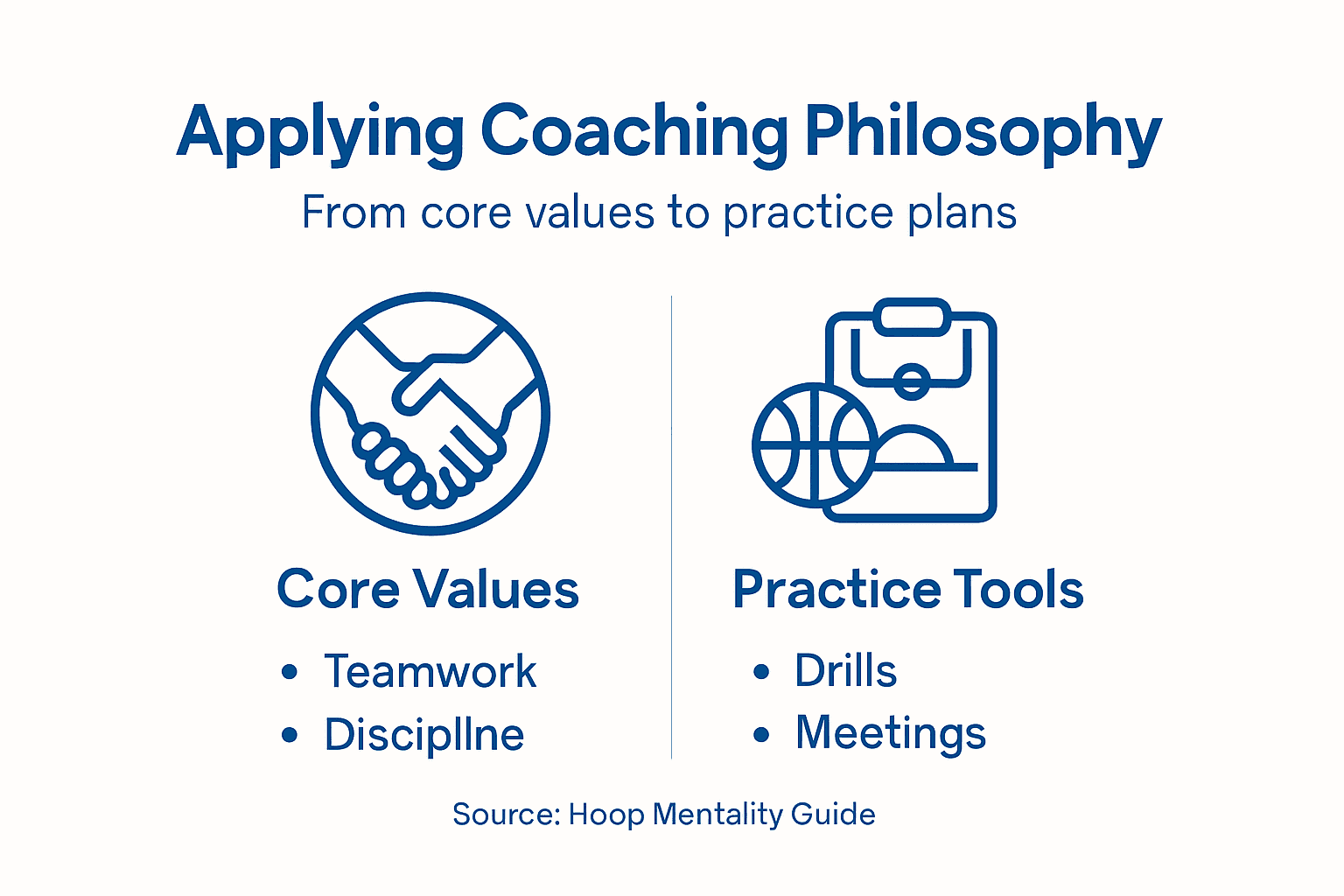
Structure your practice plans with intentional progression that mirrors your coaching philosophy. Each training session should have clear objectives that connect directly to your broader team vision. Select drills and conditioning exercises that not only improve physical skills but also reinforce the mental and emotional attributes you want to develop. Your practice timeline should balance technical skill building tactical understanding and psychological preparation ensuring that players are developing holistically as athletes and individuals.
Pro tip: Document your practice plans with detailed notes connecting each activity to your specific philosophical principles to maintain consistency and intentionality.
Step 5: Evaluate and refine your coaching results
Evaluating your coaching performance is a critical process that transforms good coaches into exceptional leaders. Continuous coaching evaluation supports team improvement by providing objective insights into your strategies and player development.
Develop a comprehensive assessment framework that goes beyond win loss records. Analyze multiple dimensions including player skill progression team cohesion individual athlete motivation and tactical understanding. Create specific measurable indicators for each aspect of your coaching philosophy. For instance if player development is a core value track metrics such as individual skill improvements confidence levels and tactical awareness. Use both quantitative data video analysis and qualitative feedback from players and assistant coaches to build a holistic evaluation approach.
Implement a regular review cycle where you critically examine your coaching methods. Schedule quarterly reflective sessions to dissect practice footage game performance and player feedback. Be willing to adjust your strategies when data suggests alternative approaches. Remember that refinement is not about criticism but continuous growth. Your ability to adapt and evolve demonstrates the most powerful leadership trait sustainable improvement.
Pro tip: Maintain a coaching journal documenting your observations insights and potential improvements to track your professional development systematically.
This table summarizes key methods for evaluating and refining your basketball coaching results:
| Evaluation Method | What It Assesses | Frequency |
|---|---|---|
| Skill Progress Metrics | Player technical development | Weekly |
| Team Cohesion Review | Group collaboration and chemistry | Monthly |
| Video Performance Analysis | Tactical decision-making | After each game |
| Player Feedback | Motivation and satisfaction | Quarterly or as needed |
| Coach Self-Reflection | Leadership and growth | After major events |
Elevate Your Coaching Philosophy with Proven Tools from Hoop Mentality
Building a winning basketball coaching philosophy involves clear values, consistent communication, and structured practice plans. If you want to move beyond theory and put your coaching philosophy into action Hoop Mentality offers essential resources to support every step of your journey. Struggling with practice planning or finding drills that reinforce teamwork and discipline? Our comprehensive Basketball Drills and Basketball Guides – Hoop Mentality are built to help coaches like you develop focused, purposeful training sessions that align perfectly with your core values.

Take control of your team’s development today by visiting Hoop Mentality and explore professional coaching resources designed to save you time, improve communication, and sharpen your leadership. Whether you aim to boost player accountability or cultivate team cohesion Hoop Mentality provides practical solutions that turn your coaching philosophy into winning results. Start transforming your approach now and create the mindset your team needs to excel.
Frequently Asked Questions
What are the key components of a basketball coaching philosophy?
Your basketball coaching philosophy should include core values like teamwork, discipline, respect, personal growth, and accountability. Identify these principles and ensure they guide every interaction and strategy within your program.
How can I establish clear team standards and expectations?
Create detailed guidelines covering practice attendance, effort levels, communication, and behavior. Involve your team in discussions to ensure they understand and agree to these standards, promoting collective ownership and accountability.
What effective communication strategies can enhance my coaching?
Utilize both verbal and non-verbal communication methods tailored to each player’s preferences. Regular one-on-one meetings and team communication platforms can help you connect deeply and address individual challenges effectively.
How can I translate my coaching philosophy into practice planning and game strategies?
Incorporate your core values into every practice session by designing drills that promote teamwork and resilience. Ensure each activity aligns with your broader coaching philosophy, allowing your players to experience these values in action.
What methods can I use to evaluate and refine my coaching results?
Develop a comprehensive assessment framework that looks at player performance, team cohesion, and feedback. Schedule regular review sessions to analyze data and make necessary adjustments to your coaching strategies for continuous improvement.
Why is documenting my coaching practices important?
Keeping a coaching journal helps you track observations and insights systematically. This documentation enables you to reflect on your growth and refine your coaching strategies effectively over time.