

Every practice brings a new challenge when trying to balance individual player growth and building a united team. Defining a clear and effective basketball coaching philosophy is often the missing piece that transforms effort into meaningful progress. For American high school coaches, understanding the core principles behind a strong coaching philosophy can provide a practical roadmap for strengthening communication, developing player skills, and shaping lasting team culture. Discover how a well-crafted philosophy serves as your foundation for real improvement.
Table of Contents
- Defining Basketball Coaching Philosophy Principles
- Types of Coaching Philosophies in Basketball
- Core Values That Guide Team Decisions
- Impact of Philosophy on Practice and Games
- Common Pitfalls When Establishing Team Philosophy
Key Takeaways
| Point | Details |
|---|---|
| Player-Centered Philosophy | Focus on individual athlete growth enhances overall team performance and development. |
| Core Values Implementation | Articulating and modeling team core values fosters accountability, respect, and teamwork. |
| Adaptability of Philosophy | A successful coaching philosophy must evolve based on team dynamics and competitive changes. |
| Common Pitfalls Awareness | Understanding common pitfalls in philosophy development helps in creating a more effective coaching approach. |
Defining Basketball Coaching Philosophy Principles
A basketball coaching philosophy represents the fundamental set of beliefs, values, and principles that guide a coach’s approach to developing players and building team culture. Comprehensive coaching principles require intentional design and systematic understanding of player development.
Effective coaching philosophies are built around core components that transform raw athletic potential into cohesive team performance. These critical elements include:
- Player-Centered Approach: Prioritizing individual athlete growth
- Strategic Decision Making: Establishing clear behavioral and performance expectations
- Holistic Development: Focusing on technical, psychological, and emotional skills
- Consistent Communication: Creating transparent feedback mechanisms
The philosophical framework goes beyond mere tactical instruction. Coaches must understand that their philosophy represents a comprehensive roadmap for transforming athletes into disciplined, high-performing team members. Coaching behavior insights suggest that successful philosophies integrate personal values with strategic objectives.
Developing a robust coaching philosophy requires continuous reflection and adaptation. Coaches must remain flexible, understanding that their approach will evolve with experience, player interactions, and changing competitive landscapes. Effective philosophies are living documents that grow alongside the team’s collective development.
Pro tip: Regularly document and review your coaching philosophy, treating it as a dynamic blueprint for team success rather than a static set of rules.
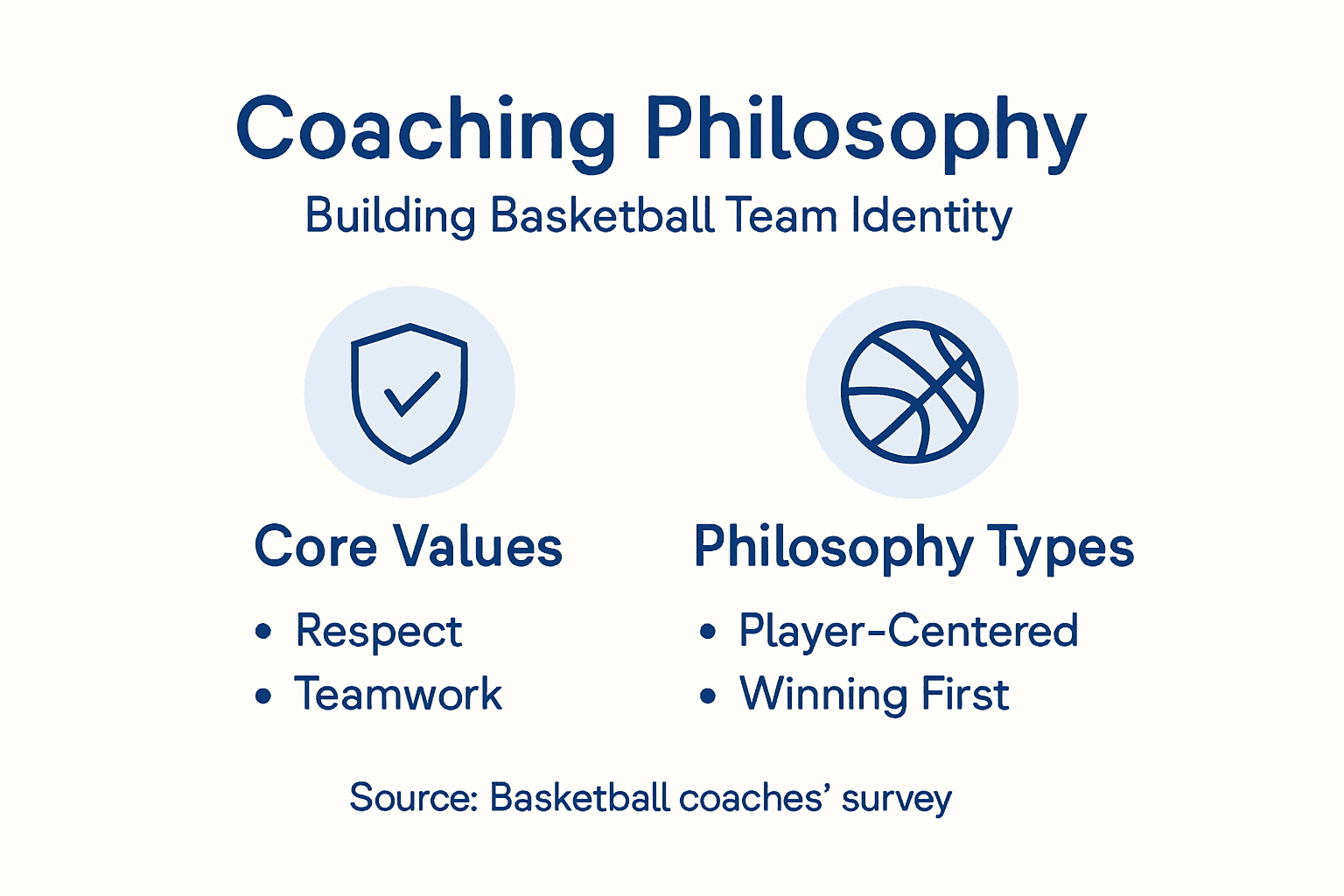
Types of Coaching Philosophies in Basketball
Basketball coaching philosophies represent diverse strategic approaches that fundamentally shape team culture, player development, and competitive performance. Coaching philosophy spectrum reveals multiple distinctive styles that range from highly structured to more adaptive methodologies.
The primary types of coaching philosophies in basketball can be categorized into several key frameworks:
- Skill-Development Philosophy: Prioritizes individual player growth and technical improvement
- Performance-Oriented Philosophy: Emphasizes winning and competitive results
- Humanistic Philosophy: Focuses on player personal development and holistic growth
- Transformational Philosophy: Concentrates on leadership and character building
- Task-Mastery Philosophy: Centers on achieving specific technical and strategic objectives
High-performance coaching approaches demonstrate that effective coaches often blend multiple philosophical styles, adapting their approach based on team dynamics, player potential, and competitive context. Each philosophy carries distinct characteristics that impact coaching behaviors, practice structures, and player interactions.
Here’s a comparison of basketball coaching philosophy types and their impact on team culture:
| Philosophy Type | Main Focus | Influence on Culture | Adaptability |
|---|---|---|---|
| Skill-Development | Technical player growth | Encourages learning | Highly flexible |
| Performance-Oriented | Competitive results | Drives winning mindset | Moderately flexible |
| Humanistic | Personal player growth | Fosters support and trust | Very adaptable |
| Transformational | Leadership and character | Builds strong values | Flexible |
| Task-Mastery | Strategic and technical goals | Promotes discipline | Somewhat adaptable |
Successful coaches understand that no single philosophy is universally superior. The most effective approach involves understanding your team’s unique needs, individual player motivations, and creating a flexible framework that can evolve with changing team compositions and competitive landscapes.
Pro tip: Regularly assess and adjust your coaching philosophy, recognizing that adaptability is the most critical ingredient in long-term team success.
Core Values That Guide Team Decisions
Core values serve as the foundational framework that determines how basketball teams operate, make decisions, and develop team culture. Values-based coaching approach reveals how philosophical beliefs systematically translate into practical team behaviors and strategic choices.
The most critical core values that consistently guide effective team decision-making include:
- Accountability: Taking personal responsibility for individual and collective performance
- Respect: Treating teammates, coaches, and opponents with genuine dignity
- Excellence: Pursuing continuous improvement and high-performance standards
- Integrity: Maintaining consistent ethical standards on and off the court
- Teamwork: Prioritizing collective success over individual achievements
These core values are not merely abstract concepts but practical decision-making tools that shape every interaction and strategic choice within the team. Coaches who successfully embed these values create a cohesive environment where players understand the underlying principles guiding their collective journey.

Implementing core values requires more than verbal communication. Coaches must consistently model these principles through their actions, create systems that reinforce these values, and provide clear consequences and recognition that align with the team’s fundamental beliefs. This approach transforms core values from theoretical concepts into lived team experiences.
This table summarizes how core values translate into practical team behaviors:
| Core Value | Practical Behavior | Resulting Team Benefit |
|---|---|---|
| Accountability | Owning mistakes | Improved performance |
| Respect | Listening to teammates | Stronger team cohesion |
| Excellence | Consistent hard effort | Higher standards |
| Integrity | Ethical decision-making | Enhanced credibility |
| Teamwork | Sharing responsibilities | Greater collective success |
Pro tip: Create a visible team values charter that players help develop, ensuring genuine commitment and understanding of the core principles guiding the team.
Impact of Philosophy on Practice and Games
A basketball coach’s philosophical approach fundamentally transforms how teams train, compete, and conceptualize success. Coaching practice strategies demonstrate that philosophical priorities directly influence practice structures and in-game decision-making processes.
The specific ways coaching philosophy impacts practice and game performance include:
- Practice Design: Determining drill selection and training intensity
- Player Development: Focusing on individual skill progression versus team tactics
- Game Strategy: Shaping offensive and defensive approach
- Mental Preparation: Establishing psychological readiness and resilience
- Performance Evaluation: Creating metrics for measuring team and individual growth
Philosophical frameworks translate into concrete coaching behaviors that players experience daily. A skill-development philosophy, for instance, might emphasize technical repetition and individual improvement, while a performance-oriented approach could prioritize competitive simulation and tactical understanding.
Successful coaches understand that their philosophical approach must remain flexible, adapting to team dynamics, player potential, and competitive challenges. The most effective philosophies create a consistent framework that allows for nuanced interpretation and strategic evolution.
Pro tip: Document your coaching philosophy’s practical applications, creating a living blueprint that guides both practice design and game-day decision making.
Common Pitfalls When Establishing Team Philosophy
Establishing an effective basketball coaching philosophy requires nuanced understanding and intentional strategy. Coaching philosophy challenges reveal critical errors that can undermine team development and performance potential.
The most significant pitfalls coaches encounter when developing team philosophy include:
- Lack of Clarity: Failing to articulate specific philosophical principles
- Inconsistent Implementation: Not consistently applying philosophical beliefs
- Rigid Thinking: Refusing to adapt philosophy to changing team dynamics
- Overemphasis on Single Approach: Neglecting holistic player development
- Poor Communication: Not effectively explaining philosophy to players
Successful coaches recognize that a team philosophy is not a static document but a dynamic framework requiring continuous reflection and adjustment. What works for one team might completely fail for another, making contextual awareness crucial.
Developmental philosophies must balance structure with flexibility. Coaches who become too attached to a predetermined approach risk limiting their team’s potential, while those who remain open to evolution can create more responsive and resilient team cultures.
Pro tip: Conduct periodic team philosophy reviews, soliciting player feedback to ensure your coaching approach remains relevant and engaging.
Build Your Basketball Coaching Philosophy with Proven Resources
Defining a clear coaching philosophy and building a strong team identity requires practical tools that match your core values like accountability, teamwork, and development. If you struggle with inconsistent implementation or want a flexible, adaptable approach that drives both player growth and competitive success, our Basketball Playbooks - Hoop Mentality offer detailed strategies designed for exactly that purpose. Combine these playbooks with targeted Basketball Drills - Hoop Mentality to create practice sessions that reflect your philosophy and truly engage your players.

Start translating your basketball coaching philosophy into action today with resources created by real coaches who understand the challenges you face. Visit Hoop Mentality now to access step-by-step guides and tools that help you organize practices efficiently, communicate clearly with your team, and build a winning culture that lasts. Take control of your coaching journey and see your team identity come alive on the court.
Frequently Asked Questions
What is a basketball coaching philosophy?
A basketball coaching philosophy is a set of beliefs, values, and principles that guide a coach’s approach to player development and team culture.
Why is a player-centered approach important in coaching philosophies?
A player-centered approach prioritizes individual athlete growth, helping to cultivate skills and personal development for each player, which in turn enhances overall team performance.
How can a coach adapt their philosophy to changing team dynamics?
Coaches can adapt their philosophy by remaining flexible, consistently reflecting on their approach, and adjusting strategies based on player interactions and competitive contexts.
What are some common pitfalls when establishing a coaching philosophy?
Common pitfalls include lack of clarity, inconsistent implementation, rigid thinking, overemphasis on a single approach, and poor communication with players.
Recommended
- Basketball Leadership Guide: Build Strong Team Culture – Hoop Mentality
- Defining Basketball Culture – Impact on Team Unity – Hoop Mentality
- Basketball Coaching Philosophy Guide for Winning Teams – Hoop Mentality
- Build a Basketball Team: Step-by-Step Guide for Coaches – Hoop Mentality
- Sales Team Motivation Explained: Driving Consistent Results