

Every basketball season brings new faces and fresh talent, challenging coaches to make tough decisions about player roles and team dynamics. For youth coaches across North America, developing strong player evaluation skills is essential for guiding athletes toward growth and building competitive teams. By merging time-tested observation with advanced performance analytics, you can move beyond surface statistics to truly understand each player’s unique impact and potential on the court.
Table of Contents
- Defining Player Evaluation In Basketball
- Types Of Player Evaluation Methods Used
- Key Metrics And Evaluation Criteria Explained
- The Player Evaluation Process, Step By Step
- Common Mistakes And How To Avoid Them
Key Takeaways
| Point | Details |
|---|---|
| Comprehensive Player Evaluation | Combining traditional metrics with advanced analytics provides a holistic view of player performance and potential. |
| Balanced Assessment Framework | Integrating qualitative observations with quantitative data is essential for accurate evaluation and understanding player dynamics. |
| Cognitive Bias Awareness | Coaches should strive to minimize biases in assessments to enhance objectivity and reliability in player evaluations. |
| Systematic Evaluation Process | A structured methodology that includes physical, skill-based, and intangible assessments improves the thoroughness of player evaluations. |
Defining Player Evaluation in Basketball
Player evaluation in basketball represents a sophisticated process of systematically assessing an athlete’s performance, potential, and contribution to team dynamics. Advanced performance analytics have transformed how coaches and organizations understand individual player capabilities, moving far beyond traditional observation methods.
At its core, player evaluation integrates multiple assessment techniques to provide comprehensive insights into an athlete’s strengths, weaknesses, and overall impact. These techniques typically include:
- Statistical analysis of game performance metrics
- Video breakdown of individual player movements
- Live scouting observations
- Physical and skill assessments
- Psychological and team compatibility evaluations
The goal of player evaluation extends beyond simple performance tracking. Causality-inspired measurement models now enable coaches to estimate a player’s precise impact by quantifying their expected contribution to score differences and overall team strategy.
Modern player evaluation recognizes that basketball performance cannot be reduced to individual statistics alone. Successful assessment requires understanding complex interactions between teammates, understanding situational performance, and evaluating an athlete’s potential for growth and adaptation.
Pro Tip: Develop a standardized evaluation framework that balances quantitative metrics with qualitative observations to create a holistic player assessment approach.
Types of Player Evaluation Methods Used
Basketball coaches and organizations employ a diverse range of player evaluation techniques to comprehensively assess athlete performance and potential. These methods blend traditional statistical analysis with advanced analytical approaches, creating a multifaceted assessment framework that goes beyond simple numerical measurements.
Traditional evaluation methods include:
-
Game performance statistics
- Points scored
- Assists
- Rebounds
- Turnovers
- Playing time
-
Visual observation techniques
- Live game scouting
- Video analysis
- On-court movement patterns
-
Physical assessment
- Athletic measurements
- Skill drills
- Strength and conditioning tests
Advanced analytical approaches have revolutionized player evaluation by introducing sophisticated metrics that provide deeper insights. These include Player Efficiency Rating (PER), Win Shares (WS), and Value Over Replacement Player (VORP), which help quantify a player’s comprehensive impact beyond traditional box score statistics.
Advanced analytics and traditional observation methods work together to create a holistic assessment strategy. This integrated approach allows coaches to evaluate not just statistical performance, but also critical intangibles like leadership potential, basketball intelligence, and team compatibility.
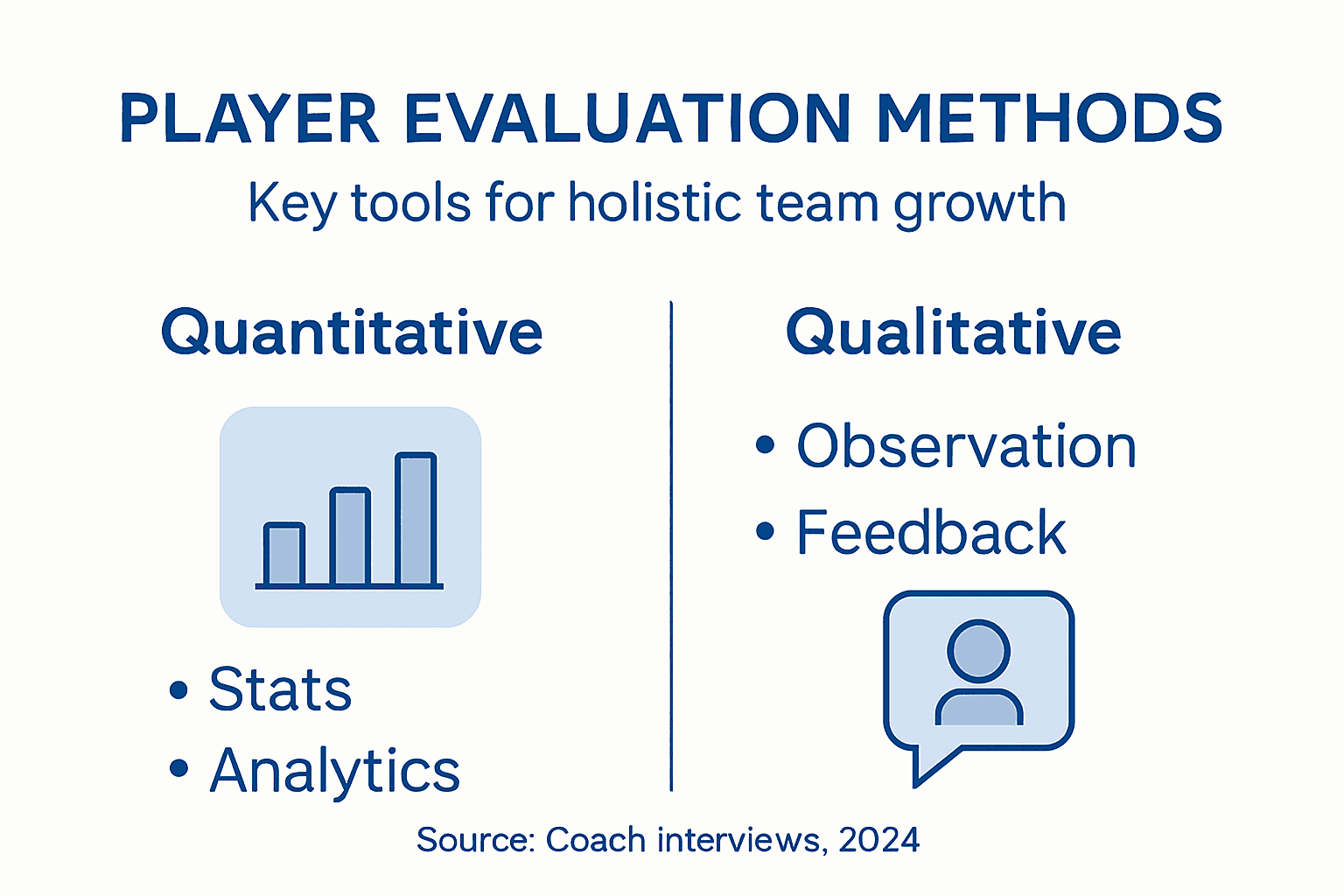
Pro Tip: Develop a comprehensive evaluation framework that balances quantitative metrics with qualitative observations to gain a nuanced understanding of each player’s unique strengths and development potential.
Here’s a comparison of traditional and advanced player evaluation approaches:
| Approach Type | Focus Area | Example Metric | Typical Insights |
|---|---|---|---|
| Traditional | Basic stats and skills | Points, rebounds | Surface-level performance trends |
| Advanced | Analytical modeling | PER, VORP, WS | Deeper impact, predictive value |
| Integrated | Blends both methods | Composite scorecards | Holistic player profiles |
Key Metrics and Evaluation Criteria Explained
Basketball performance metrics represent a sophisticated approach to understanding player contributions beyond traditional box score statistics. These metrics provide coaches and analysts with nuanced insights into individual player performance and potential team impact.
Key evaluation criteria can be categorized into several critical domains:
-
Offensive Performance Metrics
- Points per game
- Shooting percentage
- Assists
- Turnover rate
- Three-point and free throw efficiency
-
Defensive Performance Metrics
- Rebounds
- Blocks
- Steals
- Defensive rating
- Opponent field goal percentage
-
Advanced Analytical Metrics
- Player Efficiency Rating (PER)
- Win Shares
- Value Over Replacement Player (VORP)
- True Shooting Percentage
- Box Plus/Minus
Modern evaluation approaches go beyond simple statistical compilation. Predictive analytics and machine learning models now enable coaches to forecast player performance, integrating complex data points that reveal deeper insights into individual capabilities and potential team dynamics.
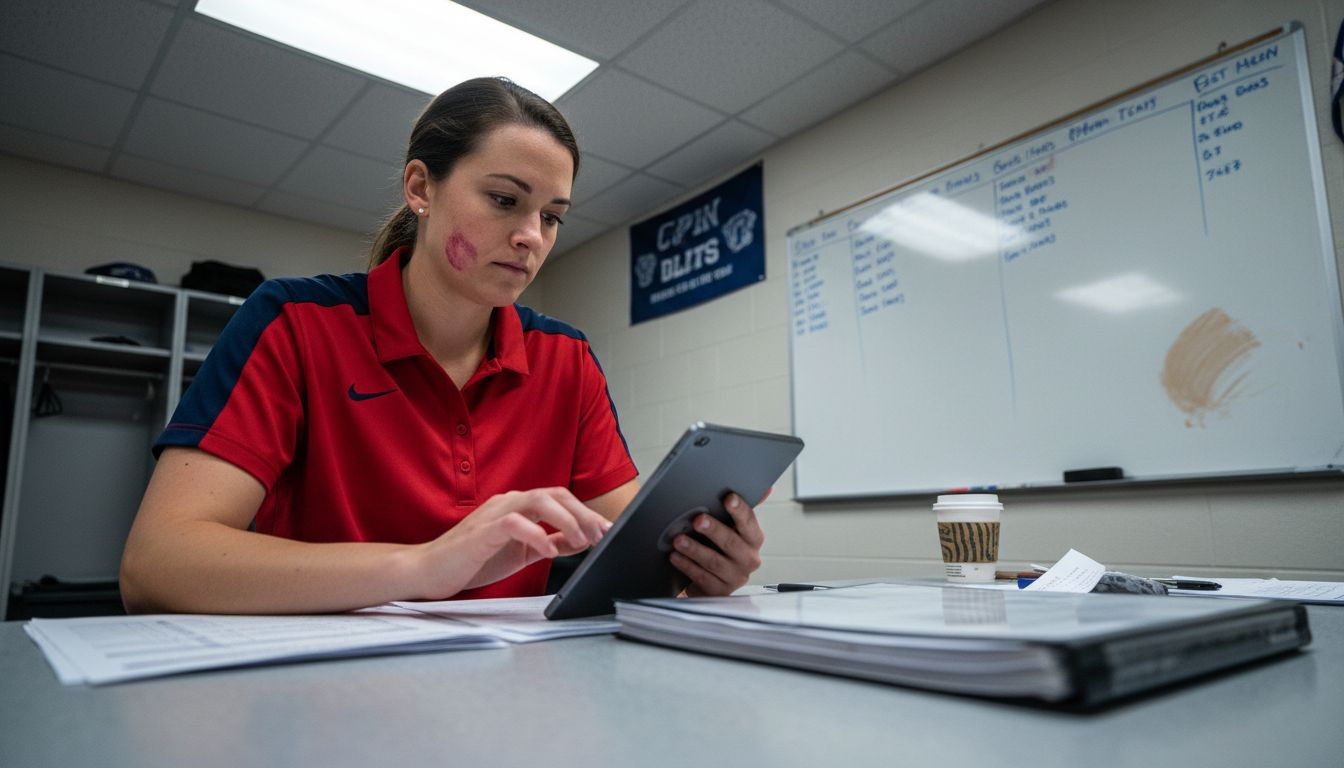
Comprehensive player evaluation requires balancing quantitative measurements with qualitative observations. Coaches must consider not just statistical output, but also intangible factors like leadership, basketball intelligence, team chemistry, and adaptability to different game situations.
Pro Tip: Create a standardized evaluation scorecard that weights both statistical metrics and subjective performance indicators to develop a more holistic assessment of player potential.
The Player Evaluation Process, Step by Step
Basketball player assessment involves a systematic approach designed to comprehensively understand an athlete’s current capabilities and potential for growth. Coaches must develop a structured methodology that goes beyond simple observation and captures both measurable skills and intangible qualities.
The player evaluation process typically involves the following key stages:
-
Pre-Evaluation Preparation
- Define specific assessment criteria
- Design standardized evaluation forms
- Establish performance benchmarks
- Prepare measurement tools and equipment
-
Physical Attribute Assessment
- Measure height and body composition
- Test speed and acceleration
- Evaluate endurance and stamina
- Check flexibility and agility
-
Basketball-Specific Skill Evaluation
- Shooting accuracy and technique
- Ball handling skills
- Passing precision
- Defensive capabilities
- Rebounding effectiveness
-
Intangible Performance Factors
- Leadership potential
- Team communication
- Work ethic
- Mental resilience
- Adaptability to different game situations
Successful player evaluation requires a holistic approach that balances quantitative measurements with qualitative insights. Coaches must remain objective while understanding that statistical data tells only part of an athlete’s performance story.
Observation in live game situations provides critical context to formal assessments. Video analysis, peer feedback, and progressive tracking of performance metrics can reveal development patterns that might not be immediately apparent during isolated evaluation sessions.
Pro Tip: Develop a multi-dimensional evaluation framework that weights different assessment components proportionally, allowing for a nuanced and comprehensive understanding of player potential.
Below is a quick summary of key player evaluation domains and what each reveals about athletes:
| Evaluation Domain | What It Reveals | Typical Assessment Tool |
|---|---|---|
| Physical Attributes | Athleticism and fitness | Measurements, fitness tests |
| Basketball Skills | Technical ability | Skill drills, video analysis |
| Intangible Qualities | Leadership, resilience | Coach interviews, peer feedback |
| Analytical Data | Quantitative impact | Statistical models, machine learning |
Common Mistakes and How to Avoid Them
Basketball player evaluation errors can significantly undermine a coach’s ability to build an effective team. Recognizing and mitigating these common pitfalls is crucial for developing accurate and comprehensive player assessments.
Key mistakes coaches frequently encounter include:
-
Statistical Misinterpretation
- Over-relying on traditional metrics
- Ignoring context of performance statistics
- Failing to integrate advanced analytics
- Neglecting player-specific performance nuances
-
Cognitive Bias Challenges
- Anchoring on initial player rankings
- Maintaining preconceived notions about player potential
- Resisting updates to player evaluation
- Emotional decision-making
-
Evaluation Methodology Weaknesses
- Incomplete assessment frameworks
- Lack of standardized evaluation criteria
- Insufficient data collection processes
- Minimal cross-referencing of performance indicators
Cognitive bias mitigation strategies are essential for developing objective player assessments. Coaches must deliberately design evaluation frameworks that minimize subjective influences and prioritize comprehensive, data-driven insights.
Successful player evaluation requires a balanced approach that combines quantitative data analysis with qualitative observation. Coaches should create flexible assessment models that can adapt to individual player development trajectories and organizational strategic goals.
Pro Tip: Implement a multi-source evaluation system that cross-references performance data from different perspectives, reducing individual bias and increasing assessment accuracy.
Master Player Evaluation with Proven Coaching Tools
Understanding player evaluation challenges like combining stats and intangible qualities can feel overwhelming. If you want to maximize your team’s growth with a clear and organized approach, start by using game-changing resources designed for coaches who demand precision and effectiveness. Our Basketball Templates - Hoop Mentality provide practical evaluation forms and scouting templates that help you capture detailed player data and insights effortlessly.

Take control of your player assessments now by incorporating proven tools that streamline your evaluation system and eliminate guesswork. Visit Hoop Mentality today to explore our full range of coaching resources. Start building a comprehensive player evaluation process that fuels your team’s next level of success.
Frequently Asked Questions
What is player evaluation in basketball?
Player evaluation in basketball is the systematic process of assessing an athlete’s performance, potential, and contribution to team dynamics using various assessment techniques such as statistical analysis, video breakdown, live scouting observations, and performance metrics.
What methods are used for evaluating basketball players?
Evaluation methods include traditional game performance statistics, visual observation techniques, physical assessments, and advanced analytical approaches like Player Efficiency Rating (PER) and Win Shares (WS) that provide deeper insights into a player’s impact beyond basic statistics.
How do coaches balance quantitative and qualitative assessments during player evaluation?
Coaches balance these assessments by developing frameworks that incorporate both statistical metrics, such as points scored and assists, and qualitative observations like leadership potential, basketball intelligence, and team compatibility.
What are common mistakes in player evaluation that coaches should avoid?
Coaches should avoid common mistakes such as over-relying on traditional metrics, ignoring context in performance statistics, neglecting advanced analytics, and allowing cognitive biases to influence their evaluations.
Recommended
- Understanding Basketball Evaluation Criteria for Coaches – Hoop Mentality
- How to Evaluate Player Performance in Basketball Effectively – Hoop Mentality
- 7 Key Player Development Tips for Coaches – Hoop Mentality
- Player Development: Transforming High School Teams – Hoop Mentality
- Why Track Football Results: The Key to Smart Engagement | DB Football Blog | DB Football