

The fastest improvement in shot, pass, and drive decisions comes from five drills run at game speed: the jab step series, sweep and go, shot fake to drive, the pivot box drill, and a live decision drill. Pair them with a one second hold rule before every move and several focused reps per side, and most players sharpen their triple threat position decisions within a few practice sessions.
TL;DR:
- Running the jab step and sweep and go drills together helps players develop fast, synchronized footwork and eye movement to read defenders more effectively.
- Progressing from no defender to live 3-player decision drills ensures transferring skills into game-like situations with reaction time and help reads.
- Quality reps at game speed with focused decision-making matter more than volume, especially for young athletes who benefit from short, frequent sessions.
- Fixing stance errors and keeping the pivot foot planted prevents common mistakes such as traveling and slow reactions during ball handler development.
- Ready-made drill packs online allow coaches to implement these progressions quickly without designing exercises from scratch.
Table of Contents
- Triple Threat Drills That Build Real Game Skills
- How Do You Structure a Triple Threat Practice?
- What Coaching Cues Fix the Most Common Mistakes?
- From Drills to Game Speed: Adding Defenders and Pressure
- How Hoop Mentality Turns These Drills Into a Practice Plan
- What Coaches Get Wrong About Triple Threat Repetition
- Ready-to-Run Drill Packs for Your Next Practice
- Sources
- FAQ
Triple Threat Drills That Build Real Game Skills
Every drill below targets a specific weakness coaches see in the triple threat position: slow feet, loose ball handling, or hesitation on the catch. Run these as your core basketball offensive drills before adding defenders or live reps.
-
Jab step series. Start in the triple threat position, ball in the shot pocket, eyes on the rim. Jab the non-pivot foot forward six to eight inches, then return to stance. Do 10 reps per side, alternating sides each set. The coaching cue that matters most: the foot and eyes move together, or defenders read the fake instantly. A common mistake is jabbing with the foot while the eyes stay flat. Fix it by having players say “shot” out loud on every jab to force the eye discipline.
-
Sweep and go (rip through). From triple threat, sweep the ball low, from shoulder to knee to the opposite hip, then explode past an imaginary defender on the first step. Keep the sweep low and tight to the body. A high sweep gets stripped almost every time. Run multiple reps per side, emphasizing a hard first step, not a tall one.
-
Shot fake to drive. Sell the shot with a quick knee bend and ball raise, holding the fake just long enough for a defender to react (roughly one second), then drive off the same footwork used in the sweep and go. Timing beats speed here. A fake that’s too fast never draws a close out.
-
Pivot box drill. Set four cones in a small box. Keeping one foot planted, pivot and step to each cone in sequence, alternating forward and reverse pivots. This builds the pivot foot control that keeps players out of travel violations and lets them create passing angles without moving their plant foot.
-
Decision drill. A coach or partner calls “shoot,” “drive,” or “pass” as the player catches the ball in triple threat. The player must react within a beat, no hesitation, no double move. This is where footwork and reads become basketball skills training instead of isolated mechanics.
Pro Tip: Run the jab step series and sweep and go back to back in the same set. The footwork overlaps, and players stop treating them as separate skills once they feel the connection.
How Do You Structure a Triple Threat Practice?
A tight 15 to 20 minute block, run two to three times a week, produces more carryover than a single long session. Isolated repetition paired with game speed work builds the stance until it becomes automatic, which is the entire point of a one second hold rule.
- Warm up and isolated footwork (5 to 10 minutes). No ball at first for younger players, just stance, jab steps, and pivots. Add the ball once footwork looks clean.
- Circuit (8 to 12 minutes). Rotate through two or three drills, three sets each, eight to 12 reps per set at game speed. Rest 30 to 45 seconds between sets so quality doesn’t drop.
- Progress weekly. Add a passive defender in week two, a live defender by week three, and shrink the decision window for the decision drill so reads happen faster. Track successful executions, not just reps completed, to see real progress.
Younger athletes respond better to shorter, more frequent sessions built around one or two moves rather than one long skill block, which lines up with the Jr. NBA’s simple 1-2-3 triple threat progression for early learners.
What Coaching Cues Fix the Most Common Mistakes?
Most triple threat breakdowns trace back to three things: a high stance, a loose ball, and a slow pivot foot. Fix the stance first, and the rest tends to follow.
- Hips low, knees bent, ball in the shot pocket with the elbow stacked over the knee.
- Protect the ball with a tight sweep and a body turn that puts the defender on your back, not your ball.
- Pick a pivot foot before the catch and never let it slide, since that single habit prevents most travel calls.
- If a player stands up out of the stance or looks down at the ball, reset the rep immediately rather than letting it slide.
Cues like “eyes on the rim, elbow over knee, ball tight to the hip” work across age groups because they’re checkable in a single glance, which is exactly what a coach needs mid-drill. For more on the mechanics behind these positions, see Hoop Mentality’s triple threat position guide.
From Drills to Game Speed: Adding Defenders and Pressure
Isolated reps teach mechanics, but games are won in live reads. Progress players through three stages so the skill actually transfers.
- 1v0: Clean reps against no defender, focused purely on footwork and ball path.
- 1v1: Add a live or cone-simulated defender, forcing real reaction timing instead of memorized counters.
- 3-player decision reps: Add a passer and a second defender so the ball handler has to read help, not just one matchup.
Combine these with short sprint bursts between reps to simulate game fatigue, and add a shot clock or count down for late-clock situational reps. For counters, alternate emphasis between finishing and passing so players don’t default to one option every time. Cone and chair progressions are a simple way to simulate a defender’s feet without needing a full second player.
How Hoop Mentality Turns These Drills Into a Practice Plan
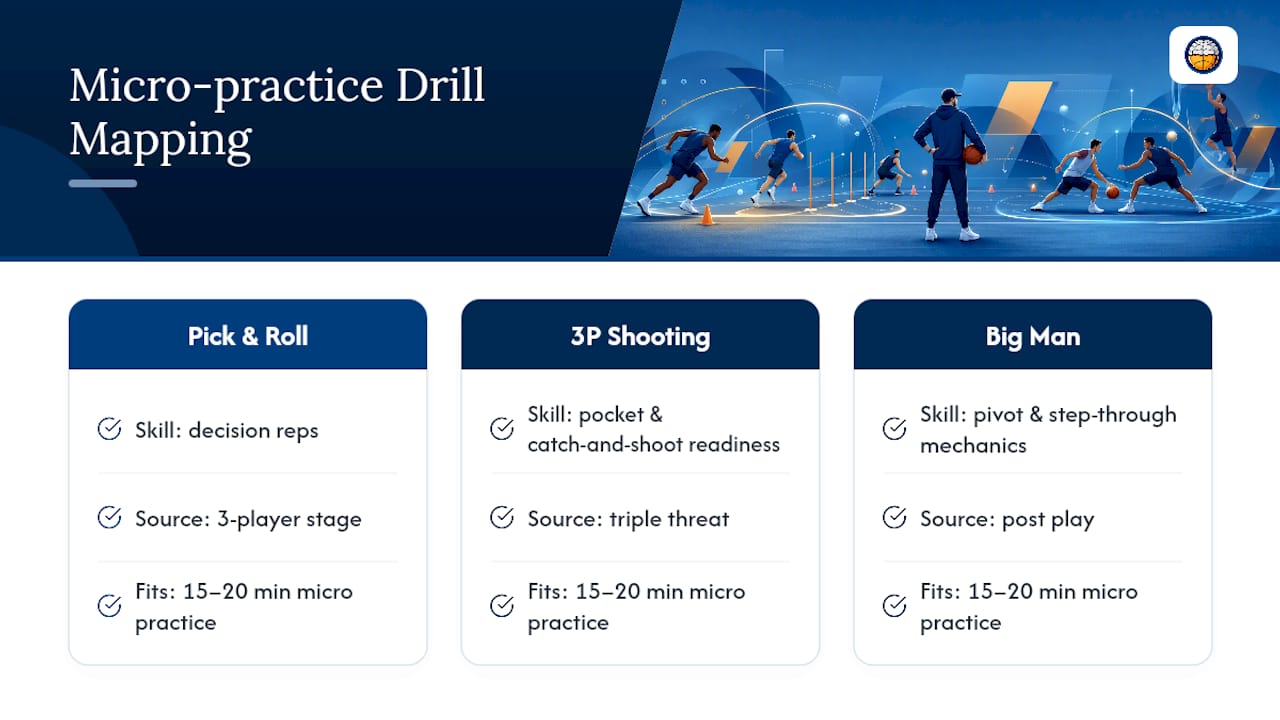
Hoop Mentality builds its drill packs around the exact progressions above. The 3 Player Pick And Roll Combo Drill trains the decision reps from the 3-player stage. The Versatile 3 Player Shooting Drill builds pocket shooting and catch-and-shoot readiness straight from triple threat. The Big Man Dual Action Drill applies pivot and step-through mechanics to post play. Coaches can drop any of these directly into a 15 to 20 minute micro practice.
What Coaches Get Wrong About Triple Threat Repetition
Quality reps at game speed beat high volume every time. Coaches often stack 50 slow reps when 15 sharp ones, with a real decision attached, teach far more. Match complexity to age and skill level. A 10-year-old doesn’t need a three-player read before mastering the jab step.
— Dejan
Ready-to-Run Drill Packs for Your Next Practice
There are alternative drill packs available that provide ready-to-use PDFs or videos coaches can use directly with players, saving the need to design and test concepts from scratch. The 3 Player Pick And Roll Combo Drill gives you decision-making reps already structured for the 3-player progression covered above.
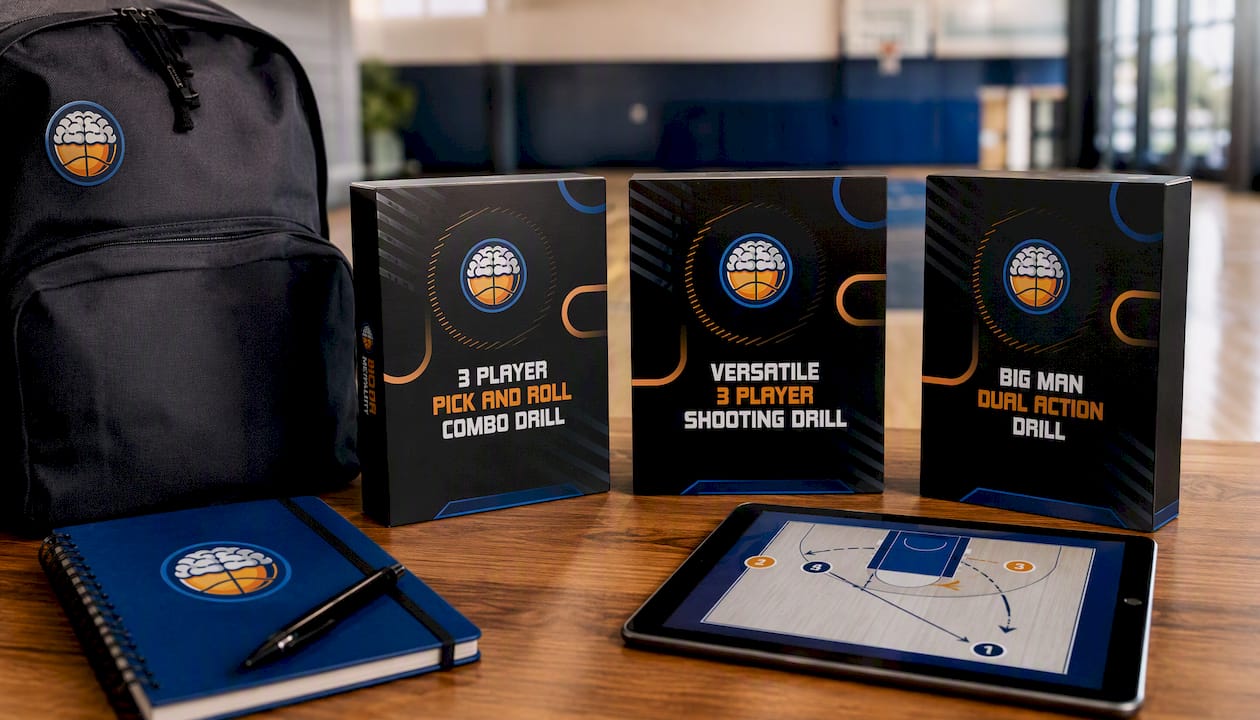
The Versatile 3 Player Shooting Drill builds catch-and-shoot and pocket shooting readiness without you having to script the reps yourself, and the Big Man Dual Action Drill hands post players a full pivot and step-through progression in one download. If you’d rather browse the whole set, the basketball drills collection covers every phase of the practice plan above, from footwork to live 3-player reps. Pick the pack that matches your next practice and download it today.
Sources
- 1-2-3 Triple Threat - NBA.com - Jr. NBA
- Master Triple Threat Positioning in Basketball: Shoot, Pass, Drive
- Triple Threat Moves - Coach Kamil Hoops
FAQ
What Is a Triple Threat Exercise?
A triple threat exercise is any drill run from the triple threat position, ball in the shot pocket, that trains a player to shoot, pass, or drive off the same stance. The jab step series, sweep and go, and shot fake to drive are the most common examples used to build that decision speed.
What Is a Triple Threat Workshop?
A triple threat workshop is typically a coaching clinic or team practice session focused entirely on teaching the triple threat position, its footwork, and its three scoring options. Coaches use these sessions to run players through isolated drills before adding defenders, following the same progression outlined in the practice plan above.
How Many Reps Should Players Do Per Drill?
Eight to 12 reps per side per drill, run in two to three sets, gives enough volume to build the habit without sacrificing quality. Adding a passive or live defender after the first few sets keeps the reps closer to real game speed.
Does Hoop Mentality Have Drills for This?
Yes. Hoop Mentality’s 3 Player Pick And Roll Combo Drill, Versatile 3 Player Shooting Drill, and Big Man Dual Action Drill each map directly to the drills and progressions covered in this article. Prices for each pack are listed on the Hoop Mentality drills collection.