

TL;DR:
- Assistant coaches develop players, analyze film, and manage recruiting within delegated authority. They support team cohesion and act as communication bridges between players and the head coach. Specialization and leadership skills boost their career growth and long-term program impact.
Assistant coaches are defined by their delegated authority to develop players, execute tactical plans, and manage specific team functions under the head coach’s direction. The role of assistant coaches is one of the most underrated positions in basketball. They handle recruiting, run position-specific practices, analyze film, and serve as the primary communication link between players and the head coach. Without a capable assistant coaching staff, most programs would collapse under the weight of daily operational demands. This article breaks down what assistant coaches actually do, how they complement the head coach, and what separates good assistants from great ones.
What are the primary responsibilities of assistant coaches?
The assistant coach’s core job is to operationalize the head coach’s vision at the player and position level. That means running drills, correcting technique, and making sure every practice rep connects to the game plan. The duties of assistant coaches span far more ground than most coaches outside the staff realize.
Daily practice and skill development
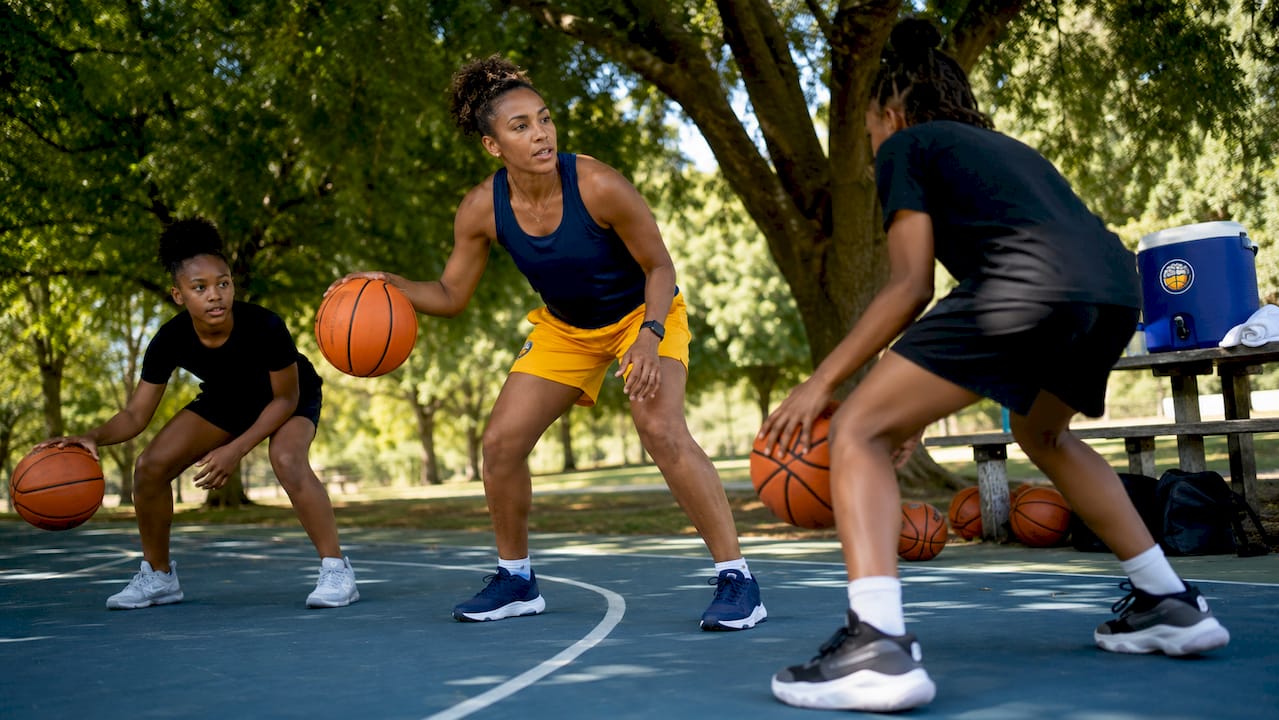
Assistant coaches plan and lead position-specific sessions every day. A guard-focused assistant might run ball-handling progressions and pick-and-roll reads while the big-man coach works post footwork on the other end. This division of labor keeps practice efficient and gives players more focused, individualized attention than a single coach could provide.
Game film and opponent scouting
Film work is a daily responsibility, not a game-week task. Assistants break down opponent tendencies, identify defensive rotations, and build scouting reports that the head coach uses to set the game plan. A well-prepared scouting report can expose a specific mismatch or a team’s late-clock habits before tip-off.
Recruiting and talent evaluation
Recruiting is where assistant coaches in college programs spend the majority of their off-season. Over half of off-season time in revenue collegiate sports is devoted to recruiting, including talent evaluation and managing campus visits. That figure shows just how much program-building depends on assistant coaches, not just the head coach’s name recognition.
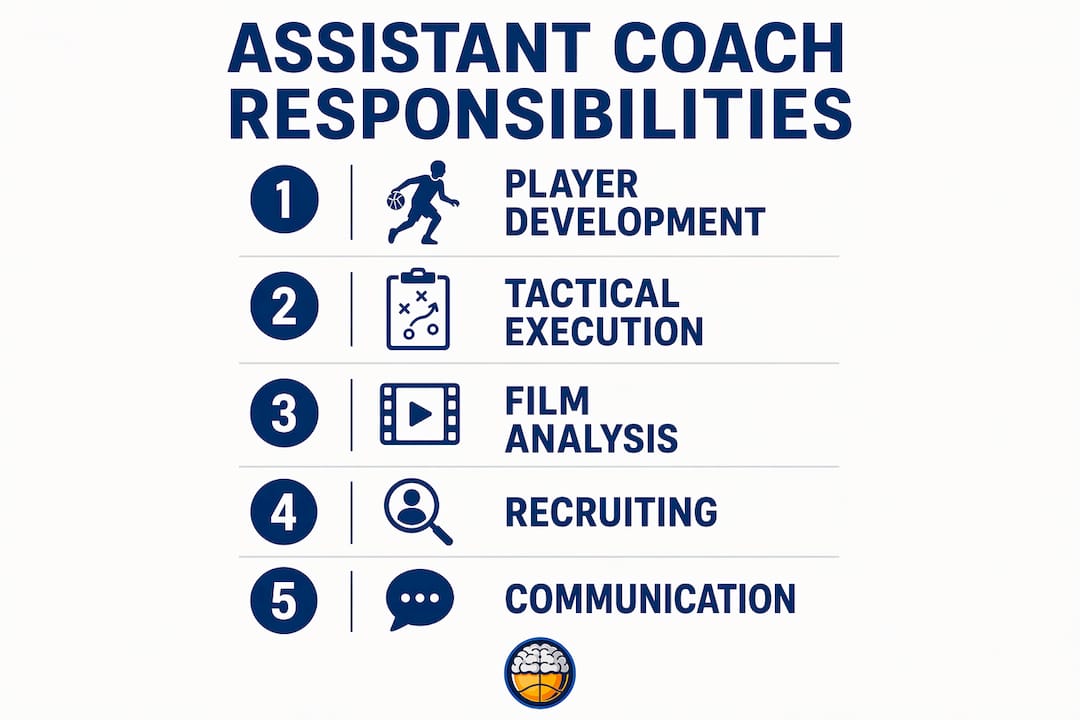
Here is a breakdown of the primary assistant coaching responsibilities:
- Practice planning: Design and run position-specific drills tied to the weekly game plan
- Film analysis: Break down opponent film and prepare scouting reports for staff review
- Recruiting: Evaluate prospects, manage relationships, and coordinate official visits
- Player instruction: Provide individualized feedback during practice and film sessions
- Game-day support: Communicate in-game adjustments and track opponent tendencies in real time
Pro Tip: Keep a short written summary after every practice session. Note which players responded to specific cues and which drills need adjustment. That log becomes your most useful planning tool over a full season.
How does the assistant coach complement the head coach?
The assistant coach functions as a tactical utility that allows the head coach to focus on program strategy without burning out on granular player management. That is not a supporting role in the passive sense. It is an active, specialized function that directly shapes team performance.
The social contract between head and assistant coaches
Head coaches set the direction. Assistant coaches execute within their delegated domains. The relationship works because both parties respect a clear boundary: disagreements stay private. Effective assistants resolve conflicts with the head coach through private channels before or after games, never on the sideline or in front of players. That discipline preserves the unified leadership front that players need to trust the staff.
This social contract is not just professional courtesy. It is a structural requirement for team cohesion. When players see cracks in the coaching staff, they exploit them, consciously or not. A staff that presents a consistent message earns more player buy-in.
Assistants as communication bridges
Players rarely go to the head coach first with personal concerns. The head coach controls playing time and discipline, which creates a natural barrier. Assistant coaches become primary confidants for athletes, bridging the communication gap between the locker room and the head coach’s office. That trust is not accidental. It builds over months of daily interaction, honest feedback, and genuine investment in each player’s growth.
Pro Tip: If a player brings you a concern that affects the team, ask their permission before taking it to the head coach. That one step protects the trust they placed in you and keeps communication flowing both directions.
The most effective assistant coaches combine these qualities:
- Clear communication with both players and the head coach
- Willingness to give honest feedback without undermining the head coach’s authority
- Consistency in how they apply team rules and expectations
- Ability to read player morale and flag issues before they become problems
What training and skills do effective assistant coaches need?
Formal training requirements for assistant coaches vary by level, but the baseline is higher than most coaches expect. Entry-level certifications typically require over 16 hours combining classroom instruction and mandatory practical experience. That combination of theory and floor time is what separates certified assistants from coaches who simply learned on the job.
Specialization as a career accelerator
Generalist assistants are useful. Specialist assistants are irreplaceable. Assistants who specialize early in areas like analytics or defensive systems gain measurable impact faster and attract attention from senior leadership. A defensive coordinator who can point to a 12-game stretch of improved opponent field goal percentages has a concrete case for advancement. A generalist assistant has a harder time making that argument.
The table below shows how specialization maps to career impact:
| Specialization | Primary contribution | Career visibility |
|---|---|---|
| Analytics | Data-driven scouting and player tracking | High, especially at college and pro levels |
| Defensive coordinator | Scheme design and opponent preparation | High, measurable through opponent scoring |
| Player development | Individual skill progression and film work | Medium to high, tied to player improvement |
| Recruiting coordinator | Talent pipeline and relationship management | High at college level |
Executive skills for advancement
Coaches who want to move from assistant to head coach need more than basketball knowledge. Army West Point’s program for aspiring head coaches specifically targets budgeting, fundraising, and interview skills. Those competencies rarely come from practice planning. Assistants who pursue them deliberately put themselves ahead of peers with equal basketball IQ.
What are the long-term benefits of assistant coaches on players and programs?
The most lasting contribution assistant coaches make is not tactical. It is personal. High school coaches consistently report that assistant coaches influence life choices that extend well into athlete adulthood. The assistant who pushed a player through a difficult season often becomes the person that player calls years later when facing a major decision.
That mentorship effect is difficult to quantify but easy to observe. Players who had strong assistant coach relationships show up more consistently, respond better to correction, and stay in programs longer. Retention and accountability are direct outputs of that relationship.
The broader program benefits include:
- Culture reinforcement: Assistants model the standards the head coach sets, every day, in every interaction
- Player accountability: Assistants track individual progress and hold players to specific development benchmarks
- Staff continuity: A strong assistant coach provides stability when head coaches transition or take leave
- Athlete retention: Players who trust the staff are less likely to transfer or disengage mid-season
- Life skills development: Assistants teach time management, communication, and resilience through daily coaching interactions
The player development impact of a skilled assistant compounds over time. One assistant who builds genuine relationships with five players per season creates a ripple effect that outlasts any single game result.
Key takeaways
Assistant coaches are the operational core of any basketball program, responsible for player development, recruiting, tactical execution, and team communication.
| Point | Details |
|---|---|
| Recruiting is a major time commitment | College assistants spend over half their off-season on recruiting and talent evaluation. |
| Specialization accelerates careers | Assistants who focus on analytics or defense gain faster visibility and advancement. |
| Private conflict resolution is non-negotiable | Disagreements with the head coach must stay off the floor to preserve team trust. |
| Assistants are the player communication bridge | Players approach assistants first because they lack the disciplinary authority of head coaches. |
| Mentorship extends beyond basketball | Assistant coach influence shapes player decisions well into adulthood. |
The hidden engine of every winning program
Most coaches I have worked with underestimate how much the assistant role shapes a program’s identity. The head coach gets the credit and the blame. The assistant coach gets the daily grind.
What I have seen consistently is that the best assistants are not waiting to become head coaches. They are fully invested in the role they are in right now. They own their position group. They know every player’s tendencies, strengths, and pressure points. They show up to film sessions with opinions, not just observations.
The assistants who struggle are usually the ones trying to manage up instead of coaching down. They spend energy positioning themselves for the next job instead of solving the problems in front of them. That is visible to everyone on the staff, including the players.
The career advice I give every assistant is simple: pick one thing you can be the best at on your staff and become undeniably good at it. Whether that is assistant coach specialization in analytics, defense, or player development, depth beats breadth at every level. The coaches who advance fastest are the ones who made themselves impossible to replace in their current role first.
— Dejan
Coaching resources built for assistant coaches
Assistant coaches carry a heavy workload. The right tools cut preparation time and sharpen the quality of every practice and scouting session.

Hoop Mentality builds resources specifically for working coaches. The Basketball Template Bundle includes practice plans, scouting templates, and communication tools that fit directly into the daily responsibilities covered in this article. For assistants focused on player development, the offseason improvement drills provide structured progressions you can run independently with your position group. Every resource is built from real coaching experience and designed to save you time where it matters most.
FAQ
What is the role of assistant coaches in basketball?
Assistant coaches develop players, run position-specific practices, analyze film, manage recruiting, and serve as the communication link between players and the head coach. Their responsibilities are defined by the authority delegated to them within the coaching staff hierarchy.
How much time do assistant coaches spend on recruiting?
In revenue collegiate sports, assistant coaches devote over half of their off-season to recruiting activities, including talent evaluation and managing campus visits.
What training do assistant coaches need?
Entry-level assistant coaching certifications require over 16 hours of combined classroom instruction and practical floor experience. Assistants advancing toward head coach roles also benefit from developing budgeting, fundraising, and leadership skills.
How do assistant coaches support player development?
Assistant coaches provide individualized instruction, track player progress against specific benchmarks, and build the trust relationships that keep players accountable and engaged throughout the season.
Can assistant coaches become head coaches?
Yes. Assistants who develop a clear specialization and build executive skills such as budgeting and program management are best positioned for head coach roles. Programs like Army West Point’s coaching development initiative specifically prepare assistants for that transition.