

Over 60 percent of team performance hinges on the effectiveness of the basketball coach. The influence of a coach goes far beyond designing plays or calling timeouts, shaping every aspect of player growth, team culture, and overall results. Understanding what truly defines basketball coach responsibilities is key for anyone aiming to lead successfully or support young athletes. This guide breaks down the core tasks and daily demands that set outstanding coaches apart from the rest.
Table of Contents
- Defining Basketball Coach Responsibilities
- Types of Basketball Coaches And Roles
- Core Duties And Daily Responsibilities
- Coaching Ethics, Safety, And Compliance
- Common Coaching Challenges And Solutions
Key Takeaways
| Responsibilities | Details |
|---|---|
| Comprehensive Role | Basketball coaches oversee athlete management, strategic development, and team dynamics, extending beyond game strategy. |
| Specialized Coaching Types | Various coaching roles exist, including head, assistant, and high-performance coaches, each focusing on specific aspects of player and team development. |
| Daily Core Duties | Coaches must manage practice planning, player assessment, and administrative tasks to foster team success and individual player growth. |
| Ethical Standards | Maintaining player safety, academic integrity, and fostering a respectful environment are critical components of responsible coaching. |
Defining Basketball Coach Responsibilities
A basketball coach plays a pivotal role in shaping athletic performance, team dynamics, and individual player development. According to Kirtland College, a basketball coach carries substantial responsibilities that extend far beyond game strategy, encompassing comprehensive athlete management and organizational leadership.
The core responsibilities of a basketball coach include strategic team development and performance management. This involves multiple critical functions such as:
- Creating comprehensive training programs
- Designing competitive game strategies
- Recruiting talented players
- Monitoring and improving player skills
- Managing team behavior and discipline
- Supporting academic achievement
As Job Bank highlights, successful coaches must balance athletic performance with academic progress. This means not just focusing on winning games, but also ensuring student-athletes maintain academic standards, develop personal discipline, and grow both as players and students.
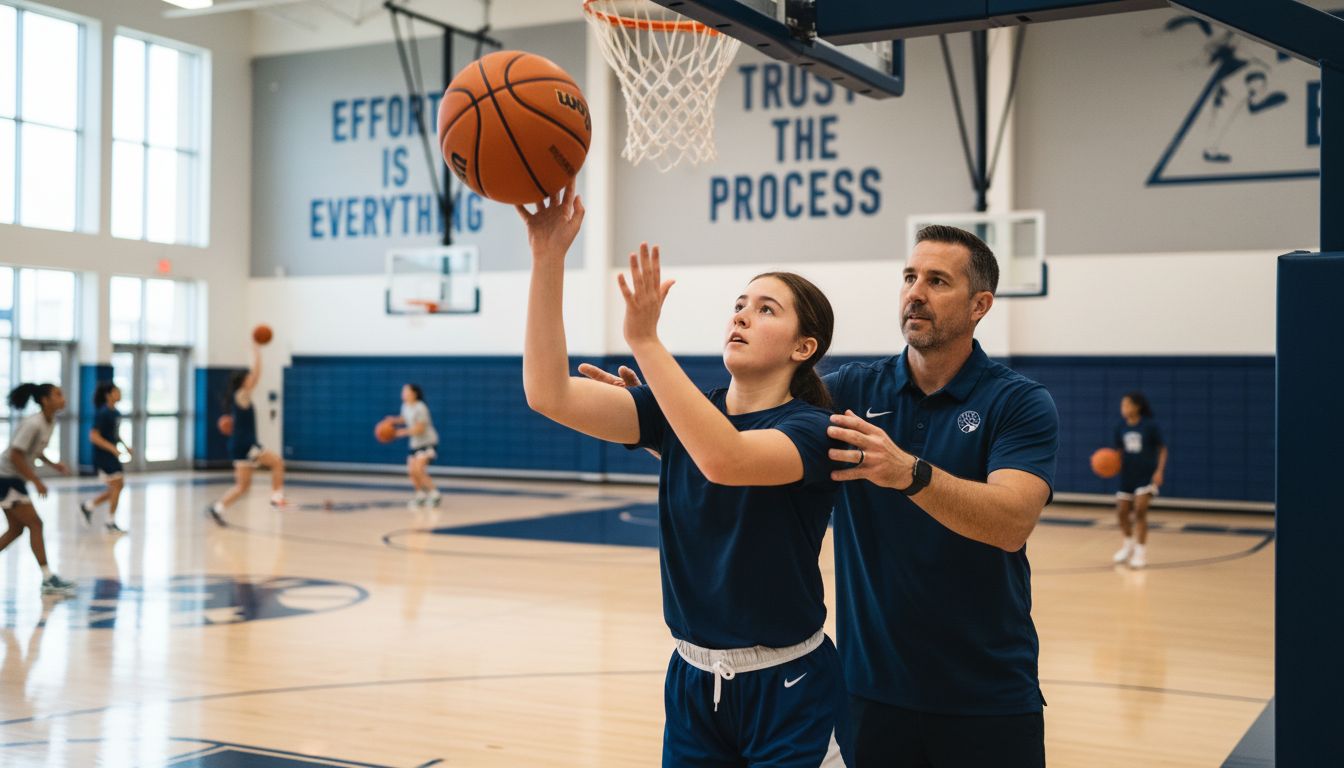
Effective basketball coaching requires a multifaceted approach that integrates technical skill development, psychological motivation, and holistic player support. Coaches must possess strong leadership skills, deep basketball knowledge, and the ability to communicate complex strategies while maintaining team morale and individual player confidence. [Learn more about coaching communication strategies in our comprehensive guide on coaching communication techniques].
Types of Basketball Coaches and Roles
Basketball coaching encompasses a diverse range of specialized roles, each with unique responsibilities and focus areas. According to Job Bank, men’s basketball coaches are fundamentally responsible for leading team development, creating strategic game plans, and ensuring overall team performance.
Types of Basketball Coaches include:
- Head Coach: Primary strategic leader responsible for overall team performance
- Assistant Coach: Supports head coach, specializes in specific skill development
- Strength and Conditioning Coach: Focuses on physical training and athlete fitness
- Youth Development Coach: Works with younger players to build foundational skills
- High-Performance Coach: Concentrates on advanced player skill optimization
ISASA highlights that a high-performance coach plays a critical role in advanced player development, implementing targeted strategies to enhance individual and team competitive potential. These coaches go beyond basic skill training, creating specialized programs that push athletes to reach their maximum potential.
Different coaching roles require unique skill sets and expertise.
While head coaches manage overall team strategy, position-specific coaches like shooting coaches or defensive specialists work intensively on particular aspects of basketball performance. [Learn more about effective coaching strategies in our basketball leadership guide], which explores the nuanced approaches successful coaches use to inspire and develop their teams.
Core Duties and Daily Responsibilities
Basketball coaching involves a comprehensive set of daily responsibilities that extend far beyond what most people imagine. According to Juniata College, a basketball coach’s core duties encompass multiple critical areas of team and athlete management.
Key Daily Responsibilities include:
- Practice Planning: Designing structured training sessions
- Player Assessment: Evaluating individual and team performance
- Skill Development: Creating targeted improvement programs
- Game Strategy: Developing and refining competitive tactics
- Player Communication: Providing consistent feedback and motivation
- Administrative Management: Handling team logistics and documentation
B-SC emphasizes that successful coaches must balance multiple complex responsibilities, including rigorous training program development, strategic recruiting efforts, and maintaining strong alumni relations. This multifaceted approach requires exceptional organizational skills and a deep understanding of both athletic performance and team dynamics.
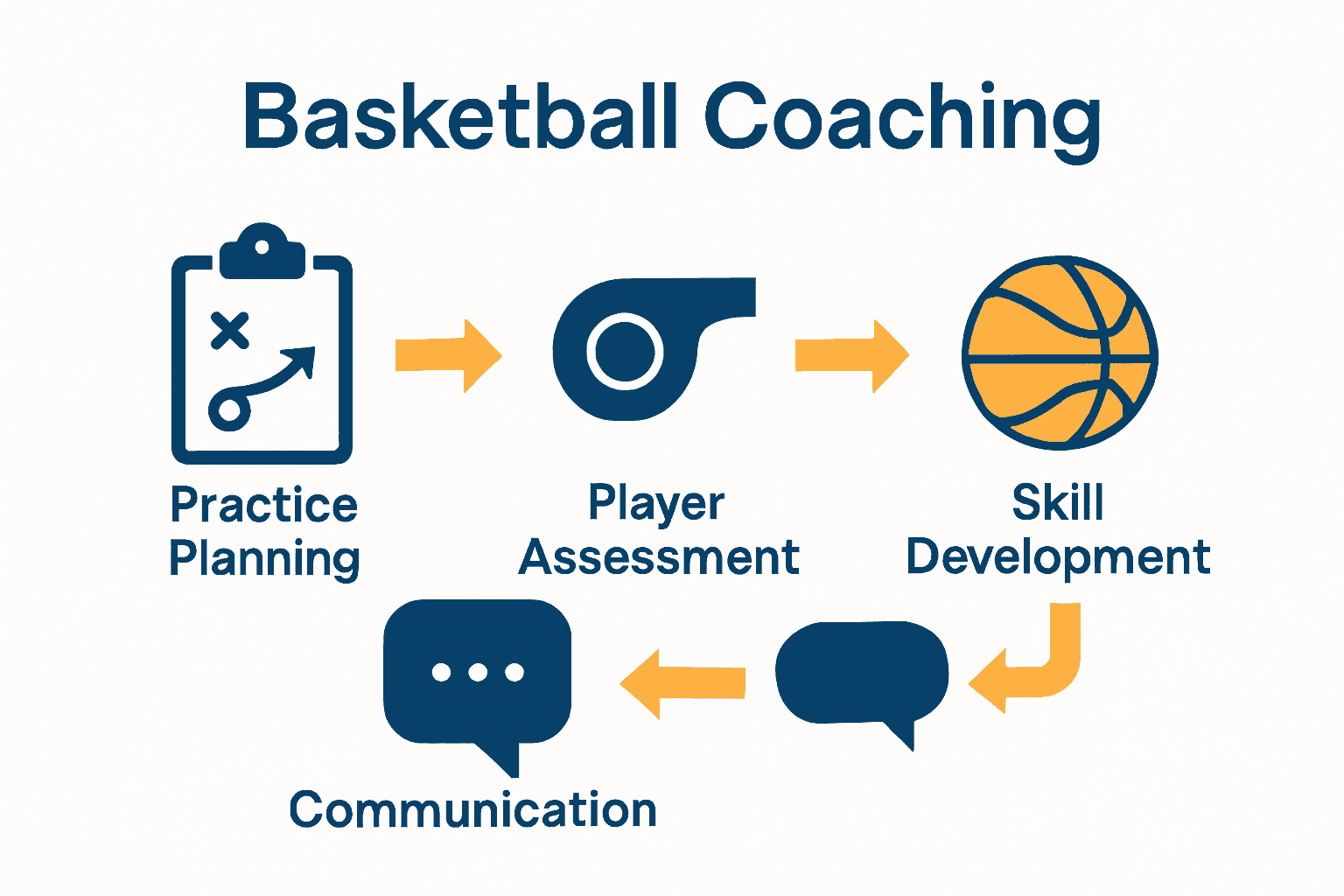
Beyond the physical training aspects, coaches spend significant time analyzing game footage, developing individual player development plans, managing team morale, and ensuring academic compliance for student-athletes. [Learn more about effective coaching communication in our player coach relationships guide, which explores the intricate dynamics of building successful team connections.
Coaching Ethics, Safety, and Compliance
Ethics and safety are fundamental pillars of responsible basketball coaching, extending far beyond athletic performance. According to Eagle Brook, coaches are expected to be exemplary role models who create safe, supportive environments while consistently upholding institutional values.
Key Ethical and Safety Considerations include:
- Player Protection: Ensuring physical and emotional safety
- Informed Consent: Obtaining proper medical clearances
- Confidentiality: Protecting player personal information
- Fair Treatment: Preventing discrimination and harassment
- Transparent Communication: Maintaining open dialogue with players and parents
- Academic Integrity: Supporting student-athletes’ educational goals
Kirtland College emphasizes that coaches must maintain professionalism and enforce consistent standards that protect both individual players and the broader team environment. This involves carefully managing team behavior, supporting academic growth, and representing the institution with integrity.
Navigating ethical challenges requires continuous education and self-reflection. Coaches must proactively develop strategies to address potential conflicts, ensure player well-being, and create a culture of mutual respect. [Learn more about managing team dynamics in our guide to handling team conflict, which provides practical insights into maintaining a positive team environment.
Common Coaching Challenges and Solutions
Basketball coaching is a dynamic profession fraught with complex challenges that require strategic problem-solving and adaptive leadership. According to Job Bank, coaches consistently face multifaceted challenges ranging from strategic development to player recruitment and regulatory compliance.
Primary Coaching Challenges include:
- Player Motivation: Maintaining consistent team engagement
- Skill Diversification: Developing individualized training approaches
- Performance Consistency: Managing player and team performance fluctuations
- Communication Barriers: Bridging generational and personality differences
- Resource Management: Balancing limited time and financial constraints
- Competitive Pressure: Managing expectations from players, administrators, and fans
ISASA emphasizes that high-performance coaches address these challenges by implementing advanced training programs and fostering competitive team cultures that promote continuous improvement and resilience. Successful coaches transform potential obstacles into opportunities for team growth and individual player development.
Navigating these challenges requires a combination of technical knowledge, emotional intelligence, and strategic thinking. Coaches must remain flexible, continually learn, and develop innovative solutions that adapt to each unique team dynamic. [Explore our time management strategies for coaches to discover practical techniques for optimizing coaching effectiveness and team performance.
Take Control of Your Coaching Responsibilities Today
Managing the many responsibilities of a basketball coach can feel overwhelming. From designing practice sessions to developing winning game strategies and motivating players, the challenges are real. If you are striving to balance coaching duties while enhancing player skills and team performance, you need practical tools that save time and sharpen your impact.

Boost your coaching effectiveness with our expertly crafted Basketball Templates and Basketball Drills. These resources are built to simplify practice planning and support skill development so you can focus on leading your team to success. Visit Hoop Mentality now and get the proven coaching materials that help you meet your responsibilities with confidence and clarity.
Frequently Asked Questions
What are the main responsibilities of a basketball coach?
A basketball coach is responsible for strategic team development, performance management, creating training programs, designing game strategies, recruiting players, monitoring skills, managing team behavior, and supporting academic achievement.
How does a basketball coach support player development?
Coaches support player development through tailored training programs, skill assessments, consistent feedback, and targeted improvement strategies, ensuring players grow both athletically and academically.
What challenges do basketball coaches face?
Coaches encounter challenges such as maintaining player motivation, developing individualized skill training, managing performance fluctuations, overcoming communication barriers, and balancing resource limitations.
What ethical considerations must basketball coaches adhere to?
Basketball coaches must ensure player safety, obtain informed consent, protect player confidentiality, treat all players fairly, maintain transparent communication, and support academic integrity.