

TL;DR:
- Building lasting basketball team culture relies on consistent rituals, shared norms, and transparent leadership. Implementing regular practices, co-creating norms, and fostering open conflict and reflection strengthen cohesion and performance. Coaches’ daily behaviors serve as the primary signals that shape team culture over time.
Team culture building is the process of establishing consistent rituals, clear communication, and shared ownership that drive trust and performance in basketball teams. Most coaches treat culture as a byproduct of winning. The coaches who build lasting programs treat it as a system. The team culture building tips in this article are grounded in research and built for the specific demands of basketball, not generic corporate advice. Apply them consistently and your players will show up differently, not just on game day, but every day.
1. What are the foundational behavioral rituals that build lasting team culture?
Culture is not built by motivational speeches or end-of-season banquets. Small, consistent rituals practiced predictably every week are what actually shape how a team behaves under pressure. The difference between a team with culture and one without is repetition.
Research shows that behavioral rituals practiced for 90 days with under 2 hours of weekly commitment create lasting cultural habits. That is a low time investment for a high return. The key is that rituals must happen even when the schedule is packed.
Here are the rituals that work best for basketball teams:
- Daily check-ins: A 5-minute circle before practice where players share one word about how they feel. This surfaces tension before it becomes conflict.
- Priority setting: At the start of each week, the team agrees on one shared focus. It aligns effort without a long meeting.
- Feedback moments: A brief end-of-practice debrief where one player calls out a teammate for a positive effort. Public recognition builds accountability.
- Ritual protection: Skipping rituals signals that culture is optional. Missing them during busy stretches is the most common failure point coaches face.
Pro Tip: Run each ritual as a 30-day experiment first. Tell your players you are testing it, not mandating it forever. This lowers resistance and gets genuine buy-in before the habit locks in.
2. How to create a team charter that builds player ownership
A team charter is a written document that defines the team’s mission, individual roles, and the norms players agree to follow. It is not a poster on the wall. It is a living agreement that every player co-creates and owns.
Co-creating a team charter in a 30–60 minute session early in the season leads to stronger player ownership and role clarity. When players write the norms themselves, they enforce them on each other. That is far more powerful than a coach enforcing rules alone.
A strong team charter covers:
- Mission: Why does this team exist beyond winning games? What do you want players to say about this program in 10 years?
- Individual roles: Each player names their primary contribution to the team. This reduces role confusion and entitlement.
- Interaction norms: How will the team make decisions? How will players communicate disagreement? What does respect look like in practice?
- Conflict protocol: What happens when two players clash? Who mediates, and how fast?
Written norms stored in a shared space guard culture during roster turnover and stressful stretches of the season. New players read the charter and understand the standard immediately. Veteran players use it as a reference when behavior slips.
Pro Tip: Hold the charter session in the first two weeks of the season. Revisit it at the midpoint. Players who helped write it will hold each other accountable to it.
3. Why structured retrospectives improve team performance
A retrospective is a structured team debrief where players and coaches reflect on what worked, what did not, and what to adjust. Most coaches skip this step. That is a measurable mistake.
Structured retrospectives improve team performance by about 25% when held starting by week 4 of the season. That number reflects the compounding effect of teams that catch problems early instead of letting them fester. Run your first retrospective before week 4, then hold one monthly.
Here is a simple format that works for basketball teams:
- What worked well? Players name two or three things the team executed well in the past month. Start positive to open the conversation.
- What can improve? Players identify one or two patterns that hurt performance. Keep this specific, not personal.
- What do we adjust? The team agrees on one norm or habit to change before the next retrospective. One change at a time sticks better than five.
- Who owns the change? Assign a player to track the adjustment. Ownership drives follow-through.
- Close with a commitment. Each player states one personal action they will take before the next session.
The retrospective only works if players feel safe speaking honestly. Set the rule that no comment in the room gets used against anyone later. Coaches who enforce this rule consistently build the psychological safety that makes the debrief worth having.
4. How to manage conflict productively and avoid false alignment
False alignment is when a team appears to agree but privately disagrees. It is one of the most damaging patterns in team culture because it looks like cohesion while actually hiding resentment. Coaches who avoid conflict to keep the peace create false alignment without realizing it.
A healthy team culture requires engineered productive conflict and norms that make debate expected before decisions are finalized. This is not about letting arguments run wild. It is about creating a structure where disagreement is safe and expected.
Strategies that work:
- Name the norm explicitly: Tell your team that debating ideas before decisions is required, not optional. Players who stay silent are not being respectful. They are withholding information the team needs.
- Surface conflict early: Naming the team’s development stage and surfacing early conflict accelerates team maturity and prevents toxic dysfunction later in the season.
- Separate person from position: Teach players to argue the idea, not the person. “I disagree with that play call” is different from “You always make bad decisions.”
- Resolve fast: Set a 24-hour rule. If two players have a conflict, they address it within 24 hours, with a coach present if needed.
Transparent communication and proactive conflict management build player trust and reduce gossip. Teams that talk openly about tension have less of it. Teams that suppress it watch it leak out in passive behavior, missed assignments, and locker room politics.
5. What role does leadership behavior play in reinforcing team culture?
The coach’s behavior is the most visible signal of what the culture actually values. Players do not follow what coaches say. They follow what coaches do consistently.
Team structure and the coach’s role as an enabler explain 74% of performance variance. That figure reframes the coach’s job entirely. You are not just a tactician. You are the primary culture signal your players read every day.
Leadership habits that reinforce culture:
- Model the standard first: If punctuality is a team value, the coach arrives first. If effort is the standard, the coach demonstrates it in every drill walkthrough.
- Make decisions transparently: When you make a lineup change or a tactical shift, explain the reasoning. Transparent decision-making reduces gossip and confusion because players understand the logic, even when they disagree with the outcome.
- Acknowledge your own mistakes: Coaches who admit errors publicly give players permission to do the same. That permission is the foundation of psychological safety.
- Reinforce culture in small moments: The way you respond to a missed assignment in practice, a late arrival, or a great defensive play sends a louder message than any team meeting.
Coaches who see themselves as culture enablers in basketball rather than just managers build programs that outlast any single season’s roster. The system carries the culture forward even when key players graduate or transfer.
6. How to use team bonding activities to strengthen collaboration
Team bonding activities work when they are tied to a specific cultural goal, not just scheduled for the sake of morale. A dinner out builds relationships. A competitive challenge builds trust under pressure. The activity should match what the team needs most at that moment in the season.
Early in the season, prioritize activities that reveal how players think and communicate. Problem-solving challenges, cooking competitions, or escape rooms force players to negotiate and collaborate outside the gym. These experiences give coaches real data on team chemistry development that practice alone does not reveal.
Mid-season, shift to activities that reinforce the team’s stated values. If the charter names “resilience” as a core value, choose an activity that requires players to push through discomfort together. The experience becomes a reference point the team can call back to when the season gets hard.
Pro Tip: Debrief every bonding activity with two questions: “What did you learn about a teammate?” and “What did you learn about yourself?” The debrief converts a fun event into a culture-building moment.
7. How effective communication habits improve team dynamics daily
Communication is the mechanism through which culture either holds or breaks down. Coaches who build effective communication habits into daily practice routines see fewer misunderstandings, faster conflict resolution, and stronger player commitment.
The most practical communication habit is the direct feedback loop. After every significant game or practice, each player receives one specific piece of feedback from the coach. Not general praise. Not vague criticism. One specific observation tied to a team value. “You helped a teammate up three times today. That is exactly what this team stands for” is more powerful than “Good effort.”
Transparent communication is underestimated but pivotal to trust and culture. Coaches who communicate the reasoning behind decisions, not just the decisions themselves, build teams that trust the process even during losing streaks. That trust is what keeps culture intact when results are hard.
Key Takeaways
The most effective team culture building process combines consistent behavioral rituals, co-created norms, structured reflection, and transparent leadership behavior practiced without exception across the full season.
| Point | Details |
|---|---|
| Rituals over events | Practice small rituals under 2 hours weekly for 90 days to build lasting cultural habits. |
| Co-create the charter | Write team norms with players in a 30–60 minute session to build ownership and accountability. |
| Run monthly retrospectives | Start structured debriefs by week 4 to catch problems early and improve team performance. |
| Engineer productive conflict | Set norms that make debate expected before decisions, so false alignment never takes hold. |
| Coach behavior is the signal | How you act daily explains 74% of performance variance, so model the standard you expect. |
What I have learned about building culture the hard way
Coaches tend to treat culture as something that happens between the real work. I used to think the same way. The real work is the culture. Everything else, the plays, the drills, the film sessions, runs through it.
The biggest mistake I see coaches make is launching culture initiatives in preseason and abandoning them by week six. Players notice. When you skip the check-in because practice ran long, you are telling them the ritual was never serious. That message lands harder than you think.
The second mistake is confusing harmony with health. A quiet locker room is not a sign of good culture. It is often a sign that players have stopped trusting each other enough to say what they actually think. The teams I have seen build real cohesion are the ones that argue well, resolve fast, and move forward together.
Start with one ritual. Run it for 30 days. Then add the charter session. Then add the retrospective. Build the system in layers, not all at once. Coaches who try to install everything in week one install nothing that lasts.
— Dejan
Hoop Mentality resources for building your team culture system
Putting these practices into action requires more than good intentions. You need ready-made tools that fit into your existing coaching workflow without adding hours of prep time.
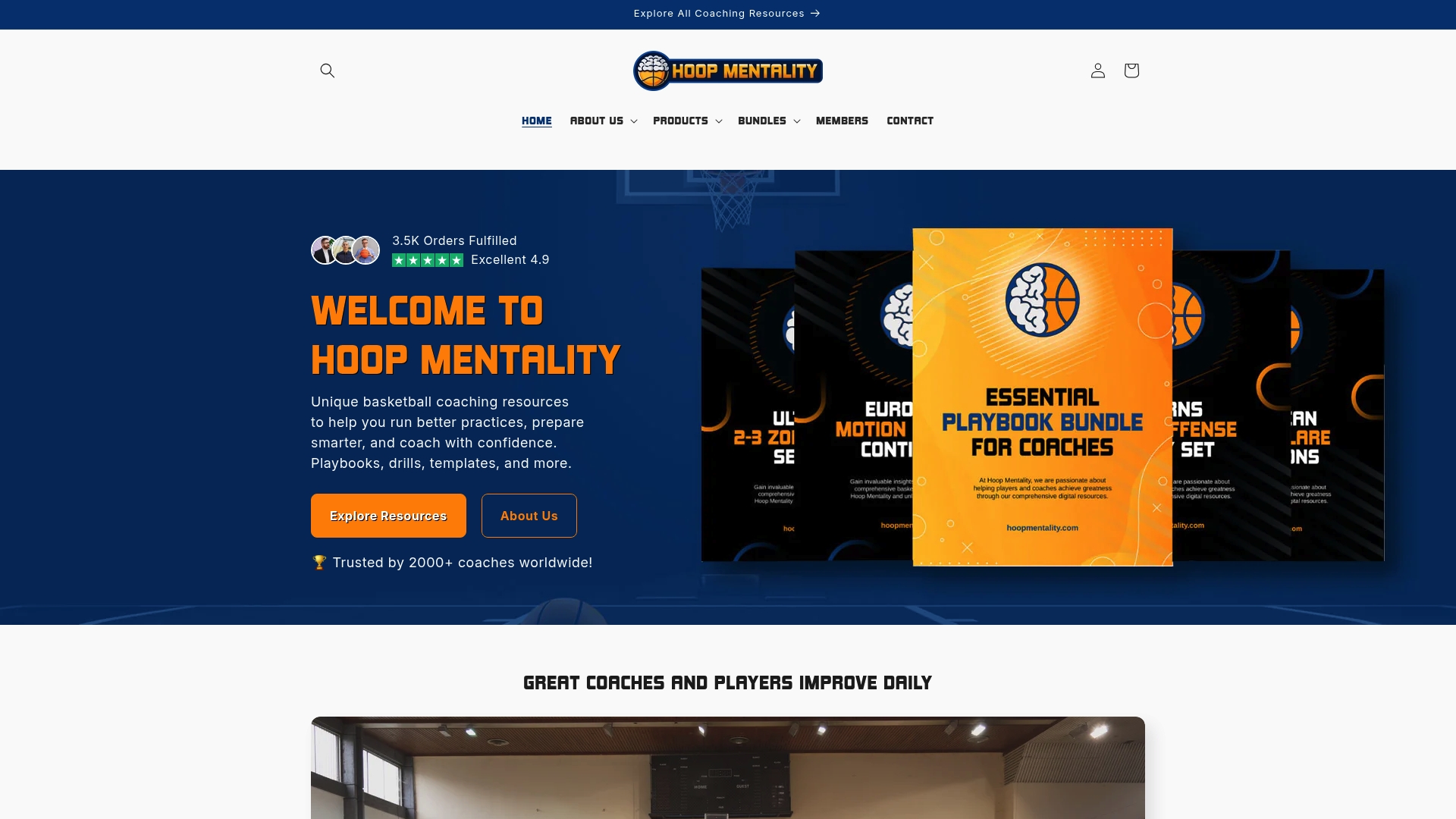
Hoop Mentality’s basketball template bundle gives you practice plan templates, communication frameworks, and team management tools built specifically for basketball coaches. Every template is designed around real coaching experience, so you spend less time creating documents and more time working with your players. The bundle covers the organizational side of culture building so your rituals, charter sessions, and retrospectives all have a clear structure to run through. Browse the full collection at Hoop Mentality and find the tools that fit your program.
FAQ
What is team culture building in basketball?
Team culture building is the process of establishing consistent rituals, shared norms, and communication habits that shape how players behave and collaborate. It is built through daily repetition, not one-time events.
How long does it take to build a strong team culture?
Research points to 90 days of consistent ritual practice as the threshold for lasting cultural habits. Coaches who maintain rituals for a full season see the strongest results.
What should a basketball team charter include?
A team charter should define the team’s mission, each player’s role, norms for communication and decision-making, and a clear conflict resolution protocol. Co-creating it with players in a 30–60 minute session builds the strongest ownership.
How do retrospectives help basketball teams improve?
Structured retrospectives give teams a regular space to identify what is working and what needs to change. Teams that hold retrospectives starting by week 4 show measurable performance gains through early problem-solving.
Why does the coach’s behavior matter so much for team culture?
The coach’s consistent behavior is the clearest signal of what the culture actually values. Team structure and the coach’s role as an enabler account for 74% of performance variance, making leadership behavior the single biggest culture lever available.