

Youth basketball teams struggle when players are unsure about what is expected on and off the court. As a coach, building a disciplined environment goes far beyond simply teaching official rules created by bodies like the NBA, NCAA, or FIBA. When you define clear team rules, you lay the groundwork for consistent discipline, strong communication, and a culture that develops athletes into responsible teammates. Clarity around expectations transforms a group of individuals into a unified force that values both accountability and respect.
Table of Contents
- Defining Basketball Team Rules And Purpose
- Core Rule Types And Common Expectations
- Implementing Rules For Player Discipline
- Best Practices For Safety And Inclusion
- Enforcing Rules And Handling Violations
Key Takeaways
| Point | Details |
|---|---|
| Establish Clear Team Rules | Team rules create an environment of trust and accountability, essential for player development and cohesion. |
| Differentiate Team Rules from Game Rules | Team rules focus on conduct, discipline, and preparation, enhancing the culture beyond the official game rules. |
| Enforce Consistency in Discipline | Consistent enforcement of rules teaches players that actions have consequences, reinforcing team standards. |
| Prioritize Safety and Inclusion | Rules should promote both physical safety and psychological belonging, ensuring all players feel valued and protected. |
Defining Basketball Team Rules And Purpose
Basketball team rules exist for one primary reason: to create an environment where players can develop, compete fairly, and achieve together. These aren’t arbitrary restrictions designed to limit your athletes. They’re frameworks that establish clarity around expectations, define consequences, and ultimately shape the culture your team embodies. When you establish clear team rules, you’re not just managing behavior—you’re building the foundation for trust, communication, and on-court success.
Team rules differ fundamentally from the official rules governing basketball play. The game’s official rules define fouls, scoring, and legal play, established by governing bodies like the NBA, NCAA, and FIBA. But team rules address conduct, preparation, discipline, and commitment. They cover attendance at practice, effort during drills, how players communicate with coaches and teammates, equipment requirements, and the standards you expect before, during, and after games. Your team rules are what separate a collection of skilled players from a cohesive unit that plays with purpose.
The purpose of establishing team rules becomes clear when you consider what young athletes bring to your program. They’re learning self-discipline, accountability, and what it means to be part of something larger than themselves. Many youth players have never played in a structured environment where consistent expectations exist. Without clear rules, confusion replaces clarity. Without consequences, accountability disappears. When you implement thoughtful team rules, you’re teaching life skills that extend far beyond the court. Players learn that preparation precedes performance. They understand that individual choices affect team outcomes. They experience how mutual respect builds stronger relationships.
Effective team rules also protect your coaching authority and your program’s credibility. When a new player joins your roster, they need to know exactly what you expect. When conflicts arise between teammates, you need a reference point for addressing them fairly. When a player’s effort drops or their attitude becomes problematic, you reference established standards rather than making reactive decisions. This consistency is what separates coaches who lose respect from coaches whose teams run like well-organized machines. The best coaches establish their rules during the offseason or first week of practice, communicate them clearly to parents and players, and enforce them consistently throughout the season. Building strong team culture through effective leadership requires this foundation.
Pro tip: Write your team rules down and share them with players and parents before the season starts—nothing demonstrates clarity and professionalism like a written document that everyone signs and understands.
Core Rule Types And Common Expectations
Team rules fall into distinct categories, each serving a different purpose in shaping how your players behave and perform. Understanding these categories helps you build a comprehensive rule system that covers all the bases without becoming overwhelming. Most effective coaching programs organize rules around attendance and punctuality, effort and preparation, communication and respect, and game day conduct. This structure makes rules easier for players to remember and for you to enforce consistently.
Attendance and punctuality rules form the foundation. Young athletes need to understand that showing up on time is non-negotiable. Missing practice sessions directly impacts team chemistry and your ability to teach concepts that translate to game situations. Many coaches require players to arrive 10 to 15 minutes before practice starts, with clear consequences for tardiness. Excused absences should have a defined process—maybe a 24-hour notice requirement or documented reasons. When players understand that attendance reflects commitment, you eliminate the pattern of casual no-shows that derail team building. Effort and preparation expectations cover what happens during practice and games. Players should understand basketball rules and violations that govern official play, but your team rules should also demand maximum effort on every drill, proper equipment maintenance, and focused attention during instruction. This is where many coaches establish “no complaining” policies, requirements to stay after practice for conditioning, and standards for how players approach shooting form or defensive positioning.
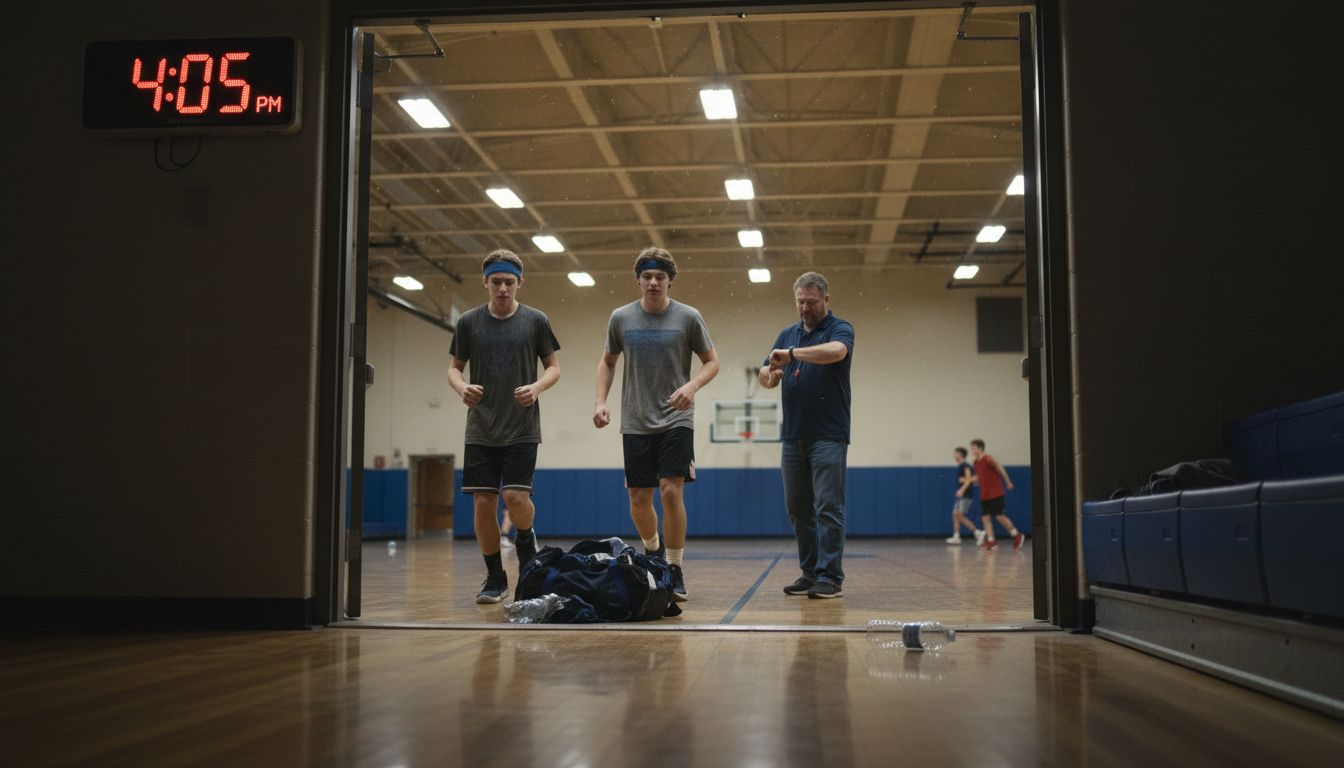
Communication and respect rules protect your team culture. These include how players speak to coaches, how they respond to corrections, and how they interact with teammates. A clear expectation might be: “Listen without interrupting when coaches provide feedback” or “Encourage teammates on and off the court.” Game day conduct rules specify behavior during timeouts, on the bench, and toward officials. Players need to know whether they can question a coach’s decision during a timeout (many coaches say no), how they should respond to criticism, and that showing frustration toward referees results in consequences. These rules prevent the toxic situations where poor sportsmanship spreads through a roster.
Here’s what separates good team rules from great ones: specificity. Don’t say “Be respectful.” Instead, say “Keep your hands down and nod when receiving feedback” or “Address coaches as Coach [Name], not by first name.” Vague rules create gray areas where players argue about interpretations. Specific rules eliminate that debate. You should also distinguish between minor infractions and major violations. A player arriving two minutes late might result in running sprints. A player talking back to an official or refusing to enter the game might mean benching. This graduated consequence system shows players that your rules have teeth without being draconian.
To clarify how team rules support player development, here’s a summary of core rule categories and their impacts:
| Rule Category | Main Focus | Impact on Team Culture |
|---|---|---|
| Attendance & Punctuality | Consistent presence and timeliness | Builds reliability and commitment |
| Effort & Preparation | Maximum effort and readiness | Fosters accountability and high standards |
| Communication & Respect | Positive talk and listening skills | Encourages trust and support |
| Game Day Conduct | Professional behavior under stress | Models sportsmanship and composure |
Pro tip: Create a one-page rule sheet with three columns: Rule, Reason, and Consequence—this clarity prevents arguments and makes enforcement feel fair rather than arbitrary.
Implementing Rules For Player Discipline
Implementing rules means nothing without enforcement. This is where many coaches fail. They establish clear expectations but then ignore violations, rationalize exceptions, or apply consequences inconsistently. Your players notice immediately. When some players run sprints for being late while others face no consequences, your authority erodes and your culture crumbles. Discipline isn’t about punishment—it’s about teaching players that actions have predictable outcomes. When you implement rules consistently, you’re creating an environment where players understand cause and effect, where respect flows from fairness, and where everyone plays by the same standard.
Start by communicating consequences clearly upfront. Players should know exactly what happens for each type of violation. A player arriving late to practice runs a specific number of sprints. A player failing to complete a conditioning requirement sits out the next game. A player showing disrespect to a coach receives a meeting with you and a parent call home. These predetermined consequences remove emotion from the enforcement process. You’re not angry and handing down a harsh punishment. You’re simply following the system you established. Understanding how technical fouls and unsportsmanlike conduct function in organized play helps you establish similar clarity for your team standards. When consequences are known, players can’t claim unfairness.
Implementation requires consistency and patience. The first few weeks of enforcing rules will test whether you actually mean what you said. A starter might violate a rule, and you’re tempted to make an exception because losing their minutes hurts the team. Don’t. This is exactly when your credibility gets forged. Enforce the consequence, even if it costs you a game. Word spreads faster than you realize. Players tell their teammates that you actually follow through. From that point forward, your rules carry weight because everyone knows you’re serious. Many coaches benefit from establishing basketball discipline methods that provide structured approaches to enforcement rather than reactive decisions. This removes personal bias from the equation.
Graduate consequences based on severity and frequency. A first offense might be a private conversation followed by a conditioning requirement. A second offense becomes a team meeting. A third offense results in reduced playing time. This progression shows players you’re giving them chances to correct behavior, but consequences escalate when they don’t. Major violations like talking back to an official or refusing to play warrant immediate, significant consequences. Minor violations like not having water bottles ready get handled quickly during practice without making a scene. This differentiation maintains your authority while showing players you’re fair and reasonable rather than tyrannical. The goal is always to bring players back into line, not to destroy them.
Here is a comparison of minor versus major rule violations and how they are typically addressed:
| Violation Type | Example Infraction | Typical Consequence | Goal of Enforcement |
|---|---|---|---|
| Minor | Late arrival to practice | Extra sprints or laps | Correct habits quickly |
| Major | Refusing to enter the game | Loss of playing time, meeting | Demonstrate non-negotiables |
Pro tip: Enforce rules privately when possible for minor infractions, saving public corrections for situations where team culture is being challenged directly.
Best Practices For Safety And Inclusion
Your team rules exist within a framework that must prioritize both physical safety and psychological belonging. Young athletes come to your program with different backgrounds, experiences, abilities, and comfort levels. Some players have played organized basketball since elementary school. Others are trying the sport for the first time. Some come from supportive home environments. Others face challenges you may not see. Your rules and culture either create space for all these players to develop or they exclude those who don’t fit a narrow mold. The best coaching programs establish rules that protect every player while fostering genuine inclusion.
Physical safety starts with clear expectations around player conduct during practice and games. Rules should address intentional fouling, aggressive behavior toward teammates, and unsafe drill execution. Many coaches establish a “no unnecessary contact” standard during conditioning drills and a “controlled intensity” requirement during scrimmages. Players need to understand that playing hard and playing safe aren’t mutually exclusive. Beyond physical safety, coaches should implement concussion management and cardiac health protocols appropriate to youth basketball, including recognition of symptoms and procedures for removing injured players from activity. These protocols protect your players legally and demonstrate genuine care for their well-being.
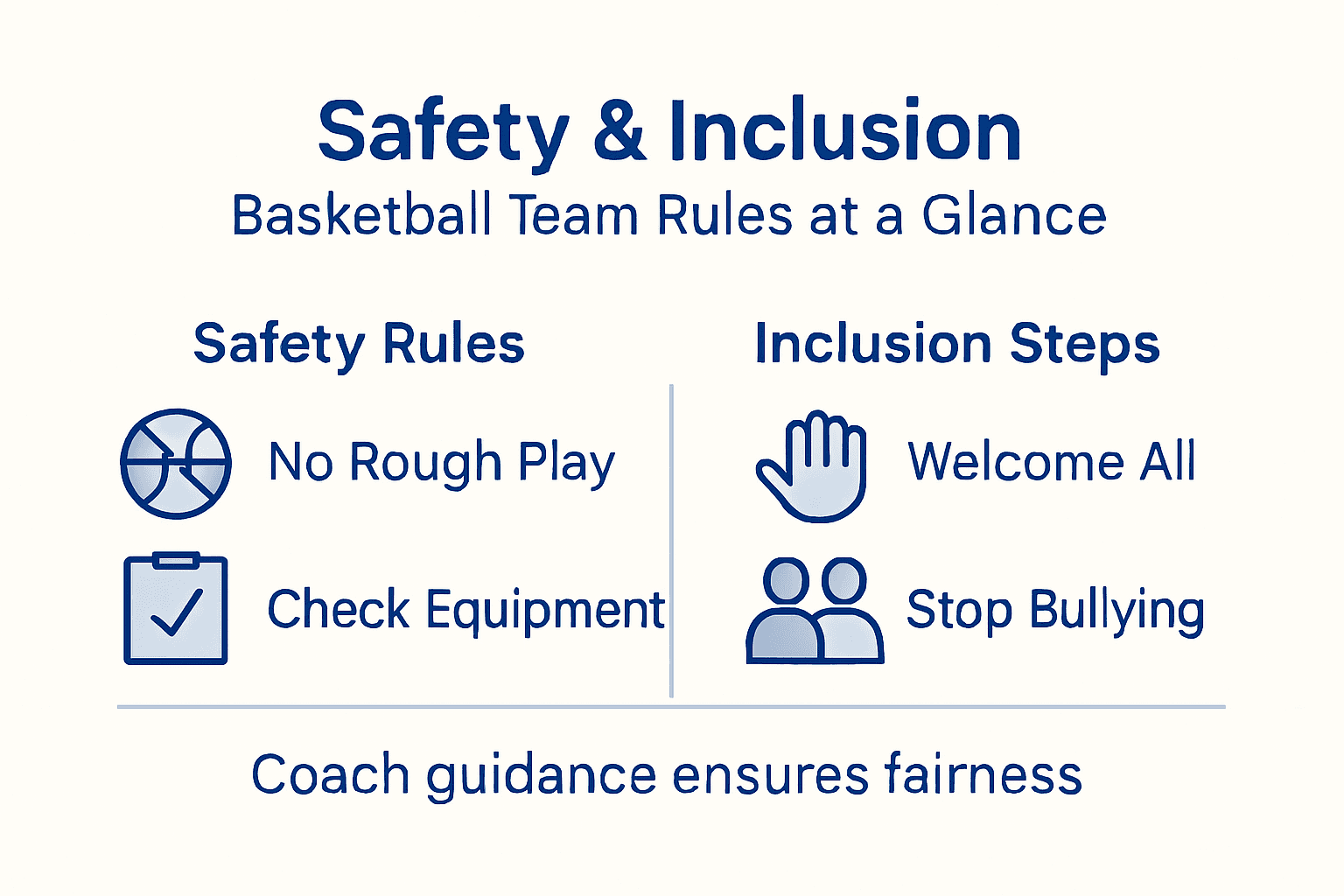
Inclusion requires intentional effort. Many coaches unintentionally create cultures where certain players feel welcomed while others feel like outsiders. This happens through language, through who gets playing time, through whose ideas are valued in team meetings, and through how conflict gets resolved. Your rules should explicitly address respect for all players regardless of skill level, background, or experience. This might mean a rule that “all players participate in team bonding activities” rather than allowing cliques to form. It might mean a rule that “negative comments about teammates are addressed immediately” to prevent toxic team dynamics. It could mean rotating leadership responsibilities so every player experiences being heard and valued. When establishing basketball teamwork principles that build genuine cohesion, focus on creating an environment where contribution isn’t measured solely by scoring or playing time.
Inclusivity also means having clear anti-discrimination policies and procedures for addressing conflicts respectfully. Players should know that racist comments, homophobic language, or any form of bullying result in immediate consequences including potential removal from the team. This isn’t negotiable. When conflicts arise between players, your rules should outline a process for resolution rather than allowing resentment to fester. This might include team mediation sessions, one-on-one conversations, or structured dialogue where both players feel heard. The message is clear: we compete hard, we hold each other accountable, but we do so with respect and dignity.
Pro tip: Schedule regular team meetings focused purely on culture and inclusion, separate from basketball strategy, where players can voice concerns and help shape the team environment they want to play in.
Enforcing Rules And Handling Violations
Enforcement separates coaches who build winning cultures from those who just talk about values. The moment a violation occurs, you face a choice. Address it immediately with consistency and fairness, or let it slide and watch your authority dissolve. Most violations fall into categories that need different responses. A player arriving five minutes late requires a different approach than a player refusing to play or showing disrespect to an official. Understanding how to categorize violations helps you respond proportionally rather than either overlooking problems or overreacting to minor issues.
Start by documenting violations. Keep a simple record of who violated what rule and when. This isn’t about building a case against a player. It’s about having facts rather than relying on memory or emotion. When you need to address a pattern, you can reference specific incidents rather than making vague accusations. Documentation also protects you if a parent challenges a consequence or if a violation becomes serious enough to warrant involvement from athletic directors or school administrators. A player might claim you’re treating them unfairly, but your documentation shows whether that’s accurate. Just as understanding basketball violations and their enforcement) helps officials maintain game integrity, your documentation maintains program credibility.
Communicate violations privately whenever possible for minor infractions. Pull a player aside during a break and explain what you observed and why it violated team standards. Give them a chance to respond. Maybe there’s context you don’t have. Maybe their grandmother passed away and they were distracted, which explains the lack of focus. Listen. Then apply the predetermined consequence. This private approach teaches accountability without humiliation. The player learns that you care enough to address issues directly with them rather than embarrassing them in front of teammates. For major violations like talking back to officials or refusing to play, address them more publicly so the team understands that these behaviors carry serious consequences. The key is matching the response to the severity and impact on team culture.
When violations repeat, escalate consequences and consider whether deeper issues exist. A player repeatedly arriving late might indicate transportation problems that need creative solutions rather than just running sprints. A player consistently showing attitude problems might be struggling with something at home or school that warrants a private conversation about how you can support them. Good enforcement doesn’t just punish. It investigates root causes and responds thoughtfully. Sometimes that means adjusting practice times. Sometimes it means connecting a player with school counselors. Sometimes it means sitting down with parents to understand what’s happening. The goal is always to bring the player back into alignment with team standards, not to exile them. Most violations stem from immaturity or poor choices, not malice. Your enforcement teaches consequences while preserving the relationship.
Pro tip: Create a violation log spreadsheet tracking player, date, violation type, consequence given, and whether the behavior improved—this data reveals patterns and helps you refine what actually works.
Build a Stronger Team Culture with Proven Coaching Resources
Struggling to create clear, enforceable basketball team rules that drive accountability and respect Take control of your team’s culture by using well-structured resources that focus on discipline, communication, and preparation. Hoop Mentality offers practical Basketball Templates designed to help you establish consistent attendance policies, define consequences, and maintain fairness across your roster. Our tools enable you to implement specific team standards that transform individual effort into collective success.

Elevate your coaching with resources built from real experience to save time and improve clarity in your leadership. Visit Hoop Mentality now to explore our comprehensive Basketball Drills and Basketball Workouts that complement your team rules. Start shaping a team culture that fosters trust, discipline, and winning attitudes today.
Frequently Asked Questions
What are the main reasons for establishing team rules in basketball?
Team rules are established to create an environment where players can develop, compete fairly, and achieve as a unit. They provide clarity around expectations, build trust, and shape the team’s culture.
How can attendance and punctuality rules affect a basketball team’s performance?
Attendance and punctuality are crucial as they build team chemistry and ensure that all players are present for important practice sessions, which directly impacts learning and performance during games.
Why is communication and respect emphasized in basketball team rules?
Communication and respect rules help foster a positive team culture. They ensure players listen to coaches and teammates, which encourages trust, support, and constructive feedback.
What should a coach do when a team rule is violated?
When a rule is violated, coaches should address the issue immediately and consistently enforce the predetermined consequences. This must be done privately for minor infractions and more publicly for major violations to maintain authority and respect in the team culture.