

TL;DR:
- Consistent free throw success depends on proper mechanics, a repeatable pre-shot routine, and deliberate practice under fatigue. Mastering shot arc, backspin, and body alignment can significantly improve accuracy, especially when combined with focused mental preparation. Regular tracking, structured drills, and practicing in game-like conditions are essential to becoming an elite free throw shooter.
Free throw improvement tips center on three non-negotiable pillars: sound mechanics, a repeatable pre-shot routine, and deliberate practice under pressure. The free throw is the only uncontested shot in basketball, yet NBA players average around 77% from the line. That gap between opportunity and execution is entirely fixable. Whether you shoot 50% or 85%, the same principles apply. Master your body alignment, lock in your routine, and train at game-level intensity. Do those three things consistently, and your percentage climbs.
1. What are the fundamental mechanics every free throw shooter must master?
Sound mechanics are the foundation of every reliable free throw. Alignment inconsistencies cause up to 70% of shooting errors. That means most misses are mechanical, not mental.
Start with your feet. Place them shoulder-width apart, with your shooting foot slightly forward toward the rim. Your hips and shoulders must be square to the basket. Any rotation in your torso sends the ball offline before you even release it.
Your elbow position is the single most critical checkpoint. Tuck your shooting elbow directly under the ball, pointing straight at the rim. A flared elbow causes left-right inaccuracy in up to 80% of struggling shooters. Fixing this one error alone produces immediate improvement for most players.
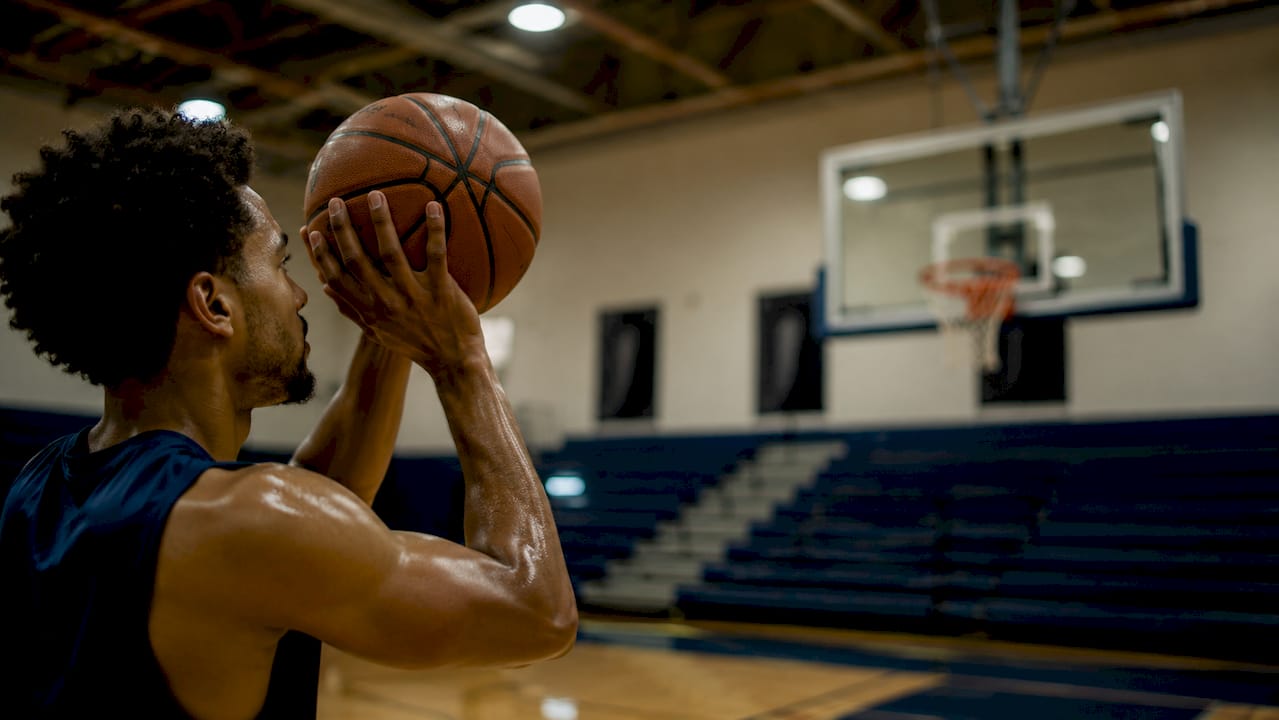
Power comes from your legs, not your arms. Free throw strength comes primarily from the legs and core, with the arms acting as guides rather than power sources. Bend your knees, then drive upward as you release. Your arm and wrist follow through that leg drive, not the other way around.
Finish every shot with a relaxed wrist snap and a held follow-through. Your fingers should point at the rim after release. Dropping your hand early is one of the most common causes of short shots.
Pro Tip: Film yourself from the side and from behind. Elbow flare and foot misalignment are nearly impossible to self-diagnose in real time. Two minutes of video review saves weeks of guessing.
Here is a quick mechanical checklist to run before every shot:
- Feet shoulder-width apart, shooting foot slightly forward
- Hips and shoulders square to the rim
- Elbow tucked under the ball, pointing at the basket
- Knees bent, ready to drive upward
- Wrist relaxed, follow-through held until the ball hits the rim
Use the basketball shooting checklist from Hoopmentality to walk through each mechanical point with your players or coach.
2. How to build a consistent pre-shot routine to improve focus
A pre-shot routine is the trigger that activates your mechanics before every attempt. Routine consistency is the primary differentiator between 90% shooters and 70–75% shooters. That is not a small gap. It is the difference between winning and losing close games.
The routine does two things. First, it gives your body a familiar sequence to follow, which reduces the chance of mechanical breakdown under pressure. Second, it occupies your conscious mind so anxiety cannot take over.
Build your routine in this order:
- Step to the line. Place your feet in the exact same spot every time.
- Dribble a set number of times. Two or three dribbles works for most players. The number does not matter. Consistency does.
- Spin the ball. This relaxes your grip and resets your hand position.
- Take one slow breath. Exhale fully before you begin your shooting motion.
- Pick your spot on the rim. Focus on the back of the rim, not the backboard.
- Shoot. Execute the same motion you have practiced hundreds of times.
Visualization and slow exhalation before release stabilize heart rate and improve focus under pressure. Spend one second seeing the ball go through the net before you start your motion. This is not wishful thinking. It is a mental rehearsal that primes your motor system.
The biggest mistake players make is rushing their routine when the game is on the line. Most failures in free throw shooting relate to inconsistent routines speeding up under pressure, not lack of talent. Slow down deliberately when the stakes are highest.
Pro Tip: Practice your routine in the mirror at home without a ball. Rehearsing the sequence away from the court builds the habit faster than you expect.
Read more about building shooting routines at Hoopmentality for a deeper breakdown of how to structure this process.
3. What practice drills and volumes are most effective?
Volume and structure both matter in free throw training. Shooting 50–100 free throws daily and tracking makes versus misses produces measurable improvement within 30 days. That tracking piece is not optional. Without data, you are guessing at your progress.
Here are the most effective drills and methods to structure your practice:
- Daily block shooting. Shoot 10 shots, record your makes, rest 60 seconds, repeat five times. This builds procedural memory without mental fatigue distorting your mechanics.
- Step-back progression. Start two feet from the basket and make five in a row before stepping back. Work your way to the free throw line. This builds confidence and reinforces proper arc.
- Post-conditioning free throws. Shoot 10 free throws immediately after sprints or defensive slides. High-pressure drills after conditioning with a heart rate above 160 bpm simulate game fatigue and improve clutch shooting.
- First to 80. Split your team into two groups. The first group to make 80 free throws wins. This creates competitive pressure without a coach manufacturing it artificially.
- Timed shooting challenges. Make as many free throws as possible in 90 seconds. This adds urgency and forces you to maintain your routine under a clock.
| Drill | Purpose | Recommended Volume |
|---|---|---|
| Daily block shooting | Build procedural memory | 50–100 shots per session |
| Step-back progression | Reinforce arc and confidence | 5 makes per distance |
| Post-conditioning shots | Simulate game fatigue | 10 shots after each conditioning set |
| First to 80 | Competitive pressure simulation | Full team, race format |
| Timed challenge | Urgency and routine speed | 90-second windows |
Deliberate practice beats mindless repetition every time. Each shot needs a full routine, a clear target, and honest tracking. Explore types of shooting drills from Hoopmentality to add more structure to your sessions.
Using data in athletic decision-making helps you identify patterns in your misses and adjust your training before bad habits become permanent.
4. Which advanced techniques separate average from elite shooters?
Elite free throw shooters control variables that most players ignore. The optimal shot release arc is between 45 and 55 degrees, with approximately 3 Hz of backspin for the best chance of scoring. A higher arc creates a larger effective target at the rim. A flatter shot requires near-perfect aim.
Backspin is not just cosmetic. It softens the ball’s contact with the rim and increases the chance of a bounce-in on near misses. Generate backspin by rolling the ball off your fingertips at release, not by snapping your wrist aggressively. The motion should feel smooth, not forced.
| Technique | Average Shooter | Elite Shooter |
|---|---|---|
| Release arc | Below 45 degrees, flat trajectory | 45–55 degrees, high arc |
| Backspin | Minimal or inconsistent | Consistent ~3 Hz rotation |
| Power source | Arm-dominant | Leg and core driven |
| Follow-through | Dropped early | Held until ball reaches rim |
| Routine speed under pressure | Speeds up, shortens | Stays identical to practice |
Release point consistency matters as much as arc. Release the ball at the same point in your upward motion every time. Players who release early on some shots and late on others will never find consistency, regardless of how good their mechanics look at rest.
“The free throw is a skill, not a gift. Every mechanical variable you control is a percentage point you earn.” — Hoopmentality coaching staff
Mental fatigue degrades mechanics faster than physical fatigue. When you are tired, your elbow flares first, then your follow-through shortens. Knowing this, you can self-correct mid-game by running your mechanical checklist before each attempt rather than relying on feel alone.
Key takeaways
Consistent free throw shooting requires correct mechanics, a locked-in routine, and structured practice at game-level intensity.
| Point | Details |
|---|---|
| Mechanics come first | Tuck your elbow, square your hips, and drive with your legs on every shot. |
| Routine beats talent | A repeatable pre-shot sequence separates 90% shooters from 70% shooters. |
| Track your volume | Shoot 50–100 free throws daily and log makes versus misses for measurable progress. |
| Train under fatigue | Practice free throws after conditioning to prepare for game-pressure situations. |
| Arc and backspin matter | Aim for a 45–55 degree release angle and consistent backspin to improve shot quality. |
What I have learned coaching free throw shooting
Free throw shooting is the most undercoached skill in basketball. Players spend hours on ball handling and footwork, then walk to the line in a game and wonder why their shot feels foreign. The line is where preparation meets pressure, and most players are not prepared.
The players I have seen improve fastest share one trait: they treat every practice free throw like a game free throw. Same routine. Same focus. Same follow-through hold. The players who improve slowest treat practice shots as warmup reps, then expect their body to perform differently when the score is tied.
Small technical fixes produce outsized results. Correcting a flared elbow or adding one deliberate breath to a routine can move a player from 65% to 75% within a month. That is not a minor gain. In a close game, those extra makes are the difference.
Track your progress with a simple notebook or a spreadsheet. When you see your percentage climb from 62% to 71% over six weeks, that data becomes motivation. It also tells you what is working so you do not abandon a good habit too early.
Be patient with the process. Free throw mechanics feel awkward when you first correct them. That discomfort is normal. Push through it for two to three weeks before judging whether the change is working. Most players quit adjustments too early because the new motion feels unnatural before it becomes automatic.
— Dejan
Take your free throw training further with Hoopmentality
Ready to put these principles into a structured program? Hoopmentality builds coaching resources around real practice experience, not theory.

The Big Man Dual Action Drill develops the focus and mechanical discipline that carries directly into free throw performance. For a full weekly structure, the Game Preparation Guide with Weekly Practice Plan includes free throw shooting blocks built into every practice week. Both resources are designed to save you planning time and give your players a clear, repeatable system to follow. Explore the full catalog at Hoopmentality and find the tools that fit your team’s current level.
FAQ
What is the most common cause of missed free throws?
A flared elbow is the leading mechanical cause, producing left-right inaccuracy in up to 80% of struggling shooters. Rushing the pre-shot routine under pressure is the most common mental cause.
How many free throws should I shoot per day to improve?
Shoot 50–100 free throws daily and track every make and miss. This volume builds procedural memory and produces measurable improvement within 30 days.
What release angle is best for free throws?
Sports science identifies 45–55 degrees as the optimal release arc, combined with approximately 3 Hz of backspin. This combination creates a softer rim interaction and a larger effective target.
How do I stop missing free throws when I am tired?
Practice free throws immediately after conditioning drills with your heart rate above 160 bpm. This trains your body to maintain mechanics under the same fatigue conditions you face in games.
Does visualization actually help free throw shooting?
Yes. Visualization combined with slow exhalation before release lowers heart rate and improves focus under pressure. Spend one second seeing the ball go through the net before starting your shooting motion.