

What separates a strong defensive team from the rest often comes down to how well players disrupt an opponent’s shot attempts. For youth basketball coaches across the United States and Canada, teaching young athletes to master shot contesting can shift game outcomes and fuel team confidence. Research shows that contesting shots within 0 to 2 feet dramatically reduces shooting percentages, proving that close defensive pressure truly matters. This guide gives you actionable ways to sharpen contesting skills and make your team tougher to score against.
Table of Contents
- What Contesting Shots Means In Basketball
- Key Types Of Shot Contests Explained
- Essential Techniques And Footwork For Defenders
- Coaching Drills To Improve Contesting Skills
- Common Shot Contest Mistakes To Avoid
Key Takeaways
| Point | Details |
|---|---|
| Contesting Shots is Strategic | Effective shot contesting disrupts the shooter’s rhythm, leading to reduced accuracy and increased misses. |
| Precise Defensive Techniques are Critical | Players must use specific techniques like balanced stance and lateral movement to successfully contest shots without fouling. |
| Common Mistakes Can Be Costly | Defensive players must avoid overaggressive movements and improper hand positioning to maintain defensive effectiveness. |
| Consistent Practice Enhances Performance | Structured drills that simulate game conditions help develop muscle memory and quick decision-making in defenders. |
What Contesting Shots Means in Basketball
Contesting shots in basketball is a strategic defensive technique where a player actively challenges a shooter to disrupt their shooting rhythm and reduce scoring probability. Shot contesting involves positioning oneself close to the shooter to create visual and physical pressure, making the attempted shot significantly more challenging.
The primary goal of contesting shots is to influence the shooter’s performance by limiting their comfort and shooting space. When a defender stands close and challenges the shot, they force the offensive player to adjust their shooting mechanics, potentially leading to:
- Reduced shooting accuracy
- Altered shot trajectory
- Increased likelihood of missed attempts
- Psychological pressure on the shooter
Defensive proximity plays a critical role in shot contesting. Research indicates that defenders who position themselves within 0-2 feet of the shooter can dramatically decrease field goal percentages. Studies demonstrate that defender presence changes shooter behavior, including modifications in shot timing and gaze patterns.
Successful shot contesting requires more than just physical proximity. Players must develop techniques like maintaining vertical positioning, keeping hands active and high, and moving feet quickly to stay in front of the shooter. Coaches often train defenders to contest shots without fouling, which requires precise timing and body control.
Pro tip: Practice shot contesting by focusing on maintaining balance, keeping your hands up, and moving laterally without losing defensive position.
Key Types of Shot Contests Explained
Basketball defenders employ several distinct shot contest techniques designed to disrupt offensive players’ shooting rhythm and reduce scoring opportunities. These defensive strategies require precise positioning, timing, and physical skills to effectively challenge shots without committing fouls.
The primary shot contest types include:
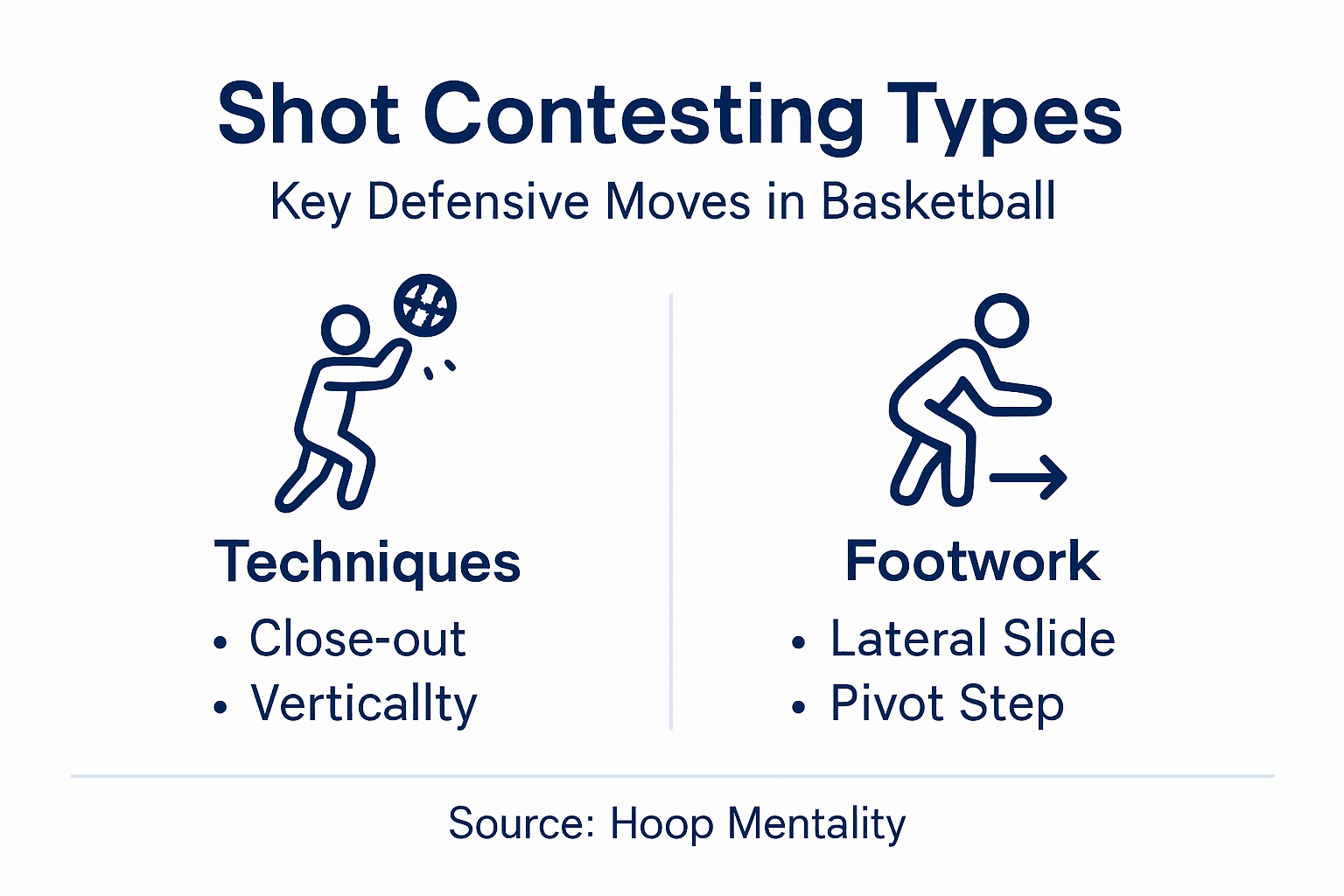
- Close-Out Contest: Sprinting toward the shooter and stopping with balanced footwork to challenge the shot
- Vertical Contest: Jumping straight up with hands extended to block shooting lanes
- Trailing Contest: Following the shooter closely and challenging from behind without making physical contact
- Hand-Down Contest: Maintaining defensive positioning with active hand movements to obstruct vision
Technique selection depends on multiple factors, including the shooter’s skill level, shooting location, and defensive player’s physical capabilities. Basketball shot selection strategies demonstrate how understanding these contest types can significantly impact defensive performance.
Each contest type requires unique skills and body control. The close-out contest demands explosive acceleration and precise deceleration, while vertical contests rely on timing and leap height. Defenders must practice these techniques to develop muscle memory and quick decision-making abilities during game situations.
Here is a summary comparing major shot contest techniques and when to use them:
| Contest Type | Key Advantage | Best Use Scenario |
|---|---|---|
| Close-Out Contest | Limits open shots on perimeter | Spot-up shooters on outside |
| Vertical Contest | Reduces fouling risk | In-the-paint jump shots |
| Trailing Contest | Challenges fast breaks | Defending runners and floaters |
| Hand-Down Contest | Disrupts vision and timing | Off-ball movement shooters |
Effective shot contesting is less about blocking the shot and more about making the shooter uncomfortable and reducing shooting efficiency.
Pro tip: Practice each shot contest technique with a focus on maintaining balance, controlling your momentum, and keeping your eyes locked on the shooter’s hip movement.
Essential Techniques and Footwork for Defenders
Defensive success in basketball hinges on mastering precise footwork and body positioning techniques that enable quick, controlled responses to offensive threats. Proper defensive footwork creates the foundation for effective shot contesting and team defensive performance.
Key defensive footwork techniques include:
- Balanced Stance: Maintaining shoulder-width foot placement with knees slightly bent
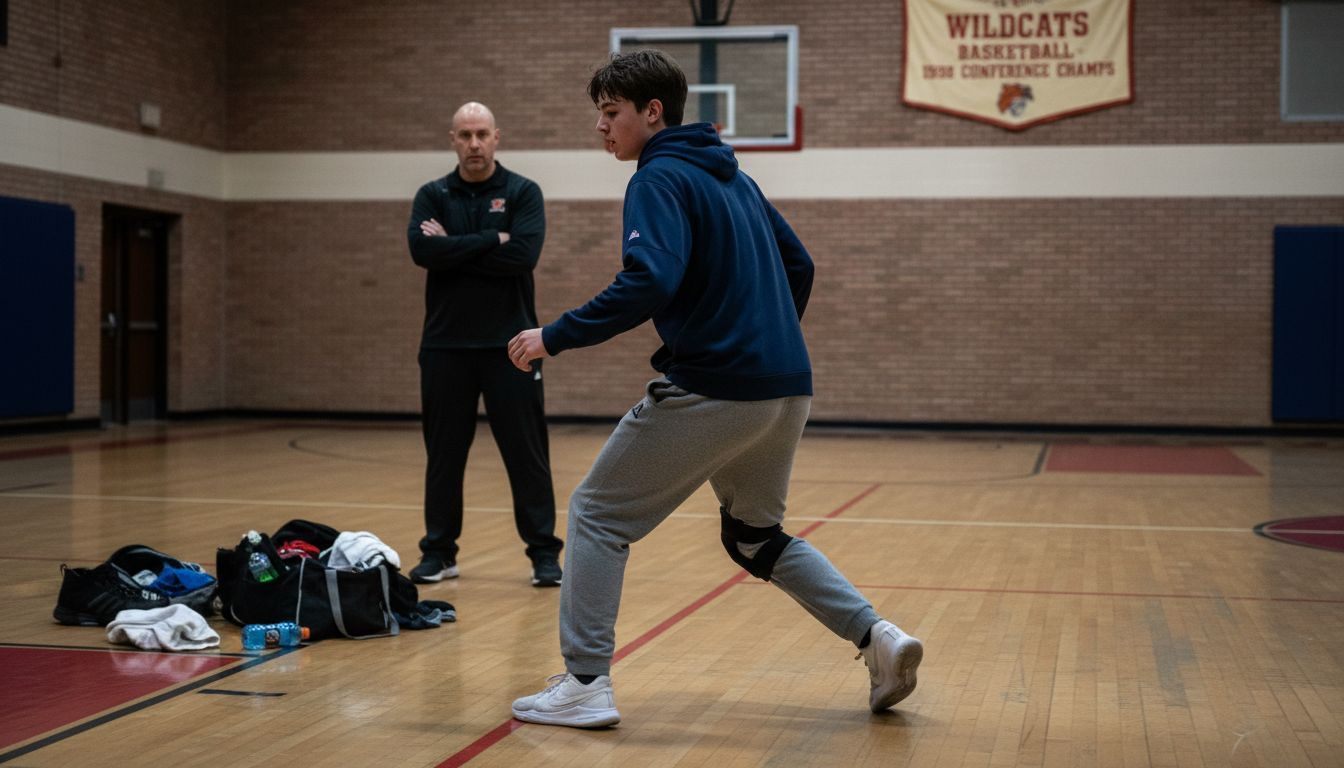
- Lateral Sliding: Moving quickly side-to-side without crossing feet
- Quick Closeout: Accelerating toward shooter while maintaining control
- Recovery Step: Rapidly repositioning after initial defensive movement
- Vertical Jump Control: Jumping straight up without leaning or fouling
The defensive positioning requires constant attention to multiple factors. Defensive angles play a critical role in limiting offensive options, with defenders focusing on forcing shooters toward less comfortable shooting zones. Basketball defensive concepts emphasize the importance of anticipation and precise movement.
Effective defense is not about blocking shots, but disrupting the shooter’s rhythm and decision-making process.
Successful defenders develop muscle memory through repetitive drills that simulate game-like scenarios. Coaches must design training programs that emphasize controlled movement, quick reaction times, and maintaining defensive positioning without committing unnecessary fouls.
Pro tip: Practice defensive slides using agility ladders and resistance bands to improve foot speed and overall defensive mobility.
Coaching Drills to Improve Contesting Skills
Developing elite defensive skills requires structured, intentional practice that simulates real-game scenarios and challenges players to refine their shot contesting techniques. Effective coaching drills focus on creating muscle memory and rapid decision-making abilities for defenders.
Key defensive training drills include:
- Closeout Challenge: One-on-one scenarios practicing controlled approach to shooters
- Rapid Reaction Drill: Quick defensive positioning against multiple offensive movements
- No-Contact Vertical Contest: Practicing vertical jumps without fouling
- Vision Disruption Drill: Learning to block shooter’s sight lines without physical contact
- Simulated Game Scenario: Full-speed defensive rotations with shot contest elements
Drill Progression matters significantly in developing defensive skills. Coaches must design increasingly complex training scenarios that push players beyond their comfort zones. Basketball defense principles emphasize creating competitive environments that translate directly to game performance.
Successful defensive training is about quality repetitions, not just quantity of practice.
Advanced coaching techniques involve breaking down each defensive movement into micro-skills, allowing players to understand and master individual components before integrating them into full defensive sequences. Small-sided competitive games can help reinforce these learned skills in high-pressure contexts.
Pro tip: Record players during defensive drills and review video together to help them understand subtle positioning and movement details.
Common Shot Contest Mistakes to Avoid
Defensive players often undermine their effectiveness by making critical errors during shot contests that can compromise team defensive performance. Common contesting mistakes can transform a potentially strong defensive play into an easy scoring opportunity for the offense.
The most prevalent shot contest mistakes include:
- Overaggressive Closeouts: Lunging forward and risking unnecessary fouls
- Improper Hand Positioning: Raising hands too low or too late to disrupt shooter’s vision
- Losing Defensive Balance: Leaning or shifting weight incorrectly during contest
- Poor Angle Selection: Failing to force shooter toward weaker shooting zones
- Neglecting Rebounding Position: Focusing solely on contesting and losing box-out opportunity
Defensive discipline requires understanding these potential pitfalls. Shooting drill techniques can help players develop muscle memory that minimizes these common errors and improves overall defensive performance.
Here is a reference table outlining common shot contest mistakes and their typical consequences:
| Mistake | Likely Defensive Breakdown | Offensive Advantage Created |
|---|---|---|
| Overaggressive Closeout | Fouls or missed closeout angle | Free throws or open shot |
| Poor Hand Positioning | Reduced shooting disruption | Clear line of sight for shooter |
| Losing Defensive Balance | Slow recovery or falling behind | Easier driving or passing lane |
| Neglecting Rebounding | Missed box-out opportunity | Extra offensive possession |
Successful shot contesting is about controlled aggression, not wild movements.
Coaches must emphasize technique over pure athleticism, teaching players to maintain composure and make calculated defensive movements. This involves developing spatial awareness, understanding shooter tendencies, and practicing consistent body control during shot contests.
Pro tip: Practice video analysis of your defensive contests, focusing on body positioning and identifying subtle technical mistakes.
Master Defensive Shot Contesting with Proven Coaching Resources
Contesting shots effectively is a key challenge for defensive players aiming to disrupt shooter rhythm and reduce scoring chances. If you want to elevate your team’s defense by mastering closeouts, vertical challenges, and footwork techniques discussed in the article you just read, consider using targeted basketball drills and workouts. These resources help build muscle memory, improve positioning, and develop the controlled aggression needed to contest shots without fouling.

Unlock your team’s defensive potential today with our expertly crafted Basketball Drills - Hoop Mentality and dynamic Basketball Workouts - Hoop Mentality. Each resource is designed to save you time while giving clear, effective methods to teach shot contesting skills and overall defense. Visit Hoop Mentality now to explore these coaching tools and begin transforming your team’s defensive impact immediately.
Frequently Asked Questions
What does contesting shots mean in basketball?
Contesting shots in basketball is a defensive technique where a player challenges a shooter to disrupt their shooting rhythm and reduce scoring chances by positioning closely and applying pressure.
What are the key techniques for effective shot contesting?
Key techniques for effective shot contesting include maintaining a balanced stance, executing lateral slides, performing quick closeouts, using proper vertical jump control, and ensuring good hand positioning to disrupt the shooter’s line of sight.
What are common mistakes to avoid when contesting shots?
Common mistakes include overaggressive closeouts that can lead to fouls, improper hand positioning that fails to disrupt the shooter’s vision, losing defensive balance, neglecting rebounding opportunities, and poor angle selection which doesn’t force the shooter into less favorable positions.
How can coaches improve players’ shot contesting skills?
Coaches can improve players’ shot contesting skills through structured drills that focus on muscle memory, controlled movements, and game simulations. Utilizing video analysis of defensive performance can also help identify and correct technique errors.