


Most American coaches have noticed that over 80 percent of youth players now face higher demands as basketball evolves far beyond traditional drills. Staying competitive in today’s game means adapting to modern, research-driven methods that push both mind and body. This guide explores how innovative training, technology, and holistic development programs are changing what it means to prepare American athletes for success throughout the entire season.
Table of Contents
- Defining Modern Basketball Training Methods
- Core Categories And Evidence-Based Approaches
- Features Of Progressive Youth Development Programs
- Integrating Holistic Training And Technology
- Responsibilities, Risks, And Common Mistakes
Key Takeaways
| Point | Details |
|---|---|
| Modern Training Comprehensiveness | Contemporary basketball training goes beyond traditional drills, incorporating technical, tactical, physical, cognitive, and psychosocial elements for holistic athlete development. |
| Individualized and Data-Driven Approaches | Coaches are adopting personalized training programs that utilize data-driven assessments to enhance skill development and athlete performance. |
| Integration of Technology | Modern training leverages technology such as wearable sensors and machine learning to provide real-time feedback and tailored training strategies. |
| Focus on Long-Term Athlete Development | Effective coaching emphasizes long-term progress over short-term success, addressing the comprehensive development of an athlete’s skills and well-being. |
Defining Modern Basketball Training Methods
Modern basketball training has evolved dramatically from traditional practice routines, transforming into a sophisticated, multifaceted approach that encompasses far more than basic skill repetition. Comprehensive player development strategies now integrate technical, tactical, physical, cognitive, and psychosocial elements, creating holistic athlete preparation systems.
This contemporary methodology recognizes that basketball performance requires more than isolated physical skills. Advanced training methods now systematically blend complex training techniques like multi-component drills, plyometrics, and dual-task approaches. The goal is developing adaptable athletes who can rapidly process game situations, make split-second decisions, and execute complex motor skills under high-pressure conditions.
Key characteristics of modern basketball training include:
- Individualized learning environments
- Context-specific tactical skill development
- Integration of cognitive and physical training
- Data-driven performance assessment
- Holistic athlete development strategies
Coaches implementing these methods focus on creating dynamic training experiences that challenge players across multiple dimensions. By moving beyond traditional drill-and-repeat approaches, modern training prepares athletes to excel in basketball’s increasingly complex competitive landscape.
Here’s a comparison of traditional vs. modern basketball training methods:
| Aspect | Traditional Training | Modern Training |
|---|---|---|
| Skill Focus | Isolated drills, repetition | Integrated skills, game scenarios |
| Athlete Assessment | Subjective, coach observation | Data-driven, technology-enabled |
| Development Approach | Physical ability emphasis | Holistic: physical, cognitive, social |
| Adaptability | Limited adjustments, fixed routines | Dynamic, individualized programming |
Pro tip: Design practice sessions that intentionally combine physical skills with cognitive challenges, such as decision-making drills that require players to process multiple tactical scenarios while executing complex movements.
Core Categories and Evidence-Based Approaches
Basketball training methods have been systematically categorized into targeted skill development strategies based on rigorous scientific research. Comprehensive training taxonomies reveal five primary training categories that are crucial for comprehensive athlete development: reaction training, speed training, strength and balance training, plyometrics, and stretching techniques.
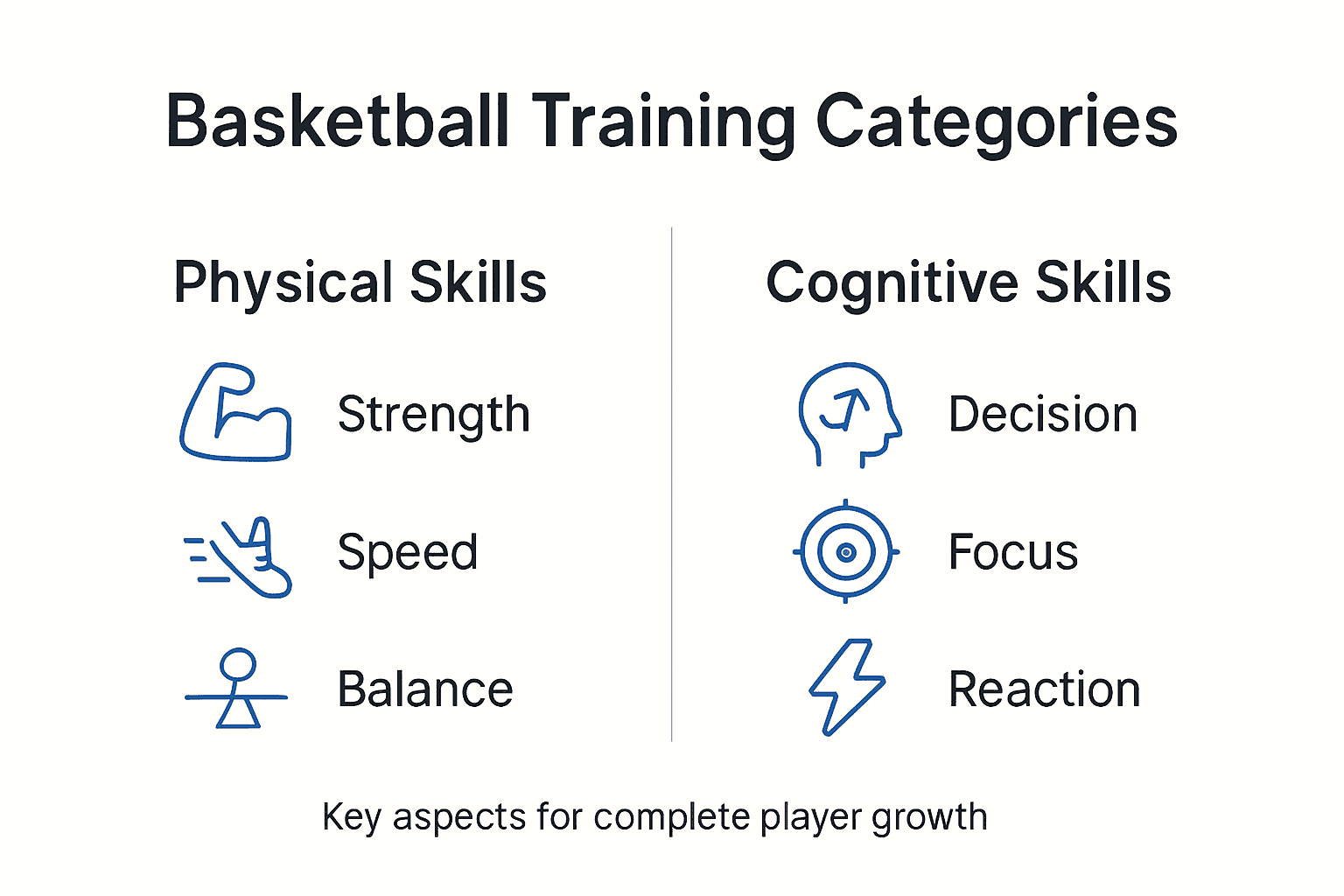
Evidence-based agility training approaches demonstrate that targeted interventions can significantly enhance player performance. Each training category targets specific physiological and cognitive capabilities, with researchers identifying precise mechanisms for skill improvement. Small-sided games, resisted and non-resisted drills, and advanced plyometric techniques represent sophisticated methods for developing multidimensional athletic capabilities.
Key training categories include:
- Reaction Training: Improving split-second decision-making and response times
- Speed Training: Developing acceleration, deceleration, and directional change capabilities
- Strength and Balance Training: Enhancing core stability and muscular control
- Plyometric Training: Developing explosive power and dynamic movement skills
- Flexibility Training: Improving range of motion and reducing injury risk
The most effective basketball training programs integrate these categories strategically, recognizing that holistic athlete development requires a nuanced, scientifically informed approach. Coaches must design programs that challenge athletes across multiple skill domains while maintaining specificity and measurable progression.
Pro tip: Implement a comprehensive assessment protocol that measures performance across all five training categories, allowing for targeted, data-driven skill development and individualized training strategies.
Features of Progressive Youth Development Programs
Global youth basketball development strategies have fundamentally transformed how coaches approach player growth, moving beyond traditional skill-focused training to embrace a holistic, comprehensive approach. Modern progressive programs recognize that athletic development involves more than physical prowess, integrating social-emotional learning, cognitive skills, and individual potential into comprehensive training frameworks.
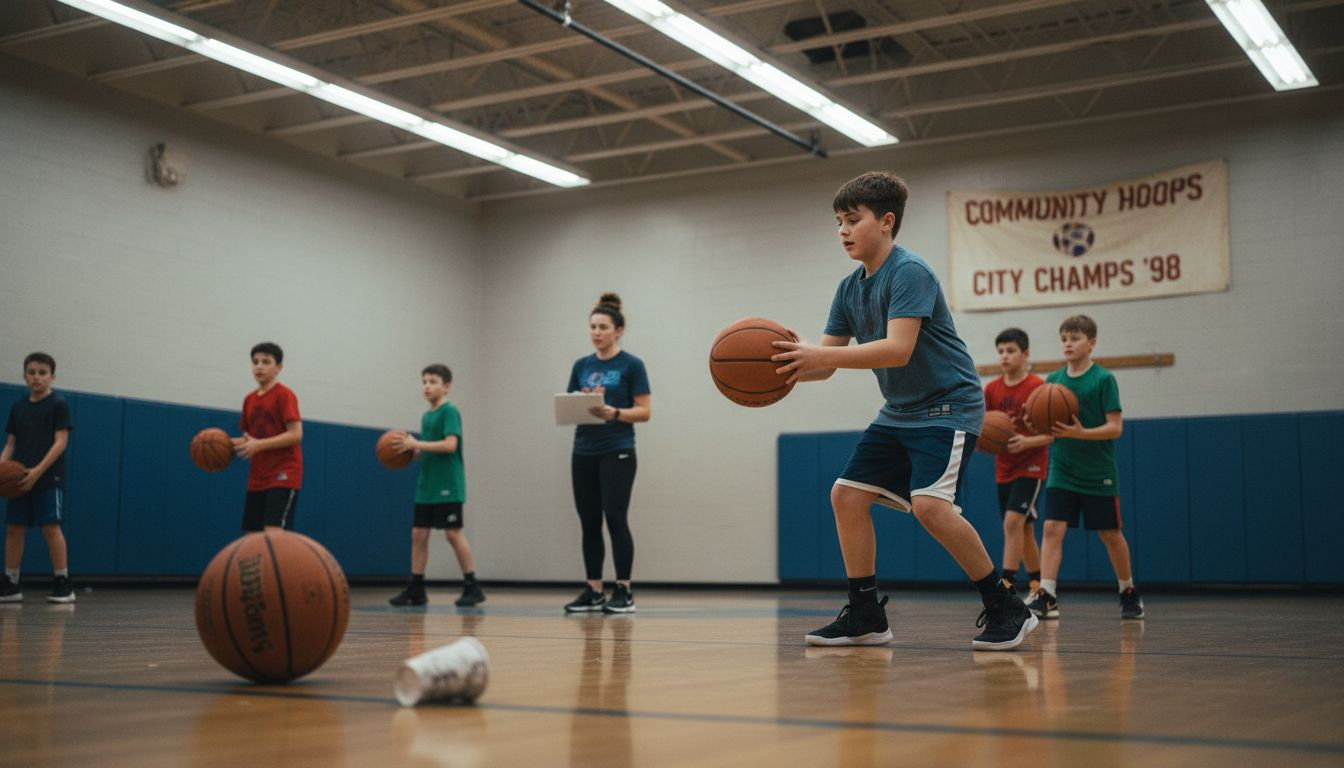
These advanced development models prioritize long-term athlete progression over short-term competitive success. Comprehensive youth development guidelines outline stage-appropriate skill benchmarks that adapt to players’ varying maturity and ability levels. The core philosophy centers on creating inclusive pathways that support diverse populations and individual learning trajectories.
Key features of progressive youth development programs include:
- Structured Skill Progression: Systematic skill acquisition aligned with developmental stages
- Holistic Athlete Development: Integrating physical, mental, and social skill components
- Individualized Learning Paths: Tailored training approaches respecting individual differences
- Coach Education: Continuous professional development for training staff
- Inclusive Access: Removing barriers to participation across diverse populations
Successful programs understand that basketball development is a complex, multidimensional journey. Coaches must design experiences that challenge young athletes while maintaining a supportive, growth-oriented environment that nurtures both athletic skills and personal character.
Pro tip: Create individual player development profiles that track not just athletic performance, but also social-emotional growth, academic progress, and personal goals to provide truly comprehensive athlete support.
Integrating Holistic Training and Technology
Emerging technological innovations are revolutionizing basketball training by providing unprecedented insights into player performance and development. Internet of Things (IoT) devices and advanced machine learning algorithms now enable coaches to track comprehensive athlete data, transforming traditional training approaches into sophisticated, data-driven experiences that address physical, cognitive, and health-related aspects simultaneously.
Advanced performance tracking technologies offer multidimensional analysis of player capabilities, integrating data analytics, wearable sensors, and immersive learning environments. These tools provide real-time feedback, personalized skill assessments, and predictive insights that allow for highly tailored training strategies, moving beyond generic coaching methods to individualized athlete development.
Key technological integration strategies include:
- Wearable Sensor Analytics: Monitoring physiological responses and movement patterns
- Virtual Reality Training: Creating immersive tactical learning environments
- Biomechanical Performance Tracking: Analyzing precise movement efficiency
- Machine Learning Feedback Systems: Generating personalized skill improvement recommendations
- Health Monitoring Technologies: Preventing injuries through predictive assessments
Successful technology integration requires a balanced approach that enhances human coaching rather than replacing traditional methods. Coaches must understand how to interpret technological data and translate insights into meaningful training interventions that support holistic athlete growth.
This summary highlights how technology enhances basketball training and athlete monitoring:
| Technology Type | Main Function | Impact on Athlete Development |
|---|---|---|
| Wearable Sensors | Collect real-time movement data | Optimize training, reduce injuries |
| Virtual Reality | Simulate game scenarios | Sharpen tactical decision-making |
| Machine Learning Analytics | Analyze performance trends | Enable personalized improvement |
| Health Monitoring Devices | Track recovery and fatigue levels | Prevent overtraining and injuries |
Pro tip: Develop a systematic approach to technology integration by first identifying specific performance goals and then selecting technologies that provide targeted, actionable insights.
Responsibilities, Risks, and Common Mistakes
Critical training load management represents the most fundamental responsibility for basketball coaches seeking to develop athletes safely and effectively. Coaches must recognize that player development involves a delicate balance between challenging athletes and protecting them from potential injuries, requiring nuanced understanding of individual physiological limitations and adaptive capacities.
The landscape of coaching responsibilities extends far beyond traditional skill instruction, encompassing comprehensive athlete health monitoring, psychological support, and strategic progression planning. Coaches bear significant responsibility for creating training environments that minimize injury risks while maximizing developmental potential, which demands sophisticated knowledge of biomechanics, recovery protocols, and individual athlete readiness.
Common mistakes coaches must proactively avoid include:
- Inappropriate Training Load: Sudden intensity increases without gradual progression
- Ignoring Individual Variations: Applying uniform training approaches across diverse athletes
- Insufficient Recovery Management: Neglecting rest and regeneration periods
- Psychological Pressure: Implementing overly rigid or punitive training methodologies
- Lack of Personalized Assessment: Failing to track individual athlete development metrics
Successful coaching requires a holistic approach that integrates scientific understanding with empathetic, individualized athlete management. Coaches must continuously adapt their strategies, recognizing that each athlete represents a unique developmental journey requiring personalized attention and strategic intervention.
Pro tip: Implement a systematic athlete monitoring protocol that tracks physical readiness, psychological state, and skill progression, enabling data-driven and individually tailored training interventions.
Elevate Your Training With Proven Coaching Resources
Modern basketball training demands a dynamic and holistic approach that balances cognitive challenges with physical skill development. If you are passionate about implementing individualized, data-driven, and progressive practice plans that truly grow players on and off the court you need coaching tools designed to match these advanced training methods. The complexity of reaction training, plyometrics, and comprehensive skill integration calls for resources that help you organize meaningful sessions and monitor player progress effectively.
Discover how Basketball Workouts - Hoop Mentality and Basketball Drills - Hoop Mentality offer detailed, science-backed practice plans and drills built with real coaching experience. These tools enable you to seamlessly incorporate cognitive and physical development elements into your training. Don’t let complicated programming hold you back – visit Hoop Mentality today and start transforming your training sessions with clarity, confidence, and measurable progress.
Frequently Asked Questions
What are modern basketball training methods?
Modern basketball training methods involve sophisticated, multifaceted approaches that integrate technical, tactical, physical, cognitive, and psychosocial elements for comprehensive player development.
How do modern training methods differ from traditional methods in basketball?
Modern training methods focus on integrated skills and game scenarios, while traditional methods rely on isolated drills and repetition. Modern methods also utilize data-driven performance assessments and emphasize holistic athlete development.
What key categories are included in basketball training programs?
Key categories in basketball training programs include reaction training, speed training, strength and balance training, plyometrics, and flexibility training, which together target various physiological and cognitive capabilities.
How can technology be integrated into basketball training?
Technology can be integrated into basketball training through wearable sensor analytics, virtual reality training, biomechanical performance tracking, machine learning feedback systems, and health monitoring technologies, providing valuable insights for personalized skill development.