

Most American coaches agree that building winning basketball teams starts with instilling the right habits early. When athletes consistently practice deliberate routines, the effect reaches far beyond individual skill, shaping both performance and character. Structured patterns drive measurable gains in teamwork and leadership, making them the foundation of successful basketball programs worldwide. Learn how targeted strategies can help you nurture habits that transform players and propel your youth or high school team to its full potential.
Table of Contents
- Defining Basketball Habits And Their Value
- Types Of Habits Every Coach Should Instill
- Keys To Building Effective Routines
- Role Of Coaches In Habit Development
- Avoiding Common Mistakes And Setbacks
Key Takeaways
| Point | Details |
|---|---|
| Importance of Basketball Habits | Basketball habits are foundational behaviors that shape an athlete’s performance and develop important attributes like teamwork and leadership. |
| Types of Critical Habits | Coaches should instill technical, tactical, mental, and physical habits to create well-rounded athletes prepared for competition. |
| Effective Routine Design | Successful routines must be adaptable, integrating both physical conditioning and psychological preparation to enhance player performance. |
| Coach’s Role in Development | Coaches must personalize training approaches for individual players while maintaining a supportive relationship to foster habit formation and motivation. |
Defining Basketball Habits and Their Value
Basketball habits represent the foundational behaviors and consistent practices that shape an athlete’s performance and potential. These structured patterns go far beyond simple repetition, forming the core of skill development and athletic excellence. Basketball habits contribute to sports literacy by improving critical attributes like teamwork, leadership, and competitive skills.
At their core, basketball habits encompass deliberate, repetitive actions performed with precision and intention. These can range from shooting mechanics and defensive stance to mental preparation and communication strategies. A player who consistently practices proper shooting form, for example, transforms muscle memory into automatic response. This means during high-pressure game moments, the body executes techniques without conscious thought, enabling faster and more accurate performance.
The true power of basketball habits lies in their holistic impact. They are not merely technical skills but comprehensive developmental tools that build discipline, mental resilience, and personal accountability. Good habits improve skill execution, enhance decision-making capabilities, and cultivate a mindset of continuous improvement. By establishing strong habits early, coaches can help players develop not just better basketball skills, but stronger personal character traits that extend well beyond the basketball court.
Pro Tip: Start implementing one focused habit drill in each practice session, consistently reinforcing the specific technique until it becomes second nature for your players.
Types of Habits Every Coach Should Instill
Successful basketball coaching requires developing comprehensive habits across multiple dimensions of athletic performance. Core coaching programs highlight critical habit development that encompass technical, tactical, physical, and psychological aspects of player growth. These multifaceted habits form the foundation for transforming individual players into cohesive, high-performing team members.
The most critical habits coaches should prioritize include technical skills, tactical understanding, mental preparation, and physical conditioning. Technical habits involve consistent shooting mechanics, precise dribbling techniques, and defensive positioning. Tactical habits focus on court awareness, strategic decision-making, and understanding complex play configurations. Mental preparation habits build resilience, emotional control, and leadership capabilities, enabling players to maintain composure under competitive pressure.
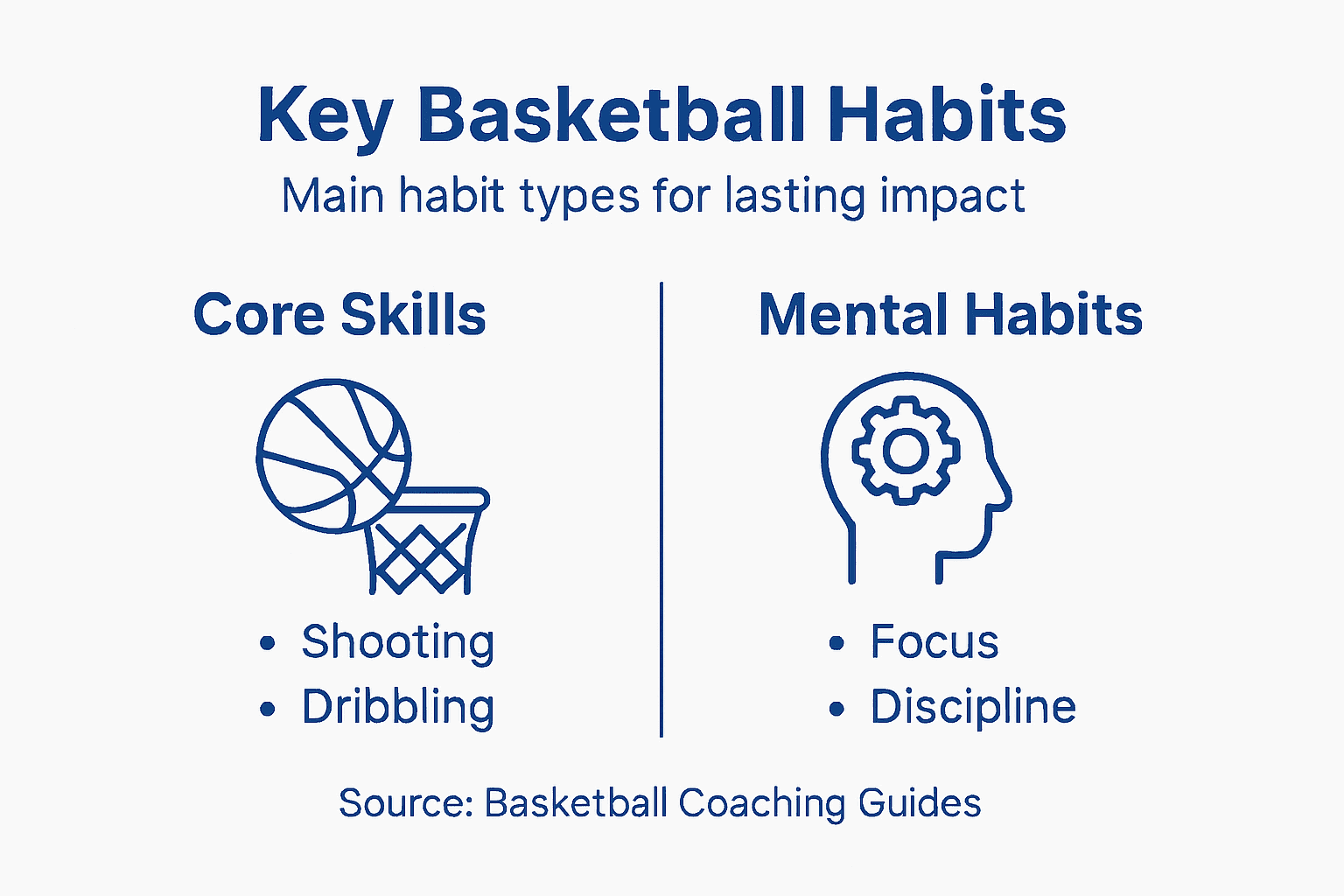
Physical conditioning habits are equally crucial for basketball performance. Core training enhances athletic skill performance through routines that develop strength, sprint speed, agility, and neuromuscular control. These physical habits not only improve individual player capabilities but also contribute to overall team dynamics. By systematically developing these interconnected habits, coaches can create athletes who are technically proficient, mentally strong, and physically prepared for high-level competition.
Here’s a quick comparison of key basketball habit types and their primary impact areas:
| Habit Type | Focus Area | Main Benefits |
|---|---|---|
| Technical | Skills execution | Sharper shooting, dribbling, defense |
| Tactical | Decision-making | Better court vision, fast plays |
| Mental Preparation | Mindset and leadership | Resilience, composure, focus |
| Physical | Athletic conditioning | Strength, agility, injury prevention |
Pro Tip: Design weekly habit-building drills that target specific skill areas, rotating focus to ensure comprehensive athletic development across technical, tactical, mental, and physical domains.
Keys to Building Effective Routines
Designing effective basketball routines requires a strategic approach that goes beyond simple repetition. Methodological aspects of routine construction demand careful consideration of multiple critical factors, including duration, intensity, exercise selection, sequence, and recovery mechanisms. Coaches must develop a comprehensive framework that addresses both the physical and psychological preparation of athletes.
The foundation of an effective routine lies in its adaptability and purposeful design. Successful routines are not one-size-fits-all but carefully tailored to specific training objectives, game day preparations, and in-game scenarios. This means creating flexible structures that can be adjusted based on team dynamics, individual player needs, and competitive demands. Technical precision matters, but so does the psychological readiness that comes from well-structured, predictable training patterns.
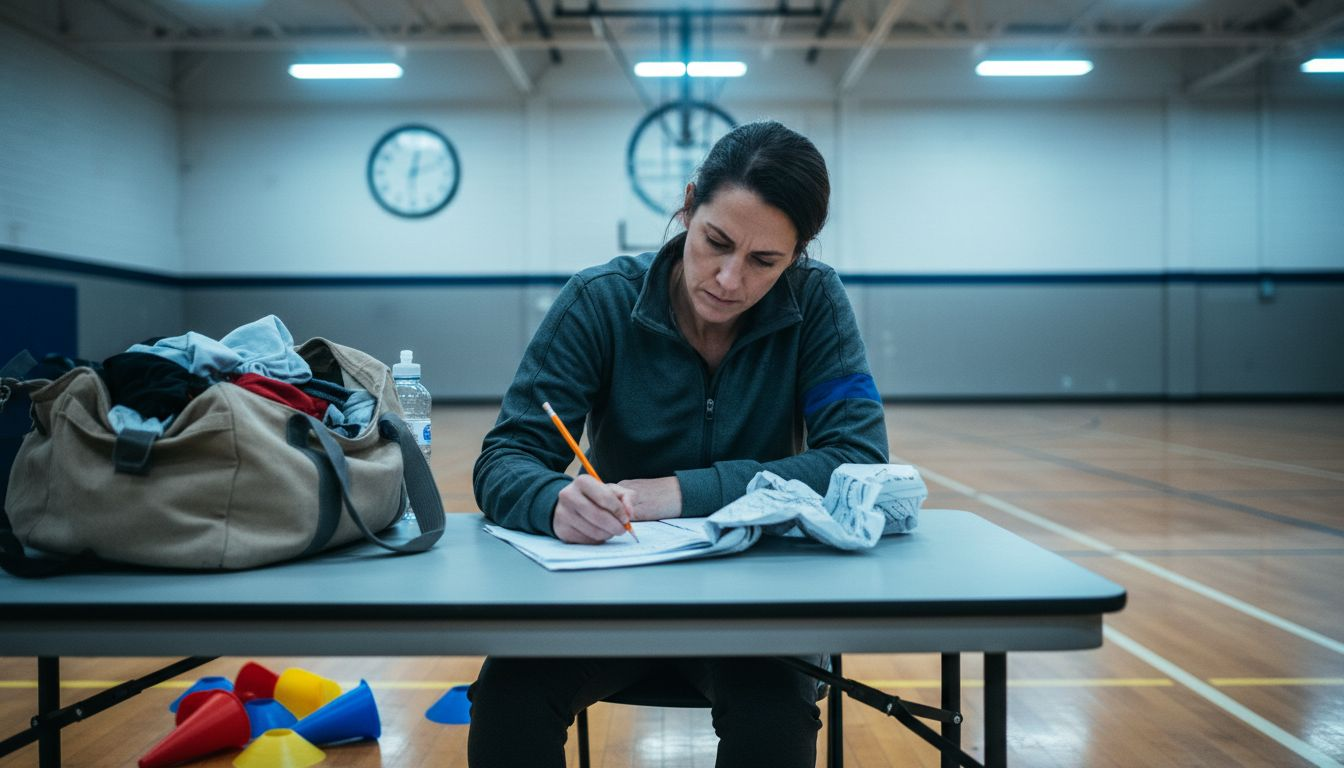
Coaches should approach routine building as a holistic process that integrates physiological conditioning with mental preparation. This involves creating sequences that progressively challenge players, build confidence, and develop muscle memory across different skill domains. The most effective routines create a sense of rhythm and predictability while simultaneously introducing elements of challenge and growth. By balancing consistency with strategic variation, coaches can help players develop the adaptive skills necessary for high-performance basketball.
Pro Tip: Create a flexible routine template that allows for 70% structured activities and 30% adaptive elements, enabling consistent skill development while maintaining player engagement and preventing training monotony.
Role of Coaches in Habit Development
Coaches play a pivotal role in developing athletes’ habits by creating intentional learning environments that transform potential into performance. Their approach goes far beyond simple instruction, involving strategic integration of technical, tactical, physical, and psychological training elements. Effective coaches understand that habit formation is a complex process requiring consistent, purposeful intervention.
The coaching methodology directly impacts an athlete’s ability to develop and maintain productive habits. This involves designing training sequences that progressively challenge players, provide constructive feedback, and connect knowledge with practical application. Coaches must carefully balance structure with adaptability, recognizing that each player requires personalized approaches to skill development. By creating environments that encourage deliberate practice and decision-making, coaches become architects of athletic potential.
The quality of the coach-athlete relationship fundamentally determines the success of habit development. Coach-athlete relationships significantly predict training engagement and skill progression. Positive coaching behaviors such as supportive communication, clear expectations, and individualized feedback create the psychological safety necessary for athletes to take risks, learn from mistakes, and consistently pursue improvement. Successful coaches understand that habit development is as much about motivation and trust as it is about technical skill instruction.
Pro Tip: Design individual habit development plans for each player, incorporating their unique learning style, motivational triggers, and specific skill gaps to maximize personal growth and team performance.
Avoiding Common Mistakes and Setbacks
Coaching mistakes significantly impact player development and can derail the progress of entire basketball teams. These errors often stem from insufficient training, lack of individualized player understanding, and poor technical-tactical decision-making. Recognizing and proactively addressing these potential pitfalls is crucial for coaches committed to creating sustainable athletic growth.
One of the most prevalent mistakes coaches make is applying a uniform approach to player development, ignoring individual differences in learning styles, physical capabilities, and psychological readiness. Successful coaches understand that each player requires a nuanced strategy tailored to their unique strengths and developmental needs. This means moving beyond generic drills and creating personalized training pathways that challenge players while maintaining their confidence and motivation.
Another critical area of potential setback involves managing player load and preventing burnout. Coaches must carefully balance intense training with adequate recovery, monitoring both physical and mental fatigue. Overtraining can lead to decreased performance, increased injury risk, and diminished player engagement. The most effective coaches maintain a holistic view of athlete development, understanding that sustainable progress requires strategic rest, psychological support, and continuous adaptive learning.
Reviewing common coaching setbacks can help avoid future pitfalls:
| Common Mistake | Potential Consequence | Prevention Strategy |
|---|---|---|
| Uniform approach | Hinders individual player growth | Customize drills and learning plans |
| Ignoring player load | Increased risk of burnout | Monitor fatigue and provide rest |
| Lack of feedback | Slower skill improvement | Schedule regular player reviews |
| Generic skill focus | Missed potential | Identify and target specific gaps |
Pro Tip: Implement a quarterly performance review system that evaluates each player’s progress holistically, incorporating physical metrics, skill development, and psychological well-being to identify and address potential developmental bottlenecks.
Build Lasting Basketball Habits with Proven Coaching Tools
Developing strong, effective basketball habits requires more than just repetition. When coaches focus on structured drills, personalized routines, and tactical training, they set the foundation for long-term player success and team growth. If you’re navigating challenges like creating adaptable routines, balancing technical and mental preparation, or avoiding common coaching setbacks, you are not alone. These are the key areas that separate average coaching from transformational impact.
Take control of your coaching journey with Hoop Mentality’s professional Basketball Drills and Basketball Templates.

Start building habits that last today. Our resources help you save time, improve communication, and confidently deliver consistent, effective practices. Visit Hoop Mentality now to access expert-developed tools designed to turn your coaching vision into winning reality.
Frequently Asked Questions
What are basketball habits and why are they important?
Basketball habits are foundational behaviors and consistent practices that shape an athlete’s performance and potential. They are crucial for skill development, discipline, mental resilience, and personal accountability, ultimately leading to improved performance on the court.
How can coaches effectively instill good habits in players?
Coaches can instill good habits by designing purposeful training routines that target technical, tactical, mental, and physical aspects of the game. Incorporating structured drills, providing personalized feedback, and maintaining clear communication can help reinforce these habits.
What types of habits should every basketball coach focus on developing?
Coaches should prioritize technical skills (like shooting and dribbling), tactical understanding (decision-making and play awareness), mental preparation (resilience and leadership), and physical conditioning (strength and agility) to create well-rounded players.
How can I measure the development of habits in my players?
You can measure habit development by implementing a performance review system that evaluates physical metrics, skill improvements, and psychological well-being. Regular check-ins and assessments can provide insights into each player’s progress and areas needing attention.
Recommended
- 7 Essential Basketball Leadership Tips for Coaches – Hoop Mentality
- Basketball Leadership Guide: Build Strong Team Culture – Hoop Mentality
- Essential Tips for First-Time Basketball Coaches - Hoop Mentality
- 7 Essential Basketball Practice Tips Every Coach Needs – Hoop Mentality
- Master Your Workout Hydration Routine for Peak Performance – Interval